President Donald Trump has repeatedly promised to make health care better for all Americans, especially those with pre-existing conditions.
But while his administration has yet to unveil a plan, his Justice Department is now threatening to strip away coverage and benefits that many people have come to take for granted in the nine years since the landmark Affordable Care Act was signed into law.
.
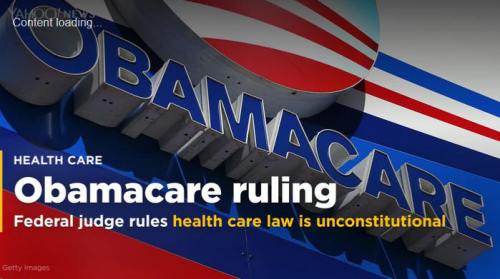
The administration said Monday that the entire law should be struck down, a dramatic reversal of its earlier stance. In a filing with a federal appeals court, the Justice Department said it agreed with the ruling of a federal judge in Texas that invalidated Obamacare. Previously, the agency under former Attorney General Jeff Sessions had argued only that two key protections for those with pre-existing conditions could not be defended.
Four months after 14 of her classmates and three school employees were shot to death, Kyra Parrow walked across a stage and was handed a diploma.
What she was not given, she says, was a road map to navigate her lingering trauma.
Right after graduation, Parrow, who was a high school senior at the time of the 2018 massacre at Marjory Stoneman Douglas High School in Parkland, Florida, moved to Orlando to start summer classes at Valencia College.
.
The Guardian
A makeshift memorial for victims of the shooting at Marjory Stoneman Douglas High School in Parkland, Florida, in February 2018. After a mass shooting, community members’ trauma lingers months or years after media attention fades.
The Trump administration on Monday adopted a more extreme position on a lawsuit challenging the Affordable Care Act: Instead of asking the federal courts to throw out just one part of the law, as it had done previously, now the administration wants the courts to throw out the entire thing.
Protections for people with pre-existing conditions, tax credits for lower- and middle-class insurance buyers, expanded state Medicaid programs for the poor ― all of these things would be gone, and millions of people would lose health insurance if the administration gets its way.
And the effects would not stop there. The health care law includes all kinds of other, lesser-known provisions, touching everything from the way Medicare pays hospitals to the calorie counts on food menus.
One part of the Hippocratic Oath, the vow taken by many physicians, requires us to “remember that there is art to medicine as well as science, and that warmth, sympathy, and understanding may outweigh the surgeon’s knife or the chemist’s drug.” When I, along with my medical school class, recited that oath at my white coat ceremony a year ago, I admit that I was more focused on the biomedical aspects than the “art.” I bought into the mechanism of insulin lowering blood sugar. I bought into the concept of diabetes-induced kidney damage. I bought into the idea of small intestinal bacterial overgrowth in patients with diabetes. But art’s—poetry’s—role in the modern practice of medicine?
I’ve changed my mind. Physicians are beginning to understand that the role of language and human expression in medicine extends beyond that horizon of uncertainty where doctor and patient must speak to each other about a course of treatment. The restricted language of blood oxygen levels, drug protocols, and surgical interventions may conspire against understanding between doctor and patient—and against healing. As doctors learn to communicate beyond these restrictions, they are reaching for new tools—like poetry.
What are dreams for? A handful of theories predominate. Sigmund Freud famously contended that they reveal hidden truths and wishes. [1] More recent research suggests that they may help us process intense emotions, [2] or perhaps sort through and consolidate memories, [3] or make sense of random neuron activity, [4] or rehearse responses to threatening situations. [5] Others argue that dreams have no evolutionary function, but simply dramatize personal concerns. [6]
Despite being largely unsupported by evidence, Freud’s view maintains a strong following around the world. Researchers found that students in the U.S., South Korea, and India were much more likely to say that dreams reveal hidden truths than to endorse better-substantiated theories. [7] Relatedly, people put great stock in their dreams: In the same study, respondents said that dreaming about a plane crash would cause them more anxiety than an official warning about a terrorist attack.
Even if dreams can’t foretell the future, they seem to expose our shared fascinations. The majority of dreams occur during REM sleep cycles, of which the average person has four or five a night. Eight percent of dreams are about sex, a rate that holds for both women and men—though women are twice as likely as men to have sexual dreams about a public figure, while men are twice as likely to dream about multiple partners.
Rent was due and, once again, I didn’t have it. I did, however, have three maxed-out credit cards, a negative account balance, and a closet full of useless junk I’d bought during a 2 a.m. online shopping binge a few weeks prior.
I wasn’t financially illiterate. I knew how credit scores can be damaged and interest charges accumulate over time thanks to my mom, a single parent who taught me to prioritize financial independence and frequently references the teachings of financial expert and lesbian style icon Suze Orman.
I fully understood what I was supposed to be doing with my money, and that I didn’t have much of it. As a freelance writer, I don’t make the kind of money to support a fun, quirky shopping addiction a la ”Confessions Of A Shopaholic.” I wasn’t trying to live out a broke-but-fabulous Carrie Bradshaw fantasy, and I was way past the point in my 20s when being broke stops being cute.
The air is getting more dangerous to breathe all over the world — and a suite of companies are hoping to capitalize with a new fashion item.
Last fall, two different wildfires destroyed huge swaths of California. The Camp Fire in Northern California covered 153,336 acres, destroyed nearly 20,000 structures, and killed 85 people; it also left a shroud of smoke and ash hovering over the area. Public schools in five Bay Area counties were closed, and residents were warned to stay inside and protect their lungs from the dangerous air quality. Stores for miles around sold out of everything from surgical masks to the recommended N95 painter’s masks — the only kind that can effectively filter 95 percent of the tiny particles that do the most damage to your lungs.
Walking around the Bay Area in the weeks following the Camp Fire felt like living in a dystopian future — the sky a matte grey, the sun a red, alien-like orb, the streets empty save a handful of souls, nearly all wearing painter’s masks or bandannas or scarves over their mouths. Those two weeks might have been not just a dark blip, but rather a glimpse into our collective future. And there are entrepreneurs poised to capitalize on it. Because in the tomorrow that the Camp Fire portends, we’re all going to need a good face mask.
.
Air filtering masks are already popular across Asia, but will they become common in the US?Sarah Lawrence for Vox
Film and Writing Festival for Comedy. Showcasing best of comedy short films at the FEEDBACK Film Festival. Plus, showcasing best of comedy novels, short stories, poems, screenplays (TV, short, feature) at the festival performed by professional actors.

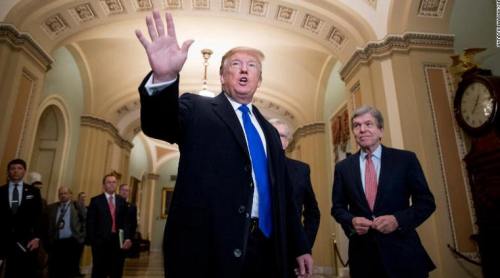 Trump wants to cancel Affordable Health Care


 .
.





/cdn.vox-cdn.com/uploads/chorus_image/image/63256252/Air_Masks_2.0.png)


