July 20, 2019
Mohenjo
Breaking News, Business, Food For Thought, Human Interest, Medical, Political
amazon, business, Business News, current-events, DOHA Qatar, Future, Hotels, human-rights, medicine, mental-health, research, Science, Science News, technology, Technology News, travel, vacation

Click the link below the picture
.
After years in which efforts at resolving America’s longest war ambled slowly forward, if at all, they now appear to be galloping toward the finish line.
American and Taliban negotiators are thought to be close to a deal that would see the 14,000 American troops remaining in Afghanistan return home, after they lost more than 2,400 of their ranks and had thousands more maimed.
But the Trump administration’s rush to withdraw will leave Afghanistan at the mercy of an extremely ascetic Islamist movement that has done little to change its ways since the U.S. invaded nearly 18 years ago.
.
 .
.
.
Click the link below for article:
.
__________________________________________
July 19, 2019
Mohenjo
Breaking News, Business, Food For Thought, Human Interest, Medical, Science, Technical
amazon, business, Business News, current-events, Future, Hotels, human-rights, medicine, mental-health, research, Science, Science News, technology, Technology News, travel, vacation

Click the link below the picture
.
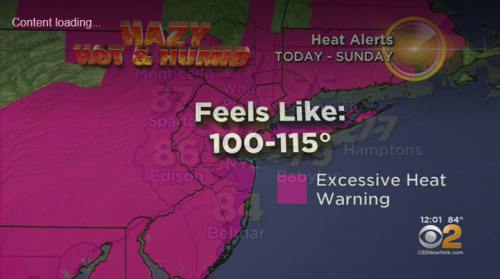
Extreme heat is a leading cause of weather-related deaths in the United States, resulting in an average 658 fatalities each year, according to the Centers for Disease Control and Prevention. Thousands more suffer from heat-related illnesses, including heat exhaustion and stroke. The elderly, children, poor people and people who have manual labor jobs outdoors are among the most vulnerable during heatwaves.
On Tuesday, as sweltering heat began to take hold of the central and eastern U.S., the Union of Concerned Scientists published a report saying that without swift action to rein in greenhouse gas emissions, the number of days per year in the U.S. when the heat index exceeds 100 degrees could more than double by 2050 and quadruple by the end of the century.
“Our analysis shows a hotter future that’s hard to imagine today,” Kristina Dahl, a senior climate scientist at UCS and a co-author of the report, said in a statement. “Nearly everywhere, people will experience more days of dangerous heat even in the next few decades.”
.
 .
.
.
Click the link below for article:
.
__________________________________________
July 19, 2019
Mohenjo
Arts, Crime, Enthralling, Food For Thought, Human Interest, Medical, missed News, Political, Science, sports, Technical
amazon, business, Business News, current-events, Future, Hotels, human-rights, medicine, mental-health, research, Science, Science News, technology, Technology News, travel, vacation

.
News You might have missed!
Use your browser or smartphone back arrow (<-) to return to this table for your next selection.
.
__________________________________________
July 18, 2019
Mohenjo
Business, Enthralling, Food For Thought, Human Interest, Medical, Science, Technical
amazon, business, Business News, current-events, Future, Hotels, human-rights, medicine, mental-health, research, Science, Science News, technology, Technology News, travel, vacation

Click the link below the picture
.
Have you ever been torn between “what your head is telling you” and “what your heart is telling you”? If so, you might be surprised at just how much your heart does have to say. It’s a little-known fact outside of scientific circles, but your heart actually contains some 40,000 neurons — the same cells which make up the bulk of your brain.
And they don’t just respond to directions from the brain. The heart also sends messages to the brain — messages that go beyond basic messages like pain signals and other unconscious data. It also sends messages to the parts of the brain which process thoughts and emotions. This means that your heart really can affect your decisions and feelings.
The phrase “listen to your heart” takes on a whole new meaning when you consider this information.
.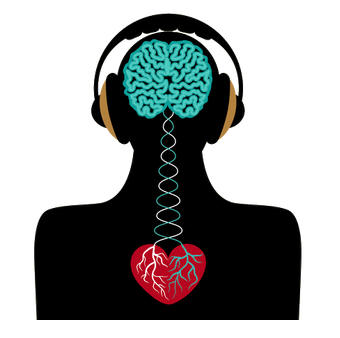
The term “heart-mind” was coined in 1991 to describe the neural network of the heart.
.
.
Click the link below for article:
.
__________________________________________
July 18, 2019
Mohenjo
Breaking News, Business, Food For Thought, Human Interest, Medical, Science, Technical
amazon, business, Business News, current-events, Future, Hotels, human-rights, medicine, mental-health, research, Science, Science News, technology, Technology News, travel, vacation

Click the link below the picture
.
For Markus Heilig, the years of dead ends were starting to grate.
A seasoned psychiatrist, Heilig joined the National Institutes of Health in 2004 with grand ambitions of finding new ways to treat addiction and alcoholism. “It was the age of the neuroscience revolution, and all this new tech gave us many ways of manipulating animal brains,” he recalls. By studying addictive behavior in laboratory rats and mice, he would pinpoint crucial genes, molecules, and brain regions that could be targeted to curtail the equivalent behaviors in people.
It wasn’t to be. The insights from rodent studies repeatedly proved to be irrelevant. Many researchers and pharmaceutical companies became disillusioned. “We cured alcoholism in every rat we ever tried,” says Heilig, who is now at Linköping University in Sweden. “And at the end of every paper, we wrote: This will lead to an exciting treatment. But everything we took from these animal models to the clinic failed. We needed to go back to the drawing board.”
.

Only 15% of regular drinkers become dependent on alcohol. Photo by Axel Bueckert / Shutterstock.
.
.
Click the link below for article:
.
__________________________________________
July 18, 2019
Mohenjo
Breaking News, Business, Food For Thought, Human Interest, Medical, Political, Technical
amazon, business, Business News, current-events, Future, Hotels, human-rights, medicine, mental-health, research, Science, Science News, technology, Technology News, travel, vacation

Click the link below the picture
.
On the last day of March, Kirstjen Nielsen set off for what was supposed to be a week long trip to Europe with a packed itinerary. In London, she would meet with British officials on counter terrorism matters, then travel on to Stockholm to discuss election security with her Swedish counterparts and finally head to Paris, where she would represent the United States at a meeting of Group of 7 interior ministers. These are some of the far-flung obligations of the secretary of homeland security, who bears responsibility for not only thwarting terrorist attacks and preventing foreign interference in American elections but also cleaning up after hurricanes and ensuring that the United States doesn’t cede control of the Arctic to Russia and China.
But the Department of Homeland Security’s mission had increasingly been telescoped into a single, all-encompassing concern. “Under Trump,” says Juliette Kayyem, a professor at Harvard’s John F. Kennedy School of Government who served as an assistant secretary at the department under President Barack Obama, “it’s a department that looks at homeland security only through a lens of border enforcement.” A few days before Nielsen left for London, she learned that, in March, the number of undocumented immigrants Customs and Border Protection stopped as they were crossing the country’s Southwest border would top 100,000 — the first time the monthly statistic had hit six figures in 12 years. In response, President Trump threatened to halt all cross-border traffic, people and goods between the United States and Mexico — a move that would wreak havoc not only on the Mexican economy but on the American one as well.
.
 Zero Tolerance
.
.
Click the link below for article:
.
__________________________________________
July 17, 2019
Mohenjo
Breaking News, Business, Crime, Enthralling, Food For Thought, Human Interest, Medical, Technical
amazon, business, Business News, current-events, Future, Hotels, human-rights, medicine, mental-health, research, Science, Science News, technology, Technology News, travel, vacation

Click the link below the picture
.
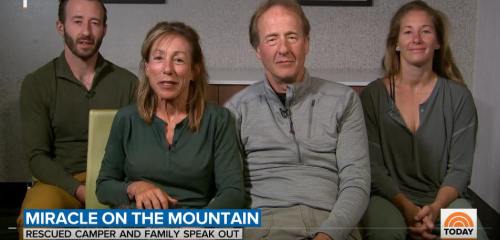
The woman who went missing while hiking in California said Tuesday that she is lucky to be alive after she got lost fleeing a knife-wielding man who threatened her near her campsite in the remote White Mountains.
Sheryl Powell, 60, of Huntington Beach, California, was reported missing by her husband on Friday afternoon after she disappeared while taking her dog on a walk near the Grandview Campsite.
Rescue teams scoured the mountains over the weekend, searching for Powell by foot and air. On Monday morning, they found Powell’s dog, Miley. About two and a half hours later, authorities found Powell, who was brought to a local hospital suffering from dehydration and superficial injuries.
.
 .
.
.
Click the link below for article:
.
__________________________________________
July 17, 2019
Mohenjo
Business, Food For Thought, Human Interest, Medical, Science, Technical
amazon, business, Business News, current-events, Future, Hotels, human-rights, medicine, mental-health, research, Science, Science News, technology, Technology News, travel, vacation
Click the link below the picture
.
One fall day in the early 1990s, in the basement of an old Staten Island home, 8-year-old Ashley Portman was electrocuted. A combination of factors were to blame: the faulty wiring of an old house, the curiosity of a child left to her own devices, the intrigue of endless rooms, and the lure of unfamiliar odds and ends belonging to a distant family friend.
Portman had gone exploring. In the basement, she found a treadmill, and for fun, she began to walk in step. The machine faced a high bar top, upon which a small television set was perched. When she turned the knob, the screen filled with the gray fuzz of television snow, so she reached to adjust the metal rabbit ears. She managed to scream before her body went as rigid as a pole. Her hands burned, and she could not release her grasp on the antennae. Decades later, the memory of the electrocution is like swimming through a dream. It remains unlike anything she’s ever felt — “an indescribable, invasive pain.”
Portman suspects she would have died, if not for some inexplicable force — “a higher power” — that intervened, knocking the television set from the bar top. As the television fell, the plug was pulled from the socket, and the electrical connection cut. She collapsed onto the floor.
.

Illustrations by Sam D’Orazio
.
.
Click the link below for article:
.
__________________________________________
July 17, 2019
Mohenjo
Business, Enthralling, Food For Thought, Human Interest, Medical, Science, Technical
amazon, business, Business News, current-events, Future, Hotels, human-rights, medicine, mental-health, research, Science, Science News, technology, Technology News, travel, vacation
Click the link below the picture
.
Alex Honnold has his own verb. “To honnold”—usually written as “honnolding”—is to stand in some high, precarious place with your back to the wall, looking straight into the abyss. To face fear, literally.
The verb was inspired by photographs of Honnold in precisely that position on Thank God Ledge, located 1,800 feet off the deck in Yosemite National Park. Honnold side-shuffled across this narrow sill of stone, heels to the wall, toes touching the void, when, in 2008, he became the first rock climber ever to scale the sheer granite face of Half Dome alone and without a rope. Had he lost his balance, he would have fallen for 10 long seconds to his death on the ground far below. One. Two. Three. Four. Five. Six. Seven. Eight. Nine. Ten.
Honnold is history’s greatest ever climber in the free solo style, meaning he ascends without a rope or protective equipment of any kind. Above about 50 feet, any fall would likely be lethal, which means that, on epic days of soloing, he might spend 12 or more hours in the Death Zone. On the hardest parts of some climbing routes, his fingers will have no more contact with the rock than most people have with the touchscreens of their phones, while his toes press down on edges as thin as sticks of gum. Just watching a video of Honnold climbing will trigger some degree of vertigo, heart palpitations, or nausea in most people, and that’s if they can watch them at all. Even Honnold has said that his palms sweat when he watches himself on film.
.

 ABSENCE OF FEAR: Scans compare Honnold’s brain (left) with a control subject’s (right), a rock climber of a similar age. Crosshairs mark the amygdala, a group of nuclei involved in generating fear. As both climbers look at the same arousing images, the control subject’s amygdala glows, while Honnold’s remains inert, showing no activity whatsoever. Photo by Jane Joseph
.
.
Click the link below for article:
.
__________________________________________
July 17, 2019
Mohenjo
Breaking News, Business, Enthralling, Food For Thought, Human Interest, Medical, Political
amazon, business, Business News, current-events, Future, Hotels, human-rights, medicine, mental-health, research, Science, Science News, technology, Technology News, travel, vacation

Click the link below the picture
.
John Paul Stevens, whose 35 years on the United States Supreme Court transformed him, improbably, from a Republican antitrust lawyer into the outspoken leader of the court’s liberal wing, died on Tuesday at a hospital in Fort Lauderdale, Fla. He was 99.
The cause was complications of a stroke he suffered the day before, the Supreme Court announced in a statement.
When he retired in 2010 at the age of 90, Justice Stevens was the second-oldest and third-longest-serving justice ever to sit on the court. Oliver Wendell Holmes Jr. was about eight months older when he retired in 1932; William O. Douglas had served 36 years (1939-75), and Stephen J. Field served a few days more than Justice Stevens (1863-97).
Justice Stevens spent much of his service on the court in the shadow of more readily definable colleagues when he emerged as a central figure during a crucial period of the court’s history: the last phase of Chief Justice William H. Rehnquist’s tenure and the early years under Chief Justice John G. Roberts Jr.
.
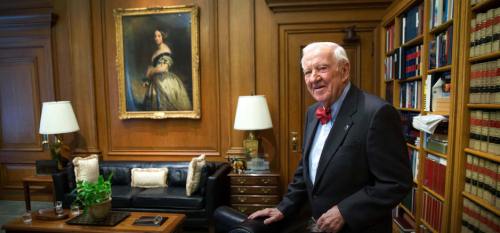 The former Supreme Court correspondent Linda Greenhouse recalls why the Citizens United case in 2010 led Justice John Paul Stevens to step down from the court.CreditCreditDoug Mills/The New York Times
.
.
Click the link below for article:
.
__________________________________________
Older Entries
Newer Entries
 James' World 2