Over the past few years, we’ve heard some vague suggestions that powered exoskeletons will, “at some point soon,” be available for applications besides meeting the needs of people doing physical rehabilitation, industrial workers, and the elderly. The rest of us could get plenty of use out of exoskeletons too, for any situation in which our bodies need to support more weight for longer than would otherwise be comfortable. It’s understandable that most exoskeleton companies aren’t going for the consumer market right away, because exoskeletons are expensive, and folks like you and me simply wouldn’t be able to justify the cost.
Yesterday, Roam Robotics (which was birthed from company-known-for-doing-weird-things, Otherlab) announced that it’s planning on selling a new kind of exoskeleton designed to offer leg support to skiers and snowboarders. The cost? Just $2500. The gadget, powered by soft pneumatic actuators, will be rentable at ski resorts for way, way less than it’s full purchase price. Roam says that without any training at all, it’ll enable you to ski better for longer without getting nearly as tired.
As Maria Robinson once said, “Nobody can go back and start a new beginning, but anyone can start today and make a new ending.” Nothing could be closer to the truth. But before you can begin this process of transformation you have to stop doing the things that have been holding you back.
.
When you stop chasing the wrong things you give
the right things a chance to catch you.
Our critics chose 15 remarkable books by women that are shaping the way we read and write fiction in the 21st century.
In 2016, the feminist press Emily Books held a panel in Brooklyn titled, a bit cheekily, “What Is Women’s Writing?” There was no consensus, much laughter and a warm, rowdy vibe. Eileen Myles read from a memoir in progress and Ariana Reines read a poem, wearing a dress with a pattern of a city on fire. All of this felt exactly right.
But even if it puts your teeth on edge to see “women’s writing” cordoned off in quotes, you can’t deny the particular power of today’s women writers — their intensity of style and innovation. The books steering literature in new directions — to new forms, new concerns — almost invariably have a woman at the helm, an Elena Ferrante, a Rachel Cusk, a Zadie Smith.
For Women’s History Month, The Times’s staff book critics — Dwight Garner, Jennifer Szalai and myself, Parul Sehgal — sat down together to think about these writers who are opening new realms to us, whose books suggest and embody unexplored possibilities in form, feeling and knowledge.
Noor Salman, the widow of Pulse nightclub gunman Omar Mateen, was found not guilty Friday in the only trial to stem from the deadly June 2016 shooting rampage.
Salman, 31, was accused of helping her husband plan his terror assault on the Orlando, Florida, nightclub and of falsely denying her role afterward.
The government equated Mateen’s actions with supporting terrorism, because he repeatedly pledged allegiance to ISIS before and during the attack, which left 49 people dead and 53 injured. For that reason, Salman was charged with aiding him in providing material support to a terror group.
Baton Rouge Police Chief Murphy Paul released four previously unseen videos of the 2016 shooting death of 37-year-old black man Alton Sterling.
“The videos you will see and hear are graphic and shocking to the conscience,” Paul said at a press conference on Friday evening.
The graphic videos from two police body cameras, a dashboard camera and a store surveillance camera show Baton Rouge Parish police Officers Blane Salamoni and Howie Lake II, both of whom are white, confronting Sterling, 37, outside the Triple S Food Mart on July 5, 2016. The officers, Paul said, were responding to a call about a man with a gun.
The footage appears to show Salamoni and Lake attempting to subdue Sterling in front of the store. After a brief scuffle, Salamoni can be heard shouting profanities at Sterling. “I’m going to shoot you in your fucking head,” Salamoni appears to yell, before hitting Sterling with a stun gun.
Boston Dynamics’ redesigned SpotMini is capable of recognizing and opening doors. The company just made this demo showing what it can do, public today.
Virtual currencies have been part of the world’s monetary system since 2009, when Bitcoin became the first of what is now a handful of these so-called cryptocurrencies.
Digital currency transactions take place in online exchanges, lending an anonymity that has led to shadowy associations with drug trading and money laundering. But that anonymity, and the convenience with which the transactions can be made, have also fueled the popularity of cryptocurrencies. More than 6 million people now own virtual currency — including many investors looking to trade the currencies to join the ranks of “Bitcoin billionaires.”
As popular as they have become, virtual currencies may soon play an even bigger role in our financial lives. In part over fears that existing cryotocurrencies (which operate independently of governments) will make it harder to detect tax evasion, Sweden, Canada, China and other nations have announced plans to launch their own official virtual currencies. In the case of Sweden, that could come as soon as 2020.
.
A visual representations of the digital cryptocurrencies, Ripple, Bitcoin, Ethernum and Litecoin.Chesnot / Getty Images
The news can often be hard to follow, but this week in particular has been a doozy.
There’s the seemingly endless staff changes in the Trump administration, the reported privacy breach and misuse of millions of Facebook users’ data, the death of the bombing suspect in Austin and the police shooting in Sacramento. It’s been a lot.
Here’s a rundown of some of the biggest news that happened in the last seven days.
.
Justin Sullivan/Getty Images
Protesters march in Sacramento, California, on March 22, 2018, after two police officers shot and killed Stephon Clark, an unarmed black man.
It was 1999 when I first interviewed Wes Anderson, in the back of a yellow tour bus that had been rented by the studio behind “Rushmore,” his sophomore film. The unorthodox setting, as the then-29-year old filmmaker explained, was a concession to his fear of flying. When I caught up with him earlier this month by phone, Anderson was traveling by train through his home state of Texas, where he had just flown in from Germany for a screening of his latest (and ninth) movie, the stop-motion animation “Isle of Dogs.”
Obviously, much has changed for the 48 -year-old director, two of whose films (“Fantastic Mr. Fox” and “The Grand Budapest Hotel”) have since been nominated for Oscars, and who regularly hops between Paris and New York, where he and his partner, the writer and designer Juman Malouf, divide their time.
In that 19-year interval, Anderson says, the biggest change is how much easier it has become to make movies, given that he has developed what might be called a working company of actors who regularly jump at the chance to appear in his films. (Several of them are in “Dogs,” including Bill Murray, Jeff Goldblum, Edward Norton, Frances McDormand and Tilda Swinton.) More important, Anderson says, is the “whole gang of people” who regularly work behind the scenes — a gang that includes his frequent producer Jeremy Dawson, who has worked with him on five films.
.
From left, Bryan Cranston as “Chief,” Bob Balaban as “King,” Koyu Rankin as “Atari Kobayashi,” Bill Murray as “Boss,” Edward Norton as “Rex” and Jeff Goldblum as “Duke” in “Isle of Dogs.” (Credit: Fox Searchlight Pictures)
Film and Writing Festival for Comedy. Showcasing best of comedy short films at the FEEDBACK Film Festival. Plus, showcasing best of comedy novels, short stories, poems, screenplays (TV, short, feature) at the festival performed by professional actors.

 Photo: Roam Robotics
 .
.
 When you stop chasing the wrong things you give
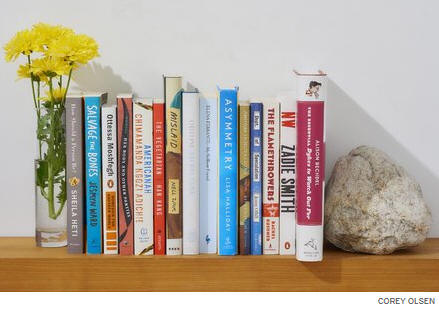 The New Vanguard
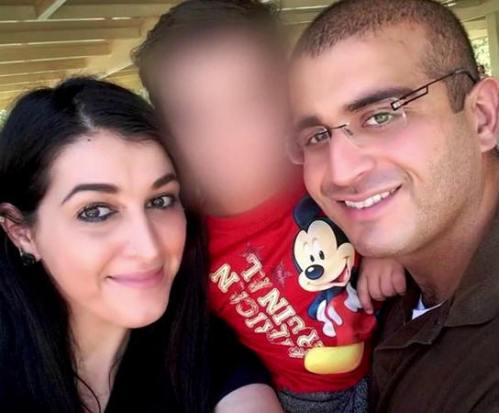 Noor Salman and Omar Mateen