Russell Glacier is a glacier in the Qeqqata municipality in central-western Greenland.It flows from the Greenland ice sheet in the western direction. The front of the glacier is located 25 km east of Kangerlussuaq. It is active, advancing 25 m every year, and due to easy approach it remains a popular tourist target.
An Amtrak passenger train that was stranded in snowy Oregon for more than 36 hours after hitting a fallen tree on the tracks is moving once again, Amtrak officials announced Tuesday.
“Amtrak crews worked with local resources and the train is now enroute north to Eugene, Oregon,” Amtrak Executive Vice President and Chief Operating Officer Scot Naparstek said in a statement. “We will be contacting customers to provide refunds and other compensation as appropriate.”
Amtrak Coast Starlight Train 11, which operates a daily service from Seattle to Los Angeles, was carrying nearly 200 people when it stalled outside Oakridge, roughly 150 miles south of Portland, around 6:18 p.m. Sunday.
President Trump has benefited enormously from the frog-in-hot-water nature of special counsel Robert S. Mueller III’s investigation into his campaign and possible overlap with Russian efforts to influence the 2016 election.
Imagine if, instead of Mueller releasing new public indictments as he went along, leveraging criminal charges to obtain more information from the targets of his probe, he instead had kept his information private. Imagine if he and his lawyers had been working in quiet for 20 months, submitting expenses to the Department of Justice and suffering the president’s tweeted ferocity.
And then, after all of that, they suddenly produced a dozen indictments and plea deals running into hundreds of pages, detailing former Trump campaign chairman Paul Manafort’s illegal and questionable financial dealings, those of his deputy Rick Gates, full details of Russia’s alleged efforts to influence social media and to steal electronic information from Democratic targets and detailed a half-dozen people who admitted to lying to federal investigators.
.
(Top L-R) Michael Cohen, Michael Flynn, Paul Manafort. (Bottom L-R) George Papadopoulos, Rick Gates, Roger Stone. (DON EMMERT,SAUL LOEB,MANDEL NGAN,BRENDAN SMIALOWSKI,EDUARDO MUNOZ ALVAREZ/AFP/Getty Images)
Oases are made fertile when sources of freshwater, such as underground rivers or aquifers, irrigate the surface naturally or via man-made wells. The presence of water on the surface or underground is necessary and the local or regional management of this essential resource is strategic, but not sufficient to create such areas: continuous human work and know-how (a technical and social culture) are essential to maintain such ecosystems.
Rain showers provide subterranean water to sustain natural oases, such as the Tuat. Substrata of impermeable rock and stone can trap water and retain it in pockets, or on long faulting subsurface ridges or volcanic dikes water can collect and percolate to the surface. Any incidence of water is then used by migrating birds, which also pass seeds with their droppings which will grow at the water’s edge forming an oasis. It can also be used to plant crops.
The publication in January of Anne Helen Petersen’s viral Buzzfeed article, “How Millennials Became the Burnout Generation” has generated many different responses: enraptured recognition, thoughtful reflection and of course — snarky cynicism. But whatever the response, there’s no doubt it touched a vulnerable spot in our collective mind.
The rejection of the idea of millennial burnout seems to usually take two broad forms: that it’s an elaborate cover story for entitled laziness or that it’s a fancy term for common fatigue brought on by a long to-do list. The solutions offered are just as predictable, often boiling down to “don’t be so lazy.” Or, if you’re really that exhausted, just stop being “a neurotic mess” and do less.
Though the solutions appear mutually contradictory, they share a basic premise: Whatever millennials are complaining about stems from bad choices (doing too little or too much), and can be remedied by making better choices (doing more or doing less). This focus on our choices may help account for the tone of exasperation audible in so many of these responses. What seems to disturb or at least irritate many critics is the implication that humans are not in full command of our minds and bodies; that we may be victims of forces larger than us.
Oscar’s best actress winners over the decades have included a great range of characters, from devoted moms to hookers to activists. Some of the acting styles have dated, but others remain powerful after all these years. And the 1968 tie between two actresses proves that Oscar voting is often extremely close: One vote would have eliminated one of those two winners. Here are all the honored actresses.
In 1936, Victor H. Green created the Negro Motorist Green Book with black fun and black fear on his mind.
Green published his Green Book, as it is commonly known, as a guide for blacks seeking recreation, and as a road map for black travelers to avoid fatal encounters with whites during the Jim Crow era. Effectively, the Green Book informed blacks not only where they should visit ― which hotels and restaurants and hair salons ― but quite literally where they could go if they valued their lives. By 1962, over 2 million subscribers were using the Green Book to find black-friendly establishments and navigate America’s infamous “sundown towns,” according to historian and Green Book expert Candacy Taylor. In these towns, blacks were not permitted in public after sunset lest they and their families face the wrath of violent white segregationists.
These journeys are receiving greater attention with the popularity of Peter Farrelly’s Oscar-nominated film “Green Book,” but truthfully the stories cannot be confined to a single awards season. They are decadeslong stories ― ongoing stories ― of black movement and migration. And they are stories that explain, in part, how certain pockets of America came to look and feel how they do.
Lavender is a type of plant found on almost all continents. It has a purplish color. It has a colornamed after it, called lavendar. Its Latin and scientific name is Lavandula.
Lavenders used in gardens
Lavenders are very popular among gardeners. Sometimes their petals are dried and sealed in pouches for good scent, and sometimes put inside clothes to prevent moths, who can damage the clothes.
Lavenders in food
Lavenders are also used in cake decorating, because the flowers can become candied. Sometimes they are used in flavoring baked goods and chocolate desserts, and sometimes they use it to make a very delicious “lavender sugar”. Lavender flowers are also used to make tea. The French make lavender syrup, which is used to make lavender scones and lavender marshmallows.
Medicine
Lavenders are sometimes put in medicine, too, and sometimes to prevent infection – such as lavender oil, that was used in World War 1 to disinfect walls and floors of the hospital. As the folk wisdom says, lavender oil is also helpful to headaches when rubbed on your temple, and lavender tea helps you relax before bed time. Lavender is also very helpful when applied to insect bites
Film and Writing Festival for Comedy. Showcasing best of comedy short films at the FEEDBACK Film Festival. Plus, showcasing best of comedy novels, short stories, poems, screenplays (TV, short, feature) at the festival performed by professional actors.

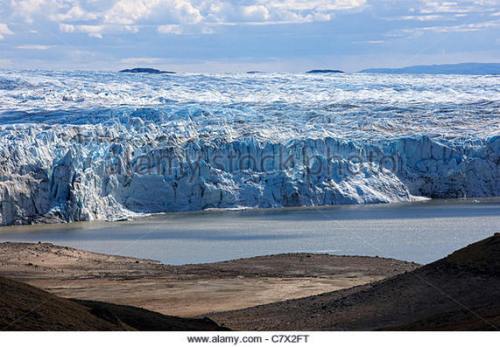 Russell Glacier
 Stranded Amtrak passenger train


 Desert Oasis


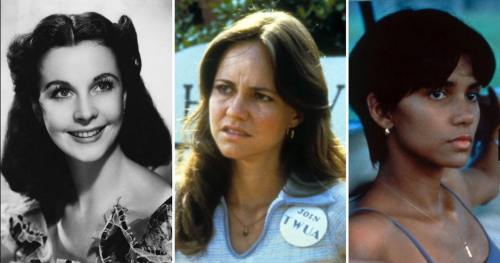 Oscar for best actress
 Field of Lavender Plants
