
Click the link below the picture
.
When Elon Musk took SpaceX public in June, a big part of its value proposition came from promises of data centers in space. Skeptics were quick to list all of the hurdles. This afternoon Google’s Project Suncatcher is scheduled to launch hardware in pursuit of the same idea: it will send artificial intelligence processors into orbit onboard—of all things—a SpaceX rocket.
That doesn’t mean Musk’s pitch will become reality anytime soon. If anything, the gulf between Suncatcher and a working data center in orbit suggests how far off that future still is. But as AI’s appetite for electricity tests the patience of communities being asked to feed it, some of the richest tech companies are racing to source their energy needs from space instead.
The test satellite will carry just four processors, which will be used to run Google’s Gemini AI models for 15 minutes at a stretch before they need to shut down and cool off. The ultimate goal is to establish a full-fledged orbital data center, built from constellations of thousands of satellites that will share the work of running AI models and beam their responses back to Earth.
The whole effort has less to do with what could be accomplished out in space than with what’s getting harder to achieve down here on Earth. Data centers are projected to use around 3 percent of the world’s electricity by 2030, roughly double their share today, according to an International Energy Agency report. In orbit, sunlight is abundant and free, and Google says a solar panel there generates up to eight times as much power as it would on the ground. “We have direct access to a wonderful renewable source of energy,” says Alexander Wyglinski, a professor of electrical and computer engineering at Worcester Polytechnic Institute.
There’s a political incentive to look beyond U.S. soil, too. As the data-center buildout grows more divisive, blasting that infrastructure into space and away from people’s backyards holds obvious appeal.
But scale is the main question, Google readily admits. The biggest AI data centers that are being built now pack in hundreds of thousands of chips and draw up to a gigawatt of power, several thousand times the output of the International Space Station’s solar arrays. Even getting enough solar panels into orbit would be a massive undertaking at that scale. “It’s going from arrays that are several meters on a side to arrays that are a couple of kilometers on a side,” says Kerri Cahoy, a professor of astronautics at the Massachusetts Institute of Technology. “Launching enough mass to generate the power is huge.”
The problems don’t end once everything is up there, either. Though space is cold, its vacuum is a lousy place to dissipate heat, which is why Suncatcher’s chips must clock out to cool down and why the satellites require specialized radiators. The whole satellite network needs to be resilient to space debris. And the cosmic radiation that Earth’s atmosphere filters out can scramble calculations, forcing systems to catch and correct errors on the fly. “When we talk about satellite platforms, and you put a computer into them, you don’t put [in] a computer like the one you have on your desk,” Wyglinski says.
For months before today’s launch, Google has been anticipating those problems on Earth, shaking spacecraft to simulate the launch and bombarding its chips with proton beams to test their response to radiation. “It’s about seeing what works, identifying points of failure and applying those findings to future missions,” says Travis Beals, a senior director at Google, who leads Project Suncatcher.
Even so, scaling up could force Google and SpaceX to confront some stubborn physics. Every chip and solar panel has to be hauled into orbit, and every answer those chips produce has to come back down.
Satellites can transmit data to Earth, but doing so at scale is expensive and difficult. “We don’t have the convenient, easy way to get that data back to the ground,” says Alan George, a professor of electrical and computer engineering at the University of Pittsburgh, who heads a National Science Foundation center focused on space computing. During the Cold War, the problem was bad enough that U.S. spy satellites parachuted exposed film back to Earth.
Computers on Earth relay information easily, and lasers have made it possible to do the same between spacecraft. But getting information between Earth and space is another story entirely, so it is best to process some of the information gathered on satellites before it is sent down to Earth. “I like to tell my students the best data compression is answers,” George says. While that logic could apply to AI responses, too, his work putting computers in space tells him that the resource constraints make it hard to match what “you would put down the street in a building.”
Google’s engineers say they began from a similarly skeptical premise. “As a first step, we tried to find reasons that it was impossible,” Beals says, “but we gradually became convinced that it might actually work.”
And then there’s the question that may ultimately decide the whole thing: How will the limited bandwidth and energy savings make up the maintenance costs?
he cost of launching data center satellites and replacing them as they wear out, along with the bottleneck of getting data back down, may eat up whatever the free sunshine saves. The competitors in the first space race were nations jockeying for scientific dominance. Orbital data centers are mainly being pitched by corporations, which tend to prefer profitable ventures. So even if Project Suncatcher solves its technical challenges, those physical limitations could still kill the idea before Google gets anywhere close to a full-blown data center in space.
More often than not, space throws up more challenges than early movers expect. “It’s usually the late entrants who finally figured out how to do it effectively,” Cahoy says. SpaceX itself didn’t reach orbit until half a century after Sputnik.
If she’s right, the company that eventually gets data centers in space to scale may not even have booked its ride to orbit yet.
.
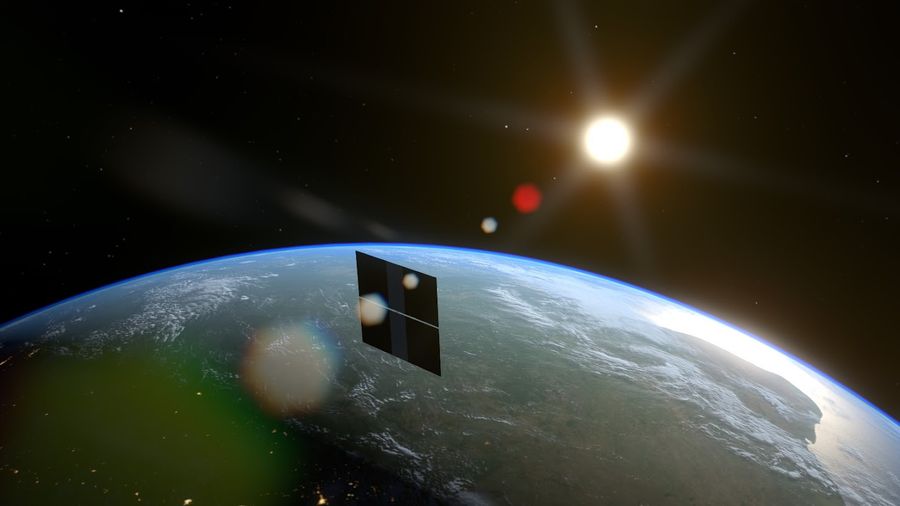
An artist’s rendition of a data center in space. Today Google is launching its own satellite equipped with artificial intelligence computing chips. This will be the first launch in the company’s experimental Project Suncatcher. Starcloud
.
.
Click the link below for the complete article:
.
__________________________________________


Leave a comment