Peggy Lipton, the actress and singer best known for her roles in The Mod Squad and Twin Peaks, has died at the age of 72.
Her death was announced on Saturday by her daughters Kidada and Rashida Jones. Lipton was diagnosed with colon cancer in 2004.
“She made her journey peacefully with her daughters and nieces by her side,” Her daughters said in a statement to the Los Angeles Times. “We feel so lucky for every moment we spent with her.”
Born Margaret Ann Lipton in New York City on Aug. 30, 1946, she began modeling at 15 and started acting at 19, making appearances on The John Forsythe Show, The Alfred Hitchcock Hour and Bewitched.
.
Peggy Lipton, star of the groundbreaking late 1960s show The Mod Squad and the 1990s show Twin Peaks, has died of cancer at age 72.
Fresh air and the endless green grasslands of the best preserved prairie in China, with hiking and visits to border towns that contain a curious mix of Chinese and Russian culture.
The Hulunbuir Prairie is located at the western foot of the Greater Xing’anling Mountains, near China’s border with Russia and Mongolia. Natural grassland occupies 80% of the whole area, making it the richest big prairie in China. The area is home to Hulun Lake, one of China’s largest freshwater lakes.
Hulunbuir is the main area for rearing livestock in Inner Mongolia. Except for the Greater Xing’anling and the Greater Green Mountains, most of the area is flat. The prairie stretches without end for mile after green mile, dotted by thousands of lakes.
The biodiversity of Hulunbuir makes it a natural treasure. More than 20 kinds of grass can be found in one square meter, making the prairie a vital habitat for dozens of species of mammals and hundreds of different kinds of birds.
Fifteen years ago, cybersecurity could be boiled down to a simple strategy: Secure the perimeter. Experts fought against malware and other nefarious code by implementing firewalls and other point-of-entry defenses. Since then, however, companies have moved their operations online and allowed employees to bring their own devices (BYOD) to work. The so-called perimeter has dissolved in the process, forcing security practitioners to prioritize tracking, understanding and ultimately making judgments about the information flowing both inside and outside of their company.
Many businesses use 10, 20 or 30 different security products to protect their systems. They all have advantages, and security practitioners will use different combinations to investigate a potential threat. If a team has access to 15 tools, for instance, one engineer might think to use three of them while another tries a completely different subset. There isn’t enough time to try them all, so experts pick products based on their experience and what they believe will be best suited to the task.
Tiffany Hensley’s drive home takes her through some picturesque scenery, and an ugly economy.
“The first thing you see when you get down here is beauty,” says Hensley, midway through her shift at a diner in the rolling hills of eastern Kentucky. “But then you get to looking around. It’s real rough.’’
Times are tough all across rural America. Nationwide numbers paint a rosy picture of accelerating growth and near-full employment. Swaths of the countryside tell a different story, its protagonists barely scraping by as their jobs drain away in the downturns and don’t come back in the booms.
The first time I truly took a break from social media was in 2015, at a summer camp for burned-out adults called “Camp Grounded.”
There were three rules: Take a camp name of your choosing, like Luna or Huckleberry, avoid talking about “W,” meaning work, and ditch all electronics at the door. At an arrival ceremony deep in the California Redwoods, volunteers in hazmat suits zipped up our devices into brown bags, leaving them locked away in a so-called “Robot Decontamination Area.”
That might seem extreme, a total gimmick.
But it prompted some deep discussion among my campmates. I recall arguing with friends about whether our experience was essentially a PG version of Burning Man, or a harbinger of something bigger, a growing discontent among millennials with social media.
It’s easy to be confused about how to grow in your career. My experience with even the most successful global companies is that they’re between average and poor at developing future talent. They’re often not transparent about your real needs and vague about the most effective development options.
The challenge is that you’re competing against every individual in your industry who wants to be a high performer. If you grow more capabilities more quickly than they do, you’ll perform better today, earn opportunities to perform better in the future, and a virtuous cycle will take hold. Development matters. So how can you chart the shortest, surest path to success?
Machines as intelligent as humans will be invented by 2029, predicts technologist Ray Kurzweil. “Nonsense,” retorts roboticist Rodney Brooks. By that time, he says, machines will only be as smart as a mouse. As for humanlike intelligence — that may arrive by 2200.
Between these two forecasts — machines with human intelligence in 11 or 182 years — lies much of the rest of the artificial intelligence community, a disputatious lot who disagree on nearly everything about their field, Martin Ford, author of “Architects of Intelligence,” tells Axios.
“Rise of the Robots” is a best-selling and well-reviewed book about a dystopian 2015 tract on the coming state of working humans in the new age of automation.
Today, he follows it up with “Architects of Intelligence,” a collection of interviews he conducted over the last year with almost two dozen of the West’s most illustrious artificial intelligence hands.
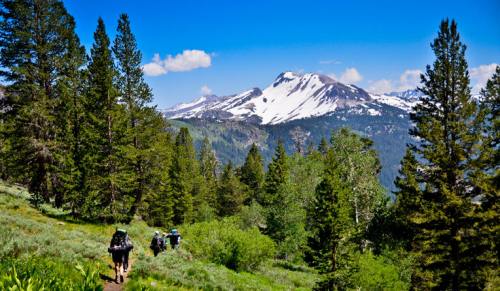
The Pacific Crest Trail, officially designated as the Pacific Crest National Scenic Trail (PCT) is a long-distance hiking and equestrian trail closely aligned with the highest portion of the Sierra Nevada and Cascade mountain ranges, which lie 100 to 150 miles (160 to 240 km) east of the U.S. Pacific coast.
Film and Writing Festival for Comedy. Showcasing best of comedy short films at the FEEDBACK Film Festival. Plus, showcasing best of comedy novels, short stories, poems, screenplays (TV, short, feature) at the festival performed by professional actors.




 Hulunbuir Grasslands Flowers
 Cybersecurity


 .
.
 franckreporter/Getty Images

 An image of the Pacific Crest Trail
