If you’re a consumer, the 5G horizon seems to be getting closer by the day as vendors begin shipping 5G-capable handsets and telecom operators refine their buildout plans.
But as the pace gradually quickens, one thing is clear: The transition to 5G won’t look anything like 3G and 4G migrations. To a certain extent, 5G will expand the speed-and-performance curve just as 3G and 4G did. And sure, we’ll have fancy new 5G phones in a couple of years, but we’re not where the real action is going to be. Because this isn’t going to be a consumer revolution at all. Rather, it’ll be an enterprise one.
How much more?
For now, radically new 5G use-cases for consumers are relatively hard to find. Today’s 4G devices and networks already deliver rich, immersive experiences, so most consumers are not compelled to pay more for 5G when they’re still focused on getting more gigabytes for their hard-earned subscription dollar.
Sleep scientist Matthew Walker has observed that “human beings are the only species that deliberately deprive themselves of sleep for no apparent gain.” We stay up late to watch our favorite TV shows. We wake up early to get to work or school on time. And twice a year we change our clocks, to the bewilderment of our circadian rhythms.
We also set up conflicts between our natural and social clocks in other, less obvious ways, a fact underscored in research published this month in the Journal of Health Economics. It turns out, the study found, that living on the wrong side of a time zone’s boundary can have negative consequences on a person’s health and wallet.
The culprit? More natural light in the evening hours.
A few years ago, I read reports of an indigenous tribe living deep in the Amazon rainforest whose members had hardly any evidence of heart disease. In fact, the researchers concluded after a year-long study that the Tsimane, as they are called, had the healthiest hearts in the world, a title previously held by Japanese women.
Preventing heart disease is a topic I think about all the time, given my own significant family history of heart disease. Like many people, I worried that it was inevitable for me. So last summer, I decided to travel to Bolivia, one of the poorest countries in South America, to learn what they could teach me and the rest of the world about preventing heart disease.
.
Getting to the Tsimane wasn’t easy. After flying into La Paz, the highest capital city in the world at nearly 12,000 feet above sea level, we took a small prop plane to Rurrenabaque, a small town in the lowlands of northern Bolivia, along the Beni River and at the edge of the Amazon rainforest. We drove 4×4 trucks as far as we could into the forest and then jumped into dug-out canoes and made our way down the rivers and streams of the Amazon.
.
Sanjay Gupta discovers the surprising secret to this tribe’s health
A Chicago bank chairman has been indicted in Manhattan on a charge that he issued millions of dollars in high-risk loans to President Trump’s former campaign chairman, Paul Manafort, in an effort to obtain a senior position in the administration, federal authorities said on Thursday.
Prosecutors said the chairman, Stephen M. Calk of Federal Savings Bank, pushed the bank to give Mr. Manafort $16 million in loans in 2016 in exchange for help in procuring an appointment for Mr. Calk.
Just after the election, Mr. Calk, 54, sent Mr. Manafort a list of 10 positions ranked in order of preference, including Treasury secretary, commerce secretary and defense secretary, according to the indictment unsealed in Federal District Court.
.
Stephen M. Calk leaving Federal District Court in Manhattan on Thursday. Mr. Calk sent Paul Manafort a list of 10 positions he wanted in the administration, according to an indictment.CreditCreditJefferson Siegel for The New York Times
It was 2014. I was 20 and struggling at my new job as a receptionist in a law firm. My boyfriend, with whom I lived, was becoming increasingly abusive. I concealed my tears by pretending to search under my desk while I cried. Fortunately, I made a friendly acquaintance.
He would frequently stop by my desk and eventually we started hanging out ― we stopped for dinner after work (Indian food); I played him a new single I liked (“Came Back Haunted” by Nine Inch Nails). I grew to trust him as a mentor and friend.
One night, I sat in his living room, crying into a microbrew about my home life. I had never been drunk before, so red flags did not go off when I began stumbling to get to the bathroom after only two and a half drinks. I soon began fading in and out of consciousness.
The Stelton colony in central New Jersey was founded in 1915. Humble cottages (some little more than shacks) and a smattering of public buildings ranged over a 140-acre tract of scrubland a few miles north of New Brunswick. Unlike America’s better-known experimental settlements of the nineteenth century, rather than a refuge for a devout religious sect, Stelton was a hive of political radicals, where federal agents came snooping during the Red Scare of 1919-1920. But it was also a suburb, a community of people who moved out of the city for the sake of their children’s education and to enjoy a little land and peace. They were not even the first people to come to the area with the same idea: There was already a German socialist enclave nearby, called Fellowship Farm.
The founders of Stelton were anarchists. In the twenty-first century, the word “anarchism” evokes images of masked antifa facing off against neo-Nazis. What it meant in the early twentieth century was different, and not easily defined. The anarchist movement emerged in the mid-nineteenth century alongside Marxism, and the two were allied for a time before a decisive split in 1872. Anarchist leader Mikhail Bakunin rejected the authority of any state — even a worker-led state, as Marx envisioned — and therefore urged abstention from political engagement. Engels railed against this as a “swindle.”
.
A matchbook ad for Pennsylvania Railroad, 1940. Jim Heimann Collection / Getty.
People rarely follow a doctor’s orders to the letter.
We often seek treatments that meet our preferences, and bend them around our personal routines and responsibilities.
This isn’t necessarily a problem. A treatment you don’t (or can’t) follow won’t help you, so the odds are better if you pick one you can.
In addition, not every treatment works for everyone — sometimes the best treatment we have works for just one of 10 people.
These truths came to mind as I recently addressed my plantar fasciitis — an injury to the tissue in the underside of the foot causing heel pain and afflicting about 10 percent of the population. I’d unwisely been trying for about six months to ignore the condition in both my feet. I kept walking to work and standing once I got there (by choice — I have a desk job) despite the discomfort.
.
About 10 percent of the population experiences plantar fasciitis, an injury to the underside of the foot that causes heel pain.CreditCreditJanet Worne for The New York Times
It was clear from the very beginning that rapper Nipsey Hussle was going to make it a priority to talk about investing in South Los Angeles.
In what is perhaps his first on-camera interview, at the Russell Simmons’ Get Your Money Right summit in 2006, Hussle spoke plainly about leaving behind the material things synonymous with hip-hop lifestyle — the diamonds, the flashy cars — to secure the financial future of his family and people in his community.
“How come you not blingin‘ and having all kind of crazy diamonds and all that,” hip-hop journalist Davey D asked Hussle, who if you squint and think back to 1993, might remind you of a young Snoop Dogg. “I guess you here to get your money, right?”
“I’d rather invest in some real estate,” Hussle said.
“So you trying to get land?” Davey D asked.
“Exactly, homie, a real asset to take care of my people,” Hussle said matter-of-factly.
.
Nipsey Hussle performs onstage at the STAPLES Center Concert during the 2018 BET Experience on June 23, 2018 in Los Angeles.Ser Baffo / Getty Images for BET file
Back in the 1960s, a Harvard graduate student made a landmark discovery about the nature of human anger.
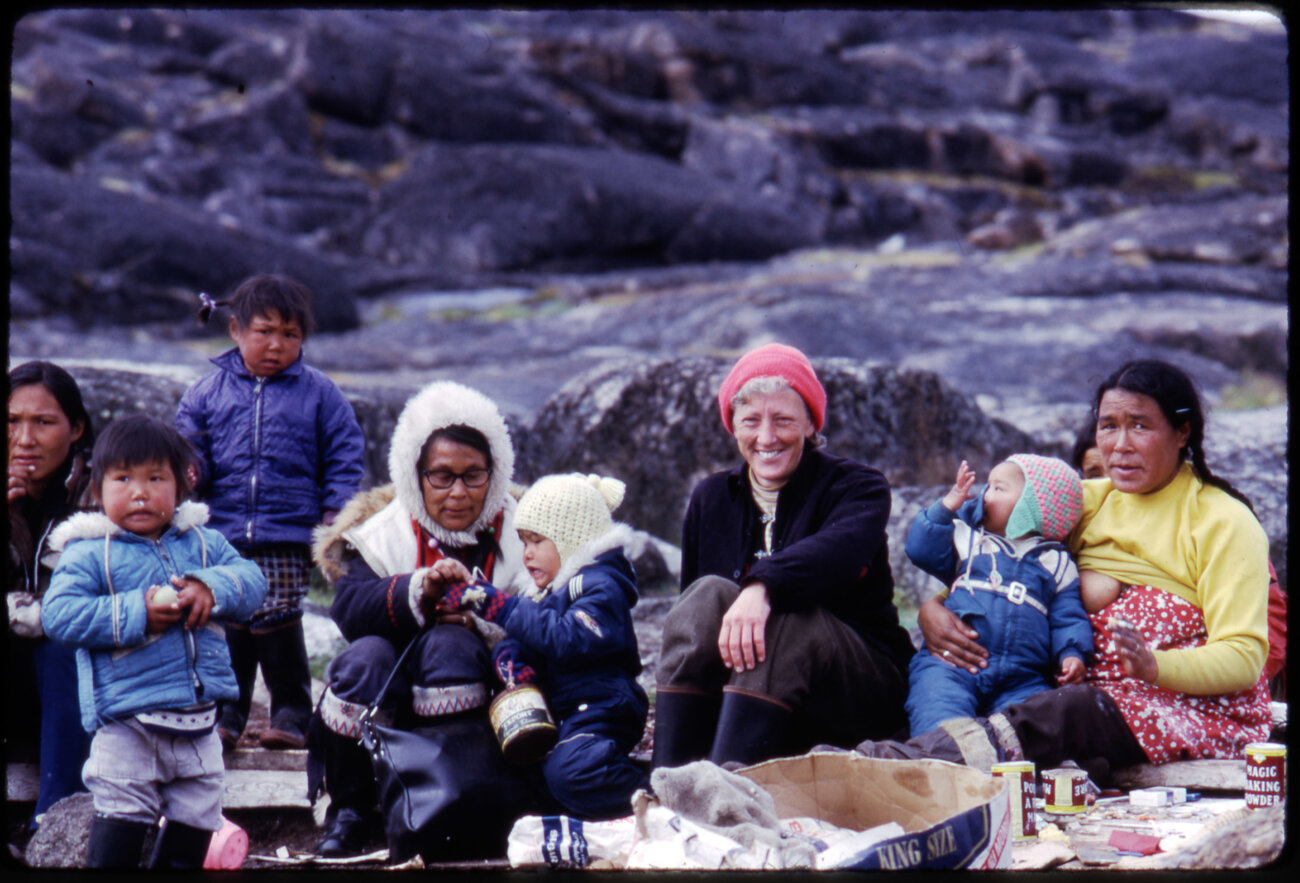
At age 34, Jean Briggs traveled above the Arctic Circle and lived out on the tundra for 17 months. There were no roads, no heating systems, no grocery stores. Winter temperatures could easily dip below minus 40 degrees Fahrenheit.
Briggs persuaded an Inuit family to “adopt” her and “try to keep her alive,” as the anthropologist wrote in 1970.
At the time, many Inuit families lived similar to the way their ancestors had for thousands of years. They built igloos in the winter and tents in the summer. “And we ate only what the animals provided, such as fish, seal and caribou,” says Myna Ishulutak, a film producer and language teacher who lived a similar lifestyle as a young girl.
.
For more than 30 years, the Inuit welcomed anthropologist Jean Briggs into their lives so she could study how they raise their children. Briggs is pictured during a 1974 visit to Baffin Island.
Jean Briggs Collection / American Philosophical Society
Film and Writing Festival for Comedy. Showcasing best of comedy short films at the FEEDBACK Film Festival. Plus, showcasing best of comedy novels, short stories, poems, screenplays (TV, short, feature) at the festival performed by professional actors.

 The key to 5G success
 The wrong side of a time zone






 An image of
 A matchbook ad for Pennsylvania Railroad, 1940. Jim Heimann Collection / Getty.