
.
News You might have missed!
Use your browser or smartphone back arrow (<-) to return to this table for your next selection.
.
__________________________________________
Assorted human interest posts.
August 25, 2021
Crime, Food For Thought, Human Interest, Medical, missed News, Political, Science, Technical amazon, business, Business News, current-events, Future, Hotels, human-rights, medicine, mental-health, research, Science, Science News, technology, Technology News, travel, vacation Leave a comment
.
.
__________________________________________
August 24, 2021
Business, Enthralling, Human Interest, Photographs amazon, business, Business News, current-events, Future, Hotels, human-rights, medicine, mental-health, research, Science, Science News, technology, Technology News, travel, vacation 3 Comments

Click the link below the picture
.
The Brecon Beacons National Park is one of three national parks in Wales and is centered on the Brecon Beacons range of hills in southern Wales. It includes the Black Mountain in the west, Fforest Fawr (Great Forest) and the Brecon Beacons in the center, and the Black Mountains in the east.
The Brecon Beacons National Park was established in 1957, the third of the three Welsh parks after Snowdonia in 1951, and the Pembrokeshire Coast in 1952. It stretches from Llandeilo in the west to Hay-on-Wye in the northeast and Pontypool in the southeast, covering 519 square miles (1,340 km2) and encompassing four main regions – the Black Mountain in the west, reaching 802 meters (2631 feet) at Fan Brycheiniog, Fforest Fawr and the Brecon Beacons in the center, including the highest summit in the park and in South Wales at Pen y Fan 886 meters (2,907 feet) and the confusingly named Black Mountains in the east, where the highest point is Waun Fach 811 meters (2,661 feet). The western half gained European and global status in 2005 as Fforest Fawr Geopark. This includes the Black Mountain, the historic extent of Fforest Fawr, and much of the Brecon Beacons and surrounding lowlands.
The Black Mountains in the east are clearly separated from the central Beacons by the Usk valley between Brecon and Abergavenny. The other three regions form a continuous massif of high ground above 300 meters (1000′), and the divisions are less clear; the A470 road forms the approximate boundary between the central Beacons and Fforest Fawr, while a minor road from Sennybridge to Ystradgynlais divides Fforest Fawr from the Black Mountain range to the west. Wikipedia
.
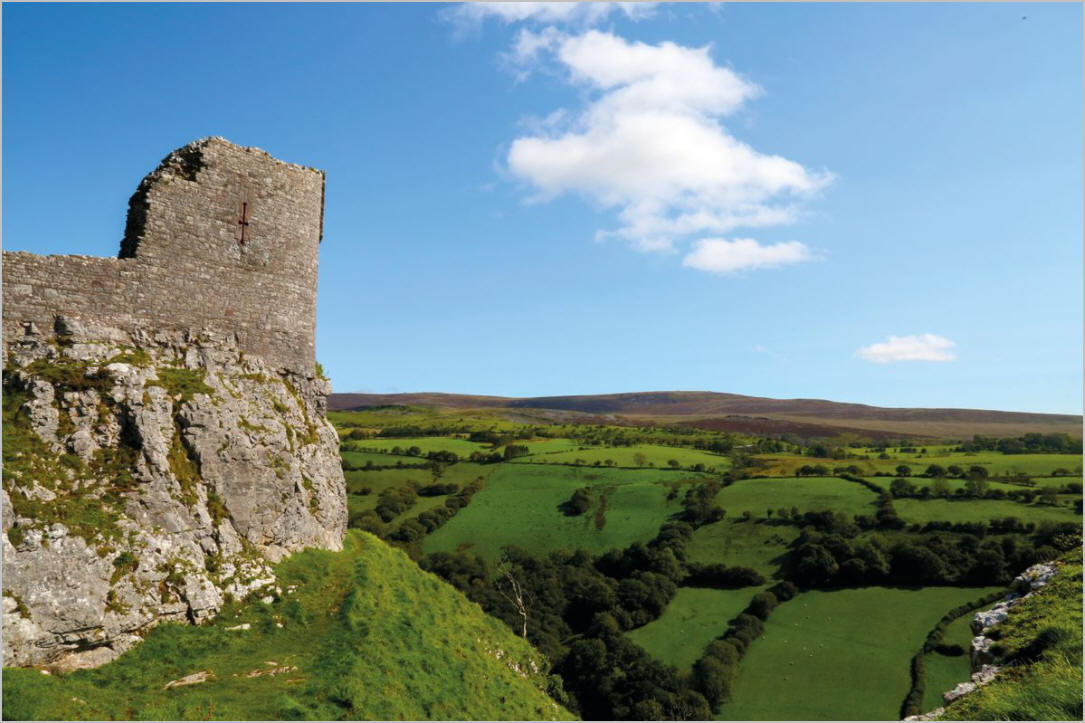 An image from Beacons, Wales
.
.
Click the link below for images:
.
__________________________________________
August 24, 2021
Business, Food For Thought, Human Interest, Science, Technical amazon, business, Business News, current-events, Future, Hotels, human-rights, medicine, mental-health, research, Science, Science News, technology, Technology News, travel, vacation Leave a comment

Click the link below the picture
.
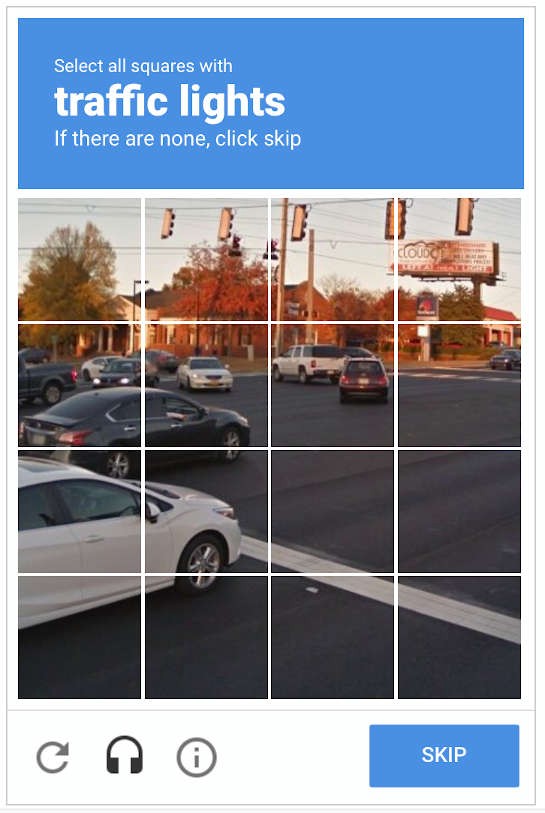
I hate doing Google’s CAPTCHAs.
Part of it is the sheer hassle of repeatedly identifying objects — traffic lights, staircases, palm trees, and buses — just so I can finish a web search. I also don’t like being forced to donate free labor to AI companies to help train their visual-recognition systems.
But a while ago, while numbly clicking on grainy images of fire hydrants, I was struck by another reason:
The images are deeply, overwhelmingly depressing.
CAPTCHA images are never joyful vistas of human activity, full of Whitmanesque vigor. No, they’re blurry, anonymous landscapes that possess positively Soviet anomie.
.
.
.
Click the link below for the article:
.
__________________________________________
August 24, 2021
Business, Food For Thought, Human Interest, Science, Technical amazon, business, Business News, current-events, Future, Hotels, human-rights, medicine, mental-health, research, Science, Science News, technology, Technology News, travel, vacation Leave a comment

Click the link below the picture
.
Even iPhone users with nothing to hide could be forgiven for being a little creeped out that Apple will scan their photos and see if they match existing databases of known illegal pornographic images. Privacy experts called the idea a potential back door for governments to request or demand scans for other images or files. Some of Apple’s own employees are reportedly pushing back on the idea.
It’s a good indication that things are headed in the wrong direction when your company’s anti-child-pornography initiative gets panned.
A major reason for the failure of Apple’s defense is that the photo-scanning program confirms a fear many users already harbor: Personal data, even the most sensitive, is effectively out of users’ control, accessible at the flip of a switch.
Apple says, relentlessly, that privacy is the central feature of its iPhones. But as the photo scanning demonstrates, that’s true only until the company changes its mind about its policies.
.
 Credit…Shawn Michael Jones
.
.
Click the link below for the article:
.
__________________________________________
August 24, 2021
Crime, Food For Thought, Human Interest, Medical, missed News, Political, Science, Technical amazon, business, Business News, current-events, Future, Hotels, human-rights, medicine, mental-health, research, Science, Science News, technology, Technology News, travel, vacation Leave a comment
.
.
__________________________________________
August 23, 2021
Business, Enthralling, Human Interest, Photographs amazon, business, Business News, current-events, Future, Hotels, human-rights, medicine, mental-health, research, Science, Science News, technology, Technology News, travel, vacation Leave a comment
Click the link below the picture
.
Colombia, officially the Republic of Colombia, is a country in South America. It is bounded on the north by the Caribbean Sea, the northwest by Panama, the south by Ecuador and Peru, the east by Venezuela, the southeast by Brazil, and the west by the Pacific Ocean. Colombia is composed of 32 departments and the Capital District of Bogotá, the country’s largest city. It covers an area of 1,141,748 square kilometers (440,831 sq mi), with a population of 50 million. Colombia’s rich cultural heritage reflects influences by various Amerindian civilizations, European settlement, African slaves, and immigration from Europe and the Middle East. Spanish is the nation’s official language, besides which over 70 languages are spoken.
Colombia has been inhabited by various indigenous peoples since at least 12,000 BCE, including the Muisca, Quimbaya, and the Tairona. The Spanish landed first in La Guajira in 1499 and by the mid-16th century colonized parts of the region, establishing the New Kingdom of Granada, with Santafé de Bogotá as its capital. Independence from the Spanish Empire was achieved in 1810, with what is now Colombia emerging as the United Provinces of New Granada. The new nation experimented with federalism as the Granadine Confederation (1858), and then the United States of Colombia (1863), before the Republic of Colombia was finally declared in 1886. Panama seceded in 1903, leading to Colombia’s present borders. Beginning in the 1960s, the country has suffered from an asymmetric low-intensity armed conflict and political violence, both of which escalated in the 1990s. Since 2005, there has been significant improvement in security, stability, and rule of law, as well as unprecedented economic growth and development.
.
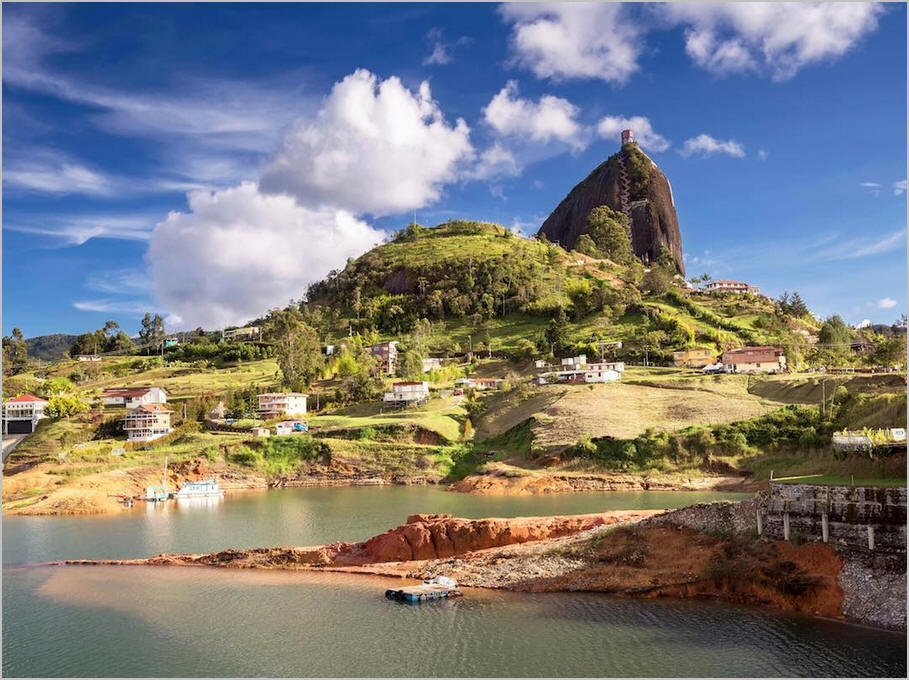 An image from Colombia Scenery
.
.
Click the link below for images:
.
__________________________________________
August 23, 2021
Arts, Business, Food For Thought, Human Interest, Technical amazon, business, Business News, current-events, Future, Hotels, human-rights, medicine, mental-health, research, Science, Science News, technology, Technology News, travel, vacation Leave a comment

Click the link below the picture
.
In 1985, Atlantic Records released one of the best hits collections ever compiled, Aretha Franklin’s 30 Greatest Hits. Covering just the years 1967 through 1974, it features one immortal track after another, songs the radio hasn’t really stopped playing since their release — some of which have come to define a whole era. But if there’s a problem with having a couple of-dozen-and-change hits that everyone knows, it’s that they can overshadow everything else an artist recorded. 30 Greatest Hits and its streaming-era descendants like Spotify’s “This Is Aretha Franklin” playlist understandably lean heavily on Franklin’s best-known tracks, as does the new Jennifer Hudson-starring biopic Respect. But you could wipe them from existence and still be left with a remarkable body of work. So consider this list a kind of alternate universe version of 30 Greatest Hits, an imaginary album beamed in from a world in which “Respect” and “(You Make Me Feel Like) A Natural Woman” never existed or at least took a back seat to some of the album tracks, one-off singles, and unreleased-in-their-time tunes featured here.
.
 Aretha Franklin performs in Los Angeles, May 16, 1975.Getty Images
.
.
Click the link below for the article:
.
__________________________________________
August 23, 2021
Business, Food For Thought, Human Interest, Medical, Science, Technical amazon, business, Business News, current-events, Future, Hotels, human-rights, medicine, mental-health, research, Science, Science News, technology, Technology News, travel, vacation Leave a comment

Click the link below the picture
.
For someone who played sports throughout the majority of her life, I admit I was never good at portion control or exercising for weight loss. My teammates were extremely lean while I looked — as my brother would say — chonky.
I didn’t have the best relationship with my body so I wanted to slim down and feel better about it, but I couldn’t find anything in the U.S that I felt like I could realistically accomplish. To be honest, the fitness culture in this country scares me. I knew I didn’t want to drink Kombucha every day or attend expensive SoulCycle classes for the rest of my life.
When I lived in Japan for a couple of years, I was shocked by the not-so-intense fitness culture. None of my peers went to the gym, drank protein smoothies, or ate granola bars for meals. Throughout my time learning about their culture, I realized that the health culture in Japan gravitates towards prevention rather than cure, which is different from the US philosophy. Rather than overworking the body to compensate for the overconsumption of high-calorie food, Japanese people eat balanced meals and walk miles for commute every day. Not many people go to the gym or buy expensive products to sustain their healthy lifestyle because their daily routine is already healthy.
.
 Source: Diana Polekhina / Unsplash
.
.
Click the link below for the article:
.
__________________________________________
August 23, 2021
Crime, Enthralling, Food For Thought, Human Interest, Medical, missed News, Political, Science, Technical amazon, business, Business News, current-events, Future, Hotels, human-rights, medicine, mental-health, research, Science, Science News, technology, Technology News, travel, vacation Leave a comment
.
.
__________________________________________
August 22, 2021
Business, Finance, Food For Thought, Human Interest, Science, Technical amazon, business, Business News, current-events, Future, Hotels, human-rights, medicine, mental-health, research, Science, Science News, technology, Technology News, travel, vacation Leave a comment

Click the link below the picture
.
There’s one question I hear as a personal finance writer more than any other. It’s not how to game the stock market, or become a billionaire—it’s simply how to make a budget work while still saving enough to retire comfortably.
And of course, it’s simple: Change your habits so you can put money aside for the things that matter to you. But that’s also really, really hard to do.
That’s because understanding personal finance is an uphill battle for many Americans. We’re not taught about the practicalities of money in school, because the truth is many industries profit from our ignorance. While wages have hardly budged in decades, shareholders and CEOs have never been richer. The cost of living in many major cities is prohibitive to just about anyone but the super privileged, or those willing to take on a lot of debt or make enormous sacrifices. While the stock market soars, just 52% of U.S. adults actually owned stock in 2016, according to Gallup, and the wealthiest 1% of households owned 38% of all stock shares in 2013. The government is actively working against consumers to make it easier for financial institutions to prey on its citizens, and a single medical bill can send a person into debt for the rest of their life.
.
 Paramount
.
.
Click the link below for the article:
.
__________________________________________
Find the Best Forex Broker for Your Trading Success
AS HUMILDES OPINIÕES DE UMA MULHER DE CORAGEM QUE DIZ SIM À VIDA!
Să facem glume, nu război
In the world, human beings are facing various problems. People who are full of greed, anger, and ignorance are seen to be fighting with each other in words and deeds. As the fighting continues, various problems such as civil wars, wars of aggression, and wars of aggression are occurring. As world peace is being destroyed, humans are facing unbearable problems. Innocent children and women are not getting the rights they deserve and deserve. I can't think of one thing every time. What is it? The United Nations. If we look at the responsibilities and duties of the United Nations, I think it is not suitable for solving the problems that are happening in the world today. In fact, the United Nations and the World Security Council, such an organization must rule the world, must be able to give orders, and must have various ways to obey orders. There must be no organization that can influence more than that organization. There should be experts from each country. They can even dominate the superpowers like the US, China, and Britain. Only then will global peace be achieved quickly. Now, if a country with power develops more militarily, economically, or socially than its own country, then powerful countries will jealously seek out enemies and wage war. Or they will attack with fighter jets. In this, innocent people are losing their lives. No one understands the value of a life. You should think about how to achieve global peace by controlling these. If the US continues to be the permanent president of the UN, world peace will never be achieved. If you think carefully, no one sees that they are working for the common good, but for their own benefit, for the benefit of their own country. The permanent president of the UN and the Security Council has rejected this, As a young Rohingya, I have come to realize that only by electing the president and secretary from among the countries in the world through a secret ballot system and governing the world fairly can we achieve global peace. The United Nations and the Security Council are organizations in which any country must govern, give orders, and make them obey their orders. For example, only when a defendant is tried in court can we hold the leaders of the countries in check and control them, can we achieve global peace smoothly. Otherwise, it will not be easy for powerful countries to use various excuses to end this war every year, every year, for the benefit of themselves and their countries. No country's leaders pay any attention to the words of the United Nations and the Security Council. If we look at it in practice, look at the Rohingya issue. Myanmar is a small country. Even that country has been under siege for 8 years. What action can be taken? Why is the UN and the Security Council Powerless? Without such Power, how can the organization bring about global peace? Everyone should think about it. Whether there is a veto or a strong one, all countries in the world can only achieve global peace if they are subject to the UN and the Security Council. Seek peace in the quiet embrace of nature. Peace is an indispensable need of the human race. It is not as if one person can kill another person, and it is as if one country can attack another country, but instead of trying to build peace, we must try to destroy the peace now, and the world is getting hotter and is on the verge of collapse. I especially appeal to all the world experts to urgently try to bring about peace in all parts of the world. Mr, Noor Muhamed Arkhan Rohingya Youth Myanmar
Publicație umoristică dedicată glumeților de pretutindeni
Faith saved us from the savages that we were, losing faith makes us savages again
Where Trends Meet Truth
https://www.tangietwoods
Freelance poetry writing
Zalai Betti
INOVATION BLOG PEOPLE AND NEWS
Németh György
Konsultan Lingkungan Hidup di Lombok - NTB
Lea Krasznai (LeaArt21) – Idezetek (Idézetek) WordPress (Budapest, Hungary)
Appunti, spunti e passioni in liberta'
Gyorgy Nemeth
تعنى بتقديم نصائح للمعلمين المبتدئين، والطلبة الممتحنين، ومشاركة الاخرين تجربة الادخار في المال، بترشيد الاستهلاك المنزلي، وترتيب البيت، والحفاظ على البيئة، وتشجيع السيارات صديقةالبيئة، والسياحة والاسفار، ونماء رؤوس الاموال، والطب البديل وتشجيع التعليم الرقمي والذكاء الاصطناعي، والعناية بالنحل وتربية الاسماك، والاسثمار في رؤوس الاموال، الزراعة العضوية، والعناية باسنان الرضع، و صحة الحوامل، وتفسير القران
apprendre pour évoluer
Thoughts on books, language, meaning, and the culture around it.
Outdoor Recreation & Adventure in the Great Lakes Region
News, Info, Bio, Articles, Reviews, Lyrics, Technology, Science, Inspiration, Motivation, Philosphy and many more...
Christian Lifestyle Blogger
CEO and president of The Mullins Companies
Two Cultures. One Life. Endless Stories
Real Estate Development Specialist
¡Bienvenido de vuelta viajero!
so looking to the sky ¡ sing and from my heart to YOU ¡ bring...
CEO and Founder of Nsight Health
Catholic News, Prayers, HD Images, Rosary, Music, Videos, Holy Mass, Homily, Saints, Lyrics, Novenas, Retreats, Talks, Devotionals and Many More
Decoding Power. Defying Narratives.
A creative collaboration introducing the art of nature and nature's art.
The Home Of Entertainment News, Reviews and Reactions
•Whenever you are confronted with an opponent, conquer him with love.(Gandhi)
Algotrader at TRADING-CLUBS.COM
Film and Writing Festival for Comedy. Showcasing best of comedy short films at the FEEDBACK Film Festival. Plus, showcasing best of comedy novels, short stories, poems, screenplays (TV, short, feature) at the festival performed by professional actors.
Peace. Tranquility. Insanity.
Take a ride on the wild side
Découvre des musiques prometteuses (principalement) dans la sphère musicale française.
No tiene que Ser una Pesadilla.
Life in Kana-text (er... CONtext)
Where feelings meet metaphors and make questionable choices.
Finding hope and peace through writing, art, photography, and faith in Jesus.

