February 22, 2022
Mohenjo
Business, Food For Thought, Human Interest, Science, Technical
amazon, business, Business News, current-events, Future, Hotels, human-rights, medicine, mental-health, research, Science, Science News, technology, Technology News, travel, vacation

Click the link below the picture
.
It’s been said that Marie Antoinette’s hair turned white the night before she was beheaded. The assumption is that the stress caused by her impending date with doom caused her locks to lose their color within hours. For what it’s worth, most scientists debunk the story but at the same time, do acknowledge that stress can play a role in the gradual process of hair turning gray.
Women start to go gray around age 35; men turn silvery around age 30. Depending on genes and overall health, gray hairs can make their first appearance in high school or come as late as age 50 for some people.
To understand whether your teenager can actually be blamed for causing you to go gray, you need to understand a bit of our physiology. A typical human head has about 100,000 follicles, each one capable of sprouting several hairs in a lifetime. At the bottom of each follicle is a little hair-growing factory where cells work together to assemble colored hair. The color comes from a pigment called melanin. Hair that has lost most of its melanin is gray; hair that has lost all of its melanin is white.
.
 Gray Hair
.
.
Click the link below for the article:
.
__________________________________________
February 22, 2022
Mohenjo
Arts, Crime, Food For Thought, Human Interest, Medical, missed News, Political, Science, Technical
amazon, business, Business News, current-events, Future, Hotels, human-rights, medicine, mental-health, research, Science, Science News, technology, Technology News, travel, vacation

.
News You might have missed!
Use your browser or smartphone back arrow (<-) to return to this table for your next selection.
.
__________________________________________
February 21, 2022
Mohenjo
Business, Enthralling, Human Interest, Photographs
amazon, business, Business News, current-events, Future, Hotels, human-rights, medicine, mental-health, research, Science, Science News, technology, Technology News, travel, vacation

Click the link below the picture
.
Ottawa is the capital city of Canada. Located on the south bank of the Ottawa River in the southern portion of the province of Ontario, Ottawa borders Gatineau, Quebec, and forms the core of the Ottawa–Gatineau census metropolitan area (CMA) and the National Capital Region (NCR). As of 2021, Ottawa had a city population of 1,017,449 and a metropolitan population of 1,488,307, making it the fourth-largest city and fourth-largest metropolitan area in Canada.
Founded in 1826 as Bytown, and incorporated as Ottawa in 1855, the city has evolved into the political center of Canada. Its original boundaries were expanded through numerous annexations and were ultimately replaced by a new city incorporation and amalgamation in 2001 which significantly increased its land area.
Ottawa has the most educated population among Canadian cities and is home to a number of colleges and universities, research and cultural institutions, including the University of Ottawa, Carleton University, the National Arts Centre, the National Gallery of Canada, and numerous national museums.
The city name Ottawa was chosen in reference to the Ottawa River, the name of which is derived from the Algonquin Odawa, meaning “to trade”. The city’s modern name in Algonquin language is Odàwàg. Ottawa is built on unceded Algonquin Anishinaabe territory, as Canada has never signed any treaty with the Algonquin Nation.
With the draining of the Champlain Sea around ten thousand years ago, the Ottawa Valley became habitable. Local populations used the area for wild edible harvesting, hunting, fishing, trade, travel, and camps for over 6,500 years. Ottawa is situated on the traditional land of the Algonquins, Indigenous peoples who are closely related to the Odawa and Ojibwe peoples. The Algonquins call the Ottawa River Kichi Sibi or Kichissippi meaning “Great River” or “Grand River”. The Ottawa River valley has archeological sites with arrowheads, pottery, and stone tools. Three major rivers meet within Ottawa, making it an important trade and travel area for thousands of years. Wikipedia
.
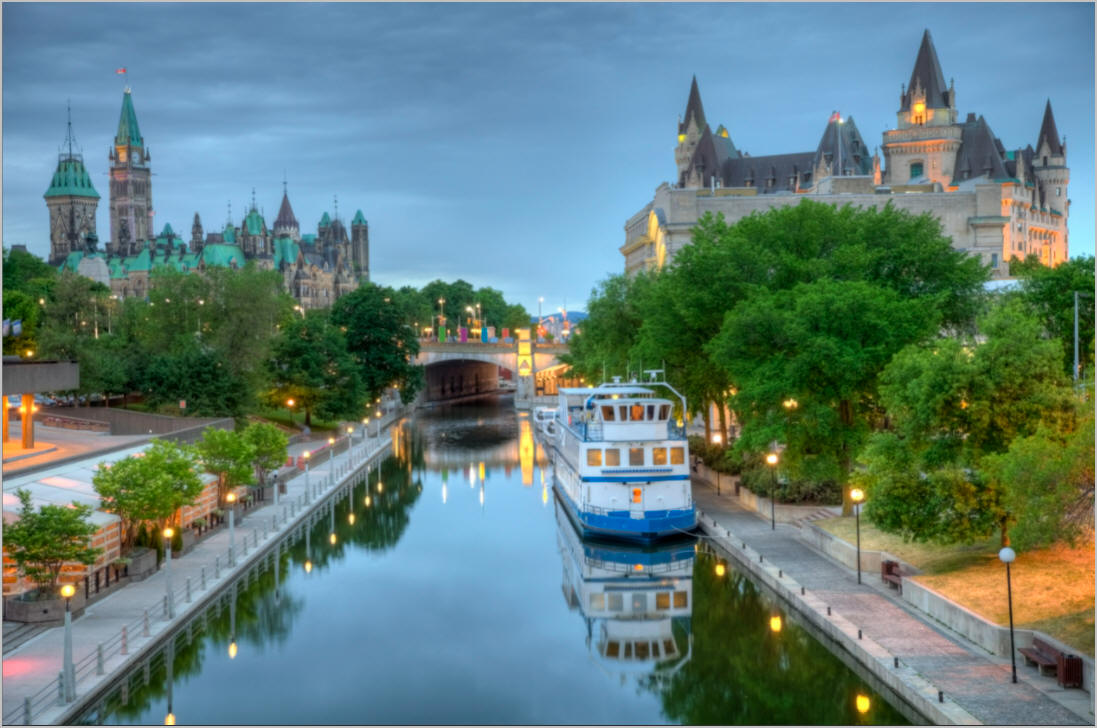 An image from Ottawa, Canada
.
.
Click the link below for images:
.
__________________________________________
February 21, 2022
Mohenjo
Business, Food For Thought, Human Interest, Political, Science, Technical
amazon, business, Business News, current-events, Future, Hotels, human-rights, medicine, mental-health, research, Science, Science News, technology, Technology News, travel, vacation

Click the link below the picture
.
It might have been a barking dog, or a crashed drone, or overheard chatter on walkie-talkies. But multiple military and intelligence sources told NBC News that something tipped off the terrorist targets of an early-morning raid by the U.S. and its allies in Yemen on Sunday, and all hell broke loose.
A well-rehearsed mission that was supposed to extract computers and other intelligence from an al Qaeda camp near a mountain village turned into a massive firefight involving Harrier jets, helicopter gunships, and gun-wielding jihadi women that killed one Navy SEAL, 14 al Qaeda fighters and, allegedly, non-combatant women and children.
According to a senior military official, one of the dead was an 8-year-old American girl, the daughter of U.S.-born al Qaeda leader Anwar al-Awlaki, who himself was killed in a U.S. strike in Yemen in 2011.
President Donald Trump declared Sunday’s mission a success, and the Pentagon released a statement Wednesday that said U.S. forces had captured “materials and information that is yielding valuable intelligence.”
But a senior military official told NBC News “almost everything went wrong.” A senior intelligence official with direct knowledge of the operation said it’s not yet clear if the mission was a success. “We went in with the intent of capturing phones and computers and we don’t know yet if anything of great value was obtained,” the official said.
.
 An image of 8-year-old Nora Anwar Al-Awlaki, who was killed in a raid in Yemen ordered by President Trump.Yemeni media / via Twitter
.
.
Click the link below for the article:
.
__________________________________________
February 21, 2022
Mohenjo
Business, Food For Thought, Human Interest, Science, Technical
amazon, business, Business News, current-events, Future, Hotels, human-rights, medicine, mental-health, research, Science, Science News, technology, Technology News, travel, vacation

Click the link below the picture
.
NASA’s advanced Kepler Space Telescope has been on the hunt for Earth-like planets in recent months, however, none have been capable of sustaining forms of life due to variables like a lack of water, an atmosphere that can’t support life, or harsh temperatures. However, CNN reported Thursday researchers have found two new planets — one on the edge of Earth’s solar system about 39 light-years away, another just outside of the region — that may be the first of their kind capable of hosting alien forms.”We haven’t even found anything close to this so far,” University of Maryland astronomer Drake Deming told CNN. “It’s more habitable, it’s less harsh and this gives us a good strong chance of actually finding life or something as opposed to the other Earth-like planets found to date.”
The planet nearest the solar system, dubbed GJ 1132b, is rocky, slightly bigger than Earth with 1.6 times the mass, and maintains a temperature of 260 degrees Celsius. “Our ultimate goal is to find a twin Earth, but along the way we’ve found a twin Venus,” Harvard-Smithsonian Center for Astrophysics astronomer David Charbonneau told Telegraph. “We suspect it will have a Venus-like atmosphere too, and if it does we can’t wait to get a whiff.”
“If we find this pretty hot planet has managed to hang onto its atmosphere over the billions of years it’s been around, that bodes well for the long-term goal of studying cooler planets that could have life,” Zachory Berta-Thompson of the Massachusetts Institute of Technology’s Kavli Institute for Astrophysics and Space Research, said in a statement. “We finally have a target to point our telescopes at, and [can] dig much deeper into the workings of a rocky exoplanet, and what makes it tick.”
.

.
.
Click the link below for the article:
.
__________________________________________
February 21, 2022
Mohenjo
Crime, Food For Thought, Human Interest, Medical, missed News, Political, Science, Technical
amazon, business, Business News, current-events, Future, Hotels, human-rights, medicine, mental-health, research, Science, Science News, technology, Technology News, travel, vacation
.
News You might have missed!
Use your browser or smartphone back arrow (<-) to return to this table for your next selection.
.
__________________________________________
February 20, 2022
Mohenjo
Business, Food For Thought, Human Interest, Overlooked Past Article, Science, Technical
amazon, business, Business News, current-events, Future, Hotels, human-rights, medicine, mental-health, research, Science, Science News, technology, Technology News, travel, vacation
Click the link below the picture
.
In a highly anticipated announcement on Thursday, NASA revealed that solar wind is probably what stripped Mars of its atmosphere — a phenomenon that likely won’t happen to planet Earth.
“To answer the question [of what happened to Mars’ atmosphere], I’ll quote Bob Dylan: ‘The answer, my friend, is blowin’ in the wind,'” lead scientist of NASA’s Mars Exploration Program Michael Meyer said during the announcement. After six months of data analysis, scientists found that solar wind stripped away the gas that was once Mars’ upper atmosphere.
“Wind grabs ions and strips them from the planet,” Bruce Jakosky of NASA’s Laboratory for Atmospheric and Space Physics said during the announcement.
Mars once had lush valleys and long-existing lakes that closely resembled Earth’s, scientists said. However, the two planets differ in a key way: Earth is protected by a global magnetic field that deflects solar wind away from its atmosphere, while Mars’ magnetic field is thick enough to prevent solar wind from reaching its surface but not from eroding its atmosphere.
The data came from NASA’s MAVEN (Mars Atmosphere and Volatile Evolution) space probe, whose mission was to study Mars’ atmosphere. “Scientists will use MAVEN data to determine the role that loss of volatiles from the Mars atmosphere to space has played through time, giving insight into the history of Mars’ atmosphere and climate, liquid water, and planetary habitability,” according to the space agency’s MAVEN mission page. MAVEN reached Mars in September 2014.
.
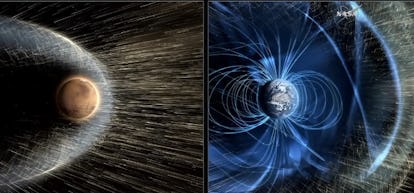 NASA
NASA
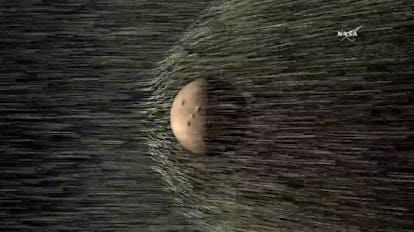 NASA
NASA
.
.
Click the link below for the article:
.
__________________________________________
February 20, 2022
Mohenjo
Business, Food For Thought, Human Interest, Science, Technical
amazon, business, Business News, current-events, Future, Hotels, human-rights, medicine, mental-health, research, Science, Science News, technology, Technology News, travel, vacation

Click the link below the picture
.
The lavish villa sat overlooking the Bay of Naples, offering bright ocean views to the well-heeled Romans who came from across the empire to study. The estate’s library was stocked with texts by prominent thinkers of the day, in particular a wealth of volumes by the philosopher Philodemus, an instructor of the poet Virgil.
But the seaside library also sat in the shadow of a volcano that was about to make terrible history.
The 79 A.D. eruption of Mount Vesuvius is most famous for burying Pompeii, spectacularly preserving many artifacts—and residents—in that once-bustling town south of Naples. The tumbling clouds of ash also entombed the nearby resort of Herculaneum, which is filled with its own wonders. During excavations there in 1752, diggers found a villa containing bundles of rolled scrolls, carbonized by the intense heat of the pyroclastic flows and preserved under layers of cement-like rock. Further digs showed that the scrolls were part of an extensive library, earning the structure the name Villa of the Papyri.
Blackened and warped by the volcanic event, the roughly 1,800 scrolls found so far have been a challenge to read. Some could be mechanically unrolled, but hundreds remain too fragile to make the attempt, looking like nothing more than clubs of charcoal. Now, more than 200 years later, archaeologists examining two of the scrolls have found a way to peer inside them with x-rays and read text that has been lost since antiquity.
.
/https://tf-cmsv2-smithsonianmag-media.s3.amazonaws.com/filer/d7/d5/d7d527b1-acd5-4d50-a729-6241f4d75f32/scoll-close.jpg) A closeup of a Herculaneum papyrus scroll used in an international scanning project. E. Brun
A closeup of a Herculaneum papyrus scroll used in an international scanning project. E. Brun
.
.
Click the link below for the article:
.
__________________________________________
February 19, 2022
Mohenjo
Business, Enthralling, Human Interest, Photographs
amazon, business, Business News, current-events, Future, Hotels, human-rights, medicine, mental-health, research, Science, Science News, technology, Technology News, travel, vacation
Click the link below the picture
.
Pitstone Windmill is a Grade II* listed windmill in England which is thought to date from the early 17th century. It stands in the northeast corner of a large field near the parish boundary of Ivinghoe and Pitstone in Buckinghamshire and belongs today to the National Trust.
It is thought to have been first built circa 1627 as this date is carved on part of the framework. This is the earliest date to be found on any windmill in the British Isles. It should be remembered that such a structure would have had to have frequent repairs made to it, so it is quite possible the mill predates 1627. It was dendrochronologically dated in 2004 by Dr. Martin Bridge of the Oxford Dendrochronology Laboratory when the oldest pieces in the buck were found to be from trees felled in winter 1595/96 and spring 1597. The ‘new’ crown tree was made from a tree felled in spring 1670, while the quarter bars of the trestle were from trees felled between 1824 and 1826, so like most mills, it is a mix of old timbers variously recycled or hanging on from their original use.
For many hundreds of years, grain grown in the two adjoining villages was ground at the mill into flour. In 1874 the mill was bought by Adelbert Wellington Brownlow Cust, 3rd Earl Brownlow who owned the nearby Ashridge Estate. He subsequently let it to a local farmer, who ran a successful milling business from the mill.
In 1902 the mill was seriously damaged during an enormous gale, damaging it beyond the price of economic repair. Around 1922 the derelict ruined mill was bought from the Ashridge Estate by a farmer whose land was close to the mill. In 1937 he donated it to the National Trust. However, it was not until 1963 that a band of volunteers began to carry out renovations at their own expense. The mill appeared in an episode of The Champions titled The Invisible Man which was filmed in 1967. In 1970, after an interlude of 68 years, the mill once again ground corn.
Today the windmill is open to the public on Summer Sunday afternoons.
.
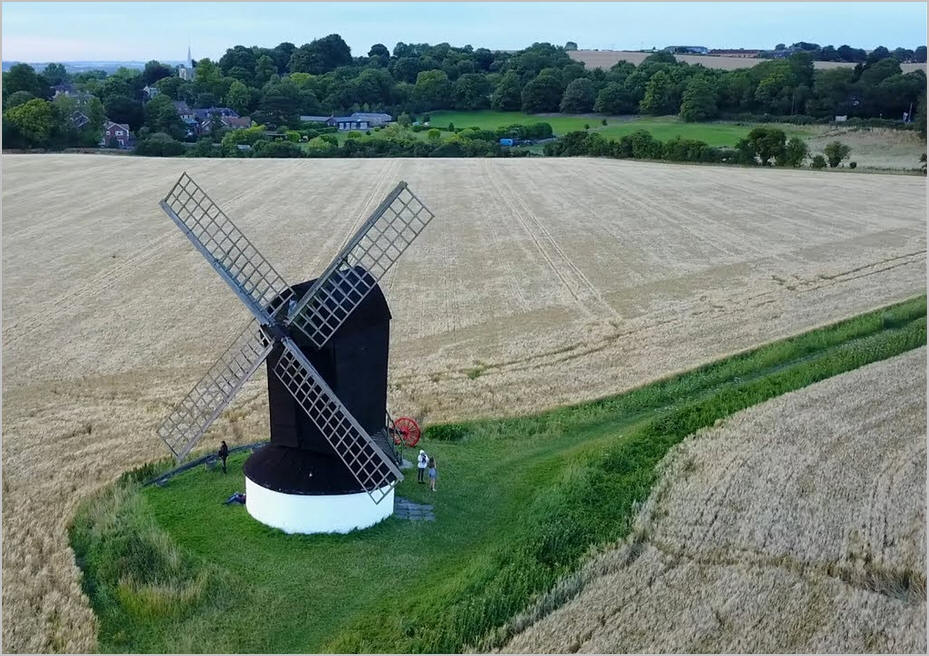 An image of the Pitstone Windmill Buckinghamshire England
.
.
Click the link below for images:
.
__________________________________________
February 19, 2022
Mohenjo
Business, Food For Thought, Human Interest, Medical, Science, Technical
amazon, business, Business News, current-events, Future, Hotels, human-rights, medicine, mental-health, research, Science, Science News, technology, Technology News, travel, vacation
Click the link below the picture
.
Ever spawning COVID variants have made the past two years exhausting, to say the least. I am so tired of worrying about how some tiny bizarre mutation to the spike protein of this itsy bitsy virus-cell could affect me. Big Pharma recently tried to console us with promises of variant-specific vaccines, but they aren’t coming fast enough to keep up with the Greek alphabet of COVID terror. Thankfully, some forward-thinking scientists are working on a universal COVID vaccine.
“You don’t want to play this whack-a-mole approach. This could go on forever,” David Martinez, a viral immunologist at the University of North Carolina at Chapel Hill, told the Washington Post. Martinez is working with other scientists at UNC to develop a vaccine with “chimeric spikes.” What that means is that, instead of using the spike protein of just one coronavirus to create a vaccine, they are using a cocktail of variants that have different spike protein mutations. The idea is that it will be more difficult for new strains to evade a vaccine that uses this multi-pronged approach, according to the Washington Post.
In case you’re not a microbiologist, an analogy might be helpful here. Vaccines work by teaching our bodies to recognize and defend itself against invading viruses by showing them what potentially dangerous viruses look like. One of the problems we’ve encountered with coronavirus is that it changes so quickly that by the time our bodies are exposed to a new mutation, it looks very different from what the vaccine showed us, so our bodies don’t know how to fight it.
.
 Maxine McCrann
.
.
Click the link below for the article:
.
__________________________________________
Older Entries
Newer Entries

