It’s June. The time of year when temperatures warm up, days get longer and winter’s marquee sport enters its most important period of play, the Stanley Cup Final. This is absurd. The only kind of ice anyone should be thinking about right now is the type that goes in lemonade.
Even for me, a hockey enthusiast born and raised in chilly Canada, staying focused for Thursday’s Game 5 between the Boston Bruins and St. Louis Blues this close to summer is a challenge. Worse yet for the sport, potential viewers who aren’t die-hard fans are turned off from tuning in at all. And it’s not just the dissonant weather and the long slog the NHL is asking newcomers to undertake. The timing also means hockey is facing off against a sport with greater worldwide popularity — basketball — that is also in the midst of its showcase playoff run.
.
The St. Louis Blues battle the Boston Bruins in Game 4 of the 2019 NHL Stanley Cup Final in St Louis on June 3. Fans could enjoy the playoffs more if they were held in May.Bruce Bennett / Getty Images file
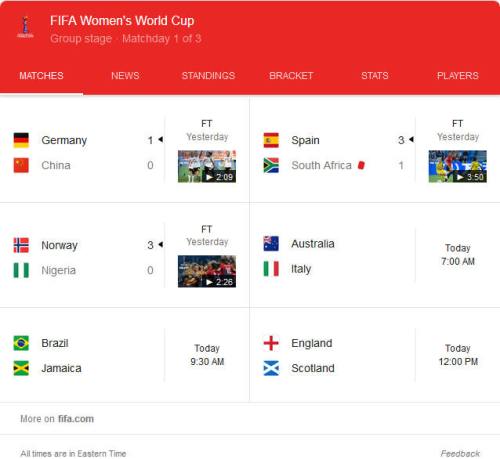
The 2019 Women’s World Cup kicked off in style as hosts France cruised to victory over South Korea in the opening game on Friday – so what can we expect from day two?
More than 45,000 supporters watched the French claim three points in Paris, with many more expected to flock to Rennes, Le Havre and Reims for three matches on Saturday.
BBC Sport takes a look at the big stories surrounding the second day of competition and how you can stay across the action.
.
Jennifer Hermoso has won scored 27 goals in 67 appearances for Spain
Will we get one more game at Oracle Arena? The scene of so much Golden State wonderfulness the past five seasons? A building about to be abandoned when the Warriors move from Oakland to a state-of-the-art arena across the Bay?
Hold up. Asking one more game out of the Warriors seems a lot at the moment.
These guys just suffered their second consecutive home playoff loss by 10 points or more, something that hasn’t happened to this franchise in 50 years. After three straight games scoring precisely 109 points, the Warriors came up 15 short Friday. They are 0-9 overall this season when held to double digits, and 0-11 in the playoffs during the Steve Kerr era, when they score 94 or fewer.
And now they’re on the wrong side of a 3-1 deficit, lacking everything from certain healthy bodies to an edge, a sharpness that was missing in the second half.
It has become the most natural thing to do: get in the car, type a destination into a smartphone, and let an algorithm using GPS data show the way. Personal GPS-equipped devices entered the mass market in only the past 15 or so years, but hundreds of millions of people now rarely travel without them. These gadgets are extremely powerful, allowing people to know their location at all times, to explore unknown places and to avoid getting lost.
But they also affect perception and judgment. When people are told which way to turn, it relieves them of the need to create their own routes and remember them. They pay less attention to their surroundings. And neuroscientists can now see that brain behavior changes when people rely on turn-by-turn directions.
The things we hold have changed, but the maneuvers are the same.
Take the figure facing the statue of Atlas: He peers upward, his elbow jutting out, his hand clasped around a camera. In one version of this image, he wears a blazer; in the other, a windbreaker, trilby and backpack.
When placed side-by-side, these photos — and others, all shot 68 years apart — resemble a trick mirror, changing black-and-white to color, suits to casualwear, film cameras to digital. Only the New York City backdrops — Rockefeller Center, Central Park or St. Patrick’s Cathedral — remain largely static.
The black-and-white pictures were shot for The New York Times Magazine by the staff photographer Sam Falk on April 2, 1951. The color ones are by Tony Cenicola, a current Times staff photographer, and were shot on April 2, 2019 (in addition to April 1 and 3). Together, they form an entirely unscientific experiment that asks: What does amateur photography look like today versus 68 years ago?
.
The “Atlas” statue in Rockefeller Center. April 2, 1951; April 1, 2019.CreditSam Falk/The New York Times; Tony Cenicola/The New York Times
Before Emma Boettcher arrived at the “Jeopardy!” studio in California on a Tuesday in March, she hadn’t heard of James Holzhauer.
Boettcher, a 27-year-old librarian at the University of Chicago, did not know that the contestant she would soon face had already won 32 games, amassed $2.46 million and established himself as one of the game show’s greatest players of all time. Games are prerecorded, usually five in one day; Holzhauer’s first win would not air until April 4.
“It was weird to be a daily watcher of ‘Jeopardy!’ and somehow there’s this phenomenon that I’d never heard of,” Boettcher said in an interview last week. (The interview was conducted before the episode aired under the condition it not be published until Monday.)
.
Emma Boettcher first auditioned for “Jeopardy!” when she was a senior in high school. She got the call to appear on the show after her fourth audition.CreditWhitten Sabbatini for The New York Times
The NHL has suspended St. Louis Blues forward Ivan Barbashev for one game for an illegal check to the head of Boston Bruins forward Marcus Johansson during Game 5 of the Stanley Cup Final.
The check occurred 5:24 into the first period of St. Louis’ 2-1 victory Thursday night.
Barbashev, 23, has played in each of the Blues’ 24 playoff games this year. He has three goals and three assists in the postseason, averaging a little more than 12 minutes a game on the fourth line. He scored 14 goals in the regular season.
The NHL’s department of player safety announced the suspension on Friday.
“There was a pond in the woods back of the house where my parents had a summer place in Connecticut. I would catch tadpoles and dissect frogs to see how they were inside,” he says. Today, at age 86, with a Ph.D. in physiology and psychology from the University of Rochester and a National Institutes of Health fellowship from Johns Hopkins School of Medicine, Coleman hasn’t lost his fascination with slippery, slimy, squishy objects.
As senior scientist and director of the L.J. Roberts Center for Alzheimer’s Research at Banner Sun Health Research Institute in Sun City, Arizona, Coleman has seen his backyard grow into a much bigger pond. The institute houses the world’s premier bank of human brains, which are harvested at high-speed precision from the 50 miles surrounding the center, where the median age is 75.
Rows of heavily monitored freezers line the walls of the research institute, packed with Tupperware containers by the thousands that store high-quality brain tissue. These containers hold out a mighty hope that scientists will soon have the answers to diagnose and treat one of humanity’s most dark and elusive diseases — Alzheimer’s.
.
For 7-year-old Paul David Coleman, the backyard pond was a source of endless fascination — and ultimately would be the place that ushered him into the world of science and single-cell research.
The eighth Women’s World Cup, which begins Friday in France, comes at a pivotal time for the women’s game. For years, players around the world have demanded better pay and more support from their federations. In some countries, serious progress has been made; in many others, the fight continues.
We wanted to know what it’s like to be an elite women’s soccer player in this moment.
To get inside that bubble, The New York Times sent a survey to every national team participating in this year’s World Cup and heard back from more than 100 players from 17 of the 24 countries competing in France.
.
Members of the United States national team at training camp in San Jose, Calif., in May.Photograph by Kelley O’Hara, 30, United States defender
In the world, human beings are facing various problems. People who are full of greed, anger, and ignorance are seen to be fighting with each other in words and deeds. As the fighting continues, various problems such as civil wars, wars of aggression, and wars of aggression are occurring. As world peace is being destroyed, humans are facing unbearable problems. Innocent children and women are not getting the rights they deserve and deserve. I can't think of one thing every time. What is it? The United Nations. If we look at the responsibilities and duties of the United Nations, I think it is not suitable for solving the problems that are happening in the world today. In fact, the United Nations and the World Security Council, such an organization must rule the world, must be able to give orders, and must have various ways to obey orders. There must be no organization that can influence more than that organization. There should be experts from each country. They can even dominate the superpowers like the US, China, and Britain. Only then will global peace be achieved quickly. Now, if a country with power develops more militarily, economically, or socially than its own country, then powerful countries will jealously seek out enemies and wage war. Or they will attack with fighter jets. In this, innocent people are losing their lives. No one understands the value of a life. You should think about how to achieve global peace by controlling these. If the US continues to be the permanent president of the UN, world peace will never be achieved. If you think carefully, no one sees that they are working for the common good, but for their own benefit, for the benefit of their own country. The permanent president of the UN and the Security Council has rejected this, As a young Rohingya, I have come to realize that only by electing the president and secretary from among the countries in the world through a secret ballot system and governing the world fairly can we achieve global peace. The United Nations and the Security Council are organizations in which any country must govern, give orders, and make them obey their orders. For example, only when a defendant is tried in court can we hold the leaders of the countries in check and control them, can we achieve global peace smoothly. Otherwise, it will not be easy for powerful countries to use various excuses to end this war every year, every year, for the benefit of themselves and their countries. No country's leaders pay any attention to the words of the United Nations and the Security Council. If we look at it in practice, look at the Rohingya issue. Myanmar is a small country. Even that country has been under siege for 8 years. What action can be taken? Why is the UN and the Security Council Powerless? Without such Power, how can the organization bring about global peace? Everyone should think about it. Whether there is a veto or a strong one, all countries in the world can only achieve global peace if they are subject to the UN and the Security Council. Seek peace in the quiet embrace of nature. Peace is an indispensable need of the human race. It is not as if one person can kill another person, and it is as if one country can attack another country, but instead of trying to build peace, we must try to destroy the peace now, and the world is getting hotter and is on the verge of collapse. I especially appeal to all the world experts to urgently try to bring about peace in all parts of the world. Mr, Noor Muhamed Arkhan Rohingya Youth Myanmar
Film and Writing Festival for Comedy. Showcasing best of comedy short films at the FEEDBACK Film Festival. Plus, showcasing best of comedy novels, short stories, poems, screenplays (TV, short, feature) at the festival performed by professional actors.




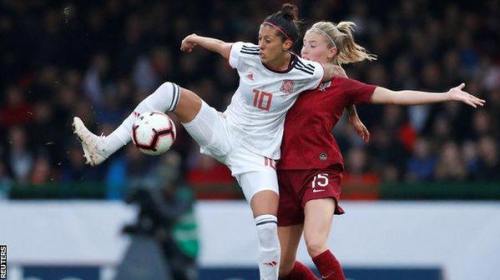 Jennifer Hermoso has won scored 27 goals in 67 appearances for Spain







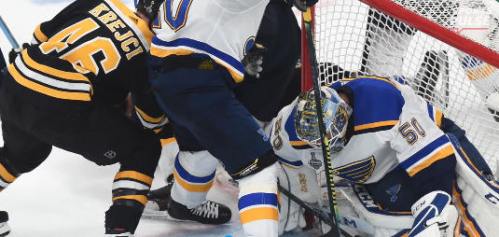 St. Louis Blues forward Ivan Barbashev suspended
 For 7-year-old Paul David Coleman, the backyard pond was a source of endless fascination — and ultimately would be the place that ushered him into the world of science and single-cell research.