January 1, 2022
Mohenjo
Business, Food For Thought, Human Interest, Science, Technical
amazon, business, Business News, current-events, Future, Hotels, human-rights, medicine, mental-health, research, Science, Science News, technology, Technology News, travel, vacation

Click the link below the picture
.
One of the most consumed drugs in the US – and the most commonly taken analgesic worldwide – could be doing a lot more than simply taking the edge off your headache, according to scientists.
Acetaminophen, also known as paracetamol and sold widely under the brand names Tylenol and Panadol, also increases risk-taking, according to a study published in 2020 that measured changes in people’s behavior when under the influence of the common over-the-counter medication.
“Acetaminophen seems to make people feel less negative emotion when they consider risky activities – they just don’t feel as scared,” neuroscientist Baldwin Way from The Ohio State University explained last year.
“With nearly 25 percent of the population in the US taking acetaminophen each week, reduced risk perceptions and increased risk-taking could have important effects on society.”
The findings add to a recent body of research suggesting that acetaminophen’s effects on pain reduction also extend to various psychological processes, lowering people’s receptivity to hurt feelings, experiencing reduced empathy, and even blunting cognitive functions.
.

(Yulia-Images/Getty Images)
.
.
Click the link below for the article:
.
__________________________________________
January 1, 2022
Mohenjo
Food For Thought, Human Interest, Medical, missed News, Political, Science
amazon, business, Business News, current-events, Future, Hotels, human-rights, medicine, mental-health, research, Science, Science News, technology, Technology News, travel, vacation

.
News You might have missed!
Use your browser or smartphone back arrow (<-) to return to this table for your next selection.
.
__________________________________________
December 31, 2021
Mohenjo
Business, Food For Thought, Human Interest, Medical, Science, Technical
amazon, business, Business News, current-events, Future, Hotels, human-rights, medicine, mental-health, research, Science, Science News, technology, Technology News, travel, vacation

Click the link below the picture
.
Every year, about 1.8 million people in the US are diagnosed with cancer. About 600,000 people die from the disease annually, which makes it the second-leading cause of death in the country after heart disease.
Scientists don’t fully understand how cancer works or what causes individual cases. It’s difficult to pinpoint the origins of cancer because many factors are involved, including genetics, environment, lifestyle, and even your job.
Research this year found links to cancer in our everyday lives.
Known cancer-causing chemicals continue to show up in unexpected places, including household items, because of industrial contamination. Researchers are also starting to better understand the health implications of other toxins, such as pesticides. Evidence from this year suggested pesticides were linked to cancer decades and generations after exposure. And lifestyle habits like what we eat, drink and do also play a role in our risk of cancer and when it might develop. While intriguing, the evidence doesn’t directly point to what causes cancer, but understanding correlations can help scientists come up with future research questions to better our knowledge of the disease and how to prevent it.
.
 A scientist lowers biological samples into a liquid-nitrogen storage tank at the Cancer Research UK Cambridge Institute. Dan Kitwood/Getty Images/Cancer Research UK
.
.
Click the link below for the article:
.
__________________________________________
December 31, 2021
Mohenjo
Business, Food For Thought, Human Interest, Science, Technical
amazon, business, Business News, current-events, Future, Hotels, human-rights, medicine, mental-health, research, Science, Science News, technology, Technology News, travel, vacation

Click the link below the picture
.
There are a number of different factors in your day-to-day life that can make it difficult to get to sleep, from stress to our central heating. People are reporting sleep disturbances more than ever: the average person is losing two hours of sleep a night and 37% of people in Britain are sleep deprived, according to 2021 research from fitness tech brand Zepp.
But what if we told you that the answer could lie in something much more simple than lavender sprays and supplements? When it comes to getting a good night’s sleep, your diet can play a huge role. Studies, including a 2016 paper from Columbia University, have found that our dietary patterns and consumption of specific foods can have a significant impact on our sleep quality, with some foods having the potential to really disrupt our time snoozing.
Certified Health Education Specialist Brielle Merchant and Dr Aishah Iqbal both know just how important sleep is, and how much our eating habits can affect it. So we asked them for their expert insights into the link between diet and sleep, what you can eat to ensure you sleep well – and what foods are most likely to disrupt your rest.
.
 Photos by Getty Images
.
.
Click the link below for the article:
.
__________________________________________
December 31, 2021
Mohenjo
Crime, Food For Thought, Human Interest, Medical, missed News, Political, Science, Technical
amazon, business, Business News, current-events, Future, Hotels, human-rights, medicine, mental-health, research, Science, Science News, technology, Technology News, travel, vacation
.
News You might have missed!
Use your browser or smartphone back arrow (<-) to return to this table for your next selection.
.
__________________________________________
December 30, 2021
Mohenjo
Business, Food For Thought, Human Interest, Science, Technical
amazon, business, Business News, current-events, Future, Hotels, human-rights, medicine, mental-health, research, Science, Science News, technology, Technology News, travel, vacation

Click the link below the picture
.
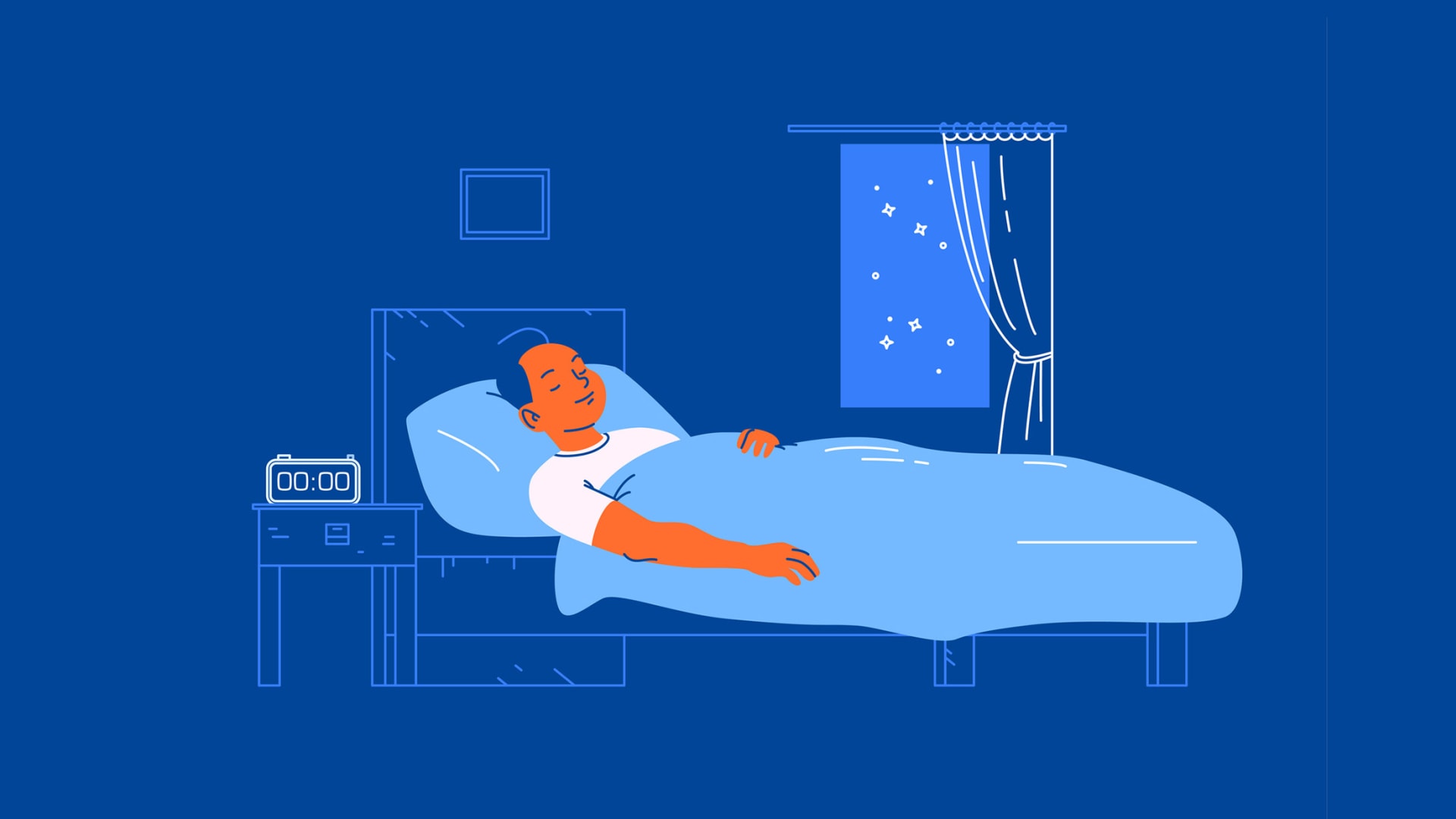
Always-on work culture, pinging phones, Netflix’s ‘watch next episode’ button, and general life stress all made getting a good night’s sleep difficult before the pandemic. Then Covid struck. Even if you’ve been lucky enough to avoid the virus, you may have fallen victim to a nationwide epidemic of pandemic disruption-related insomnia.
The pandemic has ruined our sleep
“In one study conducted across 49 countries in March and April 2020, 40 percent of people said their sleep was worse than before the pandemic. Participants’ use of sleeping pills increased by 20 percent,” reports a horrifying but hardly surprising Vox article detailing the virus’s toll on the nation’s sleep.
We are nearing year two of the coronavirus, but the experts say many people’s sleep is still disturbed. I’ve seen evidence of this myself. Stories on how to get a good night’s sleep have attracted huge interest this year. No wonder I — and tons of other writers — have been pestering experts and scouring the web for every possible sleep hack and insomnia cure out there.
.
 Getty Images
.
.
Click the link below for the article:
.
__________________________________________
December 30, 2021
Mohenjo
Business, Food For Thought, Human Interest, Science, Technical
amazon, business, Business News, current-events, Future, Hotels, human-rights, medicine, mental-health, research, Science, Science News, technology, Technology News, travel, vacation

Click the link below the picture
.
If you’re looking to reduce your body fat, you’ve probably heard that you should have frequent, small meals, because it’s “good for the metabolism”.
However, as with a lot of topics in the sphere of nutrition, this is a complicated matter, and the current literature is leaning towards avoiding snacks if we want to reduce our body fat. Frequent snacking leads to greater fat gain due to the body remaining in fat-making mode from the constant influx of food. Therefore, for optimal health, we want to avoid eating between meals. This allows our fat-making processes to switch off and our bodies to start burning stored fat.
.
 Photo by Nathan Dumlao on Unsplash
.
.
Click the link below for the article:
.
__________________________________________
December 30, 2021
Mohenjo
Crime, Food For Thought, Human Interest, Medical, missed News, Political, Science, Technical
amazon, business, Business News, current-events, Future, Hotels, human-rights, medicine, mental-health, research, Science, Science News, technology, Technology News, travel, vacation
.
News You might have missed!
Use your browser or smartphone back arrow (<-) to return to this table for your next selection.
.
__________________________________________
December 29, 2021
Mohenjo
Business, Food For Thought, Human Interest, Science, Technical
amazon, business, Business News, current-events, Future, Hotels, human-rights, medicine, mental-health, research, Science, Science News, technology, Technology News, travel, vacation

Click the link below the picture
.
For a long time, I believed that my only hope of becoming a professional writer was to find the perfect tool. A few months into my career as a book critic, I’d already run up against the limits of my productivity, and, like many others before me, I pinned the blame on Microsoft Word. Each time I opened a draft, I seemed to lose my bearings, scrolling from top to bottom and alighting on far-flung sentences at random. I found and replaced, wrote, and rewrote; the program made fiddling easy and finishing next to impossible.
I’d fallen into the trap that the philosopher Jacques Derrida identified in an interview from the mid-nineties. “With the computer, everything is rapid and so easy,” he complained. “An interminable revision, an infinite analysis is already on the horizon.” Derrida hadn’t even contended with the sirens of online life, which were driving writer friends to buy disconnected laptops or to quarantine their smartphones in storage bins with timed locks. Zadie Smith touted Freedom, a subscription service that cut off the user’s devices—a chastity belt for procrastinators.
I tried “distraction-free” writing apps that encouraged mindfulness, disabled the backspace key, or, in a few extreme cases, threatened to delete everything if I took my hands off the keyboard (Write or Die). Later, I tried coding my own writing tools, a hobby as rewarding as it was ineffective. The experiments gradually meshed into a literary Rube Goldberg machine, a teetering assemblage of Scriveners and SimpleTexts that left me perpetually uncertain of which thought I’d written down where. Longhand was a luxury I couldn’t afford: Wendell Berry boasted in Harper’s that he didn’t need a computer because he had a wife, but I was a mere urban freelancer, whose boyfriend had a job. So I continued the search for word processing’s Excalibur, a perfect union of consciousness and composition.
.

.
.
Click the link below for the article:
.
__________________________________________
December 29, 2021
Mohenjo
Business, Food For Thought, Human Interest, Political, Science, Technical
amazon, business, Business News, current-events, Future, Hotels, human-rights, medicine, mental-health, research, Science, Science News, technology, Technology News, travel, vacation

Click the link below the picture
.
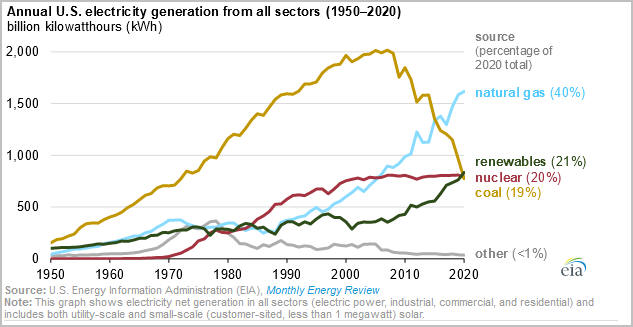
In 2020, renewable energy sources (including wind, hydroelectric, solar, biomass, and geothermal energy) generated a record 834 billion kilowatt-hours (kWh) of electricity or about 21% of all the electricity generated in the United States. Only natural gas (1,617 billion kWh) produced more electricity than renewables in the United States in 2020. Renewables surpassed both nuclear (790 billion kWh) and coal (774 billion kWh) for the first time on record. This outcome in 2020 was due mostly to significantly less coal use in U.S. electricity generation and steadily increased use of wind and solar.
In 2020, U.S. electricity generation from coal in all sectors declined 20% from 2019, while renewables, including small-scale solar, increased 9%. Wind, currently the most prevalent source of renewable electricity in the United States, grew 14% in 2020 from 2019. Utility-scale solar generation (from projects greater than 1 megawatt) increased 26%, and small-scale solar, such as grid-connected rooftop solar panels, increased 19%.
Coal-fired electricity generation in the United States peaked at 2,016 billion kWh in 2007 and much of that capacity has been replaced by or converted to natural gas-fired generation since then. Coal was the largest source of electricity in the United States until 2016, and 2020 was the first year that more electricity was generated by renewables and by nuclear power than by coal (according to our data series that dates back to 1949). Nuclear electric power declined 2% from 2019 to 2020 because several nuclear power plants retired and other nuclear plants experienced slightly more maintenance-related outages.
.
 .
.
.
Click the link below for the article:
.
__________________________________________
Older Entries
Newer Entries

