The pointe de Pen-Hir is a promontory of the Crozon peninsula in Brittany, to the south-west of Camaret-sur-Mer. On a clear day, there are views to the Pointe du Raz and the islands of Sein and Ouessant and to Pointe Saint-Mathieu. The cliffs are as tall as 70 meters (230 ft) high.
It is the site of the Monument to the Bretons of Free France, known as the Cross of Pen-Hir and inaugurated by General Charles de Gaulle in 1960. It is intended to bear witness to the group of Free French Bretons who founded Sao Breiz in Great Britain during the Second World War. It was created in 1949-1951 by architect Jean-Baptiste Mathon and sculptor Victor-François Bazin
By the spring of 2020, the high stakes involved in rigorous, timely, and honest statistics had suddenly become all too clear. A new coronavirus was sweeping the world. Politicians had to make their most consequential decisions in decades, and fast. Many of those decisions depended on data detective work that epidemiologists, medical statisticians, and economists were scrambling to conduct. Tens of millions of lives were potentially at risk. So were billions of people’s livelihoods.
In early April, countries around the world were a couple of weeks into lockdown, global deaths passed 60,000, and it was far from clear how the story would unfold. Perhaps the deepest economic depression since the 1930s was on its way, on the back of a mushrooming death toll. Perhaps, thanks to human ingenuity or good fortune, such apocalyptic fears would fade from memory. Many scenarios seemed plausible. And that’s the problem.
An epidemiologist, John Ioannidis, wrote in mid-March that Covid-19 “might be a once-in-a-century evidence fiasco”. The data detectives are doing their best – but they’re having to work with data that’s patchy, inconsistent, and woefully inadequate for making life-and-death decisions with the confidence we would like.
Some of the most perplexing topics in physics revolve around quantum theory. The quandary is seen most famously in the Schrödinger’s cat question and the issue of information loss in black hole evaporation. Richard Feynman said, “I think that I can safely say that nobody understands quantum mechanics.” Most physicists have just gotten used to it. There’s no doubt quantum theory is successful at the practical level. But when considering it as more than a tool for calculating probabilities for possible outcomes of experiments in the laboratory, and taking it as a fundamental description of the “world out there,” it faces serious conceptual problems.
The basic problem is that quantum theory seems to be about what we measure and not about what is out there in the world. One might think this is just fine, as the theory represents just “our information” about the world. But that would make sense only if there were something about the world that we can be informed of, which must be, in general situations, specified by the theory. Understanding how to deal with this conceptual problem requires us to look at the theory in more detail.
The United States has made huge advances in fighting the coronavirus. The astonishingly high death rates the country saw during the spring have fallen, and Americans are much more likely now than they were then to survive a COVID-19 hospitalization. New treatments have, in some cases, helped speed recovery—President Donald Trump has trumpeted his own bout with the virus as proof that there is a “cure” for the illness. (There is not.) These developments have given Americans the impression that no matter how high cases surge, deaths might not reach the heights of the spring.
But the truth is grimmer. The story people want to believe about how much treatments have improved in recent months does not hold up to quantitative scrutiny.
The U.S. health-care system has not reduced the deadliness of the coronavirus since July, according to a new estimate by a prominent COVID-19 researcher, which accounts for the lags in public reporting of cases and deaths. Instead, the virus has, with ruthless regularity, killed at least 1.5 percent of all Americans diagnosed with COVID-19 over the past four months.
This rate is a major improvement, down more than tenfold from the earliest days of the pandemic when deaths were high and the extreme limits on coronavirus testing held down the number of diagnosed cases. But in this new phase of the pandemic, when testing is more widely available and a much higher proportion of cases are diagnosed, to begin with, it is also terrible, terrible news.
It is not often that a comedian gives an astrophysicist goosebumps when discussing the laws of physics. But comic Chuck Nice managed to do just that in a recent episode of the podcast StarTalk. The show’s host Neil deGrasse Tyson had just explained the simulation argument—the idea that we could be virtual beings living in a computer simulation. If so, the simulation would most likely create perceptions of reality on demand rather than simulate all of the reality all the time—much like a video game optimized to render only the parts of a scene visible to a player. “Maybe that’s why we can’t travel faster than the speed of light because if we could, we’d be able to get to another galaxy,” said Nice, the show’s co-host, prompting Tyson to gleefully interrupt. “Before they can program it,” the astrophysicist said, delighting at the thought. “So the programmer put in that limit.”
Such conversations may seem flippant. But ever since Nick Bostrom of the University of Oxford wrote a seminal paper about the simulation argument in 2003, philosophers, physicists, technologists and, yes, comedians have been grappling with the idea of our reality being a simulacrum. Some have tried to identify ways in which we can discern if we are simulated beings. Others have attempted to calculate the chance of us being virtual entities. Now a new analysis shows that the odds that we are living in base reality—meaning an existence that is not simulated—are pretty much even. But the study also demonstrates that if humans were to ever develop the ability to simulate conscious beings, the chances would overwhelmingly tilt in favor of us, too, being virtual denizens inside someone else’s computer. (A caveat to that conclusion is that there is little agreement about what the term “consciousness” means, let alone how one might go about simulating it.)
Mount Sinai is a mountain in the Sinai Peninsula of Egypt that is a possible location of the biblical Mount Sinai, the place where Moses received the Ten Commandments.
It is a 2,285-metre (7,497 ft), a moderately-high mountain near the city of Saint Catherine in the region known in modern times as the Sinai Peninsula. It is next to Mount Catherine (at 2,629 m or 8,625 ft, the highest peak in Egypt). It is surrounded on all sides by higher peaks of the mountain range.
Far from the protective embrace of the Sun, the edge of our Solar System would seem to be a cold, empty, and dark place. The yawning space between us and the nearest stars was for a long time thought to be a frighteningly vast expanse of nothingness.
Until recently, it was somewhere that humankind could only peer into from afar. Astronomers paid it only passing attention, preferring instead to focus their telescopes on the glowing masses of our neighboring stars, galaxies, and nebula.
But two spacecraft, built and launched in the 1970s, have for the past few years been beaming back our first glimpses from this strange region we call interstellar space. As the first man-made objects to leave our Solar System, they are venturing into uncharted territory, billions of miles from home. No other spacecraft has traveled as far.
Some content on this page was disabled on April 15, 2025 as a result of a DMCA takedown notice from Guardian Media Group. You can learn more about the DMCA here:
Dehradun, also known as Dera Doon, is the winter capital and the most populated city of the Indian state of Uttarakhand.It is the administrative headquarters of the eponymous district and the city is governed by the Dehradun Municipal Corporation. Part of the Garhwal region, it lies along National Highway 7 with a distance of 248 kilometres (154 mi) north of India’s capital New Delhi and is served by Dehradun railway station and Jolly Grant Airport. Dehradun is one of the “Counter Magnets” of the National Capital Region (NCR) being developed as an alternative center of growth to help ease the migration and population explosion in the Delhi metropolitan area and to establish a smart city at Dehradun.
A team of physicists in New York has discovered a material that conducts electricity with perfect efficiency at room temperature — a long-sought scientific milestone. The hydrogen, carbon, and sulfur compound operates as a superconductor at up to 59 degrees Fahrenheit, the team reported today in Nature. That’s more than 50 degrees hotter than the previous high-temperature superconductivity record set last year.
“This is the first time we can really claim that room-temperature superconductivity has been found,” said Ion Errea, a condensed matter theorist at the University of the Basque Country in Spain who was not involved in the work.
“It’s clearly a landmark,” said Chris Pickard, a materials scientist at the University of Cambridge. “That’s a chilly room, maybe a British Victorian cottage,” he said of the 59-degree temperature.
Yet while researchers celebrate the achievement, they stress that the newfound compound — created by a team led by Ranga Dias of the University of Rochester — will never find its way into lossless power lines, frictionless high-speed trains, or any of the revolutionary technologies that could become ubiquitous if the fragile quantum effect underlying superconductivity could be maintained in truly ambient conditions. That’s because the substance superconducts at room temperature only while being crushed between a pair of diamonds to pressures roughly 75% as extreme as those found in the Earth’s core.
.
A novel metallic compound of hydrogen, carbon, and sulfur exhibited superconductivity at a balmy 59 degrees Fahrenheit when pressurized between a pair of diamond anvils. J. Adam Fenster / University of Rochester
In the world, human beings are facing various problems. People who are full of greed, anger, and ignorance are seen to be fighting with each other in words and deeds. As the fighting continues, various problems such as civil wars, wars of aggression, and wars of aggression are occurring. As world peace is being destroyed, humans are facing unbearable problems. Innocent children and women are not getting the rights they deserve and deserve. I can't think of one thing every time. What is it? The United Nations. If we look at the responsibilities and duties of the United Nations, I think it is not suitable for solving the problems that are happening in the world today. In fact, the United Nations and the World Security Council, such an organization must rule the world, must be able to give orders, and must have various ways to obey orders. There must be no organization that can influence more than that organization. There should be experts from each country. They can even dominate the superpowers like the US, China, and Britain. Only then will global peace be achieved quickly. Now, if a country with power develops more militarily, economically, or socially than its own country, then powerful countries will jealously seek out enemies and wage war. Or they will attack with fighter jets. In this, innocent people are losing their lives. No one understands the value of a life. You should think about how to achieve global peace by controlling these. If the US continues to be the permanent president of the UN, world peace will never be achieved. If you think carefully, no one sees that they are working for the common good, but for their own benefit, for the benefit of their own country. The permanent president of the UN and the Security Council has rejected this, As a young Rohingya, I have come to realize that only by electing the president and secretary from among the countries in the world through a secret ballot system and governing the world fairly can we achieve global peace. The United Nations and the Security Council are organizations in which any country must govern, give orders, and make them obey their orders. For example, only when a defendant is tried in court can we hold the leaders of the countries in check and control them, can we achieve global peace smoothly. Otherwise, it will not be easy for powerful countries to use various excuses to end this war every year, every year, for the benefit of themselves and their countries. No country's leaders pay any attention to the words of the United Nations and the Security Council. If we look at it in practice, look at the Rohingya issue. Myanmar is a small country. Even that country has been under siege for 8 years. What action can be taken? Why is the UN and the Security Council Powerless? Without such Power, how can the organization bring about global peace? Everyone should think about it. Whether there is a veto or a strong one, all countries in the world can only achieve global peace if they are subject to the UN and the Security Council. Seek peace in the quiet embrace of nature. Peace is an indispensable need of the human race. It is not as if one person can kill another person, and it is as if one country can attack another country, but instead of trying to build peace, we must try to destroy the peace now, and the world is getting hotter and is on the verge of collapse. I especially appeal to all the world experts to urgently try to bring about peace in all parts of the world. Mr, Noor Muhamed Arkhan Rohingya Youth Myanmar
Film and Writing Festival for Comedy. Showcasing best of comedy short films at the FEEDBACK Film Festival. Plus, showcasing best of comedy novels, short stories, poems, screenplays (TV, short, feature) at the festival performed by professional actors.

 An image from Pointe De Pen-Hir Cliff Brittany
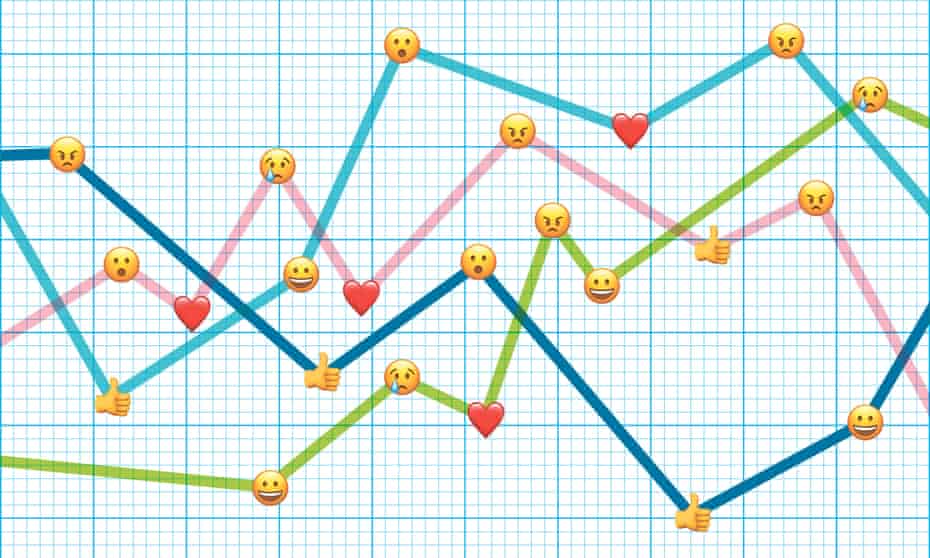 Illustration Guardian Design
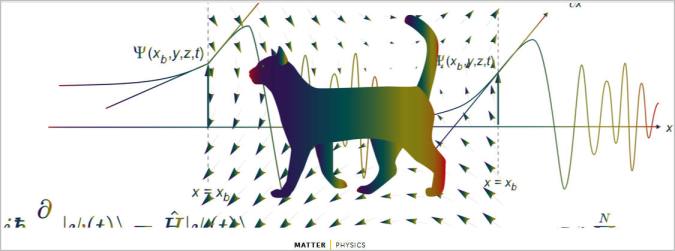


 Credit: Getty Images