In 1998, Boston Youth Symphony Orchestras launched the Intensive Community Program (ICP) as a response to the barriers keeping classical music training out of reach for many would-be musicians, including African Americans and Latinxs, who are underrepresented in orchestras.
The program lowers those barriers in Massachusetts by providing top-tier orchestra training to students in kindergarten through twelfth grade from underserved communities in and around Boston. ICP serves as an audition-based feeder program for BYSO’s six performance ensembles — 12% of BYSO musicians attend ICP.
First Republic spoke with ICP Artistic Director Nicole Cariglia and students Kensie Carroll and Noanddi Manigat to learn about their intensive music community, which adapted to virtual performances in the wake of the pandemic.
Waking up to music
As a very young child, 9-year-old Kensie Caroll woke up each morning to the sounds of cello and viola as her two sisters, twins six years older than Kensie, practiced their respective instruments for ICP.
“She was in a stroller, going to Sydney and Sadie’s auditions,” said Kensie’s father, Marc. Born into their music and the ICP lifestyle, when Kensie auditioned for the program at the age of four, she was ready.
But five years ago, as Kensie’s parents considered having her audition for ICP, Artistic Director Nicole Cariglia was a bit concerned: “I said, ‘Marc, she’s really young.’” Most four-year-olds don’t earn one of the selective program’s 90 slots. Kensie did. And as she began her own cello training, the demands didn’t surprise her. “By default, she knew what she had to do: Get up, practice, then go to school, and then go to the rehearsals and lessons,” Marc said.
Faridabad is the largest city in the Indian state of Haryana and a part of the National Capital Region of Delhi. It is one of the major satellite cities of Delhi and is located 284 kilometres south of the state capital Chandigarh.The river Yamuna forms the eastern district boundary with Uttar Pradesh. The Government of India included it in the second list of Smart Cities Mission on 24 May 2016. Faridabad has been described as the eighth fastest-growing city in the world and the third in India by the City Mayors Foundation survey. As per the 2001 Delhi Regional Plan, Faridabad is part of the Delhi Metropolitan Area (DMA).
It’s uttered in hushed tones during mommy-and-me yoga classes and at Montessori-school drop-offs, discussed ad nauseam in breastfeeding support groups and on parenting message boards.
It’s called tongue-tie, and it’s everywhere. In online mom groups, it’s blamed for all sorts of parenting woes. Baby isn’t gaining weight, or won’t take a bottle? Have you tried checking for ties? Kid won’t nap? It’s probably related to tongue-tie. Baby has a rash? Check under the tongue!
Tongue-tie, or ankyloglossia, is characterized by an overly tight lingual frenulum, the cord of tissue that anchors the tongue to the bottom of the mouth. It occurs in 4 to 11 percent of newborns. A lip tie—a related condition—is an unusually tight labial frenulum, the piece of tissue that keeps the upper lip tethered close to the gum line. Tongue and lip ties often occur in tandem.
To breastfeed effectively, babies need to create negative pressure (in a word, a vacuum) on the breast. This differs from the compression that some babies with limited tongue mobility use, effectively squeezing the milk out rather than sucking.
In America’s bloody history of racial violence, the little-known Elaine Massacre in Phillips County, Arkansas, which took place in October 1919, a century ago this week, may rank as the deadliest. The reasons why the event has remained shrouded and obscure, despite a shocking toll of bloodshed inflicted on the African-American inhabitants of Phillips County, speak to a legacy of white supremacy in the US and ruthless suppression of labor activism that disfigures American society to this day.
Phillips County, located deep in the Arkansas Delta, was largely rural and three-quarters African-American; in the small town of Elaine, there were ten times as many black residents as white. The African Americans of Phillips County, like those throughout the South, were subjected to segregation and disenfranchisement, those twin pillars of white supremacy. But the black sharecroppers and tenant farmers there were also the victims of a particularly harsh form of repression known as “debt peonage.” Under this system, they were loaned money or rented land by plantation owners; they were then forced to sell their crops to the owners at below-market rates and to purchase their food and other supplies from over-priced plantation stores, trapping them in a cycle of perpetual debt, with the owners keeping—and often doctoring—the accounts.
In the spring of 1919, a group of Phillips County African-American sharecroppers and tenant farmers, many of them veterans who had recently returned from service overseas in World War I, decided to challenge this system by joining a union called the Progressive Farmers and Household Union of America (PFHUA), which had been founded the year before by army veteran Robert Lee Hill, a black tenant farmer in Winchester, Arkansas. The union’s goal was “to advance the interest of the Negro, morally and intellectually,” and its constitution ended with a proclamation: “WE BATTLE FOR THE RIGHTS OF OUR RACE; IN UNION IS STRENGTH.”
.
Arkansas State Archives
The body of Frances Hall, one of the few victims of the massacre who can be identified by name, thanks to the journalists Robert Whitaker and Ida B. Wells, near Elaine, Arkansas, October 1919
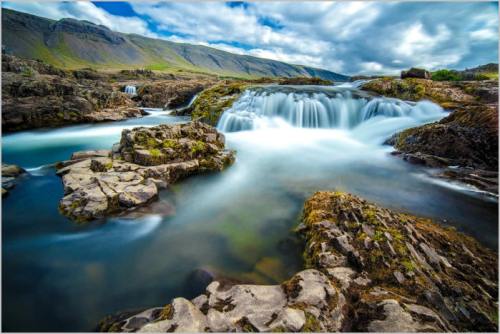
Iceland is a Nordic island country in the North Atlantic Ocean, with a population of 356,99 and an area of 103,000 km2 (40,000 sq mi), making it the most sparsely populated country in Europe.The capital and largest city is Reykjavík. Reykjavík and the surrounding areas in the southwest of the country are home to over two-thirds of the population. Iceland is volcanically and geologically active. The interior consists of a plateau characterized by sand and lava fields, mountains, and glaciers, and many glacial rivers flow to the sea through the lowlands. Iceland is warmed by the Gulf Stream and has a temperate climate, despite a high latitude just outside the Arctic Circle. Its high latitude and marine influence keep summers chilly, with most of the archipelago having a polar climate.
There are plenty of things we hold onto for good reason. Treasures from our travels, family heirlooms, sentimental birthday cards—all justifiable keepsakes. Then there are the odds and ends we accumulate just because we have the space to store them. You know, the “But what if I need this one day?” items. It seems like a rather harmless habit—until those nonessentials add up and turn your cabinets and closets into living nightmares. The chaos stops here. It’s time to repurpose, recycle, or kick ’em to the curb.
While we aren’t here to push a hyper-minimalist agenda, we do believe every object in your home should serve a distinct purpose or, at the very least, brighten your day a little. We doubt your excessive tote bag collection or rubber band–filled junk drawer is offering you much.
Weekends should be for recharging, not for catching up on work we didn’t get to during the week. This includes housework. While we like the end result, cleaning the house (for most of us) isn’t a fun or relaxing endeavor. To get to your housework to-dos before the weekend, commit to cleaning for 15 to 20 minutes five days a week. Then welcome freedom — and tidy home — when Friday night comes.
A successful weekday-only cleaning regime relies on two categories of cleaning tasks: ones that you repeat every day as a matter of habit and ones that you do once a week.
El Paso is a city and the county seat of El Paso County, Texas, United States, in the far western part of the state.The 2019 population estimate for the city from the U.S. Census was 681,728, making it the 22nd-largest city in the United States, the sixth-largest city in Texas, and the second-largest city in the Southwest behind Phoenix, Arizona. Its metropolitan statistical area covers all of El Paso and Hudspeth Counties in Texas and has a population of 840,758.
In the 1920s, decades before counterculture guru Timothy Leary made waves self-experimenting with LSD and other psychedelic drugs at Harvard University, a young perceptual psychologist named Heinrich Klüver used himself as a guinea pig in an ongoing study into visual hallucinations. One day in his laboratory at the University of Minnesota, he ingested a peyote button, the dried top of the cactus Lophophora williamsii, and carefully documented how his visual field changed under its influence. He noted recurring patterns that bore a striking resemblance to shapes commonly found in ancient cave drawings and in the paintings of Joan Miró, and he speculated that perhaps they were innate to human vision. He classified the patterns into four distinct types that he dubbed “form constants”: lattices (including checkerboards, honeycombs, and triangles), tunnels, spirals, and cobwebs.
Some 50 years later, Jack Cowan of the University of Chicago set out to reproduce those hallucinatory form constants mathematically, in the belief that they could provide clues to the brain’s circuitry. In a seminal 1979 paper, Cowan and his graduate student Bard Ermentrout reported that the electrical activity of neurons in the first layer of the visual cortex could be directly translated into the geometric shapes people typically see when under the influence of psychedelics. “The math of the way the cortex is wired, it produces only these kinds of patterns,” Cowan explained recently. In that sense, what we see when we hallucinate reflects the architecture of the brain’s neural network.
.
Credit: aeforia and Olena Shmahalo / Quanta Magazine.
In 1966, just over 50 years ago, the distinguished Canadian-born anthropologist Anthony Wallace confidently predicted the global demise of religion at the hands of an advancing science: ‘belief in supernatural powers is doomed to die out, all over the world, as a result of the increasing adequacy and diffusion of scientific knowledge. Wallace’s vision was not exceptional. On the contrary, the modern social sciences, which took shape in 19th-century western Europe, took their own recent historical experience of secularisation as a universal model. An assumption lay at the core of the social sciences, either presuming or sometimes predicting that all cultures would eventually converge on something roughly approximating secular, Western, liberal democracy. Then something closer to the opposite happened.
Not only has secularism failed to continue its steady global march but countries as varied as Iran, India, Israel, Algeria, and Turkey have either had their secular governments replaced by religious ones, or have seen the rise of influential religious nationalist movements. Secularisation, as predicted by the social sciences, has failed.
In the world, human beings are facing various problems. People who are full of greed, anger, and ignorance are seen to be fighting with each other in words and deeds. As the fighting continues, various problems such as civil wars, wars of aggression, and wars of aggression are occurring. As world peace is being destroyed, humans are facing unbearable problems. Innocent children and women are not getting the rights they deserve and deserve. I can't think of one thing every time. What is it? The United Nations. If we look at the responsibilities and duties of the United Nations, I think it is not suitable for solving the problems that are happening in the world today. In fact, the United Nations and the World Security Council, such an organization must rule the world, must be able to give orders, and must have various ways to obey orders. There must be no organization that can influence more than that organization. There should be experts from each country. They can even dominate the superpowers like the US, China, and Britain. Only then will global peace be achieved quickly. Now, if a country with power develops more militarily, economically, or socially than its own country, then powerful countries will jealously seek out enemies and wage war. Or they will attack with fighter jets. In this, innocent people are losing their lives. No one understands the value of a life. You should think about how to achieve global peace by controlling these. If the US continues to be the permanent president of the UN, world peace will never be achieved. If you think carefully, no one sees that they are working for the common good, but for their own benefit, for the benefit of their own country. The permanent president of the UN and the Security Council has rejected this, As a young Rohingya, I have come to realize that only by electing the president and secretary from among the countries in the world through a secret ballot system and governing the world fairly can we achieve global peace. The United Nations and the Security Council are organizations in which any country must govern, give orders, and make them obey their orders. For example, only when a defendant is tried in court can we hold the leaders of the countries in check and control them, can we achieve global peace smoothly. Otherwise, it will not be easy for powerful countries to use various excuses to end this war every year, every year, for the benefit of themselves and their countries. No country's leaders pay any attention to the words of the United Nations and the Security Council. If we look at it in practice, look at the Rohingya issue. Myanmar is a small country. Even that country has been under siege for 8 years. What action can be taken? Why is the UN and the Security Council Powerless? Without such Power, how can the organization bring about global peace? Everyone should think about it. Whether there is a veto or a strong one, all countries in the world can only achieve global peace if they are subject to the UN and the Security Council. Seek peace in the quiet embrace of nature. Peace is an indispensable need of the human race. It is not as if one person can kill another person, and it is as if one country can attack another country, but instead of trying to build peace, we must try to destroy the peace now, and the world is getting hotter and is on the verge of collapse. I especially appeal to all the world experts to urgently try to bring about peace in all parts of the world. Mr, Noor Muhamed Arkhan Rohingya Youth Myanmar
Film and Writing Festival for Comedy. Showcasing best of comedy short films at the FEEDBACK Film Festival. Plus, showcasing best of comedy novels, short stories, poems, screenplays (TV, short, feature) at the festival performed by professional actors.