Some content on this page was disabled on April 15, 2025 as a result of a DMCA takedown notice from Guardian Media Group. You can learn more about the DMCA here:
‘I promised Brando I would not touch his Oscar’: the secret life of Sacheen Littlefeather
June 12, 2021
Arts, Business, Food For Thought, Human Interest, Technical amazon, business, Business News, current-events, Future, Hotels, human-rights, medicine, mental-health, research, Science, Science News, technology, Technology News, travel, vacation Leave a comment
Sinai Desert
June 11, 2021
Business, Enthralling, Human Interest, Photographs amazon, business, Business News, current-events, Future, Hotels, human-rights, medicine, mental-health, research, Science, Science News, technology, Technology News, travel, vacation Leave a comment

Click the link below the picture
.
The Sinai Peninsula, or simply Sinai, is a peninsula in Egypt, and the only part of the country located in Asia. It is between the Mediterranean Sea to the north and the Red Sea to the south and is a land bridge between Asia and Africa. Sinai has a land area of about 60,000 km2 (23,000 sq mi) (6 percent of Egypt’s total area) and a population of approximately 600,000 people. Administratively, the vast majority of the area of the Sinai Peninsula is divided into two governorates: the South Sinai Governorate and the North Sinai Governorate. Three other governorates span the Suez Canal, crossing into African Egypt: Suez Governorate on the southern end of the Suez Canal, Ismailia Governorate in the center, and Port Said Governorate in the north.
In the classical era, the region was known as Arabia Petraea. The peninsula acquired the name Sinai in modern times due to the assumption that a mountain near Saint Catherine’s Monastery is the Biblical Mount Sinai. Mount Sinai is one of the most religiously significant places in the Abrahamic faiths. Wikipedia
.
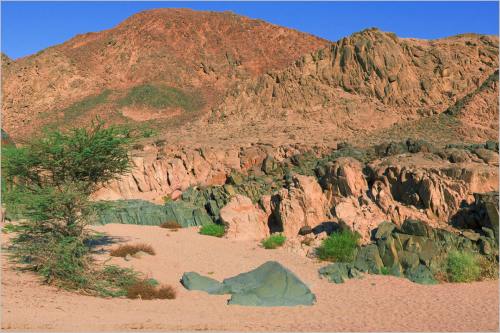 An image from the Sinai Desert
.
.
Click the link below for images:
.
__________________________________________
The Mysterious Math of Perfection
June 11, 2021
Business, Food For Thought, Human Interest, Science, Technical amazon, business, Business News, current-events, Future, Hotels, human-rights, medicine, mental-health, research, Science, Science News, technology, Technology News, travel, vacation Leave a comment
Click the link below the picture
.
Mona Lisa’s smile. Mary Lou Retton’s Olympic vault. Mariah Carey’s musical pitch. All are considered perfect. So are the numbers 6 and 28.
With feats of artistry and athleticism, perfection lies in the eye of the beholder. But for numbers, perfection is mathematically defined. “Perfect numbers” are equal to the sum of their “proper” divisors (positive integers that divide a number evenly, not counting itself). For example, 6 = 3 + 2 + 1, and 28 = 14 + 7 + 4 + 2 + 1. While these mathematical curiosities are about as likely to grace the walls of the Louvre as they are to perform a twisting layout back somersault, they do offer something irresistible: a perfect mystery.
Euclid laid out the basics of perfect numbers over 2,000 years ago, and he knew that the first four perfect numbers were 6, 28, 496, and 8,128. Since then, many more perfect numbers have been discovered. But, curiously, they’re all even. No one has been able to find an odd perfect number, and after thousands of years of unsuccessful searching, it might be tempting to conclude that odd perfect numbers don’t exist. But mathematicians haven’t been able to prove that either. How is it that we can know so much about even perfect numbers without being able to answer the simplest question about an odd one? And how are modern mathematicians trying to resolve this ancient question?
.
 BIG MOUTH for Quanta Magazine
.
.
Click the link below for the article:
.
__________________________________________
How to disconnect and truly enjoy your summer vacation
June 11, 2021
Business, Human Interest, Technical amazon, business, Business News, current-events, Future, Hotels, human-rights, medicine, mental-health, research, Science, Science News, technology, Technology News, travel, vacation Leave a comment

Click the link below the picture
.
Memorial Day weekend kicks off the unofficial summer on Monday, which means you might have a vacation planned soon. But, most of us have become glued to our screens and, if you work a lot, you might find yourself tempted to bring along a business laptop or answer emails, even when you’re at the beach or on a road trip with your kids.
If your workplace allows you to truly disconnect — some managers even encourage it to prevent burnout — here are some tips that can help you get in the right mindset to really enjoy your time off.
Remove work apps like Slack from your phone that constantly draw you back in. Don’t worry, you can reinstall it in a matter of seconds when you return. With it available, you may find yourself habitually peaking in, even when nobody needs or wants to chat with you, rather than enjoying dinner with your family.
Those notifications can ping you on certain keywords or if a co-worker wants you to see something. As long as your managers know you’re out — and know how to reach you in case of emergency — there’s no need to leave Slack or other corporate chat apps installed.
.

Aleksandar Nakic | Getty Images
.
.
Click the link below for the article:
.
__________________________________________
Riyadh, Saudi, Arabia
June 10, 2021
Business, Enthralling, Human Interest, Photographs amazon, business, Business News, current-events, Future, Hotels, human-rights, medicine, mental-health, research, Science, Science News, technology, Technology News, travel, vacation Leave a comment
Click the link below the picture
.
Riyadh is the capital of Saudi Arabia and the largest city on the Arabian Peninsula. Located in the center of the an-Nafud desert, on the eastern part of the Najd plateau, the city sits at an average of 600 meters (2,000 ft) above sea level, and receives around 5 million tourists each year, making it the forty-ninth most visited city in the world and the 6th in the Middle East. Riyadh had a population of 7.6 million people in 2019, making it the most-populous city in Saudi Arabia, 3rd most populous in the Middle East, and 38th most populous in Asia.
The first mentioning of the city by the name Riyadh was in 1590, by an early Arab chronicler. In 1737, Deham Ibn Dawwas, who was from the neighboring Manfuha, settled in and took control of the city. Deham built a wall around the city, and the best-known source of the name Riyadh is from this period, thought to be referring to the earlier oasis towns that predated the wall built by Ibn Dawwas. In 1744, Muhammad ibn ‘Abd al-Wahhab formed an alliance with the Emir of Dir’iyah, Muhammad bin Saud, and in 1774, they took Riyadh from Deham. However their state, now known as the First Saudi State, came to a collapse in 1818. Turki ibn Abdullah founded the Second Saudi State in the early 19th century and made Riyadh his capital in 1825. However, his reign over the city was disrupted by a joint Ottoman–Rashidi alliance. Finally, in the early 20th century, ‘Abdulaziz ibn Saud, known in the west simply as Ibn Saud, retrieved his ancestral kingdom of Najd in 1902 and consolidated his rule by 1926 with the final Saudi conquest of Hejaz. After this he named his kingdom Saudi Arabia in September 1932 with Riyadh as the capital. Wikipedia
.
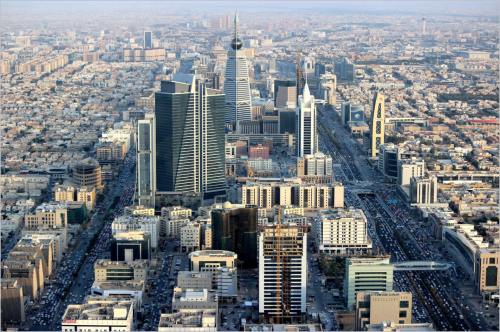 An image from Riyadh, Saudi, Arabia
.
.
Click the link below for images:
.
__________________________________________
Six Ways to Stop the Internet from Ruining Your Day
June 10, 2021
Business, Food For Thought, Human Interest, Technical amazon, business, Business News, current-events, Future, Hotels, human-rights, medicine, mental-health, research, Science, Science News, technology, Technology News, travel, vacation 2 Comments

Click the link below the picture
.
According to Nielsen, the average American spends three hours a day staring into a phone or tablet. Factor in TVs and computers, and it’s up to about nine hours in the glow of a screen. That’s a lot of time that could be better used for professional gain. In his book, Digital Minimalism, technology and productivity expert Cal Newport offers advice on how to free yourself from the tyranny of email, social media, and other digital services.
.

Illustrations by César Pelizer for Bloomberg Businessweek.
.
.
Click the link below for the article:
.
__________________________________________
Black Holes May Not Be Black. Or Even Holes.
June 10, 2021
Business, Food For Thought, Human Interest, Science, Technical amazon, business, Business News, current-events, Future, Hotels, human-rights, medicine, mental-health, research, Science, Science News, technology, Technology News, travel, vacation Leave a comment

Click the link below the picture
.
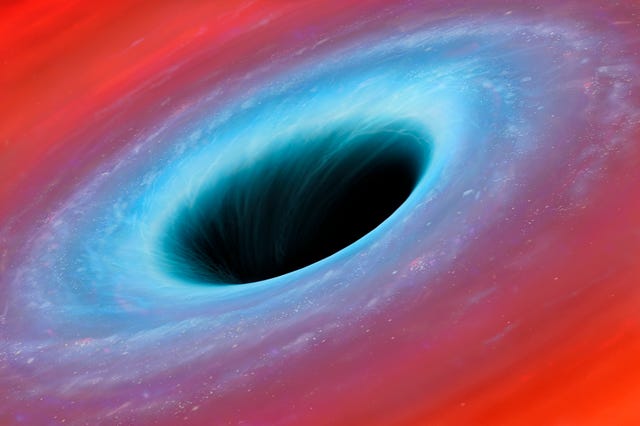
What if black holes, those all-consuming gravitational behemoths of the cosmos, aren’t actually black at all—or even holes, for that matter? Instead, a new theory suggests black holes may be dark stars with hearts of extremely dense, exotic matter. This could help explain one of the biggest mysteries of the universe: the origin and nature of dark matter.
Black holes are real-life examples of Albert Einstein’s general theory of relativity taken to the extreme. They’re places in the universe where enormously dense amounts of matter stretch the fabric of space and time to its limit, forming an infinitely deep gravitational well that not even light can escape—hence the “black hole” name.
Scientists believe at the center of each black hole, there lies an infinitely small and dense point called a singularity. Gravity is so strong at the singularity that it forms an event horizon surrounding it, where the pull of gravity surpasses even the speed of light.
.
MARK GARLICKGetty Images
.
.
Click the link below for the article:
.
__________________________________________
Antarctica Wildlife
June 9, 2021
Business, Enthralling, Human Interest, Photographs amazon, business, Business News, current-events, Future, Hotels, human-rights, medicine, mental-health, research, Science, Science News, technology, Technology News, travel, vacation Leave a comment
Click the link below the picture
.
The wildlife of Antarctica is extremophiles, having to adapt to the dryness, low temperatures, and high exposure common in Antarctica. The extreme weather of the interior contrasts with the relatively mild conditions on the Antarctic Peninsula and the subantarctic islands, which have warmer temperatures and more liquid water. Much of the ocean around the mainland is covered by sea ice. The oceans themselves are a more stable environment for life, both in the water column and on the seabed.
There is relatively little diversity in Antarctica compared to much of the rest of the world. Terrestrial life is concentrated in areas near the coast. Flying birds nest on the milder shores of the Peninsula and the subantarctic islands. Eight species of penguins inhabit Antarctica and its offshore islands. They share these areas with seven pinniped species. The Southern Ocean around Antarctica is home to 10 cetaceans, many of them migratory. There are very few terrestrial invertebrates on the mainland, although the species that do live there have high population densities. High densities of invertebrates also live in the ocean, with Antarctic krill forming dense and widespread swarms during the summer. Benthic animal communities also exist around the continent.
Over 1000 fungi species have been found on and around Antarctica. Larger species are restricted to the subantarctic islands, and the majority of species discovered have been terrestrial. Plants are similarly restricted mostly to the subantarctic islands and the western edge of the Peninsula. Some mosses and lichens however can be found even in the dry interior. Many algae are found around Antarctica, especially phytoplankton, which form the basis of many of Antarctica’s food webs.
Human activity has caused introduced species to gain a foothold in the area, threatening the native wildlife. A history of overfishing and hunting has left many species with greatly reduced numbers. Pollution, habitat destruction, and climate change pose great risks to the environment. The Antarctic Treaty System is a global treaty designed to preserve Antarctica as a place of research, and measures from this system are used to regulate human activity in Antarctica.
.
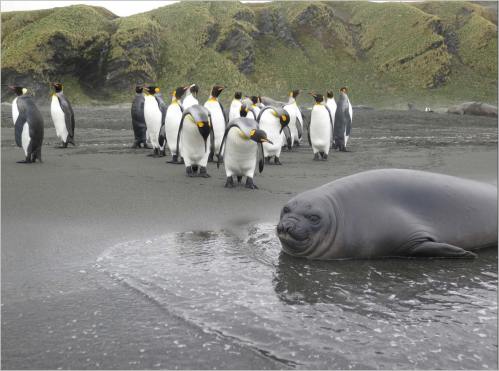 An image from Antarctica
.
.
Click the link below for images:
.
__________________________________________
The rice of the sea: how a tiny grain could change the way humanity eats
June 9, 2021
Business, Food For Thought, Human Interest, Science, Technical amazon, business, Business News, current-events, Future, Hotels, human-rights, medicine, mental-health, research, Science, Science News, technology, Technology News, travel, vacation Leave a comment
Some content on this page was disabled on April 15, 2025 as a result of a DMCA takedown notice from Guardian Media Group. You can learn more about the DMCA here:
Long Slide Looms for World Population, With Sweeping Ramifications
June 9, 2021
Business, Food For Thought, Human Interest, Science, Technical amazon, business, Business News, current-events, Future, Hotels, human-rights, medicine, mental-health, research, Science, Science News, technology, Technology News, travel, vacation Leave a comment

Click the link below the picture
.
All over the world, countries are confronting population stagnation and a fertility bust, a dizzying reversal unmatched in recorded history that will make first-birthday parties a rarer sight than funerals, and empty homes a common eyesore.
Maternity wards are already shutting down in Italy. Ghost cities are appearing in northeastern China. Universities in South Korea can’t find enough students, and in Germany, hundreds of thousands of properties have been razed, with the land turned into parks.
Like an avalanche, the demographic forces — pushing toward more deaths than births — seem to be expanding and accelerating. Though some countries continue to see their populations grow, especially in Africa, fertility rates are falling nearly everywhere else. Demographers now predict that by the latter half of the century or possibly earlier, the global population will enter a sustained decline for the first time.
A planet with fewer people could ease pressure on resources, slow the destructive impact of climate change and reduce household burdens for women. But the census announcements this month from China and the United States, which showed the slowest rates of population growth in decades for both countries, also point to hard-to-fathom adjustments.
.
 Credit…Gilles Sabrié for The New York Times
.
.
Click the link below for the article:
.
__________________________________________

