Issues of equality and acceptance of transgender and nonbinary people — along with challenges to their rights — have become a major topic in the headlines. These issues can involve words and ideas and identities that are new to some.
That’s why we’ve put together a glossary of terms relating to gender identity. Our goal is to help people communicate accurately and respectfully with one another.
Proper use of gender identity terms, including pronouns, is a crucial way to signal courtesy and acceptance. Alex Schmider, associate director of transgender representation at GLAAD, compares using someone’s correct pronouns to pronouncing their name correctly – “a way of respecting them and referring to them in a way that’s consistent and true to who they are.”
.
“Pronouns are basically how we identify ourselves apart from our name. It’s how someone refers to you in conversation,” says Mary Emily O’Hara, a communications officer at GLAAD. “And when you’re speaking to people, it’s a really simple way to affirm their identity.”
14 By the power of your hand, O Lord, destroy those who look to this world for their reward. But satisfy the hunger of your treasured ones. May their children have plenty, leaving an inheritance for their descendants
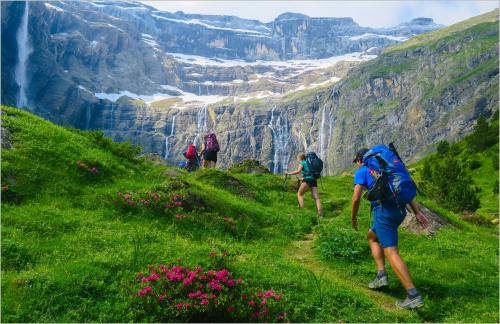
Chamonix-Mont-Blanc, more commonly known as Chamonix, is a commune in the Haute-Savoie department in the Auvergne-Rhône-Alpes region of Southeastern France. It was the site of the first Winter Olympics in 1924. In 2017, it had a population of 8,611.
Situated to the north of Mont Blanc, between the peaks of the Aiguilles Rouges and the notable Aiguille du Midi, Chamonix is one of the oldest ski resorts in France. The Chamonix commune is popular with skiers and mountain enthusiasts; via the cable car lift to the Aiguille du Midi, it is possible to access the off-piste (backcountry) ski run of the Vallée Blanche.
Chamonix is the fourth-largest commune in metropolitan France, with an area of 245 km2 (95 sq mi). Its population of around 8,900 ranks 1,089th within the country of France. Wikipedia
Veronica started using filters to edit pictures of herself on social media when she was 14 years old. She remembers everyone in her middle school being excited by the technology when it became available, and they had fun playing with it. “It was kind of a joke,” she says. “People weren’t trying to look good when they used the filters.”
But her younger sister, Sophia, who was a fifth-grader at the time, disagrees. “I definitely was—me and my friends definitely were,” she says. “Twelve-year-old girls having access to something that makes you not look like you’re 12? Like, that’s the coolest thing ever. You feel so pretty.”
When augmented-reality face filters first appeared on social media, they were a gimmick. They allowed users to play a kind of virtual dress-up: change your face to look like an animal, or suddenly grow a mustache, for example. Today, though, more and more young people—and especially teenage girls—are using filters that “beautify” their appearance and promise to deliver model-esque looks by sharpening, shrinking, enhancing, and recoloring their faces and bodies. Veronica and Sophia are both avid users of Snapchat, Instagram, and TikTok, where these filters are popular with millions of people. Through swipes and clicks, the array of face filters enable them to adjust their own image, and even sift through different identities, with new ease and flexibility.
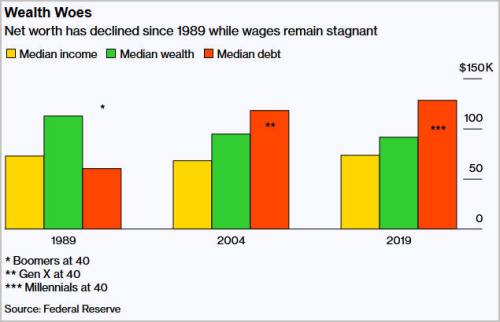
In almost every way measurable, millennials in the U.S. at 40 are doing worse financially than the generations that came before them.
Fewer millennials own homes than their parents did at their age. They have more debt — especially student debt. They simply aren’t as wealthy.
Now, if predictions of a long, post-Covid economic boom are to be believed, this may be the last opportunity an entire generation has to build wealth before heading off into retirement.
For Kellie Beach, a real-estate attorney who turned 40 in April, that means starting by aggressively paying down her credit-card debt. Beach has cycled between periods of carrying balances and paying it all off. “I stayed afloat with credit cards,” she said. “I was just used to swiping and overspending.”
The pandemic jolted her into taking a hard look at her habits.
“Now I have this feeling — like this fire — of urgency,” Beach said. “I’m not going to be in this place again. I can’t wait to get out of this debt. I can’t wait to save up for my emergency fund and invest again.”
It was 9 a.m. on a Sunday in May, and Chloe Mead was already worn out.
In her living room, she cradled her 7-year-old son, Henry, supporting his head with one hand and helping him toss a ball with the other, careful not to disturb the ventilator that was keeping him alive. A nearby monitor tracked his blood-oxygen levels and a pump was at the ready should his tracheotomy tube need cleaning. In the corner, her 4-year-old daughter was building a pillow fort.
“I need, like, five extra arms,” she said.
Ordinarily, she wouldn’t be by herself. Since infancy, Henry, who has spinal muscular atrophy, a rare muscle-wasting disorder, has had intensive, round-the-clock nursing at home, with Ms. Mead and her husband serving as fallbacks when a nurse unexpectedly cancels a shift.
But the recent shortage of home-care nurses has forced the couple, who live in Queens, to handle longer and longer periods on their own — as many as 36 hours at a stretch. That morning, her husband, Andy Maskin, was catching up on sleep so he could take that night’s late shift, from 2 a.m. until 7 a.m., when he begins his own workweek.
.
Chloe Mead and Andy Maskin tended to their 7-year-old son, Henry, who requires 24-hour medical care. Credit…Brittainy Newman for The New York Times
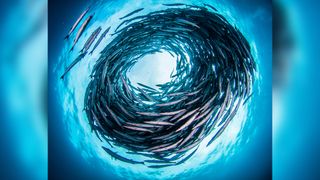
Fish school, insects swarm, and birds fly in murmurations. Now, new research finds that on the most basic level, this kind of group behavior forms a new kind of active matter, called a swirlonic state.
Physical laws such as Newton’s second law of motion — which states that as a force applied to an object increases, its acceleration increases, and that as the object’s mass increases, its acceleration decreases — apply to passive, nonliving matter, ranging from atoms to planets. But much of the matter in the world is active matter and moves under its own, self-directed, force, said Nikolai Brilliantov, a mathematician at Skolkovo Institute of Science and Technology in Russia and the University of Leicester in England. Living things as diverse as bacteria, birds and humans can interact with the forces upon them. There are examples of non-living active matter, too. Nanoparticles known as “Janus particles,” are made up of two sides with different chemical properties. The interactions between the two sides create self-propelled movement.
To explore active matter, Brilliantov and his colleagues used a computer to simulate particles that could self-propel. These particles weren’t consciously interacting with the environment, Brilliantov told Live Science. Rather, they were more akin to simple bacteria or nanoparticles with internal sources of energy, but without information-processing abilities.
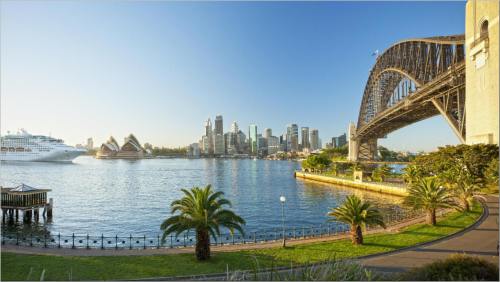
Sydney is the capital city of the state of New South Wales, and the most populous city in Australia and Oceania. Located on Australia’s east coast, the metropolis surrounds Port Jackson and extends about 70 km (43.5 mi) on its periphery towards the Blue Mountains to the west, Hawkesbury to the north, the Royal National Park to the south, and Macarthur to the south-west. Sydney is made up of 658 suburbs, spread across 33 local government areas. Informally there are at least 15 regions. Residents of the city are known as “Sydneysiders”. As of June 2020, Sydney’s estimated metropolitan population was 5,367,206, meaning the city is home to approximately 66% of the state’s population.
Indigenous Australians have inhabited the Sydney area for at least 30,000 years, and thousands of engravings remain throughout the region, making it one of the richest in Australia in terms of Aboriginal archaeological sites. Around 29 clan groups of the Eora Nation inhabited the region at the time of European contact. During his first Pacific voyage in 1770, Lieutenant James Cook and his crew became the first Europeans to chart the eastern coast of Australia, making landfall at Botany Bay and inspiring British interest in the area. In 1788, the First Fleet of convicts, led by Arthur Phillip, founded Sydney as a British penal colony, the first European settlement in Australia. Phillip named the settlement after Thomas Townshend, 1st Viscount Sydney. Penal transportation to New South Wales ended soon after Sydney was incorporated as a city in 1842. A gold rush occurred in the colony in 1851, and over the next century, Sydney transformed from a colonial outpost into a major global cultural and economic center. After World War II, it experienced mass migration and became one of the most multicultural cities in the world. At the time of the 2011 census, more than 250 different languages were spoken in Sydney. In the 2016 Census, about 35.8% of residents spoke a language other than English at home. Furthermore, 45.4% of the population reported having been born overseas, and the city has the third-largest foreign-born population of any city in the world after London and New York City. Between 1971 and 2018, Sydney lost a net number of 716,832 people to the rest of Australia but its population has continued to grow, largely due to immigration. Wikipedia
This much is clear: The coronavirus is becoming more transmissible. Ever since the virus emerged in China, it has been gaining mutations that help it spread more easily among humans. The Alpha variant, first detected in the United Kingdom last year, is 50 percent more transmissible than the original version, and now the Delta variant, first detected in India, is at least 40 percent more transmissible than Alpha.
What’s less certain, however, is how the virus’s increased transmissibility will affect the pandemic in the United States. Alpha’s arrival prompted worries about a new surge in the spring, but one never came. The proportion of Alpha cases kept going up, but the total number of cases kept going down. People got vaccinated. Alpha became dominant in the U.S. Cases fell even further. The virus had become more biologically transmissible, but it wasn’t being transmitted to more people.
There was one notable and confusing exception: In April, Michigan experienced a spike in cases that experts believe was indeed fueled by Alpha. The fact that the variant had such different consequences for Michigan than it did for the rest of the country shows just how difficult it is to make predictions. Vaccines protect against Alpha, but fears about the variants that slightly erode vaccine protection, Beta and Gamma, have also quieted; neither is causing significant case spikes among the vaccinated. “If there’s ever a time that we needed to be humble, it’s around this issue,” says Michael Osterholm, an infectious-disease epidemiologist at the University of Minnesota.
In the world, human beings are facing various problems. People who are full of greed, anger, and ignorance are seen to be fighting with each other in words and deeds. As the fighting continues, various problems such as civil wars, wars of aggression, and wars of aggression are occurring. As world peace is being destroyed, humans are facing unbearable problems. Innocent children and women are not getting the rights they deserve and deserve. I can't think of one thing every time. What is it? The United Nations. If we look at the responsibilities and duties of the United Nations, I think it is not suitable for solving the problems that are happening in the world today. In fact, the United Nations and the World Security Council, such an organization must rule the world, must be able to give orders, and must have various ways to obey orders. There must be no organization that can influence more than that organization. There should be experts from each country. They can even dominate the superpowers like the US, China, and Britain. Only then will global peace be achieved quickly. Now, if a country with power develops more militarily, economically, or socially than its own country, then powerful countries will jealously seek out enemies and wage war. Or they will attack with fighter jets. In this, innocent people are losing their lives. No one understands the value of a life. You should think about how to achieve global peace by controlling these. If the US continues to be the permanent president of the UN, world peace will never be achieved. If you think carefully, no one sees that they are working for the common good, but for their own benefit, for the benefit of their own country. The permanent president of the UN and the Security Council has rejected this, As a young Rohingya, I have come to realize that only by electing the president and secretary from among the countries in the world through a secret ballot system and governing the world fairly can we achieve global peace. The United Nations and the Security Council are organizations in which any country must govern, give orders, and make them obey their orders. For example, only when a defendant is tried in court can we hold the leaders of the countries in check and control them, can we achieve global peace smoothly. Otherwise, it will not be easy for powerful countries to use various excuses to end this war every year, every year, for the benefit of themselves and their countries. No country's leaders pay any attention to the words of the United Nations and the Security Council. If we look at it in practice, look at the Rohingya issue. Myanmar is a small country. Even that country has been under siege for 8 years. What action can be taken? Why is the UN and the Security Council Powerless? Without such Power, how can the organization bring about global peace? Everyone should think about it. Whether there is a veto or a strong one, all countries in the world can only achieve global peace if they are subject to the UN and the Security Council. Seek peace in the quiet embrace of nature. Peace is an indispensable need of the human race. It is not as if one person can kill another person, and it is as if one country can attack another country, but instead of trying to build peace, we must try to destroy the peace now, and the world is getting hotter and is on the verge of collapse. I especially appeal to all the world experts to urgently try to bring about peace in all parts of the world. Mr, Noor Muhamed Arkhan Rohingya Youth Myanmar
Film and Writing Festival for Comedy. Showcasing best of comedy short films at the FEEDBACK Film Festival. Plus, showcasing best of comedy novels, short stories, poems, screenplays (TV, short, feature) at the festival performed by professional actors.






 .
.








 Xia Yang / Getty / The Atlantic
