Literally translated into English as the ‘Green Coast’, the Costa Verde is situated at the base of the Bay of Biscay in the northern region of Asturias and Cantabria in Spain. Its stunning coastline stretches the length of the Basque region until reaching France. The Costa Verde is sheltered by the Cantabrian Mountains, which provide the perfect backdrop to this beautiful stretch of coastline as well as offering a great opportunity for hiking. Rightly names the ‘Green Coast’, the area is abundant with lush vegetation and scenery which contrasts with the golden sand of its shores. The quality of the coast’s vegetation is mainly owing to the area’s particular climate which is typical of any resort fed off the northern Atlantic coast. Summers are mainly warm and dry however there can be rainy periods and these continue throughout the winter, however, the result is beautiful.
Last September, a wildfire tore through one of Dario Sattui’s Napa Valley wineries, destroying millions of dollars in property and equipment, along with 9,000 cases of wine.
November brought a second disaster: Mr. Sattui realized the precious crop of cabernet grapes that survived the fire had been ruined by the smoke. There would be no 2020 vintage.
A freakishly dry winter led to a third calamity: By spring, the reservoir at another of Mr. Sattui’s vineyards was all but empty, meaning little water to irrigate the new crop.
Finally, in March, came the fourth blow: Mr. Sattui’s insurers said they would no longer cover the winery that had burned down. Neither would any other company. In the patois of insurance, the winery will go bare into this year’s burning season, which experts predict to be especially fierce.
.
Stuart Smith, owner of Smith Madrone Vineyards & Winery, inspected burned tree stumps near his vineyards, which were charred in last year’s wildfires, in St. Helena, Calif.Credit…Mike Kai Chen for The New York Times
IQ is often hailed as a crucial driver of success, particularly in fields such as science, innovation, and technology. In fact, many people have an endless fascination with the IQ scores of famous people. But the truth is that some of the greatest achievements by our species have primarily relied on qualities such as creativity, imagination, curiosity, and empathy.
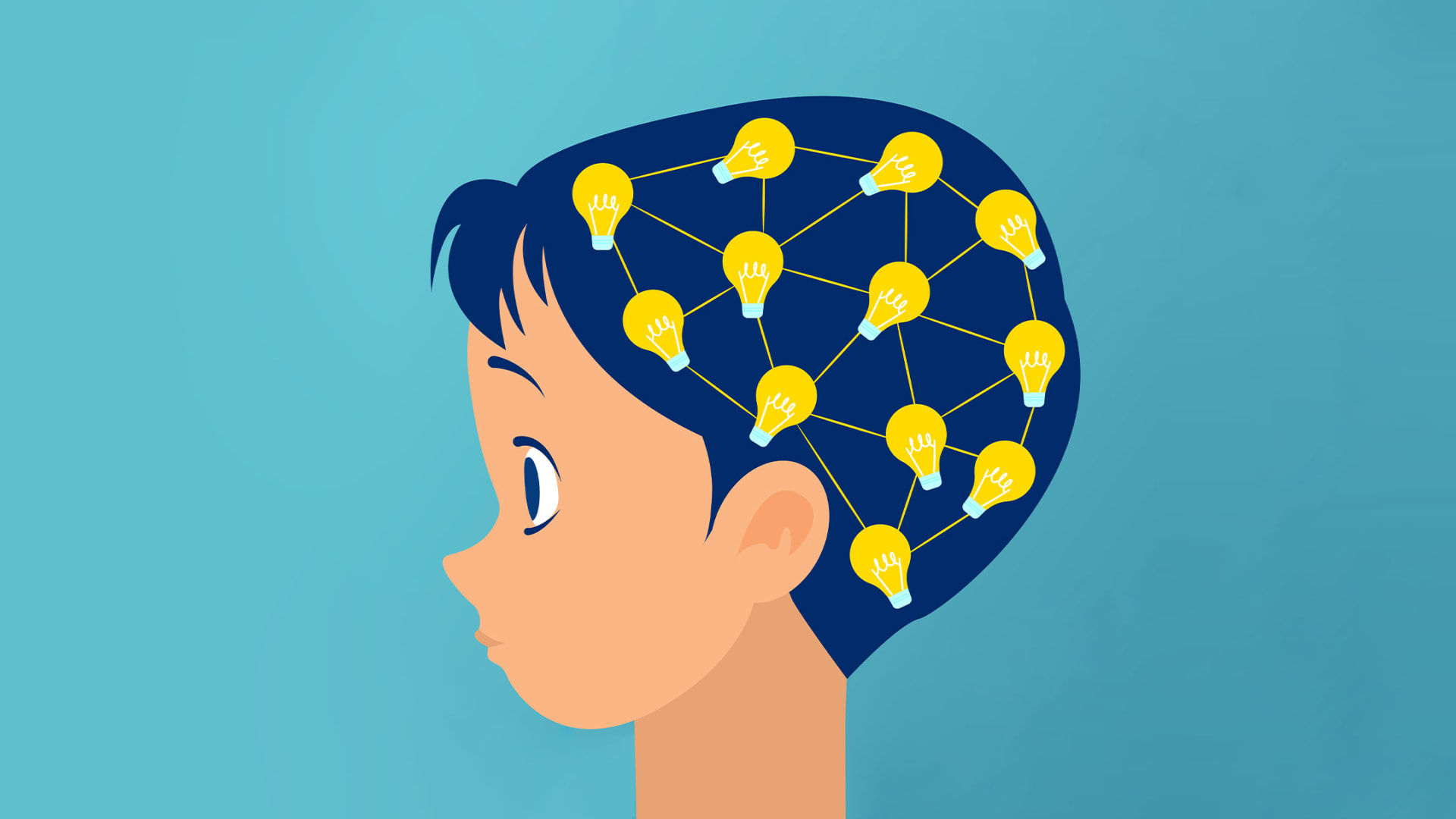
Many of these traits are embedded in what scientists call “cognitive flexibility” – a skill that enables us to switch between different concepts or to adapt behavior to achieve goals in a novel or changing environment. It is essentially about learning to learn and being able to be flexible about the way you learn. This includes changing strategies for optimal decision-making. In our ongoing research, we are trying to work out how people can best boost their cognitive flexibility.
Cognitive flexibility provides us with the ability to see that what we are doing is not leading to success and to make the appropriate changes to achieve it. If you normally take the same route to work, but there are now roadworks on your usual route, what do you do? Some people remain rigid and stick to the original plan, despite the delay. More flexible people adapt to an unexpected event and problem-solve to find a solution.
.
Einstein thought imagination was crucial. Robert and Talbot Trudeau/Flickr, CC BY-NC
Verona is a city on the Adige River in Veneto, Italy, with 259,610 inhabitants. It is one of the seven provincial capitals of the region. It is the largest city municipality in the region and the second largest in northeast Italy. The metropolitan area of Verona covers an area of 1,426 km2 (550.58 sq mi) and has a population of 714,310 inhabitants. It is one of the main tourist destinations in northern Italy because of its artistic heritage and several annual fairs, shows, and operas, such as the lyrical season in the Arena, an ancient Roman amphitheater.
Between the 13th and 14th century the city was ruled by the Della Scala Family. Under the rule of the family, in particular of Cangrande I della Scala, the city experienced great prosperity, becoming rich and powerful and being surrounded by new walls. The Della Scala era is survived in numerous monuments around Verona.
Two of William Shakespeare’s plays are set in Verona: Romeo and Juliet (which also features Romeo’s sojourn to Mantua) and The Two Gentlemen of Verona. It is unknown if Shakespeare ever visited Verona or Italy, but his plays have lured many visitors to Verona and surrounding cities. Verona was also the birthplace of Isotta Nogarola, who is said to be the first major female humanist and one of the most important humanists of the Renaissance. The city has been declared a World Heritage Site by UNESCO because of its urban structure and architecture. Wikipedia
As America struggled to recover from a global pandemic, a shattered economy, and record unemployment levels, headlines despaired: “NECKTIES DOOMED.” Men were “slashing their clothing bills” to retailers’ chagrin, the Associated Press reported. Those who continued to wear ties were downgrading from colorful, expensive silk to plain, cheap cotton. The year was 1921, and reports of the tie’s death were premature, to say the least.
A century later, as Americans begin to emerge from another financially devastating pandemic, another rash of headlines is predicting the tie’s imminent demise. Last fall, the Financial Times wondered, “Is This the End of the Tie?” More recently, The Wall Street Journal asked, “Will Ties Ever Be Relevant Again?” For more than a year, many men who once felt bound to wear ties have shown up on Zoom each day wearing polos or even T-shirts. Now that they have tasted freedom from the necktie—and have seen their colleagues, clients, and bosses doing the same—how can they ever go back to working with their necks encumbered?
After this pandemic, many fewer men will have to. The arc of fashion has always bent toward informality (and androgyny—since the late 1800s, women have sometimes worn ties too). But a major disruption—like a war, a recession, or a global pandemic—can accelerate that natural change. Ties as an everyday accessory have certainly taken a hit, from which they’re unlikely to recover fully. The deeper functions that ties have long provided—such as social signaling and personal expression—will be absorbed by other garments. But ties will continue to be worn on the most formal occasions, and as quirky accoutrements for the self-consciously old-fashioned or whimsical. In other words, neckties are the new bow ties.
Paleobotanist Scott Wing hopes that he’s wrong. Even though he carefully counted each ring in an immense, ancient slab of sequoia, the scientist notes that there’s always a little bit of uncertainty in the count. Wing came up with about 260, but, he says, it’s likely a young visitor may one day write him saying: “You’re off by three.” And that would a good thing, Wing says, because it’d be another moment in our ongoing conversation about time.
The shining slab, preserved and polished, is the keystone to consideration of time and our place in it in the “Hall of Fossils—Deep Time” exhibition at the Smithsonian’s National Museum of Natural History. The fossil greets visitors at one of the show’s entrances and just like the physical tree, what the sequoia represents has layers.
Each yearly delineation on the sequoia’s surface is a small part of a far grander story that ties together all of life on Earth. Scientists know this as Deep Time. It’s not just on the scale of centuries, millennia, epochs, or periods, but the ongoing flow that goes back to the origins of our universe, the formation of the Earth, and the evolution of all life, up through this present moment. It’s the backdrop for everything we see around us today, and it can be understood through techniques as different as absolute dating of radioactive minerals and counting the rings of a prehistoric tree. Each part informs the whole.
.
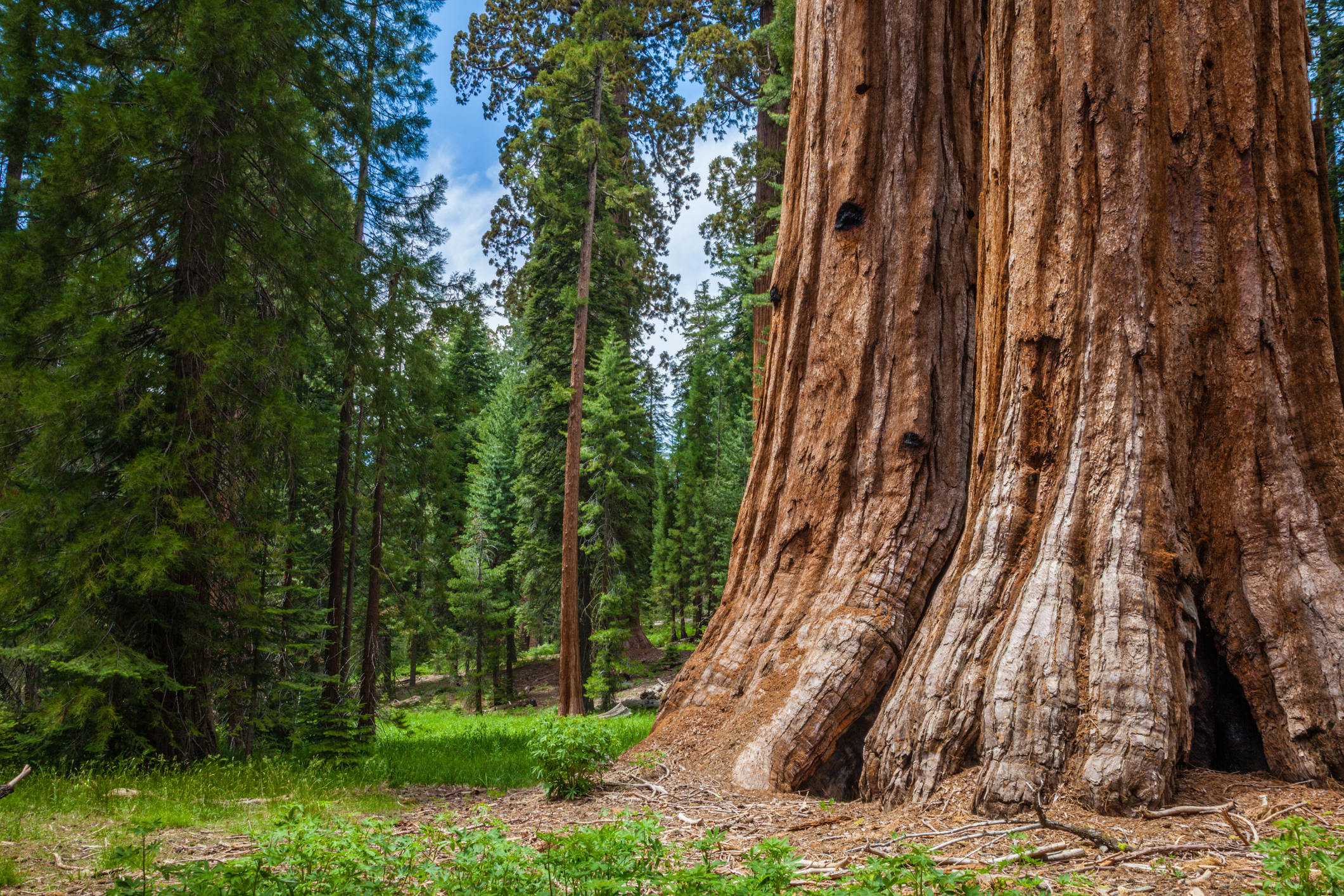
How many answers are hidden inside the giants? Photo by Kelly Cheng Travel Photography / Getty Images.
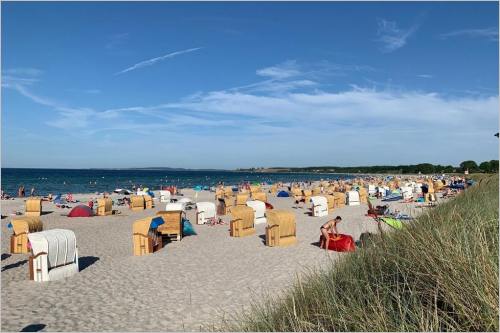
Behrensdorf is a municipality in the district of Plön, in Schleswig-Holstein, Germany.It lies on the western shore of Hohwacht Bay on the Baltic Sea coast. About one kilometer to the north is the eighty-year-old Neuland Lighthouse.
If race is largely a social construct, then teaching children about it will only perpetuate racism — right? Wrong: Studies show precisely the opposite. Open conversations about race and racism can make white children less prejudiced and can increase the self-esteem of children of color.
If states ban the teaching of critical race theory, as conservative lawmakers in many are attempting to do, or if schools don’t provide consistent education about racism and discrimination, it’s imperative that parents pick up the slack.
Even if we don’t want them to, children do notice differences in race and skin color. And that means that attempts to suppress discussions about race and racism are misguided. Those efforts won’t eliminate prejudice. They may, in fact, make it worse.
So-called colorblind parenting — avoiding the topic of race in an effort to raise children who aren’t prejudiced — is not just unhelpful, it actually perpetuates racism. That’s because racism isn’t driven solely by individual prejudice. It’s a system of inequity bolstered by racist laws and policies — the very fact that opponents of teaching critical race theory are trying to erase.
As business consultant Peter Drucker once said, “You cannot predict the future, but you can create it.” Many businesses strive to create the future, but few understand what it takes to get teams to create new and innovative ideas in a repeatable manner.
Over the last 25 years of my career, I’ve found that organizations big and small often struggle to create repeatable approaches and processes that keep them truly competitive. 50 years ago, a little-known children’s book introduced the “SCAMPER” model as a way to help teachers foster creativity in their classrooms. It’s an amazingly simple tool, and unbelievably powerful for pushing thinking beyond “business as usual.”
Here’s how it works. SCAMPER is an acronym. SCAMPER stands for Substitute, Combine, Adapt, Modify, Put to Another Use, Eliminate, and Reverse. This acronym is used to help prompt people to think differently than the norm. Each letter prompts people to answer a question related to the framework. It’s flexible. Select one letter or move through them in sequence.
SCAMPER can be used to generate ideas for improving existing offerings or business processes, or innovating completely new products and services. Once a set of ideas or concepts are developed, the best ideas should be selected and further refined through sharing and testing ideas with colleagues and customers.
It’s no secret that employee-employer tensions about heading back to the workplace are growing. As more employers push to get employees back in-house, the workers themselves are taking a harder stand. An April 2021 survey by FlexJobs found that 60% of women and 52% of men would quit if they weren’t allowed to continue working remotely at least part of the time. Sixty-nine percent of men and 80% of women said that remote work options are among their top considerations when looking for a new job.
The “official” reasons that they don’t want to head back to the workplace are well-documented. They’re more productive. It’s easier to blend work and life when your commute is a walk down the hallway. But, for some, the reasons are more personal and difficult to share. Who will walk the dog they adopted during the pandemic? They gained weight and need to buy new work clothes. The thought of being trapped in a cubicle all day makes them want to cry.
We spoke with several people who shared their very personal reasons why they don’t want to return to work. (Because of the sensitive nature of some of the comments, Fast Company has allowed some of the individuals to use a pseudonym to protect their identities.)
In the world, human beings are facing various problems. People who are full of greed, anger, and ignorance are seen to be fighting with each other in words and deeds. As the fighting continues, various problems such as civil wars, wars of aggression, and wars of aggression are occurring. As world peace is being destroyed, humans are facing unbearable problems. Innocent children and women are not getting the rights they deserve and deserve. I can't think of one thing every time. What is it? The United Nations. If we look at the responsibilities and duties of the United Nations, I think it is not suitable for solving the problems that are happening in the world today. In fact, the United Nations and the World Security Council, such an organization must rule the world, must be able to give orders, and must have various ways to obey orders. There must be no organization that can influence more than that organization. There should be experts from each country. They can even dominate the superpowers like the US, China, and Britain. Only then will global peace be achieved quickly. Now, if a country with power develops more militarily, economically, or socially than its own country, then powerful countries will jealously seek out enemies and wage war. Or they will attack with fighter jets. In this, innocent people are losing their lives. No one understands the value of a life. You should think about how to achieve global peace by controlling these. If the US continues to be the permanent president of the UN, world peace will never be achieved. If you think carefully, no one sees that they are working for the common good, but for their own benefit, for the benefit of their own country. The permanent president of the UN and the Security Council has rejected this, As a young Rohingya, I have come to realize that only by electing the president and secretary from among the countries in the world through a secret ballot system and governing the world fairly can we achieve global peace. The United Nations and the Security Council are organizations in which any country must govern, give orders, and make them obey their orders. For example, only when a defendant is tried in court can we hold the leaders of the countries in check and control them, can we achieve global peace smoothly. Otherwise, it will not be easy for powerful countries to use various excuses to end this war every year, every year, for the benefit of themselves and their countries. No country's leaders pay any attention to the words of the United Nations and the Security Council. If we look at it in practice, look at the Rohingya issue. Myanmar is a small country. Even that country has been under siege for 8 years. What action can be taken? Why is the UN and the Security Council Powerless? Without such Power, how can the organization bring about global peace? Everyone should think about it. Whether there is a veto or a strong one, all countries in the world can only achieve global peace if they are subject to the UN and the Security Council. Seek peace in the quiet embrace of nature. Peace is an indispensable need of the human race. It is not as if one person can kill another person, and it is as if one country can attack another country, but instead of trying to build peace, we must try to destroy the peace now, and the world is getting hotter and is on the verge of collapse. I especially appeal to all the world experts to urgently try to bring about peace in all parts of the world. Mr, Noor Muhamed Arkhan Rohingya Youth Myanmar
Film and Writing Festival for Comedy. Showcasing best of comedy short films at the FEEDBACK Film Festival. Plus, showcasing best of comedy novels, short stories, poems, screenplays (TV, short, feature) at the festival performed by professional actors.

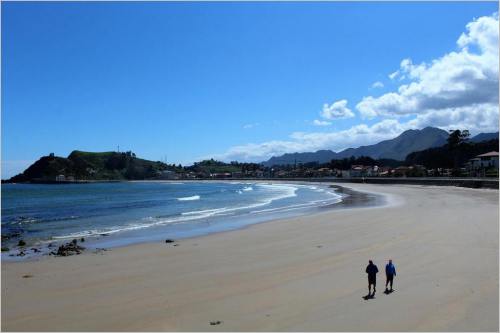 An image from Costa Verde Spain


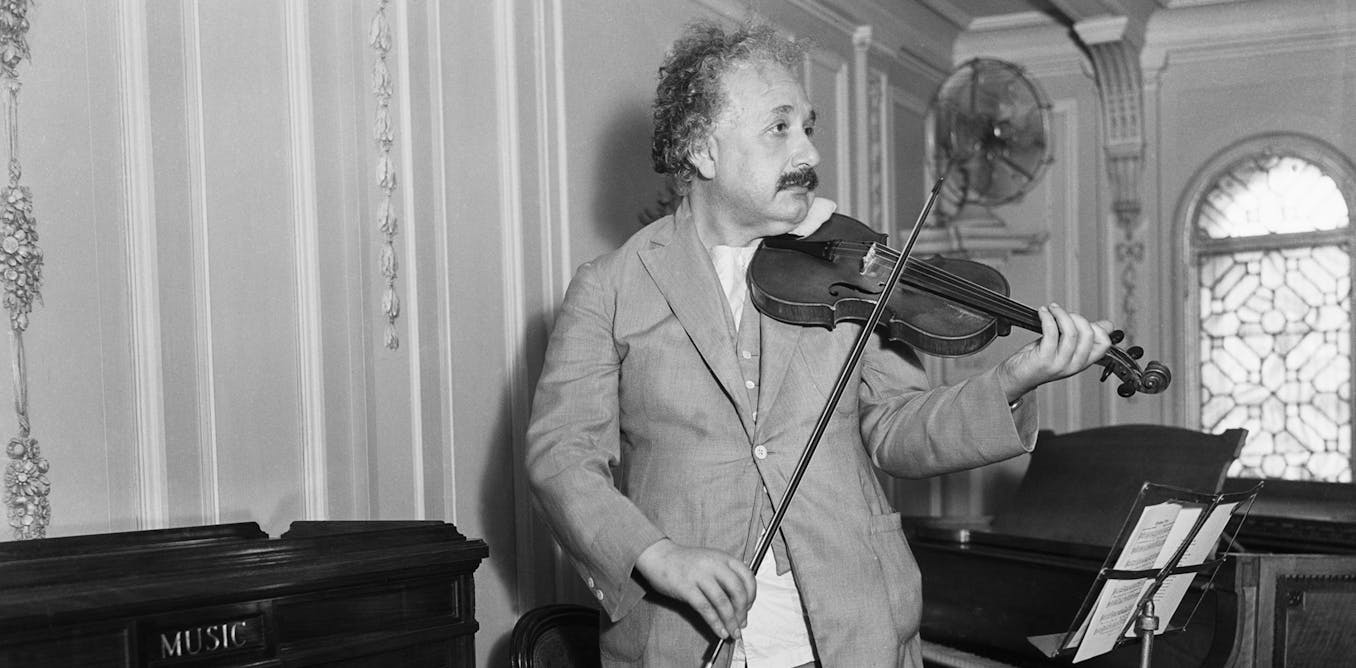 Einstein thought imagination was crucial.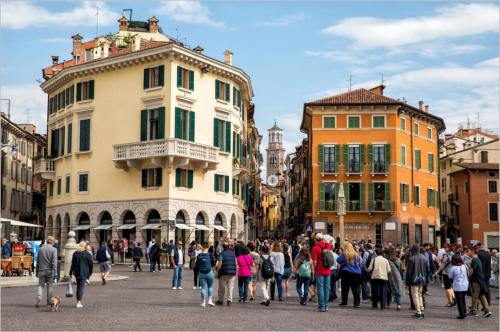

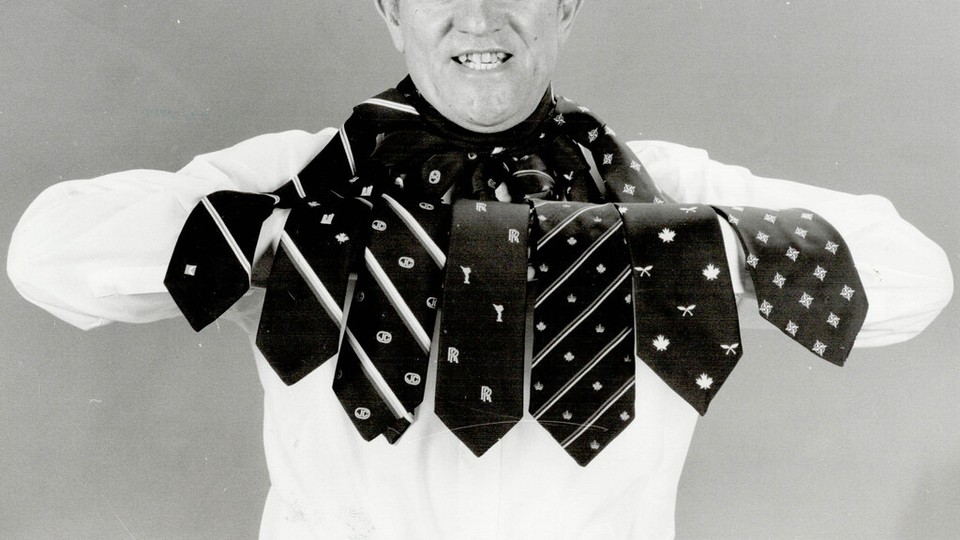 Toronto Star Archives/Getty


 Getty Images