November 27, 2021
Mohenjo
Business, Enthralling, Human Interest, Photographs
amazon, business, Business News, current-events, Future, Hotels, human-rights, medicine, mental-health, research, Science, Science News, technology, Technology News, travel, vacation

Click the link below the picture
.
Karlsruhe is the third-largest city of the German federal state of Baden-Württemberg after its capital of Stuttgart, and Mannheim. Its 308,436 inhabitants make it the 21st largest city of Germany. On the right bank of the Rhine, the city lies near the French-German border, between the Mannheim/Ludwigshafen conurbation to the north, and the Strasbourg/Kehl conurbation to the south. It is the largest city of Baden, a historic region named after Hohenbaden Castle in the city of Baden-Baden. Karlsruhe is also the largest city in the South Franconian dialect area (transitional dialects between Central and Upper German), the only other larger city in that area being Heilbronn. The city is the seat of the Federal Constitutional Court (Bundesverfassungsgericht), as well as of the Federal Court of Justice (Bundesgerichtshof) and the Public Prosecutor General of the Federal Court of Justice (Generalbundesanwalt beim Bundesgerichtshof).
Karlsruhe was the capital of the Margraviate of Baden-Durlach (Durlach: 1565–1718; Karlsruhe: 1718–1771), the Margraviate of Baden (1771–1803), the Electorate of Baden (1803–1806), the Grand Duchy of Baden (1806–1918), and the Republic of Baden (1918–1945). Its most remarkable building is Karlsruhe Palace, which was built in 1715. There are nine institutions of higher education in the city, most notably the Karlsruhe Institute of Technology (Karlsruher Institut für Technologie). Karlsruhe/Baden-Baden Airport (Flughafen Karlsruhe/Baden-Baden) is the second-busiest airport of Baden-Württemberg after Stuttgart Airport, and the 17th-busiest airport of Germany.
In 2019 the UNESCO announced that Karlsruhe will join its network of “Creative Cities” as “City of Media Arts”.
Karlsruhe lies completely to the east of the Rhine, and almost completely on the Upper Rhine Plain. It contains the Turmberg in the east, and also lies on the borders of the Kraichgau leading to the Northern Black Forest. Wikipedia
.
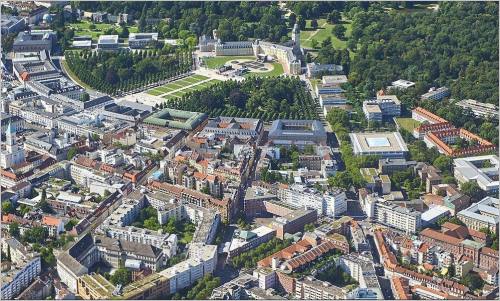 An image from Karlsruhe, Germany
.
.
Click the link below for images:
.
__________________________________________
November 27, 2021
Mohenjo
Business, Food For Thought, Human Interest, Science, Technical
amazon, business, Business News, current-events, Future, Hotels, human-rights, medicine, mental-health, research, Science, Science News, technology, Technology News, travel, vacation

Click the link below the picture
.
A research team at the University of Wisconsin-Madison has identified a new way to convert ammonia to nitrogen gas through a process that could be a step toward ammonia replacing carbon-based fuels.
The discovery of this technique, which uses a metal catalyst and releases—rather than requires—energy, was reported Nov. 8 in Nature Chemistry and has received a provisional patent from the Wisconsin Alumni Research Foundation.
“The world currently runs on a carbon fuel economy,” explains Christian Wallen, an author of the paper and a former postdoctoral researcher in the lab of UW-Madison chemist John Berry. “It’s not a great economy because we burn hydrocarbons, which release carbon dioxide into the atmosphere. We don’t have a way to close the loop for a true carbon cycle, where we could transform carbon dioxide back into a useful fuel.”
.

Credit: CC0 Public Domain
.
.
Click the link below for the article:
.
__________________________________________
November 27, 2021
Mohenjo
Business, Food For Thought, Human Interest, Science, Technical
amazon, business, Business News, current-events, Future, Hotels, human-rights, medicine, mental-health, research, Science, Science News, technology, Technology News, travel, vacation

Click the link below the picture
.
In 2009, global health officials started tracking a new kind of flu. It appeared first in Mexico, in March, and quickly infected thousands. Influenza tends to kill the very young and the very old, but this flu was different. It seemed to be severely affecting otherwise healthy young adults.
American epidemiologists soon learned of cases in California, Texas, and Kansas. By the end of April, the virus had reached a high school in Queens, where a few kids, returning from a trip to Mexico, had infected a third of the student body. The Mexican government closed its schools and banned large gatherings, and the U.S. considered doing the same. “It was a very scary situation,” Richard Besser, who was then the acting director of the Centers for Disease Control and Prevention, told me. Early estimates suggested that the “swine flu,” as the new strain became known, killed as many as fourteen percent of those it infected—a case fatality rate more than two hundred times higher than typical seasonal flu. The virus soon spread to more than a hundred and fifty countries, and the Obama Administration considered delaying the start of school until after Thanksgiving when a second wave could be underway. Manufacturers worried about vaccine supplies. Like most flu vaccines, the one for the swine flu was grown in chicken eggs. “Even if you yell at them, they don’t grow faster,” Tom Frieden, who replaced Besser as the director of the C.D.C., said, at a press conference.
.
 Illustration by Nicholas Konrad / The New Yorker
.
.
Click the link below for the article:
.
__________________________________________
November 26, 2021
Mohenjo
Business, Enthralling, Human Interest, Photographs
amazon, business, Business News, current-events, Future, Hotels, human-rights, medicine, mental-health, research, Science, Science News, technology, Technology News, travel, vacation
Click the link below the picture
.
Maasai Mara, also sometimes spelled Masai Mara and locally known simply as The Mara, is a large national game reserve in Narok, Kenya, contiguous with the Serengeti National Park in Tanzania. It is named in honor of the Maasai people, the ancestral inhabitants of the area, who migrated to the area from the Nile Basin. Their description of the area when looked at from afar: “Mara” means “spotted” in the local Maasai language, due to the many short bushy trees which dot the landscape.
Maasai Mara is one of the most famous and important wildlife conservation and wilderness areas in Africa, world-renowned for its exceptional populations of lion, African leopard, cheetah, and African bush elephant. It also hosts the Great Migration, which secured it as one of the Seven Natural Wonders of Africa, and as one of the Ten Wonders of the World.
The Greater Mara ecosystem encompasses areas known as the Maasai Mara National Reserve, the Mara Triangle, and several Maasai Conservancies, including Koiyaki, Lemek, Ol Chorro Oirowua, Mara North, Olkinyei, Siana, Maji Moto, Naikara, Ol Derkesi, Kerinkani, Oloirien, and Kimintet.
When it was originally established in 1961 as a wildlife sanctuary the Mara covered only 520 km2 (200 sq mi) of the current area, including the Mara Triangle. The area was extended to the east in 1961 to cover 1,821 km2 (703 sq mi) and converted to a Game Reserve. The Narok County Council (NCC) took over management of the reserve at this time. Part of the reserve was given National Reserve status in 1974, and the remaining area of 159 km2 (61 sq mi) was returned to local communities. An additional 162 km2 (63 sq mi) were removed from the reserve in 1976, and the park was reduced to 1,510 km2 (580 sq mi) in 1984. Wikipedia
.
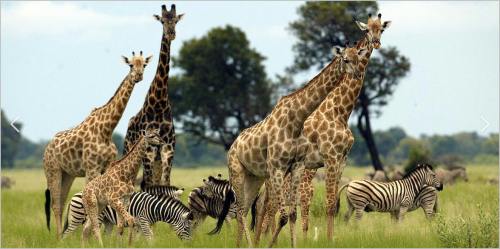 An image from Maasai Mara National Reserve
.
.
Click the link below for images:
.
__________________________________________
November 26, 2021
Mohenjo
Business, Food For Thought, Human Interest, Science, Technical
amazon, business, Business News, current-events, Future, Hotels, human-rights, medicine, mental-health, research, Science, Science News, technology, Technology News, travel, vacation

Click the link below the picture
.
Dr. Gagneur is a neonatologist and a professor of pediatrics at the University of Sherbrooke. His research has led to programs that increase childhood vaccinations through motivational interviewing. Dr. Tamerius is a former psychiatrist and the founder of Smart Politics, an organization that teaches people to communicate more persuasively.
The difference between people who eagerly want the Covid-19 vaccine and people who are hesitant is not as great as it may seem. Most vaccine holdouts are not anti-vaxxers or conspiracy theorists.
Before you demand that your loved ones get a shot, know that not all conversations are created equal. Research shows that many common persuasive styles — commanding, advising, lecturing, and shaming — not only don’t work but also often backfire.
To help you learn the basics of a method that works, we’ve created a vaccination chatbot based on the principles of motivational interviewing, a research-backed approach for encouraging people to get vaccinated that’s used by health care professionals to harness people’s innate drive for change.
.
 Albert Tercero
.
.
Click the link below for the article:
.
__________________________________________
November 26, 2021
Mohenjo
Business, Food For Thought, Human Interest, Science, Technical
amazon, business, Business News, current-events, Future, Hotels, human-rights, medicine, mental-health, research, Science, Science News, technology, Technology News, travel, vacation

Click the link below the picture
.
This year, I turned 30, a development that came with a breathless sense of dread at time’s passing. It wakes me up in the early mornings: Nocturnal terror breaks through the surface of sleep like a whale breaching for air. My ambition and fear kick in together until I get up, pour myself some water, and look out the window at the squid-ink sky and the string of lights along my neighbors’ houses. I lie down again after finding firmer mental ground, dry land.
So when a guy that my friend was seeing evangelized about “time slips” — a genre of urban legend in which people claim that, while walking in particular places, they accidentally traveled back, and sometimes forward, in time — I was a ripe target. Curious and increasingly existential, I Googled these supposed time slips. I found a global community of believers building an archive of temporal dislocations from the present. These congregants gathered in corners of the internet to testify about how, in the right conditions, the dusting of alienation that settles over the world as we age can crystallize into collective fiction.
.
 Credit…Photo illustration by Ricardo Tomás
.
.
Click the link below for the article:
.
__________________________________________
November 25, 2021
Mohenjo
Business, Enthralling, Human Interest, Photographs
amazon, business, Business News, current-events, Future, Hotels, human-rights, medicine, mental-health, research, Science, Science News, technology, Technology News, travel, vacation
Click the link below the picture
.
Banff National Park is Canada’s oldest national park, established in 1885. Located in Alberta’s Rocky Mountains, 110–180 kilometers (68–112 mi) west of Calgary, Banff encompasses 6,641 square kilometers (2,564 sq mi) of mountainous terrain, with many glaciers and ice fields, dense coniferous forest, and alpine landscapes. The Icefields Parkway extends from Lake Louise, connecting to Jasper National Park in the north. Provincial forests and Yoho National Park are neighbors to the west, while Kootenay National Park is located to the south and Kananaskis Country to the southeast. The main commercial center of the park is the town of Banff, in the Bow River valley.
The Canadian Pacific Railway was instrumental in Banff’s early years, building the Banff Springs Hotel and Chateau Lake Louise, and attracting tourists through extensive advertising. In the early 20th century, roads were built in Banff, at times by war internees from World War I, and through Great Depression-era public works projects. Since the 1960s, park accommodations have been open all year, with annual tourism visits to Banff increasing to over 5 million in the 1990s. Millions more pass through the park on the Trans-Canada Highway. As Banff has over three million visitors annually, the health of its ecosystem has been threatened. In the mid-1990s, Parks Canada responded by initiating a two-year study which resulted in management recommendations and new policies that aim to preserve ecological integrity.
Banff National Park has a subarctic climate with three ecoregions, including montane, subalpine, and alpine. The forests are dominated by Lodgepole pine at lower elevations and Engelmann spruce in higher ones below the treeline, above which is primarily rocks and ice. Mammal species such as the grizzly bear, cougar, wolverine, elk, bighorn sheep, and moose are found, along with hundreds of bird species. Reptiles and amphibians are also found but only a limited number of species have been recorded. The mountains are formed from sedimentary rocks which were pushed east over newer rock strata, between 80 and 55 million years ago. Over the past few million years, glaciers have at times covered most of the park, but today are found only on the mountain slopes though they include the Columbia Icefield, the largest uninterrupted glacial mass in the Rockies. Erosion from water and ice have carved the mountains into their current shapes. Wikipedia
.
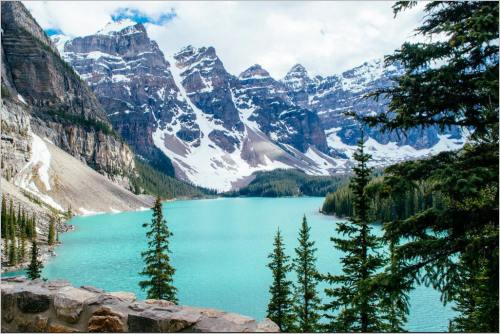 An image from Banff National Park Canada
.
.
Click the link below for images:
.
__________________________________________
November 25, 2021
Mohenjo
Arts, Business, Food For Thought, Human Interest, Science, Technical
amazon, business, Business News, current-events, Future, Hotels, human-rights, medicine, mental-health, research, Science, Science News, technology, Technology News, travel, vacation

Click the link below the picture
.
Basran Burhan was born in Indonesia, on the centrally located island of Sulawesi. He studied archeology at Hasanuddin University, at first, he told me, mostly because he liked how it involved “a lot of outdoor activities.” After graduating, in 2010, he worked for a few different Indonesian research and cultural heritage institutions. He also became an independent archeologist, helping organize excavations for a researcher named Adam Brumm at Griffith University, in Australia. Burhan’s fieldwork struck Brumm as exceptional, and on the strength of it, Brumm tried to get Burhan into a Ph.D. program. But Burhan’s imperfect English delayed this project for a number of years. Instead, he kept working for Brumm and his team.
In 2017, Burhan was helping Brumm and other researchers plan their next season of fieldwork: searching for evidence of Paleolithic humans in Sulawesi. Earlier that year, Brumm had briefly explored a new area on the island that seemed promising. Burhan and a team of six Indonesian archeologists were sent there on a field exploration.
The survey lasted for several weeks. At some point, poring over a map of the island’s southern region, Burhan found his eyes drawn to an area he’d never noticed, let alone visited—a valley in a mountain region twenty miles or so northeast of the city of Makassar. There were no roads into the valley, and there was nothing on the map to suggest a way through the bush and mountain peaks. The map did indicate rice paddies and other signs of human habitation, but Burhan didn’t know if the area was currently populated. A good part of archeology is simply exploration. Burhan thought, Why not?
.
 The discovery of the Sulawesi warty pig helps put to rest the idea that figurative cave art was unique to Europe.Photograph courtesy Basran Burhan
.
.
Click the link below for the article:
.
__________________________________________
November 25, 2021
Mohenjo
Business, Food For Thought, Human Interest
amazon, business, Business News, current-events, Future, Hotels, human-rights, medicine, mental-health, research, Science, Science News, technology, Technology News, travel, vacation
November 24, 2021
Mohenjo
Business, Enthralling, Human Interest, Photographs
amazon, business, Business News, current-events, Future, Hotels, human-rights, medicine, mental-health, research, Science, Science News, technology, Technology News, travel, vacation
Click the link below the picture
.
Kalamazoo is a city in the southwest region of the U.S. state of Michigan. It is the county seat of Kalamazoo County. As of the 2010 census, Kalamazoo had a population of 74,262. Kalamazoo is the major city of the Kalamazoo-Portage Metropolitan Statistical Area, which has a population of 335,340 as of 2015. Kalamazoo is equidistant from the major American cities of Chicago and Detroit, each less than 150 miles (240 kilometers) away.
One of Kalamazoo’s most notable features is the Kalamazoo Mall, an outdoor pedestrian shopping mall. The city created the mall in 1959 by closing part of Burdick Street to auto traffic, although two of the mall’s four blocks have been reopened to auto traffic since 1999. Kalamazoo is home to Western Michigan University, a large public university, Kalamazoo College, a private liberal arts college, and Kalamazoo Valley Community College, a two-year community college.
Originally known as Bronson (after founder Titus Bronson) in the township of Arcadia, the names of both the city and the township were changed to “Kalamazoo” in 1836 and 1837, respectively. The name “Kalamazoo” comes from a Potawatomi word, first found in a British report in 1772. The Kalamazoo River, which passes through the modern city of Kalamazoo, was located on the route between Detroit and Fort Saint-Joseph (nowadays Niles, Michigan). French-Canadian traders, missionaries, and military personnel were quite familiar with this area during the French era and thereafter. The Kalamazoo River was then known by Canadians and French as La rivière Kikanamaso. The name “Kikanamaso” was also recorded by Father Pierre Potier, a Jesuit missionary for the Huron-Wendats at the Assumption mission (south shore of Detroit), while en route to Fort Saint-Joseph during the fall of 1760. Legend has it that “Ki-ka-ma-sung”, meaning “boiling water”, referred to a footrace held each fall by local Native Americans, in which participants had to run to the river and back before a pot boiled. The word negikanamazo, purported to mean “otter tail” or “stones like otters”, has also been cited as a possible origin of the name. Another theory is that it means “the mirage or reflecting river”. Another legend is that the image of “boiling water” referred to fog on the river as seen from the hills above the current downtown. The name was also given to the river that flows almost all the way across the state.
.
 An image from kalamazoo, MI, USA
.
.
Click the link below for images:
.
__________________________________________
Older Entries
Newer Entries