May 12, 2022
Mohenjo
Business, Enthralling, Human Interest, Photographs
amazon, business, Business News, current-events, Future, Hotels, human-rights, medicine, mental-health, research, Science, Science News, technology, Technology News, travel, vacation

Click the link below the picture
.
The Great Wall of China is a series of fortifications that were built across the historical northern borders of ancient Chinese states and Imperial China as protection against various nomadic groups from the Eurasian Steppe. Several walls were built from as early as the 7th century BC, with selective stretches later joined together by Qin Shi Huang (220–206 BC), the first emperor of China. Little of the Qin wall remains. Later on, many successive dynasties built and maintained multiple stretches of border walls. The best-known sections of the wall were built by the Ming dynasty (1368–1644).
Apart from defense, other purposes of the Great Wall have included border controls, allowing the imposition of duties on goods transported along the Silk Road, regulation or encouragement of trade, and the control of immigration and emigration. Furthermore, the defensive characteristics of the Great Wall were enhanced by the construction of watchtowers, troop barracks, garrison stations, signaling capabilities through the means of smoke or fire, and the fact that the path of the Great Wall also served as a transportation corridor.
The frontier walls built by different dynasties have multiple courses. Collectively, they stretch from Liaodong in the east to Lop Lake in the west, from the present-day Sino–Russian border in the north to Tao River (Taohe) in the south; along an arc that roughly delineates the edge of the Mongolian steppe; spanning 21,196.18 km (13,170.70 mi) in total. Today, the defensive system of the Great Wall is generally recognized as one of the most impressive architectural feats in history. Wikipedia
.
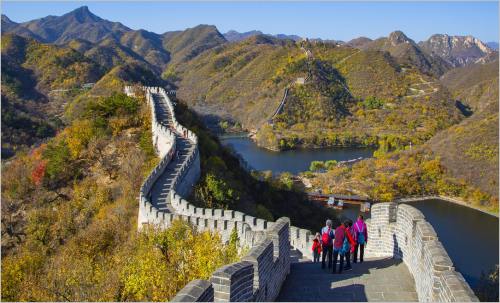 An image of the Great Wall Of China
.
.
Click the link below for images:
.
__________________________________________
May 12, 2022
Mohenjo
Business, Food For Thought, Human Interest, Science, Technical
amazon, business, Business News, current-events, Future, Hotels, human-rights, medicine, mental-health, research, Science, Science News, technology, Technology News, travel, vacation

Click the link below the picture
.
Samsung unquestionably makes some of the best Android hardware, but its software is… not on that same level. “One UI” is the company’s Android skin, and it’s the one thing holding back Galaxy devices.
Before I get started, I just want to say that this is a very subjective topic. My taste in software design may not be the same as yours. Even if you do like One UI, you might find a few things you agree with.
Bixby is a very strange product. On one hand, it seems like Samsung really wants it to be a thing, but in other ways, it acts like it doesn’t exist. Unfortunately, Galaxy devices are one area in which Samsung pushes Bixby hard.
If you’re unfamiliar with Bixby—first of all, lucky you—it’s Samsung’s take on a virtual assistant like Google Assistant and Siri. However, it’s not nearly as good, especially compared to Google Assistant—which is already included on Galaxy devices.
That’s the most annoying thing about Bixby. It doesn’t need to exist. Samsung is already including a very good virtual assistant. There’s no need to have a second one that hijacks the power button. Thankfully, there’s at least one good thing about Bixby.
.
 Framesira/Shutterstock.com
.
.
Click the link below for the article:
.
__________________________________________
May 12, 2022
Mohenjo
Business, Food For Thought, Human Interest, Political, Science, Technical
amazon, business, Business News, current-events, Future, Hotels, human-rights, medicine, mental-health, research, Science, Science News, technology, Technology News, travel, vacation

Click the link below the picture
.
The heart of NASA’s Space Launch System arrived at Kennedy Space Center last April as the agency’s first human-rated deep-space rocket in 50 years.
The 212-foot core stage rocket, along with a pair of solid rocket boosters, and the Orion crew module largely make up the Space Launch System (SLS), which NASA is counting on for its Artemis program’s 2026 return to the moon—a feat the agency last accomplished with Apollo 17 in 1972.
Despite the decades between manned lunar launches, the SLS relies on a workhorse from the shuttle program. Mounted at the bottom of the core stage are four RS-25 engines—formerly called the Space Shuttle Main Engine (SSME)—supplied by Aerojet Rocketdyne. Originally designed in the 1970s, the engines are seasoned, upgraded veterans, with 25 previous space shuttle flights among them. Among the four engines mounted to the SLS are numbers 2045 and 2060, both used on July 8, 2011, to launch the shuttle’s final mission, STS-135. Doug Bradley was at Kennedy Space Center during that launch, working as a chief engineer for Rocketdyne. “I’ve been to many flights, but it was different for 135,” Bradley says. “It was electric. It was a very emotional flight.”
The retirement of the space shuttle left Rocketdyne with a backlog of 16 engines, which the company mothballed. It was sad, says Bradley, to see them decommissioned when they could have flown dozens more missions.
.
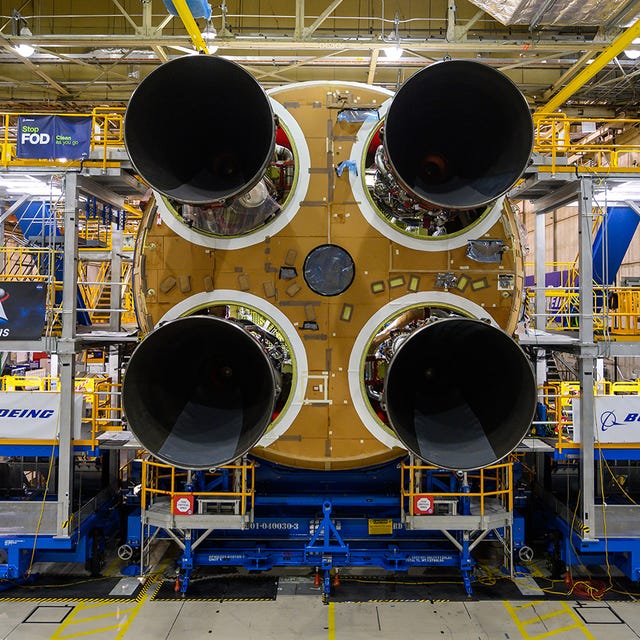 NASA/ERIC BORDELON
.
.
Click the link below for the article:
.
__________________________________________
May 11, 2022
Mohenjo
Business, Enthralling, Human Interest, Photographs
amazon, business, Business News, current-events, Future, Hotels, human-rights, medicine, mental-health, research, Science, Science News, technology, Technology News, travel, vacation
Click the link below the picture
.
Venezuela, officially the Bolivarian Republic of Venezuela, is a country on the northern coast of South America, consisting of a continental landmass and many islands and islets in the Caribbean Sea. It has a territorial extension of 916,445 km2 (353,841 sq mi), and its population was estimated at 28 million in 2019. The capital and largest urban agglomeration is the city of Caracas.
The continental territory is bordered on the north by the Caribbean Sea and the Atlantic Ocean, on the west by Colombia, Brazil on the south, Trinidad and Tobago to the northeast and on the east by Guyana. The Venezuelan government maintains a claim against Guyana to Guayana Esequiba. Venezuela is a federal presidential republic consisting of 23 states, the Capital District, and federal dependencies covering Venezuela’s offshore islands. Venezuela is among the most urbanized countries in Latin America; the vast majority of Venezuelans live in the cities of the north and in the capital.
The territory of Venezuela was colonized by Spain in 1522 amid resistance from indigenous peoples. In 1811, it became one of the first Spanish-American territories to declare independence from the Spanish and to form part, as a department, of the first federal Republic of Colombia (historiographically known as Gran Colombia). It separated as a full sovereign country in 1830. During the 19th century, Venezuela suffered political turmoil and autocracy, remaining dominated by regional military dictators until the mid-20th century. Since 1958, the country has had a series of democratic governments, as an exception where most of the region was ruled by military dictatorships, and the period was characterized by economic prosperity. Economic shocks in the 1980s and 1990s led to major political crises and widespread social unrest, including the deadly Caracazo riots of 1989, two attempted coups in 1992, and the impeachment of a President for embezzlement of public funds charges in 1993. The collapse in confidence in the existing parties saw the 1998 Venezuelan presidential election, the catalyst for the Bolivarian Revolution, which began with a 1999 Constituent Assembly, where a new Constitution of Venezuela was imposed. The government’s populist social welfare policies were bolstered by soaring oil prices, temporarily increasing social spending, and reducing economic inequality and poverty in the early years of the regime. The 2013 Venezuelan presidential election was widely disputed leading to widespread protest, which triggered another nationwide crisis that continues to this day.
Venezuela is a developing country and ranks 113th on the Human Development Index. It has the world’s largest known oil reserves and has been one of the world’s leading exporters of oil. Previously, the country was an underdeveloped exporter of agricultural commodities such as coffee and cocoa, but oil quickly came to dominate exports and government revenues. The excesses and poor policies of the incumbent government led to the collapse of Venezuela’s entire economy. The country struggles with record hyperinflation, shortages of basic goods, unemployment, poverty, disease, high child mortality, malnutrition, severe crime, and corruption. These factors have precipitated the Venezuelan migrant crisis where more than three million people have fled the country. By 2017, Venezuela was declared to be in default regarding debt payments by credit rating agencies. The crisis in Venezuela has contributed to a rapidly deteriorating human rights situation, including increased abuses such as torture, arbitrary imprisonment, extrajudicial killings, and attacks on human rights advocates. Venezuela is a charter member of the UN, Organization of American States (OAS), Union of South American Nations (UNASUR), ALBA, Mercosur, Latin American Integration Association (LAIA), and Organization of Ibero-American States (OEI). Wikipedia
.
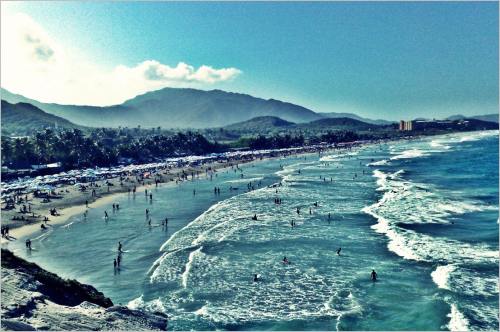 An image of a Venezuela Beach
.
.
Click the link below for images:
.
__________________________________________
May 11, 2022
Mohenjo
Business, Food For Thought, Human Interest, Science, Technical
amazon, business, Business News, current-events, Future, Hotels, human-rights, medicine, mental-health, research, Science, Science News, technology, Technology News, travel, vacation

Click the link below the picture
.
Did you know that you could tap the back of your phone to make it quick-launch apps, settings, and shortcuts?
Although I feel mild shame for not knowing such a feature existed until now, I feel even greater joy that it’s part of my life. It’s life-changing, friends. Here’s how it works on an iPhone—and two ways to get something similar on an Android phone.
iPhone Back Tap
On the iPhone, this feature is called Back Tap, and it’s been around since iOS 14.
You’ll need to enable it first by going to Settings > Accessibility > Touch and then choosing Back Tap.
.
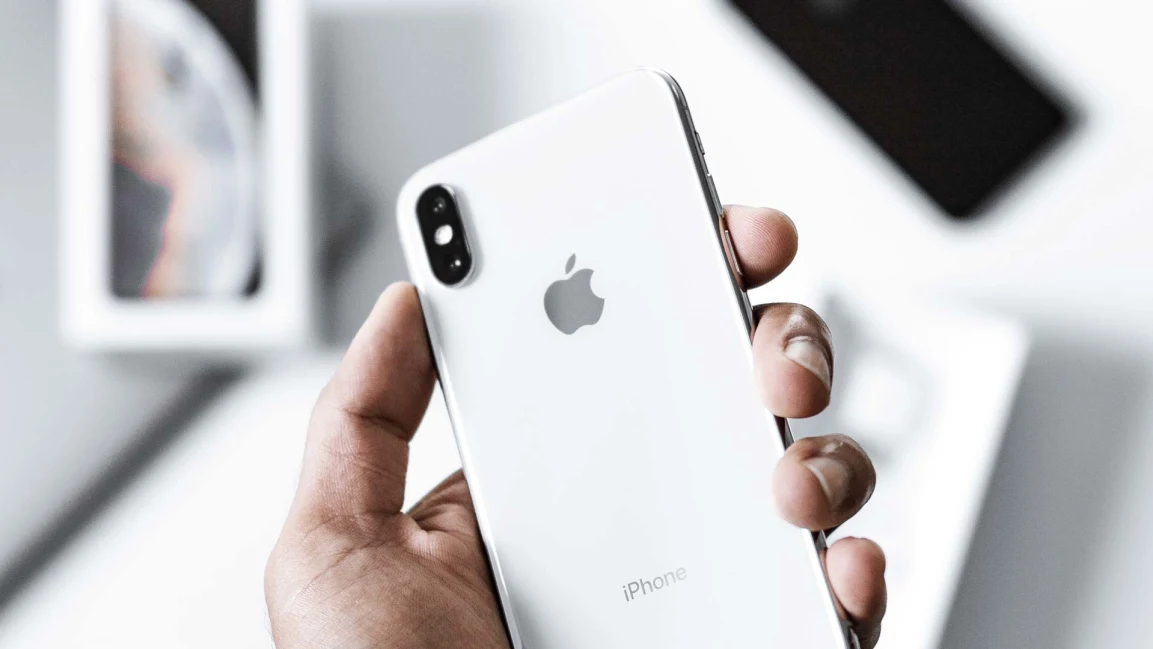 [Photo: Kevin Bhagat/Unsplash]
.
.
Click the link below for the article:
.
__________________________________________
May 11, 2022
Mohenjo
Business, Food For Thought, Human Interest, Political, Science, Technical
amazon, business, Business News, current-events, Future, Hotels, human-rights, medicine, mental-health, research, Science, Science News, technology, Technology News, travel, vacation

Click the link below the picture
.
.
.
.
Click the link below for the article:
.
__________________________________________
May 10, 2022
Mohenjo
Business, Enthralling, Human Interest, Photographs
amazon, business, Business News, current-events, Future, Hotels, human-rights, medicine, mental-health, research, Science, Science News, technology, Technology News, travel, vacation
Click the link below the picture
.
The New York metropolitan area, also commonly referred to as the Tri-State area, is the largest metropolitan area in the world by urban landmass, at 4,669.0 sq mi (12,093 km2), and one of the most populous urban agglomerations in the world. The metropolitan area includes New York City (the most populous city in the United States), Long Island, and the Mid and Lower Hudson Valley in New York State; the six largest cities in New Jersey: Newark, Jersey City, Paterson, Elizabeth, Lakewood, and Edison, and their vicinities; and six of the seven largest cities in Connecticut: Bridgeport, New Haven, Stamford, Waterbury, Norwalk, and Danbury, and their vicinities. The New York metropolitan area sits within the larger Northeast Megalopolis.
The New York metropolitan area is the most populous in the United States, as defined by both the Metropolitan Statistical Area (20.1 million residents in 2020) and the Combined Statistical Area (23.6 million residents in 2020). The metropolitan area is home to approximately 6% of the United States’ population. It is the tenth-largest urban agglomeration in the world. The New York metropolitan area continues to be the premier gateway for legal immigration to the United States, with one of the largest foreign-born populations of any metropolitan region in the world. The MSA covers 6,720 sq mi (17,405 km2), while the CSA area is 13,318 sq mi (34,493 km2), encompassing an ethnically and geographically diverse region. The New York metropolitan area’s population is larger than that of the state of New York, and the metropolitan airspace accommodated over 130 million passengers in 2016.
As a center of many industries, including finance, fintech, international trade, news, and traditional media, real estate, education, fashion, entertainment, tourism, biotechnology, law, and manufacturing, the New York metropolitan region is one of the most important economic regions in the world. Indeed, New York City has been described as the cultural, financial, diplomatic, and media capital of the world. As of 2019, the New York metropolitan area is estimated to produce a gross metropolitan product (GMP) of $1.7 trillion. If the New York metropolitan area were a sovereign state, it would have the eighth largest economy in the world. Metropolitan New York is home to the highest number of billionaires of any metropolis in the world. According to Forbes, in 2014, the New York metropolitan area was home to eight of the top ten ZIP codes in the United States by median housing price, with six in Manhattan alone. The New York metropolitan area also houses five of the top ten richest places in America, according to Bloomberg. These are Scarsdale, New York; Short Hills, New Jersey; Old Greenwich, Connecticut; Bronxville, New York; and Darien, Connecticut.
The New York metropolitan region’s higher education network comprises hundreds of colleges and universities, including New York University and three Ivy League universities: Columbia, Yale, and Princeton.
The U.S. Office of Management and Budget utilizes two definitions of the area: the metropolitan statistical area (MSA) and the combined statistical area (CSA). The MSA definition is titled the New York-Newark-Jersey City, NY-NJ-PA Metropolitan Statistical Area, and includes a population of 20.3 million people by 2017 Census estimates, roughly 1 in 16 Americans and nearly 7 million more than the second-place Los Angeles metropolitan area in the United States. The MSA is further subdivided into four metropolitan divisions. The 23-county MSA includes 10 counties in New York State (coextensive with the five boroughs of New York, the two remaining counties of Long Island, and three counties in the Lower Hudson Valley); 12 counties in Northern and Central New Jersey; and one county in northeastern Pennsylvania. The largest urbanized area in the United States is at the heart of the metropolitan area, the New York–Newark, NY–NJ–CT Urbanized Area (which had a land area of 3,450 square miles in 2010 according to the 2010 census). The New York state portion of the metropolitan area (the Five Boroughs, the lower Hudson, and Long Island) accounts for over 65 percent of the state’s population. Wikipedia
.
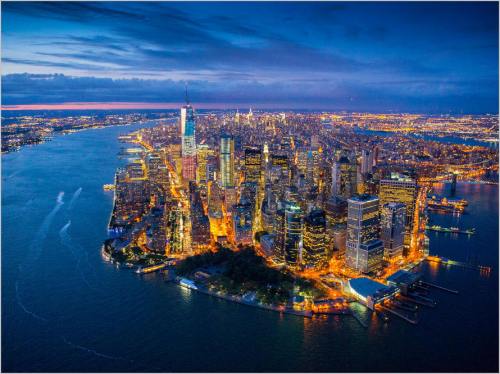 An image of New York City
.
.
Click the link below for article:
.
__________________________________________
May 10, 2022
Mohenjo
Business, Crime, Food For Thought, Human Interest, Political, Science, Technical
amazon, business, Business News, current-events, Future, Hotels, human-rights, medicine, mental-health, research, Science, Science News, technology, Technology News, travel, vacation

Click the link below the picture
.
Russia’s biggest Internet company has embedded code into apps found on mobile devices that allows information about millions of users to be sent to servers located in its home country.
The revelation relates to software created by Yandex that permits developers to create apps for devices running Apple’s iOS and Google’s Android, systems that run the vast majority of the world’s smartphones.
Yandex collects user data harvested from mobile phones before sending the information to servers in Russia. Researchers have raised concerns the same “metadata” may then be accessed by the Kremlin and used to track people through their mobile phones.
Researcher Zach Edwards first made the discovery regarding Yandex’s code as part of an app auditing campaign for Me2B Alliance, a nonprofit. Four independent experts ran tests for the Financial Times to verify his work.
Yandex has acknowledged its software collects “device, network, and IP address” information that is stored “both in Finland and in Russia,” but it called this data “non-personalized and very limited.” It added: “Although theoretically possible, in practice it is extremely hard to identify users based solely on such information collected. Yandex definitely cannot do this.”
.
 irill Kudryavtsev | Getty Images
.
.
Click the link below for the article:
.
__________________________________________
May 10, 2022
Mohenjo
Business, Food For Thought, Human Interest, Science, Technical
amazon, business, Business News, current-events, Future, Hotels, human-rights, medicine, mental-health, research, Science, Science News, technology, Technology News, travel, vacation
Click the link below the picture
.
In the Android world, one app store is king—the Google Play Store. This is the “official” place to download apps and games. However, there are a few alternatives. F-Droid is one of the most interesting options out there.
Just like getting Windows applications, you can get Android apps from a variety of sources. In fact, you don’t really even need an app store at all. The Play Store just makes it a lot easier and safer to install apps. F-Droid aims to do the same thing, but for very different reasons.
All About That FOSS
F-Droid is a repository for Free and Open Source Software (FOSS) Android apps. It’s completely non-commercial, which is why it’s not technically an app “store.” You can donate to developers, but none of the apps or games cost anything.
What makes open-source software different is its code is freely available for anyone to use. It’s essentially like solving a math equation and showing your work. Everyone can see what you did and use it themselves.
It’s important to note that there’s a big difference between FOSS apps and apps that are simply free. The majority of open-source software is monetarily free, but that’s not actually what the “free” in Free and Open Source Software means.
.
 Geeking
.
.
Click the link below for the article:
.
__________________________________________
May 9, 2022
Mohenjo
Business, Enthralling, Human Interest, Photographs
amazon, business, Business News, current-events, Future, Hotels, human-rights, medicine, mental-health, research, Science, Science News, technology, Technology News, travel, vacation
Click the link below the picture
.
North Africa or Northern Africa is a region encompassing the northern portion of the African continent. There is no singularly accepted scope for the region, and it is sometimes defined as stretching from the Atlantic shores of Mauritania in the west, to Egypt’s Suez Canal.
Varying sources limit it to the countries of Algeria, Libya, Morocco, and Tunisia, a region that was known by the French during colonial times as “Afrique du Nord” and is known by Arabs as the Maghreb (“West”, The western part of Arab World).
The United Nations definition includes Morocco, Algeria, Tunisia, Libya, Egypt, Sudan, and the Western Sahara, the territory disputed between Morocco and the Sahrawi Republic.
The African Union definition includes the Western Sahara and Mauritania but not Sudan. When used in the term Middle East and North Africa (MENA), it often refers only to the countries of the Maghreb.
North Africa includes the Spanish cities of Ceuta and Melilla, and plazas de soberanía and can also be considered to include other Spanish, Portuguese and Italian regions such as Canary Islands, Madeira, Lampedusa, and Lampione.
The countries of North Africa share a lot of ethnic, cultural, and linguistic identity with the Middle East.
Northwest Africa has been inhabited by Berbers since the beginning of recorded history, while the eastern part of North Africa has been home to the Egyptians. Between the A.D. 600s and 1000s, Arabs from the Middle East swept across the region in a wave of Muslim conquest. These peoples formed a single population in many areas, as Berbers and Egyptians merged into Arabic and Muslim culture. This process of Arabization and Islamization has defined the cultural landscape of North Africa ever since. Wikipedia
.
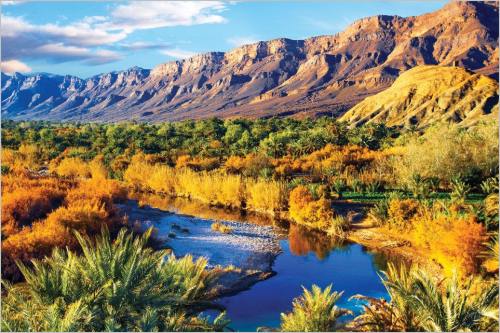 An image from North Africa Landscape
.
.
Click the link below for images:
.
__________________________________________
Older Entries
Newer Entries

