May 14, 2022
Mohenjo
Business, Enthralling, Human Interest, Photographs
amazon, business, Business News, current-events, Future, Hotels, human-rights, medicine, mental-health, research, Science, Science News, technology, Technology News, travel, vacation

Click the link below the picture
.
The Bukit Peninsula is at the southern end of the island of Bali, Indonesia. It is traditionally considered to be the entire area south of Jimbaran beach. Unlike the bulk of Bali, it features a dry, arid, and stony landscape. It is administered under Kuta South District. Bukit means ‘hill’ in Indonesian.Wikipedia
.
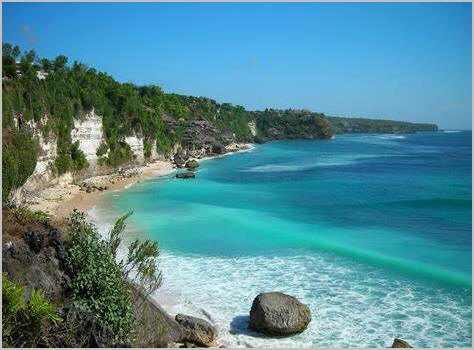 An image from the Bukit Peninsula
.
.
Click the link below for images:
.
__________________________________________
May 14, 2022
Mohenjo
Business, Food For Thought, Human Interest, Medical, Science, Technical
amazon, business, Business News, current-events, Future, Hotels, human-rights, medicine, mental-health, research, Science, Science News, technology, Technology News, travel, vacation

Click the link below the picture
.
An ongoing argument my husband and I have — which has become more contentious during the pandemic — is about how many friends we should have.
We both have one or two close friends and siblings we like to spend time with. Plus, we are busy parenting two young boys who sap most of our energy. As a textbook introvert, this feels like plenty of friends to me. Excessive, even. But my husband is an extrovert who comes alive around other people. As we slowly emerge from the pandemic, I can feel him yearning for more.
He’s not alone. For years, friendship in America has been in decline, a trend that accelerated during the pandemic. Three decades ago, 3 percent of Americans told Gallup pollsters they had no close friends; in 2021, an online poll put it at 12 percent. About a year into the pandemic, 13 percent of women and 8 percent of men age 30 to 49 said they’d lost touch with most of their friends.
There are health implications to all of this. Friendship can be an important factor in well-being, while loneliness and social isolation — distinct but related conditions — can be associated with an increased risk for conditions like depression and anxiety or heart disease and stroke. An often-cited 2010 meta-analysis led by Julianne Holt-Lunstad, a professor of psychology and neuroscience at Brigham Young University in Utah, concluded that loneliness is as harmful to physical health as smoking 15 cigarettes a day.
.
 Nathalie Lees
.
.
Click the link below for the article:
.
__________________________________________
May 14, 2022
Mohenjo
Business, Food For Thought, Human Interest, Science, Technical
amazon, business, Business News, current-events, Future, Hotels, human-rights, medicine, mental-health, research, Science, Science News, technology, Technology News, travel, vacation

Click the link below the picture
.
That shot was taken over the Clark Fork in Missoula, Montana, about halfway through my 12-mile marathon training run last week. I used to be steadfast in my commitment to never run a marathon: a half-marathon was fine, but marathons were for masochists. But my attitude began to switch last year. I was training for a Ragnar — a 200-mile relay, split between twelve people for three legs each and involves running through the night, driving around in large vans, sleeping on high school gym floors, etc.
I had one of the two most challenging runner assignments, including a significant amount of elevation gain, and I found myself more and more eager to push myself with new training goals — more elevation, more mileage — every week. Along the way, I ran a half-marathon as “training” and PR’ed, which felt amazing, but more amazing was the actual experience of the Ragnar, which provided the sort of exhaustion, pay-off, and catharsis that had largely drained away from the rest of my low-key burnt-out life. I had been researching and writing the book non-stop for six weeks by the time we showed up in Bellingham the night before the start, but then I spent the next 48 hours thinking about nothing other than the race: fueling my body, running, resting my body, repeat (plus being very present, and talking about nothing other than the race, with the other people on my team).
.

.
.
Click the link below for the article:
.
__________________________________________
May 14, 2022
Mohenjo
Business, Enthralling, Food For Thought, Human Interest, Medical, Political, Science, Technical
amazon, business, Business News, current-events, Future, Hotels, human-rights, medicine, mental-health, research, Science, Science News, technology, Technology News, travel, vacation

.
No Mask, No Vac, Death rate rising! Hmmm…
.
__________________________________________
May 14, 2022
Mohenjo
Business, Enthralling, Food For Thought, Human Interest, Medical, Political, Science, Technical
amazon, business, Business News, current-events, Future, Hotels, human-rights, medicine, mental-health, research, Science, Science News, technology, Technology News, travel, vacation

Click the link below the picture
.
This is an intriguing and interesting talk!
.
 A.R. Bernard Delivers Remarks
.
.
Click the link below for the video:
.
__________________________________________
May 13, 2022
Mohenjo
Business, Enthralling, Human Interest, Photographs
amazon, business, Business News, current-events, Future, Hotels, human-rights, medicine, mental-health, research, Science, Science News, technology, Technology News, travel, vacation
Click the link below the picture
.
Kenya, officially the Republic of Kenya, is a country in Eastern Africa. At 580,367 square kilometers (224,081 sq mi), Kenya is the world’s 48th largest country by area. With a population of more than 47.6 million in the 2019 census, Kenya is the 29th most populous country in the world. Kenya’s capital and largest city is Nairobi, while its oldest, currently second-largest city, and first capital is the coastal city of Mombasa. Kisumu City is the third-largest city and also an inland port on Lake Victoria. Other important urban centers include Nakuru and Eldoret. As of 2020, Kenya is the third-largest economy in sub-Saharan Africa after Nigeria and South Africa. Kenya is bordered by South Sudan to the northwest, Ethiopia to the north, Somalia to the east, Uganda to the west, Tanzania to the south, and the Indian Ocean to the southeast. Its geography, climate, and population vary widely, ranging from cold snow-capped mountaintops (Batian, Nelion, and Point Lenana on Mount Kenya) with vast surrounding forests, wildlife, and fertile agricultural regions to temperate climates in western and rift valley counties and dry less fertile arid and semi-arid areas and absolute deserts (Chalbi Desert and Nyiri Desert).
Kenya’s earliest inhabitants were hunter-gatherers, like the present-day Hadza people. According to archaeological dating of associated artifacts and skeletal material, Cushitic speakers first settled in Kenya’s lowlands between 3,200 and 1,300 BC, a phase known as the Lowland Savanna Pastoral Neolithic. Nilotic-speaking pastoralists (ancestral to Kenya’s Nilotic speakers) began migrating from present-day South Sudan into Kenya around 500 BC.Bantu people settled at the coast and the interior between 250 BC and 500 AD. European contact began in 1500 AD with the Portuguese Empire, and effective colonization of Kenya began in the 19th century during the European exploration of the interior. Modern-day Kenya emerged from a protectorate established by the British Empire in 1895 and the subsequent Kenya Colony, which began in 1920. Numerous disputes between the UK and the colony led to the Mau Mau revolution, which began in 1952, and the declaration of independence in 1963. After independence, Kenya remained a member of the Commonwealth of Nations. The current constitution was adopted in 2010 to replace the 1963 independence constitution.
Kenya is a presidentialrepresentative democratic republic, in which elected officials represent the people and the president is the head of state and government. Kenya is a member of the United Nations, Commonwealth of Nations, World Bank, International Monetary Fund, COMESA, International Criminal Court, and other international organizations. With a GNI of 1,840, Kenya is a lower-middle-income economy. Kenya’s economy is the largest in eastern and central Africa, with Nairobi serving as a major regional commercial hub. Agriculture is the largest sector: tea and coffee are traditional cash crops, while fresh flowers are a fast-growing export. The service industry is also a major economic driver, particularly tourism. Kenya is a member of the East African Community trade bloc, though some international trade organizations categorize it as part of the Greater Horn of Africa. Africa is Kenya’s largest export market, followed by the European Union. Wikipedia
.
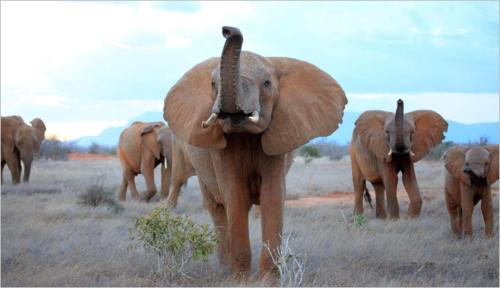 An image from Kenya
.
.
Click the link below for images:
.
__________________________________________
May 13, 2022
Mohenjo
Business, Food For Thought, Human Interest, Science, Technical
amazon, business, Business News, current-events, Future, Hotels, human-rights, medicine, mental-health, research, Science, Science News, technology, Technology News, travel, vacation

Click the link below the picture
.
It’s normal and expected to be irritable sometimes—when we’re overly tired, when our environment is too loud, when we sit in gridlock, or when someone steals our thunder at work. In some instances, like a traffic jam, there’s nothing we can do to change the circumstances—all we can do is consciously modulate our reactions. But there are a number of things we do every day that affect our mood that we can control, and some of them are habits that have become so ingrained we may not even be aware of them.
Here are some of the ways you may be unwittingly making yourself more irritable every day, and what to do about it.
.

.
.
Click the link below for the article:
.
__________________________________________
May 13, 2022
Mohenjo
Business, Food For Thought, Human Interest, Science, Technical
amazon, business, Business News, current-events, Future, Hotels, human-rights, medicine, mental-health, research, Science, Science News, technology, Technology News, travel, vacation

Click the link below the picture
.
Since my tips to improve your writing in two minutes were so popular, I thought I’d share some similar tips to improve your next conversation.
Following are the simplest tips I can give you to ask better questions, which will make your conversations more valuable to you and the people you engage with.
.
 ??
??
.
.
Click the link below for the article:
.
__________________________________________
May 12, 2022
Mohenjo
Business, Enthralling, Food For Thought, Human Interest, Medical, Science, Technical
amazon, business, Business News, current-events, Future, Hotels, human-rights, medicine, mental-health, research, Science, Science News, technology, Technology News, travel, vacation

Click the link below the picture
.
Seven years ago, scientists at Illumina, the DNA sequencing company in San Diego, were running a study seeking DNA fragments in pregnant people’s blood that might suggest chromosomal abnormalities.
During the research, a pathologist discovered something unexpected in 10 of the blood samples.
Instead of chromosomal disorders, the testing showed DNA abnormalities.
This didn’t make sense to the researchers. But there was some suspicion that cancer was involved.
Investigating further, the researchers learned that one of the 10 participants had in fact received a cancer diagnosis, and others in that subset also had cancer — despite the fact that they had no symptoms.
This convinced Illumina’s leadership to create a spin-off company in 2016 called GRAIL that combined advances in human genomics with machine learning data science.
That resulted in the development of a new blood test from GRAIL called Galleri, which can detect early stages of cancer before a person has symptoms.
.
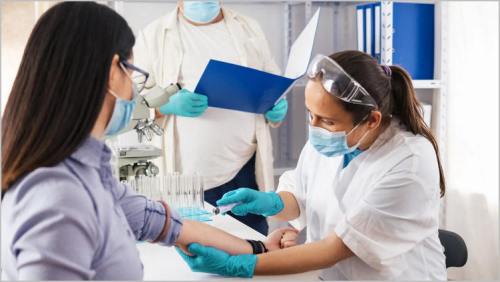 Galleri is a new blood test that has the ability to detect 50 types of cancer through a single blood draw. Select U.S. health systems will begin using it this year. Daniel Balakov/Getty Images
.
.
Click the link below for the article:
.
__________________________________________
May 12, 2022
Mohenjo
Business, Food For Thought, Human Interest, Medical, Science, Technical
amazon, business, Business News, current-events, Future, Hotels, human-rights, medicine, mental-health, research, Science, Science News, technology, Technology News, travel, vacation

Click the link below the picture
.
Of all the indignities that come with aging, excessive earwax may be the most insidious.
Don’t laugh.
That greasy, often gross, buildup occurs more often in older ears than those of the young, experts say. And when it goes unrecognized, it can pose serious problems, especially for the 2.2 million people who live in U.S. nursing homes and assisted living centers.
“The excessive amount [of earwax] can cause hearing loss or ringing in your ears. Some people experience vertigo, which increases the risk of falling,” said Jackie Clark, a board-certified audiologist who is president of the American Academy of Audiology. “Right now, we see some correlation between hearing loss and cognitive decline.”
Earwax—which is not really wax at all, but a substance called cerumen that binds with dirt, dust, and debris—is normally produced by the body as a way to clean and protect the ears. In most people, the self-cleaning process works fine.
.
 Who knew?
.
.
Click the link below for the article:
.
__________________________________________
Older Entries
Newer Entries

