November 28, 2022
Mohenjo
Business, Food For Thought, Human Interest, Political, Science, Technical
amazon, business, Business News, current-events, Future, Hotels, human-rights, medicine, mental-health, research, Science, Science News, technology, Technology News, travel, vacation

Click the link below the picture
.
I am the daughter and granddaughter of Indian immigrants. In 1967, my father and grandmother came to the United States from Jhansi, a city in the north of India, to reunite with my grandfather who had arrived three years prior. This was around the time the Civil Rights Act was passed; my grandfather attended graduate school for psychology at DePaul University on a scholarship, with less than $100 in his pocket. In 1995, my mother came to this country, having just married my dad in an arranged marriage. Up to that point, she had never stepped foot on a plane, let alone left India; all she ever knew was in Kanpur.
The story of how my family arrived and found its way in America is a unique one that exemplifies diversity. But based on revelations from Students for Fair Admissions’ challenge to Harvard and the University of North Carolina’s race-conscious admissions policies, cases that have oral arguments before the Supreme Court on Monday, it seems neither of these schools would agree with me.
They, along with many other elite universities in the U.S., seem to have decided that because Asian American enrollment at their schools exceeds the Asian American share of the population, stories like mine don’t count as “diverse.” Instead, the stories of “underrepresented” racial minorities tend to count more as the diversity in which universities have a compelling interest, the rationale for racial preferences today.
.
 Charles Krupa/Associated Press
.
.
Click the link below for the article:
.
__________________________________________
November 28, 2022
Mohenjo
Business, Food For Thought, Human Interest, Political, Science, Technical
amazon, business, Business News, current-events, Future, Hotels, human-rights, medicine, mental-health, research, Science, Science News, technology, Technology News, travel, vacation

Click the link below the picture
.
Writing for the Daily Beast, Epner predicted a ruling from the three judges involved — two of whom were appointed by the former president — could come before the end of the week and could quickly thrust the former president before his “greatest nightmare”: a Washington D.C. jury.
Based upon the questioning of the judges last week where Trump’s legal team faced a brutal grilling, the legal analyst suggested the case would be stripped from the Trump-appointed Cannon, who has been accused of running interference for the man who appointed her to a lifetime position on the bench.
“I rarely make predictions on court rulings. This is the exception,” Epner wrote. “I would be shocked if the 11th Circuit does not overturn Judge Cannon’s order. I also think it will happen quickly. The judges have asked for the upcoming schedule in front of the Special Master.”
“Special Master Dearie is required to issue his report and recommendation to Judge Cannon by December 16. After that, the parties would have the opportunity to object to Judge Cannon and, if necessary, the 11th Circuit,” he added. “That process would take months to play out. I cannot imagine the 11th Circuit allowing this circus to continue until Dec. 1, and that’s part of why I expect that the 11th Circuit will promptly overrule Judge Cannon, ending the entire process.”
As for what comes after, the legal analyst speculated Trump’s lawyers would quickly run to the Supreme Court for relief and will be promptly rebuffed.
.

Judge Aileen Cannon, Donald Trump (Court photo, Trump photo via AFP) © provided by RawStory
.
.
Click the link below for the article:
.
__________________________________________
November 27, 2022
Mohenjo
Business, Food For Thought, Human Interest, Political, Science, Technical
amazon, business, Business News, current-events, Future, Hotels, human-rights, medicine, mental-health, research, Science, Science News, technology, Technology News, travel, vacation

Click the link below the picture
.
Harvard University’s CS50 is one of the most popular beginner computer science courses in the world.
We just released the entire CS50 course–all 25 hours–on the freeCodeCamp.org YouTube channel.
David J. Malan is widely considered to be one of the best computer science instructors. He teaches this course.
This course provides an introduction to the intellectual enterprises of computer science and the art of programming. This course teaches students how to think algorithmically and solve problems efficiently.
Topics include abstraction, algorithms, data structures, encapsulation, resource management, security, software engineering, and web programming. Languages include C, Python, and SQL plus HTML, CSS, and JavaScript.
.

.
.
Click the link below for the article:
.
__________________________________________
November 27, 2022
Mohenjo
Business, Food For Thought, Human Interest, Political, Science, Technical
amazon, business, Business News, current-events, Future, Hotels, human-rights, medicine, mental-health, research, Science, Science News, technology, Technology News, travel, vacation

Click the link below the picture
.
On 27 August 1883, the Earth let out a noise louder than any it has made since.
It was 10:02 a.m. local time when the sound emerged from the island of Krakatoa, which sits between Java and Sumatra in Indonesia. It was heard 1,300 miles away in the Andaman and Nicobar islands (“extraordinary sounds were heard, as of guns firing”); 2,000 miles away in New Guinea and Western Australia (“a series of loud reports, resembling those of artillery in a north-westerly direction”); and even 3,000 miles away in the Indian Ocean island of Rodrigues, near Mauritius* (“coming from the eastward, like the distant roar of heavy guns.” 1) In all, it was heard by people in over 50 different geographical locations, together spanning an area covering a thirteenth of the globe.
Think, for a moment, just how crazy this is. If you’re in Boston and someone tells you that they heard a sound coming from New York City, you’re probably going to give them a funny look. But Boston is a mere 200 miles from New York. What we’re talking about here is like being in Boston and clearly hearing a noise coming from Dublin, Ireland. Traveling at the speed of sound (766 miles or 1,233 kilometers per hour), it takes a noise about 4 hours to cover that distance. This is the most distant sound that has ever been heard in recorded history.
So what could possibly create such an earth-shatteringly loud bang? A volcano on Krakatoa had just erupted with a force so great that it tore the island apart, emitting a plume of smoke that reached 17 miles into the atmosphere, according to a geologist who witnessed it1. You could use this observation to calculate that stuff spewed out of the volcano at over 1,600 miles per hour—or nearly half a mile per second. That’s more than twice the speed of sound.
.
 A lithograph of the massive 1883 eruption of Krakatoa. From The eruption of Krakatoa, and subsequent phenomena, 1888; Parker & Coward; via Wikipedia.
.
.
Click the link below for the article:
.
__________________________________________
November 26, 2022
Mohenjo
Business, Food For Thought, Human Interest, Political, Science, Technical
amazon, business, Business News, current-events, Future, Hotels, human-rights, medicine, mental-health, research, Science, Science News, technology, Technology News, travel, vacation

Click the link below the picture
.
Cities are unpredictable places. Not just in the hustle and bustle of dusty street corners, but across the sweep of time itself. Take Leipzig for example. Once the fifth largest city in Germany, it tumbled into steep decline after German reunification in 1990. Residents left the city in droves, decamping to new developments outside the city boundaries. By the year 2000, one in five homes within the city stood empty.
And then everything changed. In the new millennium, the German economy started gathering steam and jobs flowed back to the center of Leipzig. Those once-vacant properties were demolished to make way for new housing developments. As new immigrants chose to make their homes closer to the heart of the city, Leipzig’s suburban sprawl started to contract again. Today it is one of the fastest-growing cities in Germany, adding around 2 percent to its population every year.
Leipzig’s riches-to-rags-to-riches transformation has been dramatic, but it is just one sign of an urban renaissance taking place across the continent. After decades of slowly creeping outward with the creation of new suburban commuter belts, Europe’s cities are growing denser once more—and providing a potential boon for the environment and our well-being in the process. American cities, take note.
Between the 1970s and early 21st century, most cities went through a period of what urban planners call de-densification. Think of it as middle-aged spread: As societies became more affluent and car-based, low-density housing developments on the outskirts of cities provided larger homes for people who wanted more space but to still be within driving distance of jobs and shops. The growth of suburbia was the predominant trend for most cities all over the world in the second half of the 20th century, says Chiara Cortinovis, an urban planning researcher at Humboldt University of Berlin.
.
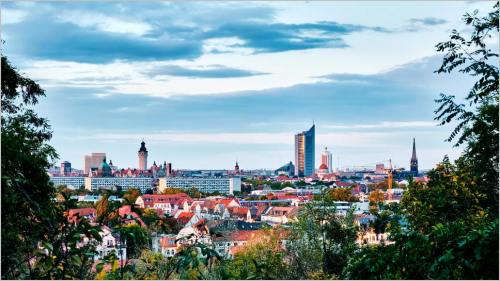 Photograph: Michael Schöne/Getty Images
.
.
Click the link below for the article:
.
__________________________________________
November 26, 2022
Mohenjo
Business, Food For Thought, Human Interest, Political, Science, Technical
amazon, business, Business News, current-events, Future, Hotels, human-rights, medicine, mental-health, research, Science, Science News, technology, Technology News, travel, vacation

Click the link below the picture
.
Our story begins in the middle of a wheat field, in the heart of Italy, in the comune, or municipality, of Monte San Pietrangeli, where there’s a pasta factory owned by Massimo Mancini, a son, and grandson of wheat farmers.
It’s a matter of pride for Mancini and his colleagues that they grow the durum wheat they use to make spaghetti, macaroni, and other noodles bound for sale in Italy and abroad, including in Canada. So his factory is actually in the middle of a field.
Mancini was explaining to me why he is so intent on working with his own semolina when he said something in passing about Canadian wheat that caught me by surprise. Over there, he said, referring to our immense country, they sometimes use pesticides in the fields right before harvest, which risks leaving residue in the grains. Do we really want to work with that kind of primary material?
The claim and the question caught me by surprise. I’d always believed Canadian one of the best in the world, that we were culinary peacekeepers, always ready to feed the planet thanks to the endless, golden fields of our Prairies.
I knew our oil industry was the butt of accusations by environmentalists, and that our treatment of First Nations was nothing to be proud of when it came to talk about Canada abroad. But our wheat? Really? This I had to investigate.
.
:format(webp)/https://www.thestar.com/content/dam/thestar/news/world/2022/11/26/is-there-pesticide-in-your-spaghetti-canadas-golden-wheat-reputation-hangs-on-the-outcome-of-a-pasta-war/d_the_combined_harvester_massimo_mancini_10_.jpg) Wheat
Wheat
.
.
Click the link below for the article:
.
__________________________________________
November 25, 2022
Mohenjo
Business, Enthralling, Human Interest, Photographs
amazon, business, Business News, current-events, Future, Hotels, human-rights, medicine, mental-health, research, Science, Science News, technology, Technology News, travel, vacation

Click the link below the picture
.
Durdle Door (sometimes written Durdle Dor) is a natural limestone arch on the Jurassic Coast near Lulworth in Dorset, England. It is privately owned by the Weld Family who own the Lulworth Estate, but it is also open to the public.
The form of the coastline around Durdle Door is controlled by its geology—both by the contrasting hardnesses of the rocks and by the local patterns of faults and folds. The arch has formed on a concordant coastline where bands of rock run parallel to the shoreline. The rock strata are almost vertical, and the bands of rock are quite narrow. Originally a band of resistant Portland limestone ran along the shore, the same band that appears one mile along the coast forming the narrow entrance to Lulworth Cove. Behind this is a 120-meter (390 ft) band of weaker, easily eroded rocks, and behind this is a stronger and much thicker band of chalk, which forms the Purbeck Hills. These steeply dipping rocks are part of the Lulworth crumple, itself part of the broader Purbeck Monocline, produced by the building of the Alps during the mid-Cenozoic.
A ‘back view’ of the Durdle Door promontory from the east, showing the remnants of the more resistant strata in Man O’War Bay
The limestone and chalk are in closer proximity at Durdle Door than at Swanage, 10 miles (16 km) to the east, where the distance is over 2 miles (3 km). Around this part of the coast, nearly all of the limestone has been removed by sea erosion, whilst the remainder forms the small headland which includes the arch. Erosion at the western end of the limestone band has resulted in the arch formation. UNESCO teams monitor the condition of both the arch and adjacent beach.
The 120-meter (390 ft) isthmus that joins the limestone to the chalk is made of a 50-meter (160 ft) band of Portland limestone, a narrow and compressed band of Cretaceous Wealden clays and sands, and then narrow bands of greensand and sandstone.
In Man O’ War Bay, the small bay immediately east of Durdle Door, the band of Portland and Purbeck limestone has not been entirely eroded away and is visible above the waves as Man O’War Rocks. Similarly, offshore to the west, the eroded limestone outcrop forms a line of small rocky islets called (from east to west) The Bull, The Blind Cow, The Cow, and The Calf.
As the coastline in this area is generally an eroding landscape, the cliffs are subject to occasional rockfalls and landslides; a particularly large slide occurred just to the east of Durdle Door in April 2013, resulting in destruction of part of the South West Coast Path. Wikipedia
.
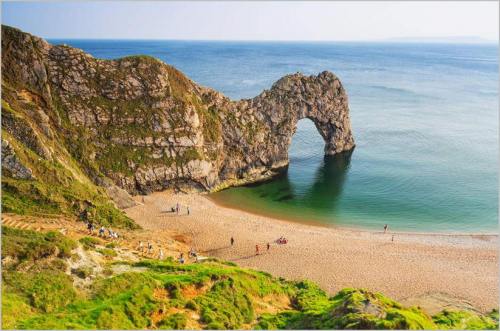 An image of Durdle Door Jurassic Coast Dorset
.
.
Click the link below for images:
.
__________________________________________
November 25, 2022
Mohenjo
Business, Food For Thought, Human Interest, Political, Science, Technical
amazon, business, Business News, current-events, Future, Hotels, human-rights, medicine, mental-health, research, Science, Science News, technology, Technology News, travel, vacation

Click the link below the picture
.
Travel inspiration is everywhere you look. The question is where to go next. Here’s our annual list of superlative destinations for the year ahead—places filled with wonder, rewarding to travelers of all ages, and supportive of local communities and ecosystems. Reported by our global editors and framed by five categories (Community, Nature, Culture, Family, and Adventure), these 25 destinations for 2023 are under the radar, ahead of the curve, and ready for you to start exploring.
.

The Greek island of Karpathos, a growing center of ecotourism, features striking landscapes surrounded by the Aegean Sea. The isle is part of the Dodecanese archipelago, one of Nat Geo’s Best of the World destinations for 2023. Photograph by Ciril Jazbec, National Geographic
.
.
Click the link below for the article:
.
__________________________________________
November 25, 2022
Mohenjo
Business, Food For Thought, Human Interest, Political, Science, Technical
amazon, business, Business News, current-events, Future, Hotels, human-rights, medicine, mental-health, research, Science, Science News, technology, Technology News, travel, vacation

Click the link below the picture
.
When a respected New York University professor was fired after a minority of students complained that the organic chemistry class he taught was too hard, it seemed to reflect a shift in the landscape of higher education.
Was this evidence that college students have become entitled customers, or is the existence of a “weed-out class,” one that many students struggle to pass, an indictment of a professor’s teaching? And if students have more power now, is that a good thing or a bad thing?
We asked students and professors to share their experiences.
Students told us that they feel they’re increasingly being listened to about how they want to be taught. Many professors wrote about how students seemed distracted and unprepared, especially after pandemic classroom disruptions. Along with students, they cited many pressures contributing to decreased classroom performance: worry about rising tuition costs, residual pandemic stress, demands as family caretakers.
Others respondents were focused on ways to adapt. David Peterson del Mar, a professor in the history department at Portland State University in Oregon, wrote that he invites his students to tell him what they want, and he has found that more than anything, “they want to be seen, want to be known.” Because of that, he makes a point of memorizing students’ names, meeting with them individually, and offering encouragement and referrals when they’re having trouble. “It’s extremely time-consuming and extremely rewarding,” he said.
.
 Janice Chung for The New York Times
.
.
Click the link below for the article:
.
__________________________________________
November 24, 2022
Mohenjo
Business, Food For Thought, Human Interest, Political, Science, Technical
amazon, business, Business News, current-events, Future, Hotels, human-rights, medicine, mental-health, research, Science, Science News, technology, Technology News, travel, vacation

Click the link below the picture
.
You may not realize this, but a lot of your personal information might be publicly available online to anyone who searches for you. This includes your name, age, address, phone number, email address, relationship status, and even court records. There are countless sites that provide this information, often for a small fee, and while it is possible to remove your info from them, doing so can be a bit of a challenge.
It can be shocking to visit a site like Spokeo, Intellius, MyLife, or BeenVerified—commonly known as data brokers or people-finding sites—and see all your information listed for anyone to see. But how are they even getting it?
“Often, it comes from scraping public records,” explains Gennie Gebhart, associate director of research at the Electronic Frontier Foundation. “For example, if you own a home, that real estate transaction is public record. They draw from all sorts of sources.”
.
 Photo by PCH-Vector/Getty Images
.
.
Click the link below for the article:
.
__________________________________________
Older Entries
Newer Entries

