January 30, 2023
Mohenjo
Business, Food For Thought, Human Interest, Political, Science, Technical
amazon, business, Business News, current-events, Future, Hotels, human-rights, medicine, mental-health, research, Science, Science News, technology, Technology News, travel, vacation

Click the link below the picture
.
A backlash against industrial-size solar farms is brewing. At least 75 big solar projects were vetoed across the United States last year, compared to 19 in 2021. And between January 2021 and July 2022, planning permission for 23 new solar farms was rejected across England, Wales, and Scotland, when only four projects were refused between 2017 and 2020—representing the highest rejection rate in five years. Decarbonization, to some extent, risks getting bogged down by planning objections. People very often don’t want solar farms in their backyard.
France, though, appears to have a solution: transforming its parking lots into solar farms nationwide. The French Senate has approved a bill requiring new and existing lots with more than 80 spaces to be at least half covered with canopies of solar panels that sit over the parking spaces. Assuming the bill comes into effect later this year, parking lots with more than 400 spaces must be compliant by 2026; smaller ones with 80 to 400 spaces will be given until 2028.
Because they’re in abundance and cover large areas, parking lots are obvious candidates for doubling up as solar arrays. But that’s only part of the potential benefit. It makes sense aesthetically and logistically too—mass parking tends to be right next to energy-hungry urban areas, and it’s hard to make a vast asphalt lot any uglier. It’s a “no-brainer solution to providing clean electricity without wasting space,” says Joshua Pearce, professor of electrical and computer engineering at the University of Western Ontario.
.
 Photograph: DAMIEN MEYER/Getty Images
.
.
Click the link below for the article:
.
__________________________________________
January 29, 2023
Mohenjo
Business, Food For Thought, Human Interest, Political, Science, Technical
amazon, business, Business News, current-events, Future, Hotels, human-rights, medicine, mental-health, research, Science, Science News, technology, Technology News, travel, vacation

Click the link below the picture
.
The summer of 2018 was affectionately nicknamed the Summer of Scam, as everyone on the internet devoured New York Magazine’s Anna Delvey long read—and every other scam-themed article that followed. But four years later, Summer of Scam is still going strong. My team at Truly*Adventurous has published a handful of features about con artists over the years, and we find that the best stories are the ones that give that coveted, special access to the swindler’s thinking, their notes on the back of the napkin. Because why wonder “what were they thinking?” when you can have them tell you exactly that—if you believe them, of course. (Check them all out time permitting.)
.
:extract_focal()/https%3A%2F%2Fs3.amazonaws.com%2Fpocket-collectionapi-prod-images%2F088c1288-764e-42ca-95c3-2b2ff8586217.jpeg) Image by Boris SV/Getty Images
Image by Boris SV/Getty Images
.
.
Click the link below for the article:
.
__________________________________________
January 27, 2023
Mohenjo
Business, Food For Thought, Human Interest, Political, Science, Technical
amazon, business, Business News, current-events, Future, Hotels, human-rights, medicine, mental-health, research, Science, Science News, technology, Technology News, travel, vacation

Click the link below the picture
.
When it comes to vitamins, some tend to hog the spotlight more than others in terms of popularity. Vitamin C, for example, comes straight to mind as we inch closer to winter, aka cold season (in terms of temperature and those agonizing nasal infections). However, we should ensure that we’re getting enough of all vitamins to stay in good health year-round—vitamin K included.
In case you’re less familiar with vitamin K, you’ll definitely want to keep reading. Ahead, with the help of two nutrition experts, we’ll cover tell-tale signs you’re not getting enough of it. Plus: an overview of why it’s so important and how to get more vitamin K in your diet.
How vitamin K benefits your health
Erin Stokes, ND, a naturopathic doctor, and MegaFood Medical Director, kicks things off by giving a brief summary of this (potentially) lesser-known vitamin. “Vitamin K is a fat-soluble vitamin involved in coagulation, bone metabolism, and cardiovascular health,” she shares. Fun fact: She adds that it gets its name from the Danish word koagulation. (You really do learn something new every day.)
From there, Dr. Stokes adds that the principal forms of vitamin K are K1 (phylloquinone) and K2 (menaquinone). “K1 is found in leafy green vegetables, and K2 is made in the human intestine and also found in fermented foods,” she explains.
.
 Photo: Stocksy/Nataša Mandić
.
.
Click the link below for the article:
.
__________________________________________
January 27, 2023
Mohenjo
Business, Food For Thought, Human Interest, Political, Science, Technical
amazon, business, Business News, current-events, Future, Hotels, human-rights, medicine, mental-health, research, Science, Science News, technology, Technology News, travel, vacation

Click the link below the picture
.
Mike LaPointe has the envious job of figuring out how to get space exploration to the science fiction future.
He and his colleagues fund high-risk, high-reward projects as part of the NASA Innovative Advanced Concepts program, or NIAC, which last week announced grants to 14 teams exploring fantastical ideas. Many of them won’t pan out. But some—perhaps the lunar oxygen pipeline or the space telescope mirror that’s actually built in space—could become game changers.
“We’re looking at anything from back-of-the-napkin kind of concepts to things that are conceptualized but not developed yet,” LaPointe says. “These are things looking 20 to 30 years down the road to see how we could drastically improve or enable new types of NASA missions.” For example, while efforts to slightly boost a chemical rocket engine’s efficiency would be laudable, that’s not far out enough for the program. A proposal for a completely new system that could replace chemical rockets would fit right in.
NASA awards these grants annually, mostly to academic researchers in the United States. This new batch of awards is for Phase 1 projects, which each receive $175,000 to conduct a nine-month study that researchers will use to lay out their plans in more detail, run tests, and design prototypes. A promising few will make it to Phase 2 and get $600,000 for a two-year study. After that, NASA will award $2 million to a single exceptional project to fund a two-year Phase 3 study.
Some of the competitors may ultimately find a home at NASA or with a commercial partner; others may have an indirect effect on space exploration by paving the way to spin-off technologies. For example, the startup Freefall Aerospace’s inflatable space antenna began as an NIAC project. A NIAC proposal for a rotorcraft on the Red Planet inspired the Martian helicopter Ingenuity.
.
.
Click the link below for the article:
.
__________________________________________
January 26, 2023
Mohenjo
Business, Food For Thought, Human Interest, Political, Science, Technical
amazon, business, Business News, current-events, Future, Hotels, human-rights, medicine, mental-health, research, Science, Science News, technology, Technology News, travel, vacation

Click the link below the picture
.
Millions of years ago thylacines, also known as Tasmanian tigers, were widespread across Australia. About the size of an American coyote, these dog-like creatures with stripes disappeared from the mainland around 2,000 years ago. They remained in Tasmania until the 1920s when they were slaughtered by European colonizers who saw them as a threat to livestock.
“It was a human-driven extinction – European settlers came to Australia and brutally obliterated this animal,” says Andrew Pask, a geneticist at the University of Melbourne.
Pask is leading a team of scientists who, together with “de-extinction” company Colossal Biosciences, aim to recreate the wolf-like creature and bring it back.
Thanks to recent advances in genetics, namely the advent of gene editing technology Crispr-Cas9, the thylacine is not the only lost species that we could soon see again. How does the science of de-extinction work, and what kinds of ethical questions does it raise?
In the case of the thylacine, the first step is sequencing the extinct animal’s DNA – the genetic blueprint contained in every single cell of the body. Pask did this in 2017.
“The great thing about the thylacine, is that as it was such an important marsupial every major museum wanted one in their collection, so there are hundreds of samples around the globe, and some are exceptionally preserved,” says Pask.
.
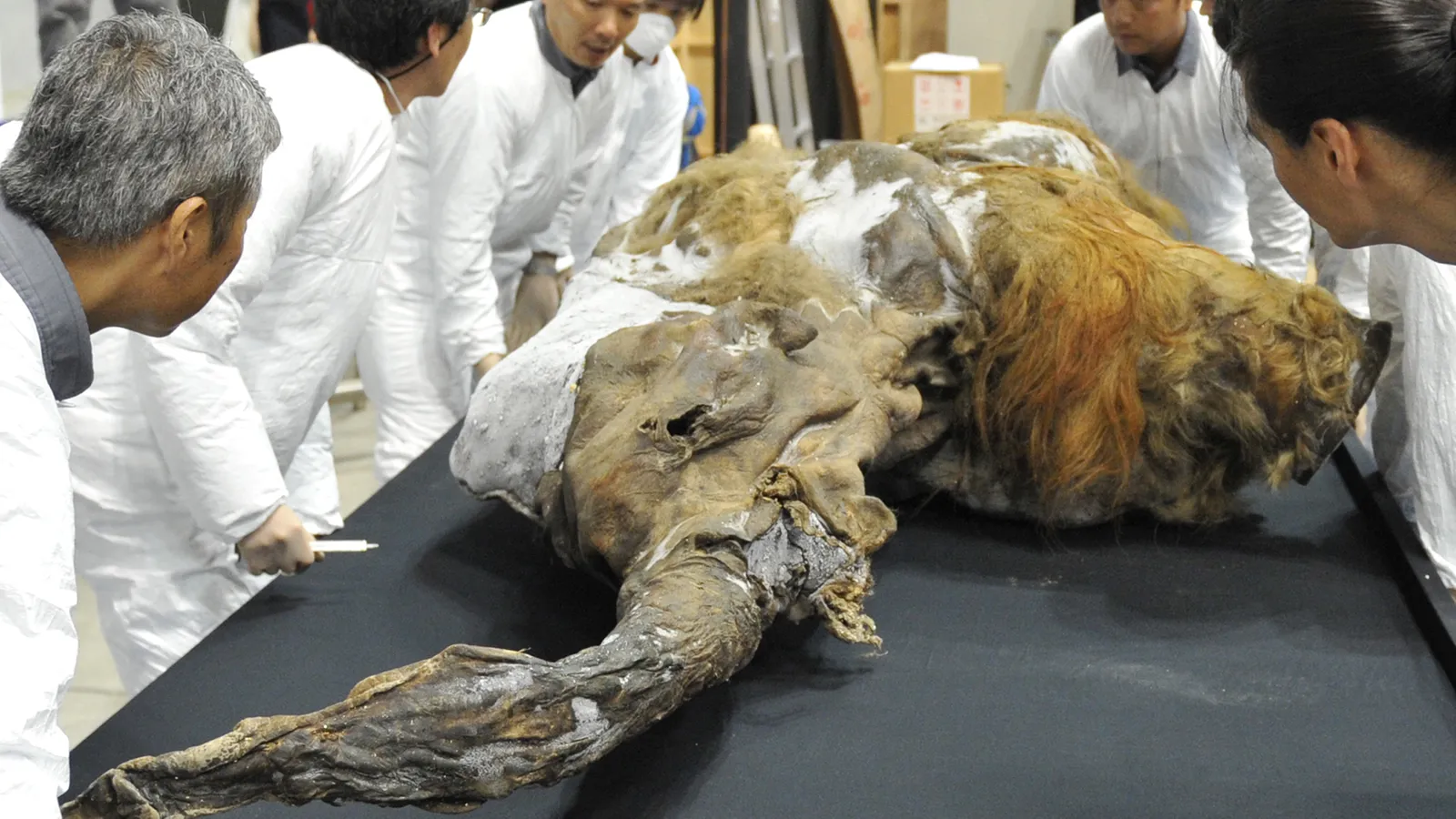 From an Australian frog that swallowed its own eggs to woolly mammoths, scientists are getting ever closer to being able to bring long-lost species back from the dead.
.
.
Click the link below for the article:
.
__________________________________________
January 26, 2023
Mohenjo
Business, Food For Thought, Human Interest, Political, Science, Technical
amazon, business, Business News, current-events, Future, Hotels, human-rights, medicine, mental-health, research, Science, Science News, technology, Technology News, travel, vacation

Click the link below the picture
.
No matter how many marathons you run, how many dietary supplements you take daily, or how often you see your chiropractor, inflammation is unavoidable. Trauma, infections, injury, and toxins trigger inflammation to defend your body’s health. While inflammation sounds like the ultimate killjoy, its job is to fight these foreign invaders so your body can heal and get healthy again, per StatPearls.
Diseases like cancer, diabetes, and Alzheimer’s can stem from chronic inflammation when inflammation worsens and lasts for months or even years. Aging, alcohol intake, and diets high in saturated fats can amplify inflammation, per a 2022 review published in Food Research International. The bright side? You can equip your body to combat inflammation and lessen your chances of developing chronic diseases. Even though there’s no magical cure-all food, eating a diet patterned after the Mediterranean diet can be a first-line approach to reducing inflammation. The Med diet focuses on fruits, vegetables, lean protein, whole grains, and healthy fats from nuts, olive oil, and fish.
.
 .
.
.
Click the link below for the article:
.
__________________________________________
January 25, 2023
Mohenjo
Business, Food For Thought, Human Interest, Political, Science, Technical
amazon, business, Business News, current-events, Future, Hotels, human-rights, medicine, mental-health, research, Science, Science News, technology, Technology News, travel, vacation

Click the link below the picture
.
Undergoing clinical trials around the world is a brain surgery that doesn’t need an incision or produce any blood yet drastically improves the lives of people with essential tremor, depression, and more. The procedure, known as a focused ultrasound, aims sound waves at parts of the brain to disrupt faulty brain circuits causing symptoms.
“Focused ultrasound is a noninvasive therapeutic technology,” said Dr. Neal Kassell, founder, and chairman of the Focused Ultrasound Foundation. “We’ve said that focused ultrasound is the most powerful sound you will never hear, but sound that someday could save your life.”
Kassell describes the way it works as “analogous to using a magnifying glass to focus beams of light on a point and burn a hole in a leaf.”
“With focused ultrasound, instead of using an optical lens to focus beams of light,” he added, “an acoustic lens is used to focus multiple beams of ultrasound energy on targets deep in the body with a high degree of precision and accuracy, sparing the adjacent normal tissue.”
Kassell served on the board of Insightec — a leading maker of focused ultrasound machines — more than 10 years ago, according to an Insightec spokesperson. As a result, he holds .03% of the company’s private shares. Kassell told CNN the financial aspect doesn’t drive his interest in focused ultrasound procedures.
.
 Brenda Hric consults with neurosurgeon Dr. Jeff Elias, who conducted her focused ultrasound.
.
.
Click the link below for the article:
.
__________________________________________
January 25, 2023
Mohenjo
Business, Food For Thought, Human Interest, Political, Science, Technical
amazon, business, Business News, current-events, Future, Hotels, human-rights, medicine, mental-health, research, Science, Science News, technology, Technology News, travel, vacation
Some content on this page was disabled on April 15, 2025 as a result of a DMCA takedown notice from Guardian Media Group. You can learn more about the DMCA here:
https://wordpress.com/support/copyright-and-the-dmca/
January 24, 2023
Mohenjo
Business, Food For Thought, Human Interest, Political, Science, Technical
amazon, business, Business News, current-events, Future, Hotels, human-rights, medicine, mental-health, research, Science, Science News, technology, Technology News, travel, vacation

Click the link below the picture
.
In his book, Influence: The Psychology of Persuasion, Robert Cialdini makes reference to what he considers to be one of the most important yet often unrecognized factors inherent in the art and practice of influence and persuasion, two highly significant aspects of effective communications. Whether we are involved in personal relations, business transactions, politics, sales, education, or any other domain that deals with just about any type of interpersonal transaction, our ability to influence the perspective of others is critical to the fulfillment of our goals and intentions.
Lest we forget, there is a profound difference between “control,” which has to do with having domination or authority over another, and “influence” which has to do with the power to sway or affect change in another’s perspective or behavior. Efforts to control frequently result in outcomes that differ from or may even be the opposite of our intended desires, since most of us have a natural tendency to resist overt efforts from others to control our behavior or beliefs.
Exploring the rule of reciprocation
In his book, Cialdini makes reference to what he refers to as the “rule of reciprocation” which has to do with the universal tendency in human beings to feel compelled to repay or reciprocate when given a gift whether it has come in the form of a material object, a kind deed, or an act of generosity. There is a strong impulse in people from all cultures to repay gifts or favors with a gift of our own to them. This impulse expresses itself in reciprocation to invitations to parties, Christmas cards, birthday presents, or acts of kindness.
.

Rule of Reciprocation
.
.
Click the link below for the article:
.
__________________________________________
January 24, 2023
Mohenjo
Business, Food For Thought, Human Interest, Political, Science, Technical
amazon, business, Business News, current-events, Future, Hotels, human-rights, medicine, mental-health, research, Science, Science News, technology, Technology News, travel, vacation

Click the link below the picture
.
Getting a good night’s sleep is absolutely essential for our mental and physical health.
Rather than being a time when the body completely shuts down, as is sometimes said, it is actually an active time when your body repairs cells, processes information, and strengthens itself. Many of the exact ways in which this happens are still a mystery to scientists, but they all resolutely emphasize its importance for good health and well-being.
.
 Photos by Getty, Unsplash / Lead image design: Alessia Armenise
.
.
Click the link below for the article:
.
__________________________________________
Older Entries
Newer Entries


