February 28, 2023
Mohenjo
Business, Food For Thought, Human Interest, Political, Science, Technical
amazon, business, Business News, current-events, Future, Hotels, human-rights, medicine, mental-health, research, Science, Science News, technology, Technology News, travel, vacation

Click the link below the picture
.
In the early 2000s, just a few years before Netflix began offering streaming services and when time spent watching TV in America was at its peak, Cristel Russell had an observation: Amid the boom of new television series, why did so many people choose to rewatch shows they’d already seen? Russell, a professor of marketing at the Graziadio Business School at Pepperdine University, realized the phenomenon applied not only to television, but books, movies, and travel experiences, too. “I thought this question had already been studied,” she says. “And it turned out it had not.”
Russell and a collaborator, the marketing researcher Sidney Levy, interviewed 23 study participants to parse their motivations for revisiting familiar media. Published in 2011, Russell and Levy’s paper helped define the concept of a rewatch — volitional reconsumption — and explained why nostalgia isn’t the primary motivation for returning to these shows.
This interview has been edited and condensed for clarity.
What did you find motivated people to revisit certain media?
Going into this, I thought that it would be nostalgia because that would have seemed like the most logical reason. Participants would say [shows were] like comfort food. They would go back to something that was familiar, and they knew they liked it, but they didn’t necessarily remember the details of why they liked it. They knew that it was a funny show, but they couldn’t really remember exactly what was funny about it, or they knew that it was a movie that made them feel good at the end, but couldn’t remember the details. They enjoyed it that much more because now they were rediscovering it as if it were new because they couldn’t remember exactly.
.
:format(webp)/cdn.vox-cdn.com/uploads/chorus_image/image/71994561/GettyImages_1394550285.0.jpg) Getty Images
Getty Images
.
.
Click the link below for the article:
.
__________________________________________
February 27, 2023
Mohenjo
Business, Food For Thought, Human Interest, Political, Science, Technical
amazon, business, Business News, current-events, Future, Hotels, human-rights, medicine, mental-health, research, Science, Science News, technology, Technology News, travel, vacation

Click the link below the picture
.
Does an English speaker perceive reality differently from say, a Swahili speaker? Does language shape our thoughts and change the way we think? Maybe.
The idea that the words, grammar, and metaphors we use result in our differing perceptions of experiences have long been a point of contention for linguists.
But just how much impact language has on the way we think is challenging to determine, says Betty Birner, a professor of linguistics and cognitive science at Northern Illinois University. Other factors, like culture, meaning the traditions and habits we pick up from those around us, also shape the way we talk, the things we talk about, and hence, changes the way we think or even how we remember things.
.
 Photo by dickcraft/Getty Images.
.
.
Click the link below for the article:
.
__________________________________________
February 27, 2023
Mohenjo
Business, Food For Thought, Human Interest, Political, Science, Technical
amazon, business, Business News, current-events, Future, Hotels, human-rights, medicine, mental-health, research, Science, Science News, technology, Technology News, travel, vacation

Click the link below the picture
.
We are living through a traumatic inflection point in our American story. Millions of our fellow citizens are hurting from a series of pandemics. Our public health system, our economic fate, and issues of racial justice all are on the line at the very same time. So, too, is democracy itself.
Observing the vicious murder of George Floyd on the streets of Minneapolis last spring was not only shocking; it was disorienting. I wondered: was this 1968 all over again, or the Red Summer of 1919, when anti-black violence consumed the country amidst another devastating pandemic, or 1877, the year the bright lights of Reconstruction were violently snuffed out just a dozen years after the Civil War restored the Union on the basis of freedom and equal citizenship under the law? And this was before the presidential election in November!
The tense days that followed—made all the more desolate by the loss of such icons as John Lewis and C.T. Vivian—only reinforced my sense that the history of the first Reconstruction was being refracted through our own lives and in our own time. Then came the special elections in Georgia in January, when, on the eve of the insurrection at the U.S. Capitol, the Rev. Raphael Warnock, the pastor of Dr. King’s church in Atlanta, became the first African American ever sent to the Senate from his state and the eleventh Black American to be elevated to that chamber overall. The first had been Hiram Revels, of Mississippi, in 1870, and, like Warnock, Revels had been a man of the Word. In fact, during Reconstruction, the historian Eric Foner tells us, three of the first sixteen African American members of Congress were ministers, and of the more than 2,000 Black officeholders at every level of government in that era, more than 240 were ministers—second only to farmers.
.
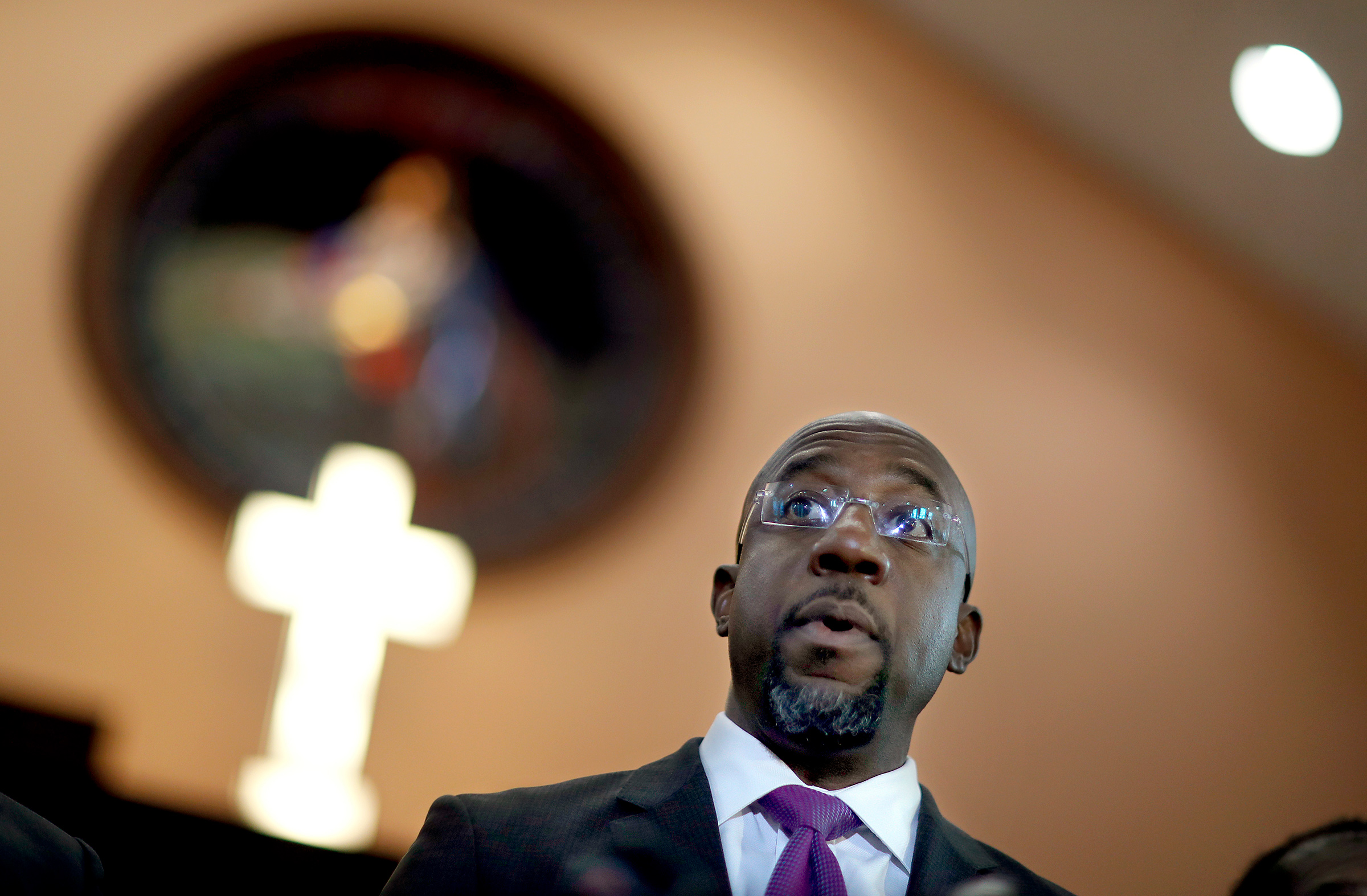
Rev. Raphael Warnock speaks at Ebenezer Baptist Church in Atlanta, on Jan. 12, 2018. David Goldman—AP
.
.
Click the link below for the article:
.
__________________________________________
February 27, 2023
Mohenjo
Business, Food For Thought, Human Interest, Political, Science, Technical
amazon, business, Business News, current-events, Future, Hotels, human-rights, medicine, mental-health, research, Science, Science News, technology, Technology News, travel, vacation

Click the link below the picture
.
Imagine a world where everyone had brown skin. Tens of thousands of years ago, that was the case, say scientists at Pennsylvania State University. So, how did white people get here? The answer lies in that tricky component of evolution known as a genetic mutation.
Out of Africa
Scientists have long known that Africa is the cradle of human civilization. There, our ancestors shed most of their body hair around 2 million years ago, and their dark skin protected them from skin cancer and other harmful effects of UV radiation. When humans began leaving Africa 20,000 to 50,000 years ago, a skin-whitening mutation appeared randomly in a sole individual, according to a 2005 Penn State study.1 That mutation proved advantageous as humans moved into Europe. Why? Because it allowed the migrants increased access to vitamin D, which is crucial to absorbing calcium and keeping bones strong.
“Sun intensity is great enough in equatorial regions that the vitamin can still be made in dark-skinned people despite the ultraviolet shielding effects of melanin,” explains Rick Weiss of The Washington Post, which reported on the
findings. But in the north, where sunlight is less intense and more clothing must be worn to combat the cold, melanin’s ultraviolet shielding could have been a liability.
Just a Color
This makes sense, but did scientists identify a bonafide race gene as well? Hardly. As the Post notes, the scientific community maintains that “race is a vaguely defined biological, social, and political concept…and skin color is only part of what race is—and is not.”
Researchers still say that race is more of a social construct than a scientific one because people of purportedly the same race can have as many differences in their DNA as people of separate so-called races do. It’s also difficult for scientists to determine where one race ends and another begins, considering that people of supposedly different races may have overlapping features in terms of hair color and texture, skin color, facial features, and other characteristics.
.
:max_bytes(150000):strip_icc():format(webp)/hands-stopping-dna-helix-106682797-59357c925f9b589eb4f76732.jpg)
.
.
Click the link below for the article:
.
__________________________________________
February 26, 2023
Mohenjo
Business, Food For Thought, Human Interest, Political, Science, Technical
amazon, business, Business News, current-events, Future, Hotels, human-rights, medicine, mental-health, research, Science, Science News, technology, Technology News, travel, vacation
Some content on this page was disabled on April 15, 2025 as a result of a DMCA takedown notice from Guardian Media Group. You can learn more about the DMCA here:
https://wordpress.com/support/copyright-and-the-dmca/
February 26, 2023
Mohenjo
Business, Food For Thought, Human Interest, Political, Science, Technical
amazon, business, Business News, current-events, Future, Hotels, human-rights, medicine, mental-health, research, Science, Science News, technology, Technology News, travel, vacation

Click the link below the picture
.
It was the beginning of the late 1980s. Don and Judy were finally ready to start a family. But, after a few attempts, they realized that they would have to adjust their plan. They would need a sperm donor. And, even before they found one, they had already decided. They were going to have two children, and they would never tell their children that their father was not biologically related to them. This was a secret they promised to each other that they would never tell.
For the past decade, I’ve studied the psychology of secrecy. I know the story of Don and Judy’s secret well because I’m their first child, and I learned about this secret the same day I gave an invited talk about my research on secrecy for a job interview. I was 26, and if you’re wondering what it’s like to learn such a major secret, I’ll tell you this: it was surprising. It was shocking to learn that I was not biologically related to my father nor his parents with whom I was very close. And it was even more shocking to learn that my brother was, in fact, my half-brother, conceived from a different donor. But I had not been the keeper of the secret for all those years. And, while the revelation for me was jolting, the greater impact and harm came to my parents themselves.
Secrets usually hurt their holders most. Keeping a secret is associated with lower life satisfaction, lower-quality relationships, and symptoms of poor psychological and physical health. Our secrets often hurt us, but not for the reasons you might think. While hiding a secret in conversation can feel uncomfortable, the hiding turns out to be the easy part. Simply thinking about a secret outside of a social interaction is associated with feelings of shame, isolation, and inauthenticity. These experiences can leave us feeling helpless, at the mercy of our secrets, and unable to cope. And these harms can begin the very moment you decide to keep a secret.
.
 Photo by Alex Majoli/Magnum
.
.
Click the link below for the article:
.
__________________________________________
February 25, 2023
Mohenjo
Business, Food For Thought, Human Interest, Science, Technical
amazon, business, Business News, current-events, Future, Hotels, human-rights, medicine, mental-health, research, Science, Science News, technology, Technology News, travel, vacation
Some content on this page was disabled on April 15, 2025 as a result of a DMCA takedown notice from Guardian Media Group. You can learn more about the DMCA here:
https://wordpress.com/support/copyright-and-the-dmca/
February 25, 2023
Mohenjo
Business, Food For Thought, Human Interest, Political, Science, Technical
amazon, business, Business News, current-events, Future, Hotels, human-rights, medicine, mental-health, research, Science, Science News, technology, Technology News, travel, vacation

Click the link below the picture
.
The first time the Rev. Lettie Moses Carr saw Jesus depicted as Black, she was in her 20s.
It felt “weird,” Carr said.
Until that moment, she’d always thought Jesus was white.
At least that’s how he appeared when she was growing up. A copy of Warner E. Sallman’s “Head of Christ” painting hung in her home, depicting a gentle Jesus with blue eyes turned heavenward and dark blond hair cascading over his shoulders in waves.
The painting, which has been reproduced a billion times, came to define what the central figure of Christianity looked like for generations of Christians in the United States — and beyond.
For years, Sallman’s Jesus “represented the image of God,” said Carr, director of ministry and administrative support staff at First Baptist Church of Glenarden in Maryland.
.
 Painting by Warner Sallman, “Head of Christ,” © 1941 Warner Press Inc., Anderson, Indiana. Used with permission
.
.
Click the link below for article:
.
__________________________________________
February 24, 2023
Mohenjo
Business, Food For Thought, Human Interest, Political, Science, Technical
amazon, business, Business News, current-events, Future, Hotels, human-rights, medicine, mental-health, research, Science, Science News, technology, Technology News, travel, vacation

Click the link below the picture
.
For much of the postwar era, America’s territories thrived. Remnants of the age of imperialism, the five far-flung Caribbean and Pacific outposts added residents faster than most states. But the 2020 Census revealed a troubling turn: Every territory is now shrinking, losing population faster than any state.
The synchronized swoon flummoxed us. They appear to have so little in common!
The largest U.S. territory, Puerto Rico, has 3.3 million people and Spanish and West Indian traditions tracing back to Columbus. The nearby U.S. Virgin Islands (population 87,000) were previously settled by Denmark. Over in the Pacific between Japan and Australia, Guam (pop. 154,000) and the Northern Mariana Islands (pop. 47,000) share Chamorro heritage and tourist economies oriented toward East Asia. And American Samoa (pop. 50,000), in the heart of Polynesia, still employs a communal system of land ownership and lies closer to New Zealand than Hawaii.
One big thing unites them: U.S. rule.
.
 As the sun sets, Carlos Fernandez, 90, stands in the doorway of his shack, down a steep, winding road on a remote mountainside in Villalba, Puerto Rico. (Sarah L. Voisin/The Washington Post)
.
.
Click the link below for the article:
.
__________________________________________
February 23, 2023
Mohenjo
Business, Food For Thought, Human Interest, Political, Science, Technical
amazon, business, Business News, current-events, Future, Hotels, human-rights, medicine, mental-health, research, Science, Science News, technology, Technology News, travel, vacation
Click the link below the picture
.
Often derided and the topic of many a teacher’s report card comment daydreaming, or mind-wandering, is generally seen as an undesirable activity, especially among school-age children from whom the education system demands unrelenting focus. “Monica likes to daydream,” notes home to my Mom would read. “I do wonder what she is thinking about.” And yet, on average, we daydream nearly 47% of our waking hours. If our brain spends nearly half of our awake time doing it, there is probably a good reason why.
The term “daydreaming” was coined by Julien Varendonck in 1921 in his book The Psychology of Day-Dreams (with a foreword by Sigmund Freud, so sort of a big deal). While Varendonck and Freud saw benefits to daydreaming, the past 20 years have yielded research that portrays daydreaming as “a cognitive control failure,” with some researchers out of Harvard recently declaring “a wandering mind is not a happy mind.” An exception to that opinion was one held by the late eminent psychologist Jerome Singer, who spent most of his professional life researching daydreaming (he preferred the term to “mind-wandering”). Singer identified three types of daydreaming, and while two can have negative impacts, one is quite beneficial.
The first is “guilty dysphoric” or fear-of-the-future daydreaming, when we either think about the past, perseverating on a negative experience (like reliving a tough phone call over and over), or we catastrophize the future (like imagining failing spectacularly at an upcoming work presentation). Then there is “poor attentional control,” where a person struggles to focus on a particular thought or task, particularly troublesome for those with attention deficits. These two kinds of daydreaming don’t have identifiable benefits. But the third type, “positive constructive daydreaming (PCD),” where we cast our mind forward and imagine future possibilities in a creative, positive way, can be quite beneficial. Helpful for planning and creativity, PCD is the bridge that links our internal observations with the forecasting required for future exploration.
.
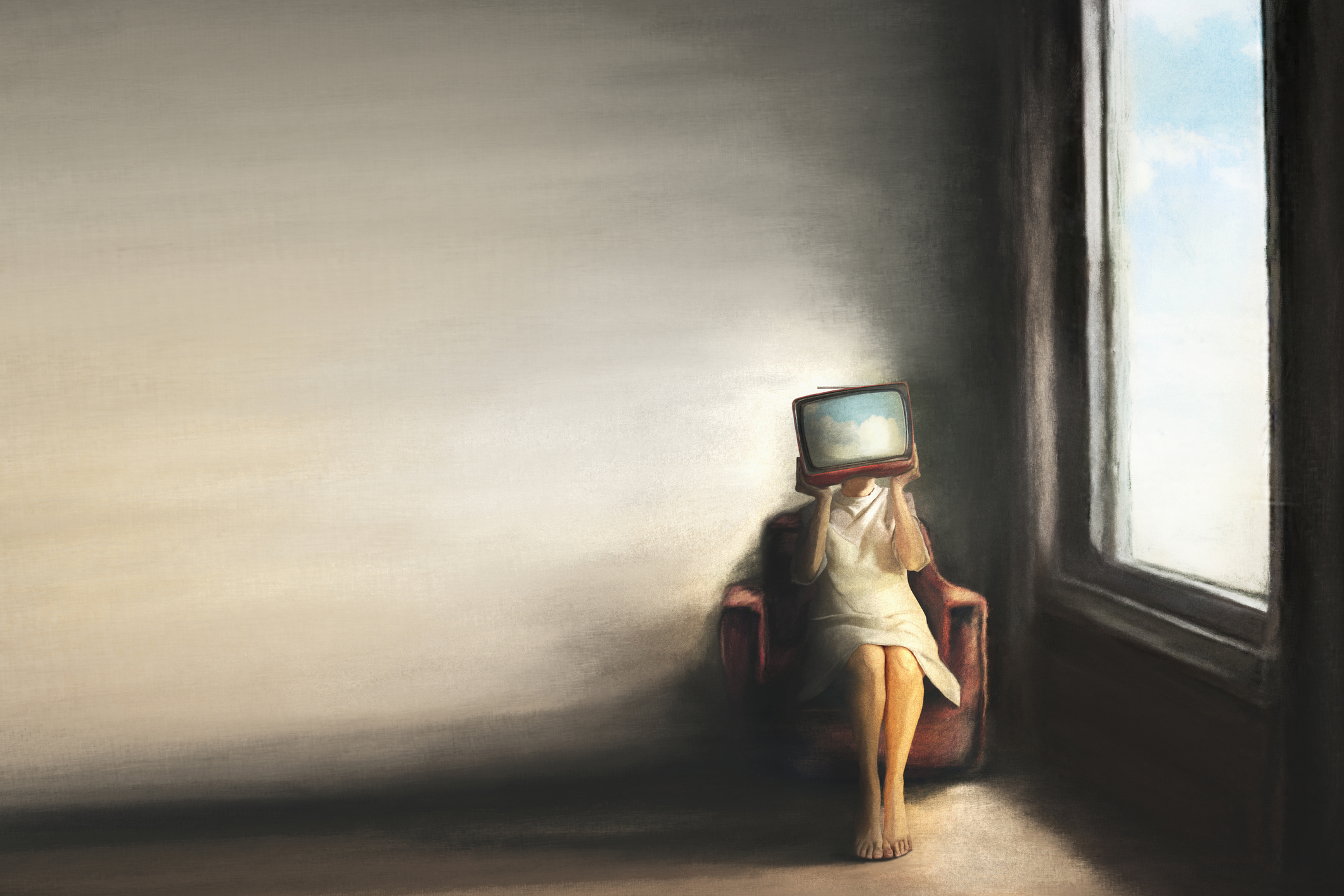 Getty Images
.
.
Click the link below for the article:
.
__________________________________________
Older Entries
Newer Entries
 James' World 2
Nanette Hoogslag / Getty Images