March 6, 2024
Mohenjo
Business, Food For Thought, Human Interest, Political, Science, Technical
amazon, business, Business News, current-events, Future, Hotels, human-rights, medicine, mental-health, research, Science, Science News, technology, Technology News, travel, vacation

Click the link below the picture
.
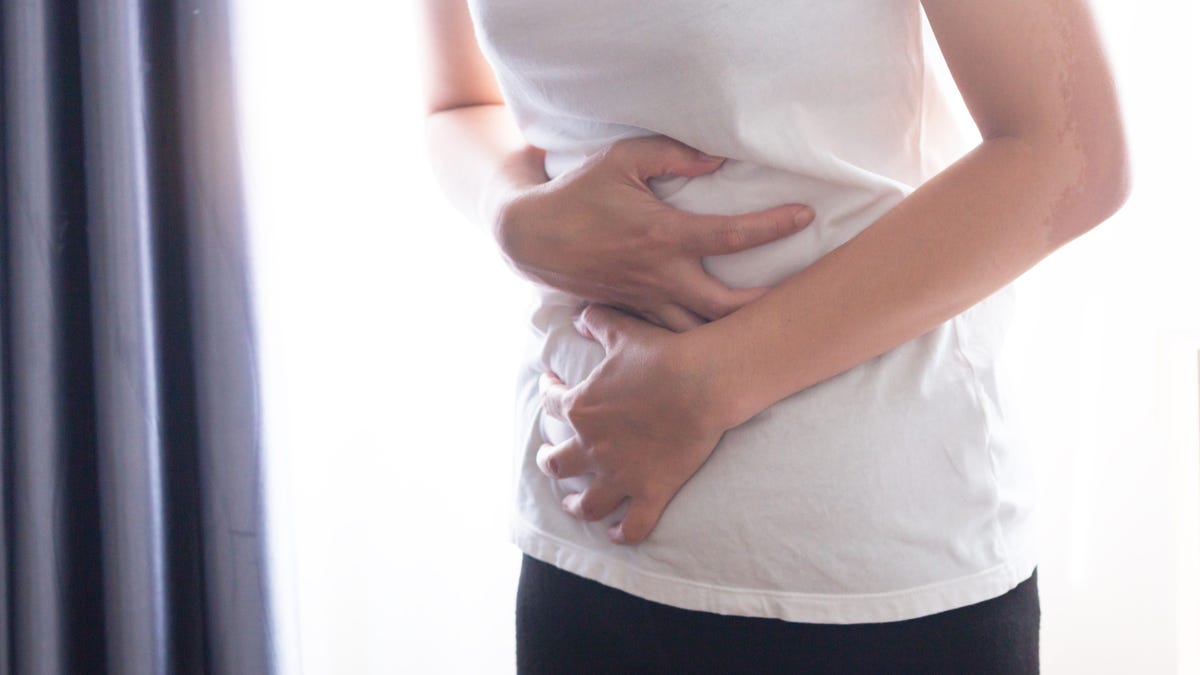
Think of your gut microbiome as a half-teased tangle of connections to other aspects of your health and body. Researchers are still unpicking its links to digestive function, mental health, your skin, and more.
In some cases, they’re figuring out whether an unhealthy gut microbiome is a cause of a symptom or health condition or a reaction to one.
The microbiome refers to the trillions of microorganisms (also called microbes) living in your body, such as bacteria, viruses, and fungi. The gut microbiome, specifically, references the microbes in your intestines, notably the large intestine. These microbes help you metabolize the food you can’t digest, boost your immune function, and control inflammation. They also generate metabolites (substances that your body uses to break down food), including vitamins, enzymes, and hormones, according to Gail Cresci, a microbiome researcher and registered dietician with Cleveland Clinic’s pediatric gastroenterology, hepatology, and nutrition department.
You should think of your gut microbiome as “little pets living inside your intestinal tract,” Cresci told CNET in 2023. What we eat feeds them, and our internal environment dictates how well they thrive.
As we learn more about the gut microbiome, there are a few beginner tips you can use to keep it as healthy as you can.
.
 Krisanapong Detraphiphat/Getty Images
.
.
Click the link below for the article:
.
__________________________________________
March 6, 2024
Mohenjo
Business, Food For Thought, Human Interest, Political, Science, Technical
amazon, business, Business News, current-events, Future, Hotels, human-rights, medicine, mental-health, research, Science, Science News, technology, Technology News, travel, vacation

Click the link below the picture
.
.
 Photograph: HUIZENG HU/Getty Images
.
.
Click the link below for article:
.
__________________________________________
March 5, 2024
Mohenjo
Business, Food For Thought, Human Interest, Political, Science, Technical
amazon, business, Business News, current-events, Future, Hotels, human-rights, medicine, mental-health, research, Science, Science News, technology, Technology News, travel, vacation

Click the link below the picture
.
Don’t look now, but after half a decade of transforming public life on an international scale, TikTok may finally be entering its flop era.
The clues are there if you know where to look, even outside the millions of videos that have lapsed into total silence since Universal Music Group yanked its vast catalog from the app, including Taylor Swift, J Balvin, your favorite city pop pioneers, and so many others. The professed reason was to deny the app a chance to train artificial intelligence on commercial music without compensating artists—which, fair enough. Yet it’s not just the songs that have left these videos; it’s the entire audio altogether, leading to the loss of creator narration on both old and new TikToks.
Then, there’s also the sharp slowdown in user growth over the past year, widespread annoyance with its ad-heavy push into e-commerce via the “TikTok Shop,” impatience with its never-ending deluge of A.I.–generated spam and misinformation, exhaustion with the homogenizing effects of TikTok trends and aesthetics, increased apprehension over its demeaning A.I.–powered face filters, outrage at its rumormongering automated-search suggestions, and concern over the heightened prevalence of conspiratorial “health”-focused influencers. Turmoil is coming from inside the house too, with layoffs and a gender-discrimination lawsuit hitting both TikTok and its parent company—the latter of which reported significant drops in revenue growth and overall valuation at the tail end of 2023. Oh, and: President Joe Biden has finally joined the app to reach the youths. The result is as cringe as it sounds, as my colleague Scott Nover pointed out.
TikTok is not anywhere near dead or dying; it’s more that you can sense a less-than-ideal vibe shift on the platform. With its revenue increasingly driven by consumer spending, you can expect TikTok to push even harder into Shop-like ventures, through exclusive subscription spaces or paid-for benefits like the ability to upload longer videos, even as it continues to slash its already-measly payouts to videomakers and musicians. Because, even though the app still takes in heaping amounts of ad revenue, its new request for agencies to increase their app spending isn’t going over great with advertising executives. That may be thanks, in part, to the geopolitical firestorms occurring even outside home nation China: The app’s image-making prowess is universally credited with assisting the recent electoral successes of strongmen in the Philippines, Argentina, and Indonesia. It’s a rickety situation in the United States as well: Politicians like Sen. John Fetterman, who once actively courted the app’s many youth organizers, are now parroting unfounded talking points about how TikTok is turning those very activists into Hamas surrogates. (Fetterman has not posted any new videos to his profile since making those comments in December.)
.
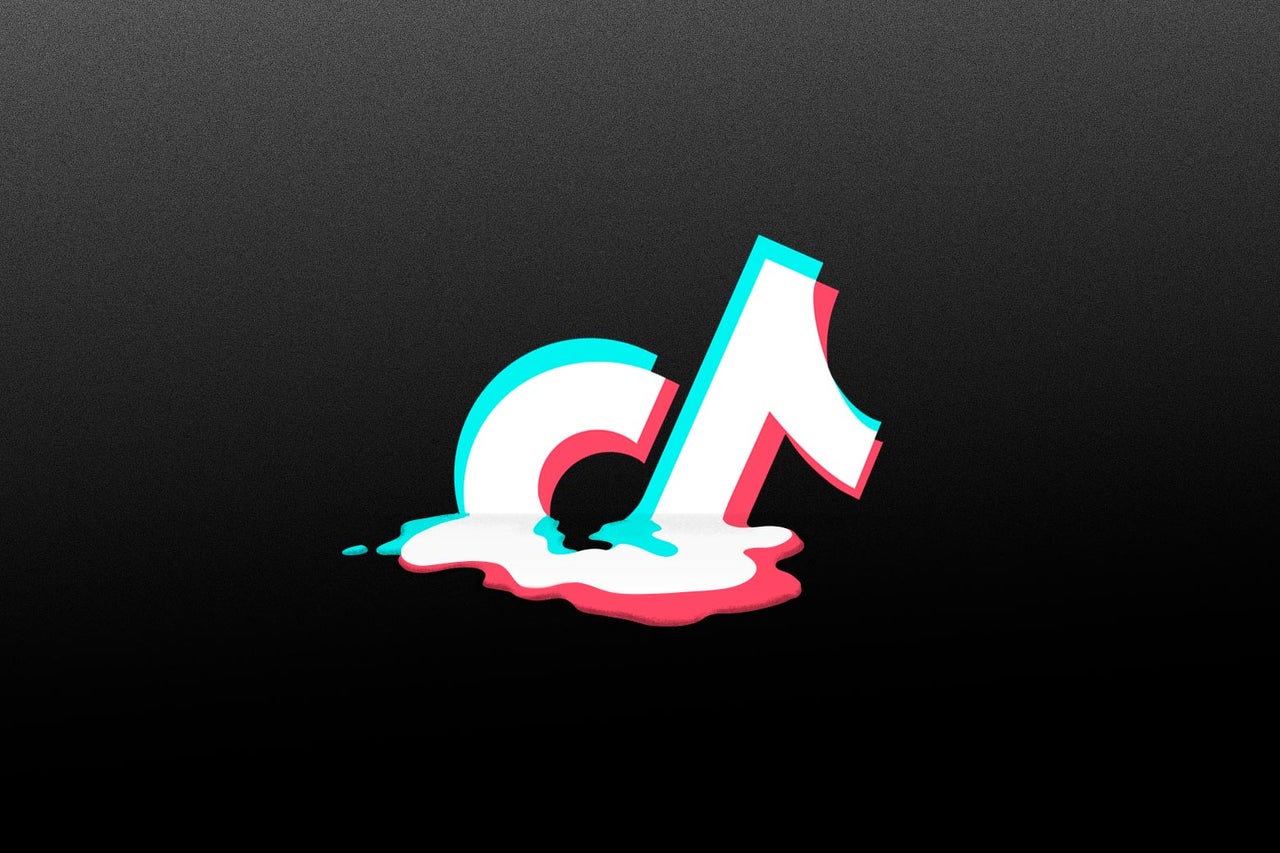 Photo illustration by Natalie Matthews-Ramo/Slate
.
.
Click the link below for the article:
.
__________________________________________
March 5, 2024
Mohenjo
Business, Food For Thought, Human Interest, Political, Science, Technical
amazon, business, Business News, current-events, Future, Hotels, human-rights, medicine, mental-health, research, Science, Science News, technology, Technology News, travel, vacation

Click the link below the picture
.
Like going on a diet, the first step in reducing the amount of single-use plastic we discard is to understand how much we really consume. Judith Enck, president of Beyond Plastics, a nationwide anti-plastic campaign, suggests looking at the plastic we throw away on a daily basis for an honest assessment of our consumption and for clues to how we can make the most impact. “I saw that I used a lot of Keurig pods, so I switched to using a French press,” Enck says. “My husband is a big orange juice drinker, so now we use frozen concentrated juice,” to avoid plastic jugs and cartons.
You don’t need to become an eco-warrior overnight. “Take it one product at a time, and work your way up,” says Deb Singer, the leader of the plastic bag ban at Whole Foods and co-founder of BRINGiT reusable shopping bags. “Starting with one thing makes it more palatable to make other changes.”
In addition to personal actions, you can push for producer responsibility laws that slow the flow of plastic at its source. “With plastic pollution, the tap is overrunning,” says Mariana Del Valle Prieto Cervantes, water equity and ocean program manager at GreenLatinos, which focuses on environmental, natural resource, and conservation issues that affect the Latino community in the U.S. “We have to turn off the tap before we can clean up this mess.”
Do First
Bring your own reusable bags and refuse plastic ones. BRINGiT makes eco-friendly compostable cellulose bags, but just about any reusable bag is better than a single-use plastic bag. Each reusable bag could cancel out hundreds to thousands of plastic bags.
Use mesh cloth bags for your produce. Try to avoid fruits and vegetables packed in plastic wrap or clamshells.
Do More
Kick your zipper food-storage bag habit. Use reusable silicone or paper-based bags instead.
Avoid plastic poop bags for your dog’s waste. Use paper-based alternatives or a pooper scooper if you have a yard.

.
.
Click the link below for the article:
.
__________________________________________
March 4, 2024
Mohenjo
Business, Food For Thought, Human Interest, Political, Science, Technical
amazon, business, Business News, current-events, Future, Hotels, human-rights, medicine, mental-health, research, Science, Science News, technology, Technology News, travel, vacation
Click the link below the picture
.
A team of computer scientists has created a nimbler, more flexible type of machine learning model. The trick: It must periodically forget what it knows. And while this new approach won’t displace the huge models that undergird the biggest apps, it could reveal more about how these programs understand language.
The new research marks “a significant advance in the field,” said Jea Kwon, an AI engineer at the Institute for Basic Science in South Korea.
The AI language engines in use today are mostly powered by artificial neural networks. Each “neuron” in the network is a mathematical function that receives signals from other such neurons, runs some calculations, and sends signals on through multiple layers of neurons. Initially, the flow of information is more or less random, but through training, the information flow between neurons improves as the network adapts to the training data. If an AI researcher wants to create a bilingual model, for example, she would train the model with a big pile of text from both languages, which would adjust the connections between neurons in such a way as to relate the text in one language with equivalent words in the other.
But this training process takes a lot of computing power. If the model doesn’t work very well, or if the user’s needs change later on, it’s hard to adapt it. “Say you have a model that has 100 languages, but imagine that one language you want is not covered,” said Mikel Artetxe, a co-author of the new research and founder of the AI startup Reka. “You could start over from scratch, but it’s not ideal.”Artetxe and his colleagues have tried to circumvent these limitations. A few years ago, Artetxe and others trained a neural network in one language, then erased what it knew about the building blocks of words, called tokens. These are stored in the first layer of the neural network, called the embedding layer. They left all the other layers of the model alone. After erasing the tokens of the first language, they retrained the model on the second language, which filled the embedding layer with new tokens from that language.
.
 Valentin Tkach for Quanta Magazine
.
.
Click the link below for the article:
.
__________________________________________
March 4, 2024
Mohenjo
Business, Food For Thought, Human Interest, Political, Science, Technical
amazon, business, Business News, current-events, Future, Hotels, human-rights, medicine, mental-health, research, Science, Science News, technology, Technology News, travel, vacation

Click the link below the picture
.
At a wedding last weekend the conversation around the table turned, as it so often does in the presence of a freshly minted marriage, to finding love. “Where am I supposed to meet people?” the man to my left despaired, as though someone on table eight was holding all eligible women hostage from him. “I speak to girls on Tinder but I barely ever actually meet them.”
Foregoing dating apps for the old-school method of seeking out a partner without your phone can be a daunting proposition. But while bad romantic comedies would have you believe you need to go out six nights a week and speak to every person in the post office to find love, even the time and inspiration-poor can find someone in real life.
Firstly, delete the apps
Tinder et al are a sinkhole of energy and, for many, a boom-bust exercise of conversations that go nowhere and just serve to boost the ego of one party. If you have found Tinder successful and are confident selling yourself on a few holiday pictures and a bio, don’t stop. If it’s not really working out – which is probably why you clicked on this article – banish it from your phone and give yourself the impetus to meet people in real life without the safety net of Tinder distracting you from your pocket.
.
 Dating App
.
.
Click the link below for the article:
.
__________________________________________
March 3, 2024
Mohenjo
Business, Food For Thought, Human Interest, Political, Science, Technical
amazon, business, Business News, current-events, Future, Hotels, human-rights, medicine, mental-health, research, Science, Science News, technology, Technology News, travel, vacation

Click the link below the picture
.
It was, of all people, Justin Bieber who first opened my eyes to a new way of thinking about my phone. See, Bieber isn’t into phones. He ditched his a while back and became an iPad guy. According to a 2021 Billboard article, he wakes up in the morning, grabs his tablet, and checks in with his management to see what’s going on for the day. The idea was to “limit who can reach him.” This is something you hear a lot from phone-free celebs: they’re not trying to disconnect from everyone, but they are trying to get away from that feeling of being tapped constantly on the shoulder by all the calls, texts, and emails.
I’ve been obsessed with celebrity technology usage, or lack thereof, for years. In so many cases, it seems that once you become sufficiently famous — with millions of people hanging on your every word, millions of others talking about you all the time, and countless people in your life scrambling for your time, energy, and money — the only sane way to manage it all is to sever as much as possible. So many celebrities ditch their phone, disconnect from their social media, log off entirely. Everyone from Tom Cruise to Elton John to Sarah Jessica Parker to Michael Cera to Dolly Parton to George Clooney has extolled the virtues of a phone-free life. The internet practically revolves around A-list celebrities, and they often don’t even know.
For most of us, ditching our phones and moving into the woods or whatever is a fantasy. We don’t have managers and personal assistants and accountants to handle all of our calls; we have family members and bosses who need to reach us. Plus, phones are useful and cool and fun! Even some of these celebrities end up going back — a few recent pictures of Bieber indicate he might once again be a phone-haver. But I’ve still found myself looking for lessons from the celebrities, wondering what they’ve discovered about the internet and themselves by disconnecting a bit. I’ve also been looking for tips on how to do the same. And I think I might have figured it out.
A few years ago, Ed Sheeran shared a strategy that sounded a lot like Bieber’s. He hasn’t had a phone since 2015, he told Hodinkee, because “I got really overwhelmed and sad with a phone.” Being phoneless hadn’t cut his contact to the world, Sheeran said, just reduced it — and that was the point. “I have friends email and people email, and every few days I’ll sit down and open up my laptop, and I’ll answer 10 emails at a time,” he said. “I’ll send them off, and I close my laptop, and then that’ll be it. And then I’ll go back to living my life, and I don’t feel overwhelmed by it.”
.
:format(webp)/cdn.vox-cdn.com/uploads/chorus_asset/file/25307956/1235753585.jpg)
If Justin Bieber can figure out how to leave his phone behind, so can I. Photo by Bellocqimages / Bauer-Griffin / GC Images
.
.
Click the link below for the article:
.
__________________________________________
March 3, 2024
Mohenjo
Business, Food For Thought, Human Interest, Political, Science, Technical
amazon, business, Business News, current-events, Future, Hotels, human-rights, medicine, mental-health, research, Science, Science News, technology, Technology News, travel, vacation
Click the link below the picture
.
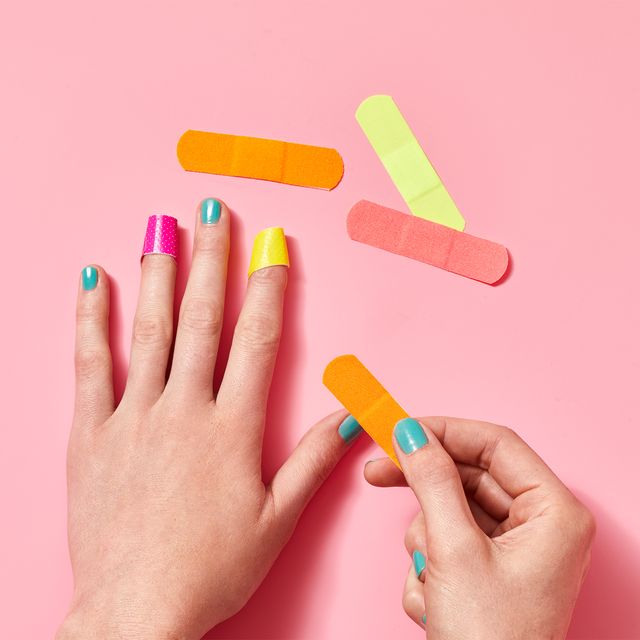
Do you have a bad habit of biting your nails whenever you’re anxious, stressed, or bored? You’re not alone. In fact, nearly 20 to 30% of the population have the same habit — but the seemingly innocuous behavior is actually not as harmless as you might think. When left untreated, chronic nail-biting can lead to a slew of health problems, including infections and other hygiene issues (not to mention you’ll never get those dream nails you always wanted!)
Of course, if you’re one of the many people who can’t help but constantly nibble on their nails, you already know that it’s an extremely tough habit to kick — especially since most of the time you’re doing it without realizing it. Luckily, there are a few ways to overcome the urge once and for all. If you’re wondering how to stop nail-biting for good and finally get strong, healthy nails that haven’t been incessantly gnawed on, here are some of the best expert-approved tips to finally kick the bad habit to the curb.
Why do I bite my nails?
Before trying to stop your nail-biting habit, it’s important to know the causes behind the behavior — or onychophagia, as medical experts call it in clinical settings. According to Rebecca Rialon Berry, Ph.D., a licensed psychologist and director of the Tics, Tourette Disorder, and Trichotillomania Program at the Child Study Center at NYU Langone Health, nail-biting falls along the lines of a type of behavior in the clinical world called body-focused repetitive behaviors, or BFRBs, which refer to any repetitive self-grooming behaviors that damage the skin, hair or nails.
Why is it that we engage in these types of behaviors? Research suggests that more likely than not, there’s a genetic cause behind this tick. But there are also a number of environmental triggers that manifest the onset of nail-biting behavior — including stress, anxiety, boredom, and other forms of emotional distress. “Sometimes people engage in these behaviors because they’re actually feeling underwhelmed, under-stimulated or bored,” adds Berry. “And then there is a subset of people that could be working more automatically as part of a stress response.”
.
We’ve been independently researching and testing products for over 120 years. If you buy through our links, we may earn a commission. Learn more about our review process. Mike Garten
.
.
Click the link below for the article:
.
__________________________________________
March 2, 2024
Mohenjo
Business, Food For Thought, Human Interest, Political, Science, Technical
amazon, business, Business News, current-events, Future, Hotels, human-rights, medicine, mental-health, research, Science, Science News, technology, Technology News, travel, vacation

Click the link below the picture
.
If you’ve decided to take a break from drinking alcohol, you’re not alone. Breaking the booze habit, whether it’s for 30 days or longer, has its benefits. But for many people, the challenge is getting started.
Here are six strategies and tips to get you on your way.
1. Assess your relationship with alcohol
Think about what’s motivating you to take a break from alcohol. To begin the process, consider starting a journal. Rachel Kazez, a licensed clinical social worker and therapist with All Along, says to begin with some basic questions to get a little perspective.
- How often, and how much am I drinking? What are the reasons I drink?
- How do I feel before I drink? How do I feel afterward?
These are all simple questions — but once you start reflecting — your answers may surprise you. “It’s the act of stepping back and looking at one’s relationship with alcohol that we think is where the magic is,” says Aaron White of the National Institutes of Alcohol Abuse and Alcoholism, part of the National Institutes of Health. He says here are some more questions to ask yourself:
- How does alcohol affect your social relationships?
- Do you get to work on time?
- Are you hungover a lot?
- Do you find yourself thinking about alcohol?
There’s no right or wrong answer, and no judgment. Given that alcohol is so ubiquitous in our culture, some people drink out of habit and haven’t taken the time to take note of its effects. A break from drinking will give you this opportunity.
.
6 tips to help you try dry January, or taking any break from alcohol. Becky Harlan/NPR
.
.
Click the link below for the article:
.
__________________________________________
March 2, 2024
Mohenjo
Business, Food For Thought, Human Interest, Political, Science, Technical
amazon, business, Business News, current-events, Future, Hotels, human-rights, medicine, mental-health, research, Science, Science News, technology, Technology News, travel, vacation

Click the link below the picture
.
Fittingly, the CEO of a startup that hopes to take over the AI world appears on screen with what appears to be a robotic limb.
“I’ve got this piece of metal in me now,” Dmitry Shapiro says of the high-tech brace. “It’s kind of cool, like a cyborg arm.” He ruptured his bicep while helping his family evacuate during floods in San Diego, all of which sounds kind of cool, too. Then Shapiro, 54, admits the cause: Picking up a box in the garage. As he and his wife discovered doing research afterwards, a bicep tendon rupture is most frequently felt by … middle-aged men picking up boxes.
The problem and the solution were both duller – and more widespread and more helpful, respectively – than they seemed at first blush. Which makes the not-so-cyborg arm an even more fitting visual for Shapiro’s startup, and for where the AI industry is going next. Shapiro, a tech veteran who previously ran Google machine learning teams, co-founded his startup YouAI and launched its product MindStudio last year. MindStudio lets managers build apps using any or all of the major AI services, like OpenAI’s GPT-4 Turbo or Google’s Gemini. Fresh data can be sprinkled in from all kinds of other non-AI databases or documents. These AI apps can be constructed in minutes, visually, like a flow chart, without the user needing to touch a line of code — the way Windows runs on top of DOS, Shapiro notes. (Left unsaid: putting Windows atop DOS made Microsoft the wealthiest company of the 1980s and 1990s.)
Less than a year in, MindStudio can boast more than 18,000 user-created AI apps (putting it ahead of Dante AI, a similar brew-your-own chatbot service with 6,000 user-created apps). Its growth was based entirely on word-of-mouth. Again, the 18,000 number sounds awesome and a little terrifying — like a flurry of drones — until Shapiro offers an example that drills home the mundanity of those apps. A friend of his exited the tech world, bought a pool-cleaning business, and used MindStudio to build a “pool-cleaning copilot” in a matter of minutes. Now his employees test the pH of pools and the app tells them what to do with the result.
“The things you can do with this now would have been seen as science fiction last year,” Shapiro says, suggesting he needs to read more interesting science fiction. Still, his point stands. As it comes into focus, this technology looks less like the Terminator, and more like giving robot arms to people lifting boxes.
.

.
.
Click the link below for the article:
.
__________________________________________
Older Entries
Newer Entries
 James' World 2