
Click the link below the picture
.
Do you have a bad habit of biting your nails whenever you’re anxious, stressed, or bored? You’re not alone. In fact, nearly 20 to 30% of the population have the same habit — but the seemingly innocuous behavior is actually not as harmless as you might think. When left untreated, chronic nail-biting can lead to a slew of health problems, including infections and other hygiene issues (not to mention you’ll never get those dream nails you always wanted!)
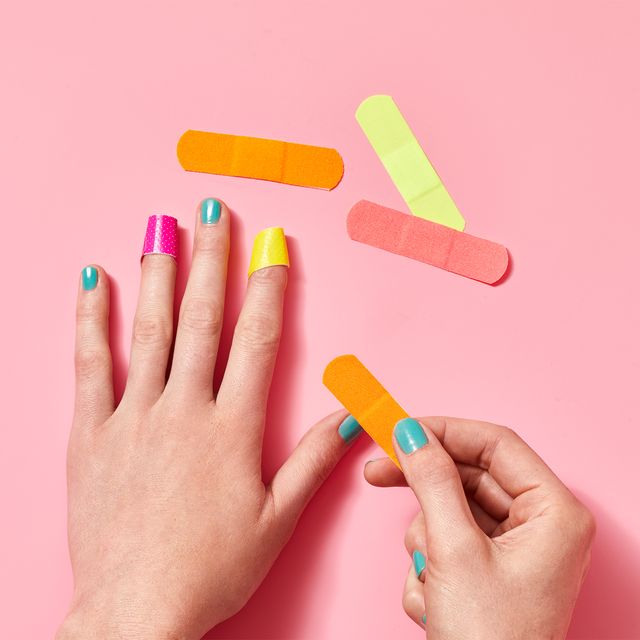
Of course, if you’re one of the many people who can’t help but constantly nibble on their nails, you already know that it’s an extremely tough habit to kick — especially since most of the time you’re doing it without realizing it. Luckily, there are a few ways to overcome the urge once and for all. If you’re wondering how to stop nail-biting for good and finally get strong, healthy nails that haven’t been incessantly gnawed on, here are some of the best expert-approved tips to finally kick the bad habit to the curb.
Why do I bite my nails?
Before trying to stop your nail-biting habit, it’s important to know the causes behind the behavior — or onychophagia, as medical experts call it in clinical settings. According to Rebecca Rialon Berry, Ph.D., a licensed psychologist and director of the Tics, Tourette Disorder, and Trichotillomania Program at the Child Study Center at NYU Langone Health, nail-biting falls along the lines of a type of behavior in the clinical world called body-focused repetitive behaviors, or BFRBs, which refer to any repetitive self-grooming behaviors that damage the skin, hair or nails.
Why is it that we engage in these types of behaviors? Research suggests that more likely than not, there’s a genetic cause behind this tick. But there are also a number of environmental triggers that manifest the onset of nail-biting behavior — including stress, anxiety, boredom, and other forms of emotional distress. “Sometimes people engage in these behaviors because they’re actually feeling underwhelmed, under-stimulated or bored,” adds Berry. “And then there is a subset of people that could be working more automatically as part of a stress response.”
.
We’ve been independently researching and testing products for over 120 years. If you buy through our links, we may earn a commission. Learn more about our review process. Mike Garten
.
.
Click the link below for the article:
.
__________________________________________
 James' World 2
Leave a comment