Last year, New York City saw hundreds of thousands of protesters spill into the streets of Manhattan for the Women’s March. In Washington, D.C., half a million came out. Across the country and world, women took a stand.
And they had some pretty great signs with them while doing it. This year was no different.
Since President Donald Trump’s inauguration, women proved they are a force to be reckoned with. Women came out in record numbers last year to both protest and run for office. And men in power have seen their worlds shattered by women fed up with their abuse.
But we don’t need to tell you that.
.
ANDREW CABALLERO-REYNOLDS via Getty Images
Protesters hold up signs near the White House after the Women’s March on Washington.
Paul Bocuse, the most celebrated French chef of the postwar era and a leading figure in the pathbreaking culinary movement known as nouvelle cuisine, died on Saturday, his family said in a statement. He was 91.
Mr. Bocuse emerged as the first among a brilliant band of chefs who developed a modernized version of classic French cooking in the late 1960s and early ’70s, cheered on by Henri Gault and Christian Millau, the publishers of the influential Gault-Millau Guide. Following the lead of Fernand Point, the spiritual father of nouvelle cuisine and a mentor to many of its pioneers, Mr. Bocuse shaped a style of cooking at the Auberge du Pont de Collonges, his three-star restaurant near Lyon, that stressed fresh ingredients, lighter sauces, unusual flavor combinations and relentless innovation that, in his case, rested on a solid mastery of classic technique.
His signature dishes not only pleased the palate; they also seduced the eye and piqued the imagination. He stuffed sea bass with lobster mousse and encased it in pastry scales and fins. He poached a truffled Bresse chicken inside a pig’s bladder.
.
A mural of Mr. Bocuse was painted in Lyon in 2015. Despite his international status, the chef remained deeply rooted in his native soil.CreditJeff Pachoud/Agence France-Presse — Getty Images
In the days before Donald Trump’s inauguration, a wealthy Russian pharmaceutical executive named Alexey Repik arrived in Washington, expressing excitement about the new administration.
He posted a photo on Facebook of a clutch of inauguration credentials arranged next to a white “Make America Great Again” hat, writing in Russian: “I believe that President Donald Trump will open a new page in American history.”
Throughout his trip, Repik had prime access. He wrote on Facebook that he got close enough to the president-elect at a pre-inaugural event to “check the handshake strength of Donald Trump.” He and his wife, Polina Repik, witnessed Trump’s swearing-in from ticketed seats in front of the U.S. Capitol. And he posed for a photo shoulder-to-shoulder with Mike Pompeo, the president’s nominee to head the CIA, although Repik later said he was not aware of Pompeo’s intended role at the time.
.
Some prominent Russians came to Washington to witness Donald Trump’s inauguration last year. Above is a section where some had ticketed seats in front of the U.S. Capitol. (CNN/Photo illustration by The Washington Post)
Donald Trump campaigned as the master deal-maker, a guy who could come to Washington, knock a few heads and get the government working again.
But on the anniversary of Trump’s inauguration, America awoke to a government shutdown — a dramatic testament to dysfunction, partisan gridlock and failed leadership.
There was a lot at stake: for the public, for House Republicans who fear losing their majority, for Senate Democrats whose incumbents will now have to defend their votes and the shutdown to constituents, and for Trump, whose approval ratings have languished below 40 percent.
But as federal spending authority expired at midnight Saturday, the nation’s top elected officials sent the election-year message that they’re less concerned with performing the most basic task of governance than catering to the demands of partisans.
In what is being described as a “first,” lifeguards successfully deployed a drone to rescue two boys in trouble while swimming off the eastern coast of Australia Thursday.
It was all a bit of serendipity, too. Members of the Australian Lifeguard Service just happened to be training with the drone — which is being developed to spot sharks — when they got word that the swimmers were having difficulty nearby as they encountered a 9-foot swell in rough surf conditions, according to the surf lifesaving website in New South Wales.
And the man piloting the drone at the time just happened to be Jai Sheridan, the 2017 New South Wales Lifeguard of the Year.
.
The Westpac Little Ripper UAV and Rescue Pod at Bilgola Beach in New South Wales, Australia, used to drop the flotation device. (Westpac Little Ripper via AP)
The Global Positioning System (GPS) has been among the most far-reaching innovations of the past 50 years. Operated by the U.S. Air Force, the technology uses satellite signals to determine a precise location and synchronize time around the world. It’s been instrumental in the development of everything from drones and mobile maps to the infrastructure of our modern financial system and utility grid.
GPS doesn’t come from your phone. Few realize that it’s a complex network, comprising a constellation of advanced satellites in orbit, a sophisticated ground control system and signal receivers that today serve over a billion military, commercial and civilian users. The Air Force now is engaged in a major modernization program that will give the system even more advanced capabilities.
A critical component to this modernization is a new generation of satellites, known as “GPS III.” Developed by Lockheed Martin, GPS III is not just an upgrade but an entirely new, more resilient design to produce the most powerful GPS satellites ever. GPS III surpasses any of its predecessors with greater accuracy, improved anti-jamming capability and a longer on-orbit life. The pathbreaking technology will for the first time provide users around the world with greater connectivity by leveraging other global navigation satellite infrastructures.
.
The next generation of GPS will bring even more advanced capabilities for a safer world.
Cindy Garcia has had a long, exhausting and life-changing week. And by all appearances, the whirlwind is going to continue.
On Monday morning, she watched immigration agents escort Jorge Garcia, her husband of 15 years, through the security gates at Detroit Metropolitan Airport, deporting him to Mexico after nearly three decades living and raising a family in Michigan.
Video of Cindy Garcia and the couple’s two adolescent children sobbing as they said goodbye grabbed national headlines. Supporters held up the family’s experience as an example of the far-reaching effects of President Trump’s sweeping crackdown on undocumented immigration. Observers across the political spectrum took notice. “Surely this should not be happening,” tweeted Bill Kristol, editor of the right-leaning Weekly Standard.
.
Jorge Garcia poses with his wife, Cindy Garcia, in Detroit on Jan. 15 at a farewell party before he was deported to Mexico. (Niraj Warikoo /Detroit Free Press via AP)
Dolores O’Riordan, the lead singer of the Irish rock band the Cranberries, died on Monday in London. She was 46.
Her death was announced by her publicist, who did not specify the cause.
“Irish and international singer Dolores O’Riordan has died suddenly in London today,” Lindsey Holmes, the publicist, said in an emailed statement, adding that Ms. O’Riordan had been in London for a recording session.
The statement said that family members are “devastated to hear the breaking news and have requested privacy at this very difficult time.”
A spokeswoman for the Metropolitan Police said on Monday that the police were called to a Park Lane hotel in Westminster at about 9:05 a.m., and that Ms. O’Riordan was pronounced dead at the scene. Her death is not being treated as suspicious.
Lawmakers appeared a little closer Wednesday to passing yet another short-term spending bill to keep the government open, but as Senate Democrats looked increasingly likely to cave, conservatives in the House looked increasingly likely to fight ― or at least get some concessions. And depending on what demands GOP leaders give in to, those changes could still throw the Senate into chaos and the government into a shutdown.
House Freedom Caucus Chairman Mark Meadows (R-N.C.) emerged from a meeting with Chief Deputy Whip Patrick McHenry (R-N.C.) on Wednesday night saying House Republicans don’t yet have the votes to pass another short-term spending fix, called a continuing resolution (CR).
“At this point, if the vote were to happen today, there’s not the votes to fund it with Republican-only votes,” Meadows told reporters Wednesday night.
Still, Meadows said they were making “good progress,” and he expected leadership to have some accommodation for conservatives.
.
Bill Clark via Getty Images
Rep. Mark Meadows (R-N.C.), chairman of the conservative House Freedom Caucus, said a short-term spending bill is on shaky ground. “At this point, if the vote were to happen today, there’s not the votes to fund it with Republican-only votes.”
Film and Writing Festival for Comedy. Showcasing best of comedy short films at the FEEDBACK Film Festival. Plus, showcasing best of comedy novels, short stories, poems, screenplays (TV, short, feature) at the festival performed by professional actors.

 ANDREW CABALLERO-REYNOLDS via Getty Images



 .
.





 Dolores O’Riordan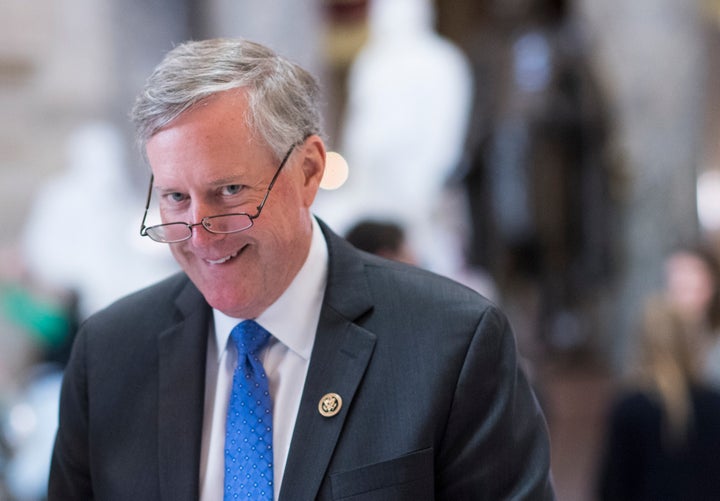

 James' World 2