
Click the link below the picture
.
Personality psychology has spent decades demonstrating that people display remarkable consistency in broad traits while simultaneously adapting their behavior across situations. There is, to add more nuance to this matter, significant variability in the degree to which we connect the different roles or personas we activate in different areas of life, as entrepreneur and thinker Riccarda Zezza illustrates in a compelling new book about the science of transilience.
We are often different people with different audiences, not because we are deceptive, but because context changes which version of ourselves is adaptive. At the same time, as the great Jarvis Cocker wisely remarked, “You will always be stuck with yourself, no matter where you go or what you do.” In other words, even if you tried to be someone else, that is still you trying to be someone else!
This should hardly surprise us. Civilization itself depends on our ability to strategically display those aspects of ourselves that are relevant to each specific audience and occasion, which tends to involve the ability to suppress impulses rather than express them. Imagine a world in which surgeons behaved “authentically” during operations, pilots authentically during turbulence, or judges authentically when sentencing particularly irritating defendants.
Human progress owes far more to emotional regulation than emotional expression. We evolved because we learned to inhibit, censor, delay gratification, cooperate, and strategically present ourselves in ways that allowed strangers to trust us enough to build villages, companies, and eventually multinational corporations.
Which brings us to perhaps my least favorite corporate slogan: “Bring your whole self to work.” I don’t know about you, but my whole self is not even welcome at home. Members of my family routinely ask me to leave parts of it outside the door, even during festive or holiday dinners. Apparently, nobody enjoys hearing my deep psychological analyses of themselves or passionately arguing about the world and the World Cup—and somehow grumpy me, impulsive me, and control-freak me, are rather not welcome at home!? If even those who love us most prefer a carefully edited version of our personalities, it seems optimistic to assume colleagues deserve the unabridged edition or director’s cut of ourselves.
By the same token, it is rarely the case that unfiltered honesty is rewarded, let alone celebrated. Consider perhaps the most predictable interview question ever asked: “Why do you want this job?” Radical authenticity would require an answer along the lines of: “Because at this stage I would take any job, regardless of what it requires, and even if it means putting up with you.” The reason virtually nobody (unless they are unemployable) answers this way is that successful social interaction depends on impression management.
That is, once we hit emotional and psychological maturity, which not everybody achieves, it is typically the case that we habituate to instinctively edit reality into socially acceptable forms of interactions, because by that stage we have typically learned that cooperation requires at least as much diplomacy as the impulse to broadcast our unfiltered thoughts and feelings to others.
Mark Snyder’s influential work on self-monitoring—the tendency to predict and care about how your actions affect others—followed by decades of subsequent research, has consistently shown that individuals who adapt their self-presentation across situations tend to navigate organizations more successfully than those who insist on behaving identically everywhere.
We like to think that it is morally superior to be uncompromisingly rigid in how we present ourselves, but what others actually value is the willingness to make an effort to acknowledge that they exist, and that we are happy to tweak or edit our behavior to accommodate. It is no different from cooking vegetarian food when you invite someone over for dinner who is a vegetarian.
The workplace, then, does not need your “real” self. It needs your best self. Failing that, anything in between those two would do! Crucially, those are rarely the same thing.
High-stakes environments reward judgment, restraint, self-awareness, and social intelligence, not emotional disinhibition. Elon Musk and Donald Trump can tweet (or is it the correct verb X now?) whatever they want, but 99.9% of humans are hugely incentivized to modulate their behavior according to the social requirements of the situation. It is not a sign of weakness but rather civility and social skills. Ironically, what many organizations describe as “authenticity” is often little more than behavioral impulsiveness reflecting our inability or unwillingness to understand that the right to be ourselves cannot override our obligation to others.
.
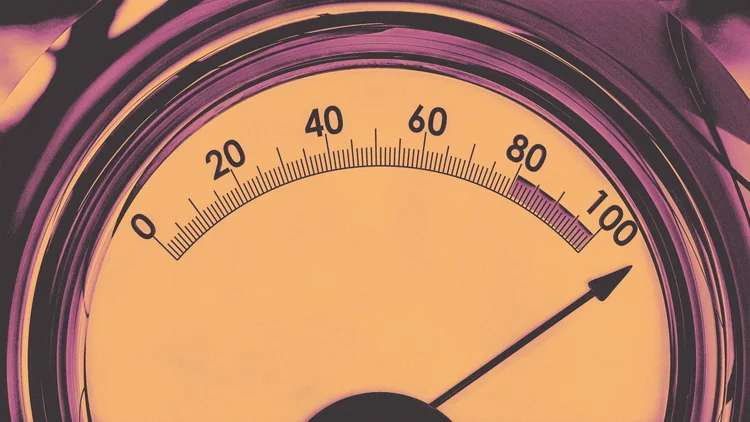 [Source Image: Adobe Stock]
.
.
Click the link below for the complete article:
.
__________________________________________


Aug 14, 2026 @ 02:40:36
Nicely shared.
LikeLike
Aug 14, 2026 @ 02:48:05
Thank you sir for your comment!
LikeLiked by 1 person