
Click the link below the picture
.
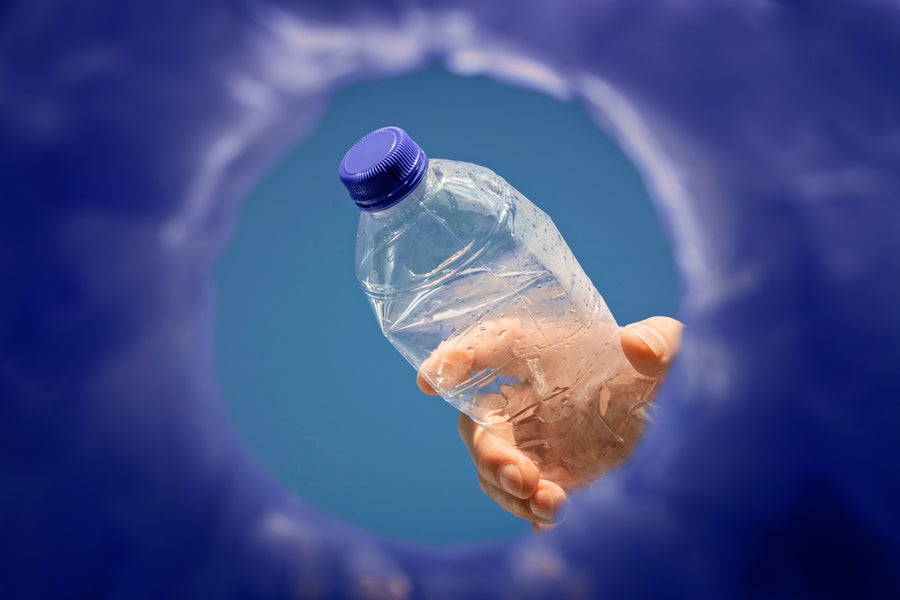
Among the plastic in your house might be an orange-colored hard laundry detergent bottle and a squeezable clear ketchup bottle. Come recycling day, you might put them on the curb in a blue bin or bag, expecting they will become something new.
But here’s the problem: those two plastic bottles cannot be recycled together because they are different colors, different plastic types, and made from different chemicals. Unlike an old aluminum can that can be recycled into a new aluminum can, plastics are fundamentally not designed to be recycled.
Yet the idea that plastics are just as recyclable as aluminum is a pervasive misconception because the plastics and petrochemical industries have been drilling it into our brains for nearly half a century. This long con has allowed these industries to make billions of dollars with zero accountability—until recently, when California attorney general Rob Bonta announced that the state of California was suing ExxonMobil for environmental damage and recycling lies.
This is a historic moment in the fight against plastic pollution, a crisis that has been created by companies that have known recycling was not possible for most plastics. While others have filed important suits against consumer brand companies for their pollution, like New York attorney general Letitia James’ lawsuit against PepsiCo, Bonta’s suit is the first to target a company for lying about plastic recycling’s efficacy.
Exxon, one of the largest oil and gas companies in the world, was an obvious company to focus on. Americans typically associate the company with gas stations, but Exxon also makes the polymers—the chains of repeating chemical pieces—that become plastic bottles, cups, utensils, takeout containers, and other packaging for U.S. consumer goods. It considers the manufacturing of plastic components a “core” part of its business and, according to Bonta’s lawsuit, sees 80 percent of the company’s growth potential as “dependent on single-use plastics applications.”
Think about that: while you’re stressing about what to put in the recycling bin, companies like Exxon are on a mission to find new ways to pump unnecessary plastic into the world.
The composition of most plastic makes it an inherently unrecyclable material. More than 16,000 chemicals are used to make different plastics to give the material qualities like color and flexibility, with different types of plastic using different combinations of these additives. The small amount of plastic that is actually recyclable (primarily No. 1 and No. 2, PET and HDPE) is delivered to a facility where the plastic is shredded and ground. Unlike paper, which can be turned into new paper products several times, recycled plastic typically becomes plastic lumber or clothing—which then can no longer be recycled and does not biodegrade.
That’s why less than 6 percent of plastics are recycled in the U.S. and why it’s deceptive that Exxon and others have spent millions over decades on public relations campaigns that falsely promote plastic recycling’s ability to manage all of the mess.
.
 BrianAJackson/Getty Images
.
.
Click the link below for the article:
.
__________________________________________


Leave a Reply