We’ve all heard that an apple a day keeps the doctor away, but how true is that?
Apples are not high in vitamin A, nor are they beneficial for vision like carrots. They are not a great source of vitamin C and therefore don’t fight off colds as oranges do.
However, apples contain various bioactive substances – natural chemicals that occur in small amounts in foods and that have biological effects in the body. These chemicals are not classified as nutrients like vitamins. Because apples contain many health-promoting bioactive substances, the fruit is considered a “functional” food.
For years, I have taught university classes on nutrients such as vitamins, minerals, carbs, proteins, and fats. But recently I developed a course specifically on functional foods. The class explores the various bioactive substances in food and how some may even function like a medicine.
Functional foods defined
Functional foods are not the same as superfoods. “Superfood” is a buzzword marketers use to promote foods like kale, spinach, and blueberries. Labeling them as “super” appeals to the public and increases sales. But superfood is generally meant to imply a food that has superior nutritional value and that is high in nutrients that are beneficial for health. For example, salmon and tuna are considered superfoods because the omega-3 fats they contain have been linked to heart health.
Superfood advertisements claim that eating the food will improve some aspect of health. The problem is that most of those claims are not based on scientific research like the criteria for functional foods are.
In addition to the nutrients that our bodies need for growth and development, functional foods contain a variety of bioactive substances, each with a unique function in the body. The bioactive substances can be found naturally in foods or added during processing.
.
While apples aren’t considered a superfood, they are considered a functional food. Caterina Oltean/500px Prime via Getty Images
The term toxic positivity has gained popularity in recent years, referring to moments when people responded to others’ struggles with surface-deep assurances and clichéd phrases such as, “Everything happens for a reason,” or, “Have you tried yoga?”
But there is a similar, if lesser-known, concept that is more inner-directed: emotional perfectionism.
While we usually think of a perfectionist as someone who holds themselves to a high standard for how they look, behave, or work, emotional perfectionists hold themselves to a similar standard regarding how they feel. Rather than encouraging others to look on the bright side (toxic positivity), they expect themselves to be unfailingly upbeat.
“It’s really when you have an emotion about emotion, and you’re suppressing what you have labeled the bad emotion,” said Annie Hickox, a psychologist who also holds a Ph.D. in clinical neuroscience. “Emotional perfectionism often follows a script of: ‘We shouldn’t do this,’ ‘I shouldn’t be mad about that,’ ‘I shouldn’t be angry,’ ” added Hickox, who coined the term in 2016.
Hickox believes emotional perfectionism could be an unrecognized source of anxiety, based on experience with her patients. “They’ll say, ‘Oh no, I’m not a perfectionist.’ But you can find thoughts where they’re holding themselves up to a very high standard,” she said.
Toxic positivity and emotional perfectionism have the same underlying root cause: a discomfort with other people’s negative emotions. Vrinda Kalia, a psychology professor at Miami University who studies perfectionism and emotional expression, said that expecting life — yours or others’ — to be “awesome all the time” is extremely debilitating because it ignores reality. “This is not what life is like.”
.
People who experience emotional perfectionism are reluctant to admit to negative emotions. (iStock)
Professor Charles Ogletree Jr., a prolific lawyer, advocate, scholar, and educator who endeavored to shed light on our nation’s history of racial injustice and its pernicious evolution in the criminal legal system, died today at age 70. Charles Ogletree became a lawyer because, he said, “A jury verdict changed my life.” The first in his […]
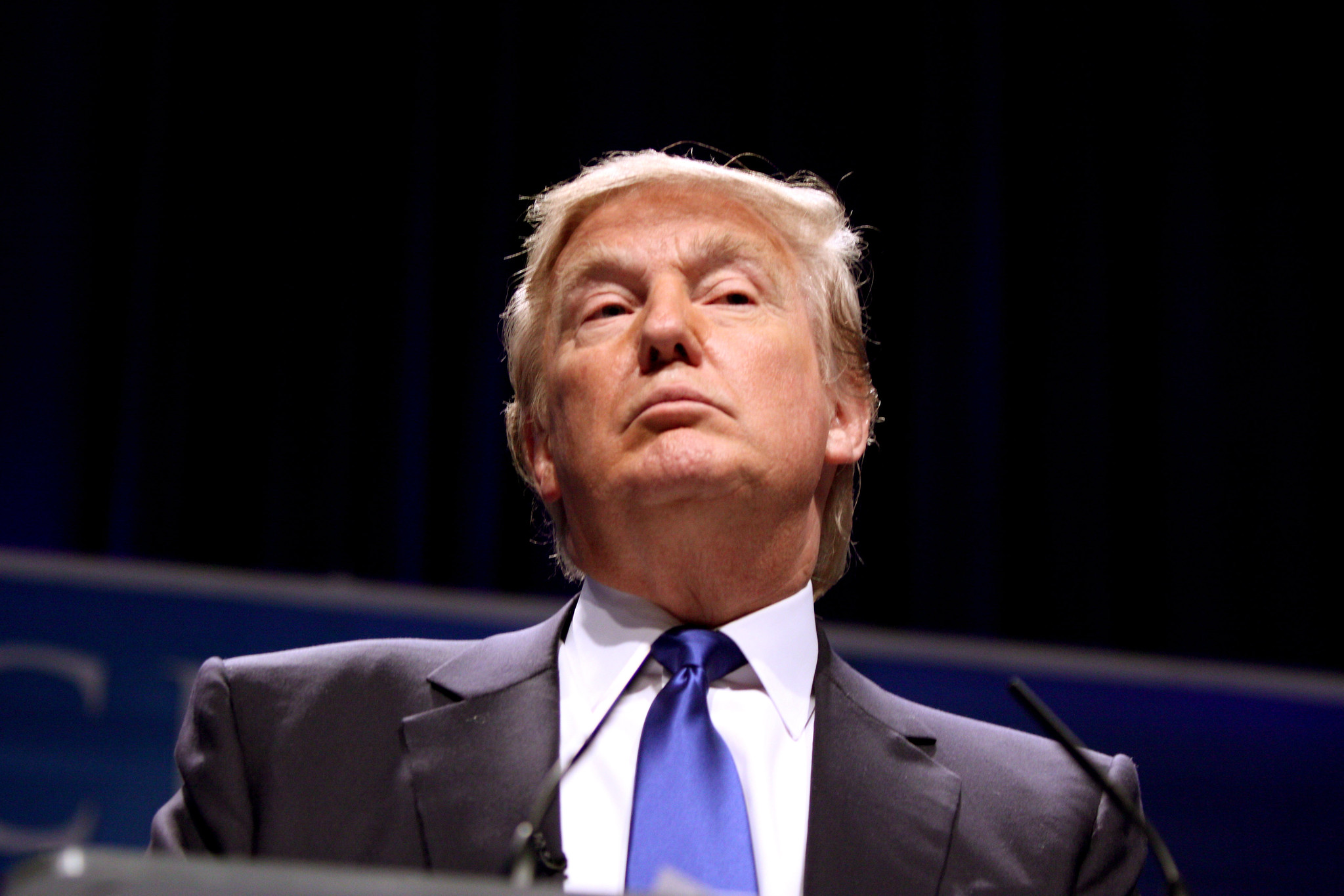
One of Donald Trump’s greatest political talents–if you can call it that–is the ability to kick up such a whirlwind of chaos that it becomes easy to lose sight of simple moral baselines. Actions and stories that would functionally end other presidencies are forgotten within days as the bright bouncy orange ball moves to the next outrage and shatters the next norm. Opponents are left wondering whether to five the next five-alarm fire or try to focus on rebuilding the crumbling foundations of governance from the last fire.
That is in part what has happened over Trump’s personal financial behavior. For years, Americans of decency have eagerly awaited the disclosure of Donald Trump’s personal and organizational tax records, knowing that they were likely to reveal massive corruption, potentially leading to a crisis of government, impeachment, resignation, or any other consequence of note. But Trump’s chaos tornado, particularly in the context of a historic pandemic, has essentially nullified the consequences of what should be earth-shattering revelations.
When the New York Times released the main story on Trump’s tax-dodging and enormous personal debts, it basically had no impact on public polling and lasted about one to two days in the national news cycle. This is in part because Trump has so debased expectations for his own behavior and public service that everyone knows he’s a crook–even his own supporters–but either they don’t care or they were already opposing him, anyway. But it’s also because who has time to worry about whether the president is a tax cheat when he is actively spreading a deadly virus at the highest levels of government, sabotaging the Postal Service, and refusing to accept the results of a free and fair election? This in spite of the fact that we absolutely must care about these things. After all, the president is $421 million in debt. Whoever owns his debt, including potential foreign adversaries, could essentially be running national policy! Even if we believe we cannot afford to pay attention to it given the rest of the hurricane winds, we still must manage to maintain our focus.
Rain or shine, Mohammad Shukkur Ali, a rickshaw puller in his 50s, shows up for work on the streets of the Bangladesh capital Dhaka. The work is already punishing as it requires massive physical effort. But this year, the heat has made things even worse. Temperatures in the city hit 40.6C (105.8F) in April – a record high.
But Mr. Ali, who lives with his wife and two children in a rented room, says he has no choice but to endure the discomfort.
“I need to work because we are poor,” he said.
Mr Ali works eight-hour shifts every day in Gulshan, an affluent district in Dhaka which houses fancy apartments, sprawling corporate offices and several foreign embassies. To be even allowed into the area, he has to wear a jacket over his shirt – a uniform of sorts – which makes the heat even more uncomfortable.
The grueling heat in the country has been made worse by fuel shortages- a consequence of the Ukraine war – which has led to frequent power cuts.
Millions of people across the world, including in North America and Europe, have experienced blistering heat this year.
A large number of cities have reported record temperatures, with scientists saying that July is “virtually certain” to be the world’s warmest month on record.
.
Mohammad Shukkur Ali, 50, a Bangladeshi rickshaw puller, says the heat this year has been extreme
The Little Mermaid is a musical romantic fantasy directed by Rob Marshall from a screenplay written by David Magee. Co-produced by Walt Disney Pictures, Lucamar Productions, and Marc Platt Productions, it is a live-action adaptation of Disney’s 1989 animated film of the same name, itself loosely based on the 1837 fairy tale of the same […]
APRIL 28, 2023, BY CONTRIBUTED BY: EUELL A. NIELSEN Diambi Kabatusuila is the traditional Queen of the Bakwa Luntu people of the Kingdom of Luba, located in the southern part of the Democratic Republic of Congo. She also holds the title of Mukalenga Mukaji wa Nkashama wa Bakwa Luntu wa Baluba wa Congo, which means “The Woman […]
Just four years ago, the movement to ban police departments from using face recognition in the US was riding high. By the end of 2020, around 18 cities had enacted laws forbidding the police from adopting the technology. US lawmakers proposed a pause on the federal government’s use of the tech.
In the years since, that effort has slowed to a halt. Five municipal bans on police and government use passed in 2021, but none in 2022 or in 2023 so far, according to a database from the digital rights group Fight for the Future. Some local bans have even been partially repealed, and today, few seriously believe that a federal ban on police use of face recognition could pass in the foreseeable future. In the meantime, without legal limits on its use, the technology has only grown more ingrained in people’s day-to-day lives.
However, in Massachusetts, there is hope for those who want to restrict police access to face recognition. The state’s lawmakers are currently thrashing out a bipartisan state bill that seeks to limit police use of the technology. Although it’s not a full ban, it would mean that only state police could use it, not all law enforcement agencies.
The bill, which could come to a vote imminently, may represent an unsatisfying compromise, both to police who want more freedom to use the technology and to activists who want it completely banned. But it represents a vital test of the prevailing mood around police use of these controversial tools.
In the world, human beings are facing various problems. People who are full of greed, anger, and ignorance are seen to be fighting with each other in words and deeds. As the fighting continues, various problems such as civil wars, wars of aggression, and wars of aggression are occurring. As world peace is being destroyed, humans are facing unbearable problems. Innocent children and women are not getting the rights they deserve and deserve. I can't think of one thing every time. What is it? The United Nations. If we look at the responsibilities and duties of the United Nations, I think it is not suitable for solving the problems that are happening in the world today. In fact, the United Nations and the World Security Council, such an organization must rule the world, must be able to give orders, and must have various ways to obey orders. There must be no organization that can influence more than that organization. There should be experts from each country. They can even dominate the superpowers like the US, China, and Britain. Only then will global peace be achieved quickly. Now, if a country with power develops more militarily, economically, or socially than its own country, then powerful countries will jealously seek out enemies and wage war. Or they will attack with fighter jets. In this, innocent people are losing their lives. No one understands the value of a life. You should think about how to achieve global peace by controlling these. If the US continues to be the permanent president of the UN, world peace will never be achieved. If you think carefully, no one sees that they are working for the common good, but for their own benefit, for the benefit of their own country. The permanent president of the UN and the Security Council has rejected this, As a young Rohingya, I have come to realize that only by electing the president and secretary from among the countries in the world through a secret ballot system and governing the world fairly can we achieve global peace. The United Nations and the Security Council are organizations in which any country must govern, give orders, and make them obey their orders. For example, only when a defendant is tried in court can we hold the leaders of the countries in check and control them, can we achieve global peace smoothly. Otherwise, it will not be easy for powerful countries to use various excuses to end this war every year, every year, for the benefit of themselves and their countries. No country's leaders pay any attention to the words of the United Nations and the Security Council. If we look at it in practice, look at the Rohingya issue. Myanmar is a small country. Even that country has been under siege for 8 years. What action can be taken? Why is the UN and the Security Council Powerless? Without such Power, how can the organization bring about global peace? Everyone should think about it. Whether there is a veto or a strong one, all countries in the world can only achieve global peace if they are subject to the UN and the Security Council. Seek peace in the quiet embrace of nature. Peace is an indispensable need of the human race. It is not as if one person can kill another person, and it is as if one country can attack another country, but instead of trying to build peace, we must try to destroy the peace now, and the world is getting hotter and is on the verge of collapse. I especially appeal to all the world experts to urgently try to bring about peace in all parts of the world. Mr, Noor Muhamed Arkhan Rohingya Youth Myanmar
Film and Writing Festival for Comedy. Showcasing best of comedy short films at the FEEDBACK Film Festival. Plus, showcasing best of comedy novels, short stories, poems, screenplays (TV, short, feature) at the festival performed by professional actors.

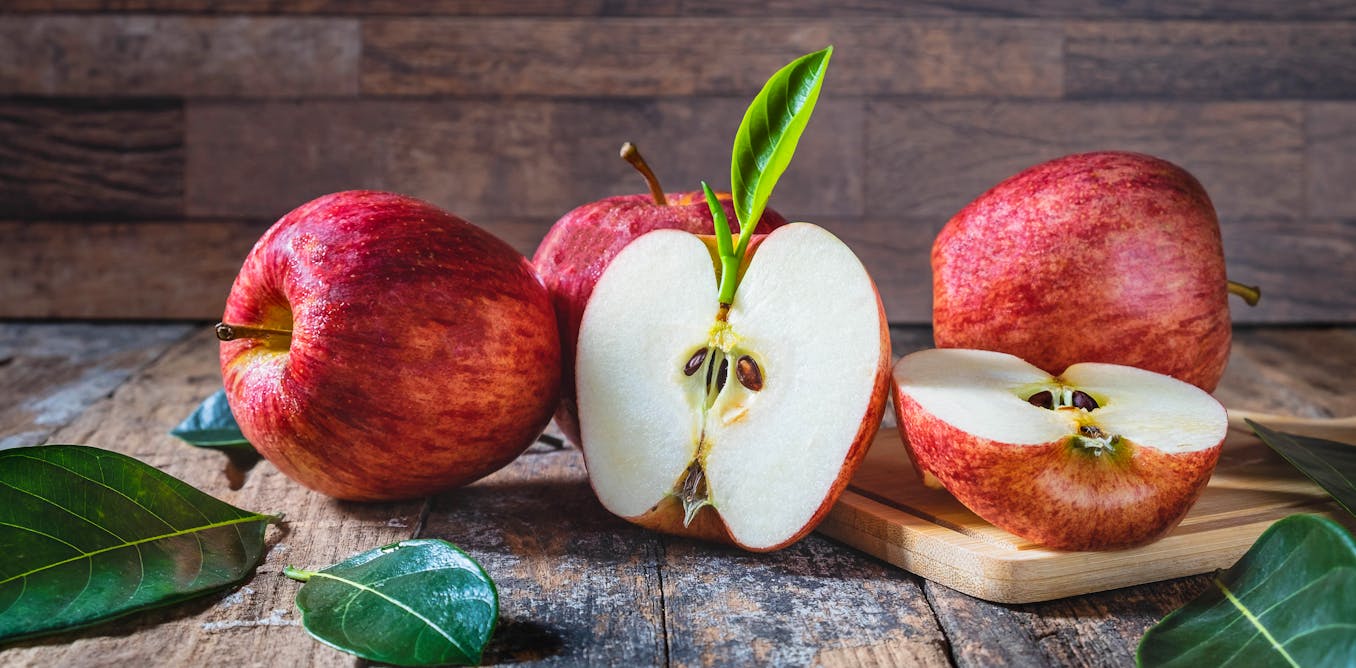 While apples aren’t considered a superfood, they are considered a functional food. Caterina Oltean/500px Prime via Getty Images



 Gage Skidmore/Flickr
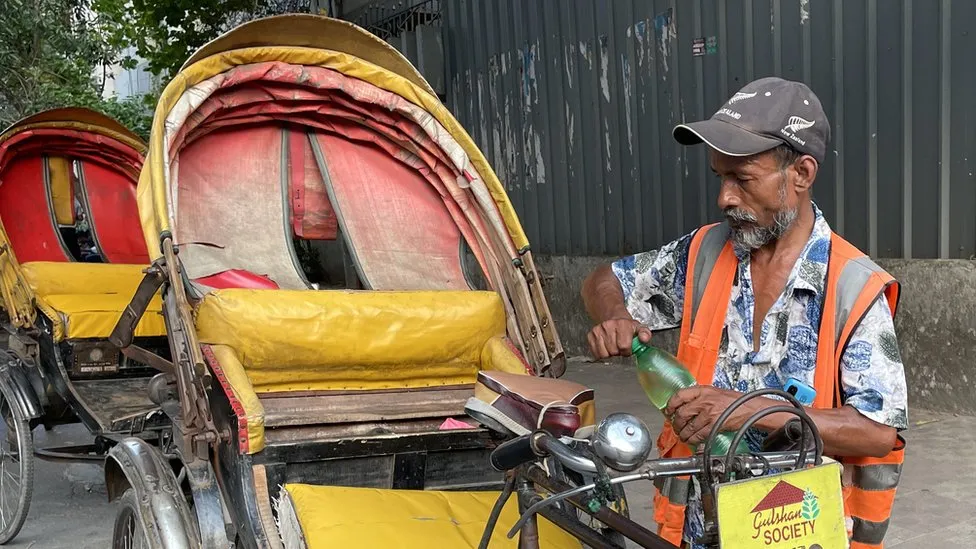 Mohammad Shukkur Ali, 50, a Bangladeshi rickshaw puller, says the heat this year has been extreme