
Mandela Barnes (1986-) Politician, State Representative, 45th Lieutenant Governor
Assorted human interest posts.
July 16, 2026
Business, Food For Thought, Human Interest, Political, Science, Technical amazon, business, Business News, current-events, Future, Hotels, human-rights, medicine, mental-health, research, Science, Science News, technology, Technology News, travel, vacation Leave a comment

Click the link below the picture
.
Most adults have levels of a dangerous type of cholesterol that are above 100, but this new drug can reduce levels to around 50.
The U.S. Food and Drug Administration has approved a new cholesterol-busting drug that appears to reduce harmful cholesterol far below levels than can be achieved using statins.
Statins have long been the preferred drugs for reducing levels of LDL (low-density lipoprotein), a dangerous type of cholesterol that causes plaque to build up inside the arteries, raising the risk of heart disease and stroke. Most adults have levels of LDL above 100, but the new pill can lower levels to 50 or even lower, clinical trials show.
Called enlicitide, the once-a-day pill is set to be sold under the brand name Lipfendra at a list price of $315 for a 30-day supply. Injectable drugs that work the same way as enlicitide and are just as effective have been available for around a decade, but they are much more expensive.
Cardiologist and director of the Scripps Research Translational Institute Eric Topol says it is “good to have an FDA-approved pill that works through the same known pathway and achieves LDL lowering comparable to the injectable PCSK9 drug inhibitors.”
The newly approved drug is made by the pharmaceutical giant Merck, which discovered lovastatin—the first statin to gain FDA approval—in 1987.
Enlicitide works by inhibiting PCSK9, a protein produced by the liver that slows the body’s ability to flush out cholesterol. Clinical trial data suggest it has side effects comparable to those of a placebo. Over the course of about six months, the drug lowered cholesterol levels in adults with, or at risk of, atherosclerotic cardiovascular disease—caused by the buildup of cholesterol plaques on artery walls—by up to 60 percent.
The approval comes after the American Heart Association and the American College of Cardiology released new cholesterol guidelines in March. These suggested patients who are at risk of heart attack or stroke should try to lower their LDL levels to below 70; for people at high risk, the recommended target is below 55. Currently, U.S. adults are recommended to be screened for cholesterol levels at least once every five years.
Overwhelming evidence suggests that too much LDL cholesterol raises the risk of heart attack or stroke. Merck is now conducting trials to see if its new medication can prevent heart attacks and strokes.
.

A three-dimensional visualization of thickened arteries and veins in coronary heart disease. adventtr via Getty Images
.
.
Click the link below for the complete article:
.
__________________________________________
July 16, 2026
Business, Food For Thought, Human Interest, Political, Science, Technical amazon, business, Business News, current-events, Future, Hotels, human-rights, medicine, mental-health, research, Science, Science News, technology, Technology News, travel, vacation Leave a comment

Click the link below the picture
.
After spending just a few days together, New York Giants player Juju Smith-Schuster and fitness instructor Laura Kruk knew it was meant to be. The two first connected in January 2023 when the wide receiver was playing for the Kansas City Chiefs, and Laura lived in Arizona. “I went out to visit her on my playoff bye week,” Juju tells Vogue. “First time seeing her, I said, ‘Wow, you are so beautiful.’” On that trip, Laura took Juju to her favorite restaurants, introduced him to her friends, and even put him through a few workouts. “He’s been my best friend ever since,” she says.
Just nine months later, Juju knew the pair would remain best friends for life. So on September 7, 2023, the football player proposed to Laura on a surprise trip to the White Elephant in Nantucket. “It was such a peaceful, calm day,” remembers Juju. The two began by shopping around the town, enjoying oysters, and taking a boat out to explore the coastline. “With the lighthouse standing in the distance and the sky painted in the most breathtaking colors, it felt like time stood still. My heart was racing the entire time,” says Juju. “I was so nervous yet so incredibly excited, and I couldn’t stop smiling because I knew I was about to ask the love of my life the most important question I’d ever ask. It was a moment I’ll cherish forever.” At sunset, he popped the question, and Laura said “yes.” She adds, “It was a phenomenal day.
”The couple decided to enjoy the engagement period and chose to tie the knot at the Ritz-Carlton in Laguna Niguel, California, on July 10, 2026. “We wanted our wedding to reflect who we are as people and as a couple and to be one big party,” says the bride. The groom admits that Laura was the true star behind the planning process. “I was a great team player by helping with the DJ and saying ‘yes’ and ‘no,’” Juju says. Working with wedding planner Audrey Wood made the entire process seamless and helped Laura truly enjoy the journey. “She made it so easy, and no task was ever too big for her,” adds Laura. “We took our time with the process and really kept our guests and their experience in mind throughout.
”Both the bride and groom were lucky enough to find their wedding-day looks quite easily. Laura actually spotted her Steven Khalil gown online a few months before she went shopping. She knew she would have to try it on. “It was the second dress I stepped into, and although I continued shopping at a couple other boutiques, I knew it was the one,” she says. The style features a mermaid silhouette, detailed lace fabric, and a ruched tulle overlay. She paired it with a coordinated veil for her trip down the aisle, diamond studs, and a tennis bracelet. “The dress and veil were the moment, so for jewelry, I wanted to stay timeless and classic,” the bride shares.
Juju donned a custom double-breasted white suit by Julian Abdul Studios for the wedding day. “I had my stylist, Vick Michel of Upnxt, help me pick and show me options to decide on,” the groom explains. “What I wore was an easy decision for me.” He accessorized with Chanel glasses for the sunny California afternoon and Tom Ford shoes, a pocket square, and a bow tie. Adds Laura, “I loved that he kept his look a secret from me, so I was just as excited to see his outfit as he was to see mine.
”The wedding weekend began with a beachside welcome party in Laguna Niguel. The Hawaiian theme served as a perfect nod to the groom’s Samoan roots. “The guests enjoyed piña coladas in branded coconuts with our wedding logo on them and danced to good music all evening,” shares the bride. “We brought out Polynesian dancers halfway through the night and listened to speeches from our closest friends and family.
”The next day, the wedding ceremony was set on a lawn adorned with white and green florals overlooking the ocean. “It was the ceremony of my dreams,” shares Laura. “Guests were welcomed with Champagne upon arrival, and some of our favorite love songs played by a violinist.” All the bride’s nerves washed away when she arrived at the altar. “It truly felt like it was just the two of us in that moment,” she shares. Juju also felt a wave of calm when he saw Laura. “The moment I saw her walking toward me, I knew without a doubt that I was marrying the woman I had prayed for,” he says. “It still feels surreal finally having a ring on my finger—and for once, it’s not a Super Bowl ring.”
After the ceremony, guests, including Taylor Swift and former Kansas City Chief teammates Travis Kelce and Patrick Mahomes, enjoyed the cocktail hour while the newlyweds took a moment for themselves—and captured a few portraits with their photographer, Nicole Ivanov. Both the bride and groom describe the reception as unforgettable. “No phones were allowed during our wedding celebration, and everyone was so present,” says Laura. “Seeing all of our family and friends mingling and making new friends was so much fun.” Juju’s aunt Jane emceed the night and led the evening through dances and speeches. “She completely stole the show,” remembers Juju. “She had everyone laughing from beginning to end and made the night so special.”
Later in the evening, the couple performed a Samoan Taualuga dance, a traditional dance that serves as the grand finale of an important celebration. “This was my favorite part of the entire day,” shares Juju. “I knew my wife was nervous and stepping far outside of her comfort zone, but seeing her embrace my culture with such love and courage meant more to me than words can express. Watching her honor my family and our traditions made me incredibly proud and reminded me just how blessed I am to call her my wife.” The party then moved indoors, where guests sipped espresso martinis and danced until 2 a.m. “The after-party was the perfect ending to an unforgettable day,” notes Juju. “Watching everyone come together to celebrate our love is a memory I’ll cherish forever.”
Reflecting on their celebration, the bride says, “I couldn’t have asked for a more electric day, and the energy every single guest brought was on another level. The wedding was a perfect reflection of our relationship and love, and I can’t believe I am now married to the love of my life.” Adds Juju, “It was, without a doubt, the most unforgettable—and absolutely lit—day of our lives.”
.
 Photo: Nicole Ivanov
.
.
Click the link below for the complete article:
.
__________________________________________
July 16, 2026
Business, Food For Thought, Human Interest, Political, Science, Technical amazon, business, Business News, current-events, Future, Hotels, human-rights, medicine, mental-health, research, Science, Science News, technology, Technology News, travel, vacation Leave a comment

Click the link below the picture
.
President Trump used a lot of alarming words on Thursday night as he addressed the American people about threats to the integrity of elections in the United States: “Deep state.” “Rigged and stolen.” “Conspiring.” “Manipulation.” “Corrupt.” “Fraud.” “Cover up.”
But the bottom-line message he clearly wanted to leave with the public was this: He is not a loser, regardless of the result of the 2020 election. There were dark forces at work to thwart him. And if his party loses this fall’s midterm election, he intimated, that may not be an honest outcome either.
Mr. Trump’s prime-time speech from the East Room of the White House was an astonishing spectacle featuring a president intent on persuading the country that its elections cannot be trusted, at least not the ones where he or his allies fall short. He cited selectively declassified documents to make sensational claims about vulnerabilities of the election system, although nothing he revealed proved any outcomes were actually changed.
The exercise underscored how much Mr. Trump, in his second term, has come to be obsessed with relitigating the 2020 election and finding ways to cast doubt on the 2026 election. In the 18 months since he returned to office, he has installed election deniers in key positions, sought to change the rules to make it harder to cast ballots, seized voting records in a bid to prove his conspiracy theories, and purged officials who investigated his efforts to overturn his election defeat six years ago.
“It does feel a little like Captain Ahab in ‘Moby-Dick,’” said Trevor Potter, a Republican former chairman of the Federal Election Commission. “He is just fixated on his claim that he didn’t lose the 2020 election. Armchair psychiatrists can say he doesn’t like losing; he can never admit he lost anything. But it’s clearly become an important part of his psyche and in some ways an important part of this administration.”
On one level, according to people close to him, Mr. Trump’s fixation on rewriting the history of 2020 is about salving the wounded ego of a man who constitutionally resists ever admitting that he has lost anything. He has made it a litmus test for anyone working for him to accede to, or at least not contradict, the lie that he won back then, not Joseph R. Biden Jr.Mr. Trump has authorized investigations to revisit his many claims that have previously been debunked, inquiries seemingly aimed not at following wherever the facts may take them but in search of facts to back up his own unsubstantiated certitudes. It is hard to imagine that he would accept any investigation concluding that he lost fair and square.
But while part of this is about looking backward, it also is about looking forward. With Mr. Trump deeply unpopular, according to polls — just 37 percent approve of his performance in the latest Washington Post-Ipsos survey — his party faces a possible drubbing in congressional races in November. So Mr. Trump seems intent on laying a predicate that, at the least, could explain away a defeat and, at most, his critics fear, potentially justify direct intervention aimed at changing the results.“It’s the standard approach to cast doubt on the electoral rules of the game where many populist authoritarians feel threatened by unpopularity at the polls or if the results declare them the loser at the ballot,” said Pippa Norris, who has taught political science at Harvard University for three decades and was the founding director of the Election Integrity Project. “Indeed, it’s been a leitmotif which the president has used for more than a decade now.”
Mr. Trump’s allies insist that he has well-founded reasons for his election conspiracy hunt, that Democrats, the news media, career officials and foreign governments all had cause to try to stop him from winning a second term and then hide their tracks. A self-serving establishment, they say, is protecting its own power and eager to take down a disruptive outsider in the form of Mr. Trump.
“The president passionately believes he was wronged in the 2020 election,” said Christopher Ruddy, his friend and chief executive of Newsmax Media, “and I think he is motivated for two reasons: to get vindication and to prevent future election irregularities.”
But some Republicans wish Mr. Trump would move on, seeing the issue as politically unhelpful in a campaign season when voters are focused on the cost of living and other matters close to home.
An Economist-YouGov poll last month found that Mr. Trump has persuaded 50 percent of Republicans that the 2020 election was rigged, but that is more of an article of faith among the president’s base than the broader electorate. While 66 percent of self-identified MAGA Republicans share that view, just 32 percent of other Republicans do, and only 23 percent of independents.
Mr. Trump’s repeated forays into election denialism this term also reflect the change in his inner circle. While there were powerful voices in his first term who told him that his claims of election fraud were not true, most notably William P. Barr, then the attorney general, Mr. Trump, this time, is surrounded by advisers who either cheer him on or keep quiet.
“Clearly, there’s nobody in the White House who can say no to him; there’s no adult in the room,” said former Representative Barbara Comstock, Republican of Virginia and a longtime Trump critic. “They won’t say to him, ‘Mr. President, you lost the damn election. Why are we doing this again?’”
Indeed, would-be administration officials at the start of this term were asked point-blank during job interviews if they believed Mr. Trump won the 2020 election. Those who said no were generally not welcomed into the fold. Conversely, Democrats have now made a point of asking the same question during confirmation hearings of Trump nominees, leaving them struggling to find an answer under oath that does not anger the president.
“Do you deny that Joe Biden won the 2020 election?” Senator Mark Warner, Democrat of Virginia, asked Jay Clayton, the president’s nominee for director of national intelligence, during a hearing this week.
“Senator, I’m not an election denier,” Mr. Clayton responded. “Joe Biden was certified as the president of the United States.”
Democrats noticed the use of the word “certified,” as opposed to “elected” or “won.” That has become an escape word for Trump nominees. Even the president does not deny that Mr. Biden was certified; he just claims that he should not have been.
Senator Jon Ossoff, Democrat of Georgia, tried to pin Mr. Clayton down. “Who won the 2020 election?” he asked directly.
“I’ve answered it,” Mr. Clayton said. “I’ve answered it.”
“Isn’t it humiliating to be unable to answer this question, to have to indulge the president’s delusions?” Mr. Ossoff replied.
Mr. Trump’s laser focus on 2020 was evident in his speech on Thursday night. As he spun out assertions of Chinese hacking, illegally registered voters, and cover-ups, Mr. Trump referred seven times to the 2020 election that he lost, albeit without an explicit claim that he won. He offered no concerns about the validity of the 2016 or 2024 elections that he won.
And while he suggested that China intervened in the election six years ago because it “wanted me to lose,” he made no mention of Russia’s intervention four years before that on his behalf. He used the words “China” or “Chinese” 20 times and mentioned Russia only once as part of a list of nations that have the capacity to hack election machines.
In fact, U.S. intelligence agencies have concluded that while China made nascent efforts to influence American opinion during the 2020 election, it largely stayed on the sidelines, while Russia mounted an expansive and aggressive campaign to help Mr. Trump win in 2016.
With just less than 16 weeks until the next election, the pressing issue is where Mr. Trump plans to take the matter. He used the speech to announce that he has ordered the F.B.I. and other agencies to investigate election interference. He also pushed Congress again to pass legislation to require proof of citizenship to register and photo identification to cast ballots. But Senate Republicans have made clear to him again and again that there are not enough votes to pass it.
The idea that Mr. Trump might opt to take action if the election does not go the way he wants it to is not unthinkable. In an interview with The New York Times in January, Mr. Trump said he regretted not heeding advisers who urged him to order the National Guard to seize voting machines in swing states that he lost in 2020.
“Great damage has been done to our country,” he said on Thursday night. “Our elections were left vulnerable to being rigged and stolen, and the trust of the American people was lost. This cannot be allowed to continue.”
The question for many Americans will be whom do they trust.
.

President Trump seen on a screen inside the White House briefing room as he addressed the nation on Thursday night. Credit…Doug Mills/The New York Times
.
.
Click the link below for the complete article:
.
__________________________________________
July 16, 2026

You are the sum of your mundane, repetitive failures, not your delusional aspirations. You cling to grand intentions while your daily routine remains a pathetic display of mediocrity. You aren’t what you say, you aren’t what you think, and you certainly aren’t what you promise; you are exactly what you consistently perform. Every sloppy habit…
True me.. Tap-2558..
July 15, 2026
Business, Food For Thought, Human Interest, Political, Science, Technical amazon, business, Business News, current-events, Future, Hotels, human-rights, medicine, mental-health, research, Science, Science News, technology, Technology News, travel, vacation Leave a comment
Click the link below the picture
.
This massive dinosaur skeleton sold for more than $50.1 million on Tuesday
A Tyrannosaurus rex fossil named “Gus” became the most expensive dinosaur ever to sell at auction on Tuesday.
Gus sold for $50,130,000—far above the estimated $20-million to $30-million price tag that had been set earlier by the auction house Sotheby’s.
The skeleton stands about 12.5 feet (3.8 meters) tall and is approximately 38 feet long—the dinosaur’s skull alone is some 4.5 feet long, according to Sotheby’s, and weighs so much that it must be handled separately. (The skull mounted on the fossil skeleton that is currently displayed at the auction house is a replica.) The skeleton is estimated to be about 61 percent complete, and Sotheby’s said this makes it among the most complete T. rex fossils ever found.
Gus is unusual, according to the auction house, because the fossil retains some bones called gastralia. Also known as “belly ribs,” gastralia are free-floating bones located in the abdominal wall. Today they are still found in certain reptiles, such as crocodiles and tuatara.
The fossil was discovered in 2021 on a South Dakota ranch. It is believed to be roughly 67 million years old. The bones bear evidence of bite marks from other tyrannosaurs, and Sotheby’s said these may have been “sustained by either combat or post-mortem scavenging.” Gus also shows signs of “injuries which occurred during the life of the individual, with fractured and healed bones discernable in several ribs and gastralia,” according to the auction house.
The value of Gus eclipses that of “Stan,” another T. rex fossil found in South Dakota, which was sold for $31.8 million in October 2020 and is now in a history museum in Abu Dhabi, and the Stegosaurus “Apex,” which was bought for $44.6 million by billionaire Ken Griffin in 2024. Gus went to an unknown phone bidder.
Scientists have long criticized the practice of auctioning off dinosaur fossils like these. Researchers have argued that allowing private buyers to own such specimens deprives paleontologists the opportunity to study them. And the extreme prices the fossils command mean most museums or academic institutions can’t compete in a bidding war.
.

The head of “Gus,” a partial Tyrannosaurus rex skeleton that is one of the most complete ever found, is pictured during a press preview at the Sotheby’s headquarters in the Breuer building in New York City on July 1, 2026. TIMOTHY A. CLARY/AFP via Getty Images
.
.
Click the link below for the complete article:
.
__________________________________________
July 15, 2026
Business, Food For Thought, Human Interest, Political, Science, Technical amazon, business, Business News, current-events, Future, Hotels, human-rights, medicine, mental-health, research, Science, Science News, technology, Technology News, travel, vacation Leave a comment

Click the link below the picture
.
On the gay internet, the death of Sen. Lindsey Graham was met with a smirk. Memes and posts suggested that the longtime South Carolina lawmaker, who unexpectedly died on Saturday, was gazing on a Provincetown cruising spot from the afterlife, flamboyantly courting Ronald Reagan’s attention in hell, and being honored at Grindr headquarters with a flag flown at half-staff.
Though Graham maintained throughout his life that he was not gay, his sexuality was an open question in Washington. It’s not just that he had what some deemed an effeminate air and was never romantically linked with a woman, though that certainly fed the rumors. There were also multiple public accounts from men who said Graham had paid them for sex, claims he also denied. Still, nothing ever erupted into a full-blown scandal. And until his death, Graham remained a staunch opponent of LGBTQ+ rights.
This apparent hypocrisy made Graham a ripe subject of debate on the ethics of outing anti-gay public figures. One line of thinking holds that everyone has a right to sexual privacy so long as all participants are adult and consenting. Others believe that political officials who enjoy a private gay life while working to enshrine LGBTQ+ people as second-class citizens deserve no privilege of discretion. Graham’s alleged homosexuality was wielded as a weapon by both Republican opponents and left-leaning critics, leading some queer people to argue that invoking his sexuality in an insult amounted to outright homophobia.
But as LGBTQ+ advocates have grown less compromising and more confrontational in service of their cause, the pro-outing position has largely won out in popular discourse. For Graham—a supposedly closeted politician whose sexuality never became a major story—this situation was one of the last of its kind, a holdover from an era when being gay was a political death sentence, and it was still common for public figures to deny it for life.
The buzz about Graham’s sexuality simmered for years before boiling over in 2020, when gay porn star Sean Harding tweeted, of a Republican senator with the initials L.G., “Every sex worker I know has been hired by this man.” The nickname supposedly given to Graham by the sex workers he had employed, “Lady G,” began making its way around social media. A couple of days later, another man wrote on Medium that Graham had hired him for a tryst at a Baltimore hotel, which led to a memorable anecdote about the clusters of moles Graham allegedly called his “ladybugs.” Upon his death, another person came forward with a tale of gay sex with Graham: trans author Jesse James Rose, who wrote on Instagram that Graham had paid her a “fat stack of cash” while she was a “twinky pre-transition college student” to perform sex acts on him while he wore red lingerie. She didn’t know he was a senator, she wrote, until other sex workers outed Lady G on social media.
The 2020 allegations bobbed around for a bit, but they never led to a major exposé or any further corroboration, likely because there was never any proof beyond the testimony of sex workers, who were apt to be met with distrust. And while Graham would occasionally bat down the rumors, sometimes with a joke, he seemed wholly unbothered by the accusations. Same with his fellow conservatives, who defended him by calling his critics homophobic when they hinted at his sexuality. Maybe it never blew up because Graham and his colleagues didn’t make a big thing of it, because Graham always denied it, or because there was no scorned wife for whom to feign empathy. Or perhaps it was because Graham was never a foaming-at-the-mouth bigot, never the loudest voice against marriage equality or nondiscrimination protections, even as he toed the GOP party line on LGBTQ+ issues at every opportunity.
It’s hard to imagine a gay Republican rising through the ranks today with the Graham playbook. There is less reason to hide now that openly gay men are all over the GOP, and it’s much harder to keep a private life private when you came of age in the camera-phone era. But Graham’s life still offers an important lesson about the nature of right-wing politics.
It’s expected, at this point, that family-values leaders will cheat on their wives, encourage their girlfriends to have abortions, indulge in the pleasures of cross-dressing, sexually harass their staffers, and solicit men for gay sex. With a few possible exceptions (if a Mitt Romney sexting scandal breaks, I’ll eat my iPhone), the sexual morals espoused by conservatives are a whole lot of posturing that readily subsides when personal interest strikes.
A punitive stance on nonnormative sexuality is useful for the GOP insofar as the party can use it to rile up its anti-LGBTQ+ base. But so long as gay and transgender Republicans are loyal soldiers who don’t threaten the gender hierarchies the right is invested in upholding, they pose no danger to the right-wing project. They can even help legitimize it, as when Caitlyn Jenner advocated against trans girls in school sports. If Graham was gay, it was isolated to the arena of sex practices, rather than the weightier realms of identity and politics in which queer activism lies.
In life and in death, gay commentators have portrayed Graham’s reportedly closeted life as sad and lonely. But I doubt he felt much regret, shame, or sadness about his choices. Like many of his Republican peers in the Trump era, he had stated values that swayed this way and that with the shifting tides of power. Graham appears to have been far more motivated by his own capacity for political influence—and by seeking displays of dominance through unrelenting hawkishness—than by personal integrity or any solid sense of self. He might not have even thought himself to be gay in the sense of a sexual or romantic identity, as opposed to a man who craves gay sex. For Graham, alleged secret paid sex and a direct line to the president might have been a dream come true.
.
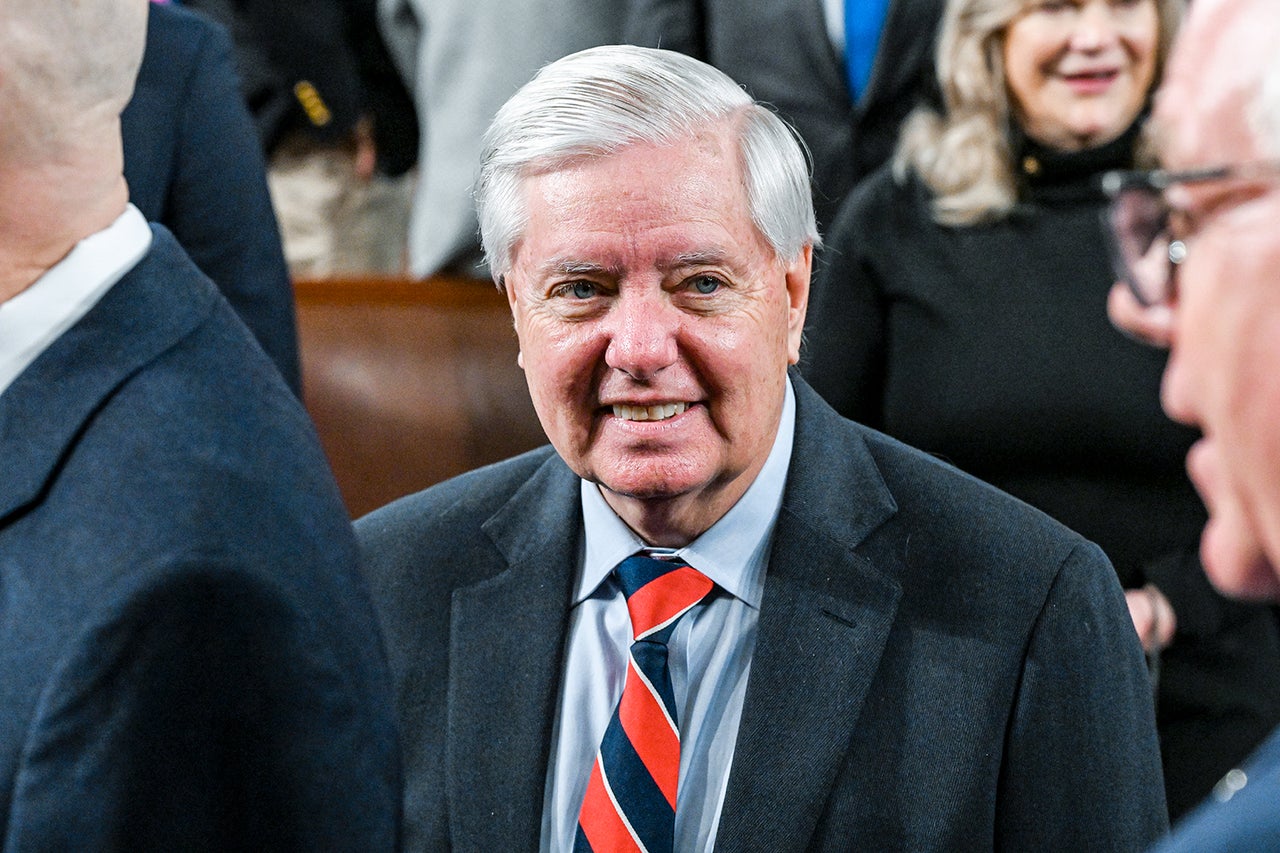 Kenny Holston/Pool/Getty Images
.
.
Click the link below for the complete article:
.
__________________________________________
July 15, 2026
Business, Food For Thought, Human Interest, Political, Science, Technical amazon, business, Business News, current-events, Future, Hotels, human-rights, medicine, mental-health, research, Science, Science News, technology, Technology News, travel, vacation Leave a comment

Click the link below the picture
.
China’s economy last quarter grew at the slowest rate in three years, reflecting a broader slump that the country’s leaders signaled earlier this year when they set the lowest growth target in more than three decades.
On Wednesday, that National Bureau of Statistics said that the economy expanded by 4.3 percent in the second quarter, compared to a year ago, down from a 5 percent pace in the first quarter and short of economists’ expectations.
Although China’s factories are churning out chips and electric cars to supply a global boom in artificial intelligence and energy-saving products, many Chinese people are feeling squeezed at home.
A long-running property crisis has no end in sight, with steep declines in construction dragging down economic growth. Jobs outside of factories are hard to come by, and paychecks are not growing. Retail sales of consumer goods have been choppy. They fell in May, for the first time since the end of Covid-19 lockdowns in late 2022, before recovering somewhat in June.
That is in stark contrast to China’s relentless strength in manufacturing and trade, with a government report released on Tuesday showing China’s exports surging by 27 percent in June compared with a year earlier, driven by shipments of chips, batteries and cars. China’s trade surplus in June, at more than $125 billion, was second largest on record.
In other words, China’s mighty export machine is masking weaknesses elsewhere.
“You get this A.I. boom, which is a global thing, and China is part of the leading nations on the frontier,” said Yu Song, the chief China economist at UBS Securities. “Without this, China’s economy would be in a much worse state.”
When measured on a quarter-to-quarter basis, China’s economy expanded by only 0.9 percent in the second quarter. When projected out for a year, the second-quarter data implies that the economy was growing at an annual rate of 3.6 percent, sharply down from a pace of more than 6 percent in the first quarter.
The second-quarter annualized rate also missed official targets. Shortcomings in China’s economic growth drivers prompted the ruling Communist Party earlier this year to set the lowest annual growth target in decades, with a goal of between 4.5 percent and 5 percent this year.
Stepping back to consider the trends in the first half of the year, economists say that China’s manufacturing and export prowess, however robust, cannot carry growth on its own.
Industrial production rose by 5.4 percent in the first six months of the year, versus the same period last year. High-tech manufacturing rose by more than 13 percent over that period. But fixed asset investment — which includes infrastructure, property construction and manufacturing — fell by 5.7 percent. Real estate development dropped 18 percent.
The value of China’s exports surged by more than 20 percent in the first half. But consumer spending, which a Moody’s Analytics report said “remains the economy’s weakest link,” faltered. Retail sales of consumer goods increased by 1.3 percent over the first half of the year.
The effects of the war in Iran have pinched Chinese households, with rising fuel prices prompting them to drive and fly less, at a time when many were already worried about the economy and choosing to save more.
China has softened the blow of rising fuel costs by controlling the price at the pump, but the cost of filling up for drivers is still double-digit percentages higher than a year ago.
One silver lining, economists said, was that rising fuel prices started to feed through to broader inflation in the quarter, reversing a problem that China has struggled to shake: more than three years of a broad-based decline in prices. Such deflation tends to chill spending, with consumers putting off purchases in expectation that prices will be lower in the future.
.
 Shoppers at an electric car showroom in Shanghai. Chinese consumers have embraced a culture of thriftiness, as many are not feeling the benefits of economic growth. Credit…Qilai Shen for The New York Times
.
.
Click the link below for the complete article:
.
__________________________________________
Să facem glume, nu război
In the world, human beings are facing various problems. People who are full of greed, anger, and ignorance are seen to be fighting with each other in words and deeds. As the fighting continues, various problems such as civil wars, wars of aggression, and wars of aggression are occurring. As world peace is being destroyed, humans are facing unbearable problems. Innocent children and women are not getting the rights they deserve and deserve. I can't think of one thing every time. What is it? The United Nations. If we look at the responsibilities and duties of the United Nations, I think it is not suitable for solving the problems that are happening in the world today. In fact, the United Nations and the World Security Council, such an organization must rule the world, must be able to give orders, and must have various ways to obey orders. There must be no organization that can influence more than that organization. There should be experts from each country. They can even dominate the superpowers like the US, China, and Britain. Only then will global peace be achieved quickly. Now, if a country with power develops more militarily, economically, or socially than its own country, then powerful countries will jealously seek out enemies and wage war. Or they will attack with fighter jets. In this, innocent people are losing their lives. No one understands the value of a life. You should think about how to achieve global peace by controlling these. If the US continues to be the permanent president of the UN, world peace will never be achieved. If you think carefully, no one sees that they are working for the common good, but for their own benefit, for the benefit of their own country. The permanent president of the UN and the Security Council has rejected this, As a young Rohingya, I have come to realize that only by electing the president and secretary from among the countries in the world through a secret ballot system and governing the world fairly can we achieve global peace. The United Nations and the Security Council are organizations in which any country must govern, give orders, and make them obey their orders. For example, only when a defendant is tried in court can we hold the leaders of the countries in check and control them, can we achieve global peace smoothly. Otherwise, it will not be easy for powerful countries to use various excuses to end this war every year, every year, for the benefit of themselves and their countries. No country's leaders pay any attention to the words of the United Nations and the Security Council. If we look at it in practice, look at the Rohingya issue. Myanmar is a small country. Even that country has been under siege for 8 years. What action can be taken? Why is the UN and the Security Council Powerless? Without such Power, how can the organization bring about global peace? Everyone should think about it. Whether there is a veto or a strong one, all countries in the world can only achieve global peace if they are subject to the UN and the Security Council. Seek peace in the quiet embrace of nature. Peace is an indispensable need of the human race. It is not as if one person can kill another person, and it is as if one country can attack another country, but instead of trying to build peace, we must try to destroy the peace now, and the world is getting hotter and is on the verge of collapse. I especially appeal to all the world experts to urgently try to bring about peace in all parts of the world. Mr, Noor Muhamed Arkhan Rohingya Youth Myanmar
Publicație umoristică dedicată glumeților de pretutindeni
Faith saved us from the savages that we were, losing faith makes us savages again
Where Trends Meet Truth
https://www.tangietwoods
Freelance poetry writing
Zalai Betti
INOVATION BLOG PEOPLE AND NEWS
Németh György
Konsultan Lingkungan Hidup di Lombok - NTB
Lea Krasznai (LeaArt21) – Idezetek (Idézetek) WordPress (Budapest, Hungary)
Appunti, spunti e passioni in liberta'
Gyorgy Nemeth
تعنى بتقديم نصائح للمعلمين المبتدئين، والطلبة الممتحنين، ومشاركة الاخرين تجربة الادخار في المال، بترشيد الاستهلاك المنزلي، وترتيب البيت، والحفاظ على البيئة، وتشجيع السيارات صديقةالبيئة، والسياحة والاسفار، ونماء رؤوس الاموال، والطب البديل وتشجيع التعليم الرقمي والذكاء الاصطناعي، والعناية بالنحل وتربية الاسماك، والاسثمار في رؤوس الاموال، الزراعة العضوية، والعناية باسنان الرضع، و صحة الحوامل، وتفسير القران
apprendre pour évoluer
Thoughts on books, language, meaning, and the culture around it.
Outdoor Recreation & Adventure in the Great Lakes Region
News, Info, Bio, Articles, Reviews, Lyrics, Technology, Science, Inspiration, Motivation, Philosphy and many more...
Christian Lifestyle Blogger
CEO and president of The Mullins Companies
Two Cultures. One Life. Endless Stories
Real Estate Development Specialist
¡Bienvenido de vuelta viajero!
so looking to the sky ¡ sing and from my heart to YOU ¡ bring...
CEO and Founder of Nsight Health
Catholic News, Prayers, HD Images, Rosary, Music, Videos, Holy Mass, Homily, Saints, Lyrics, Novenas, Retreats, Talks, Devotionals and Many More
Decoding Power. Defying Narratives.
A creative collaboration introducing the art of nature and nature's art.
The Home Of Entertainment News, Reviews and Reactions
•Whenever you are confronted with an opponent, conquer him with love.(Gandhi)
Algotrader at TRADING-CLUBS.COM
Film and Writing Festival for Comedy. Showcasing best of comedy short films at the FEEDBACK Film Festival. Plus, showcasing best of comedy novels, short stories, poems, screenplays (TV, short, feature) at the festival performed by professional actors.
Peace. Tranquility. Insanity.
Take a ride on the wild side
Découvre des musiques prometteuses (principalement) dans la sphère musicale française.
No tiene que Ser una Pesadilla.
Life in Kana-text (er... CONtext)
Where feelings meet metaphors and make questionable choices.
Finding hope and peace through writing, art, photography, and faith in Jesus.
Eyasu
Eyasu The Wonderful

