
Thank you for your time.
How to Attract a Respectable Partner:
Assorted human interest posts.
August 11, 2024
Thank you for your time.
How to Attract a Respectable Partner:
August 10, 2024
Business, Food For Thought, Human Interest, Political, Science, Technical amazon, business, Business News, current-events, Future, Hotels, human-rights, medicine, mental-health, research, Science, Science News, technology, Technology News, travel, vacation Leave a comment

Click the link below the picture
.
CLIMATEWIRE | Climate change is thinning Arctic sea ice, but contrary to conventional wisdom that’s making shipping through the North American Arctic more difficult.
A study published in Nature looked at Canada’s Northwest Passage over 15 years. It found that the melting of local ice due to global warming enables thicker ice from Greenland to flow into the corridor’s choke points, reducing the length of time when ships can move through the passage.
“First-year ice, that’s retreating. But it means the thick ice — multiyear ice — is then more able to flow down into those areas,” lead author Alison Cook, a researcher at the Scottish Association for Marine Science and the University of Ottawa, said in an interview.
That thicker ice poses hazards for ships, such as damage or sinking if there’s a collision.
The results contradict the common view that the Northwest Passage, the Arctic Ocean waterway linking the Atlantic and Pacific, is an increasingly practical option for commercial shipping. It even surprised Cook.
“I certainly was assuming the season length was becoming longer everywhere, and it just wasn’t,” she said.
Cook and her colleagues looked at historical ice charts of the Northwest Passage and converted those into season lengths. The seasons indicate the number of weeks where medium ice-strength ships can traverse the passage without taking extra safety precautions.
Four regions saw significant changes. In three, the shipping season was shortened by 50 to 70 percent between 2007 and 2021. In one — the eastern Lancaster Sound — the season length grew by 15 percent.
Shipping seasons typically run between 15 and 25 weeks, though it fluctuates heavily between years and regions.
Changing ice has discouraged at least one passenger cruise line from sailing the passage.
Scenic Luxury Cruises and Tours crossed the Northwest Passage in 2022, but “because of the sensitive environment and ever-changing ice conditions and weather conditions of the Arctic, they redeployed their sailings after that season,” said Michelle Abril, vice president of Coyne PR and a spokesperson for Scenic. “They are not currently sailing there or have itineraries set through Q1 2027 to visit that region.”
Despite the shrinking seasons, crossings have — on average — increased over the past decade, according to data provided to POLITICO’s E&E News by the Canadian Coast Guard.
“Over the coming years, the Canadian Coast Guard anticipates an increase in arctic traffic, due to increased tourism, commercial shipping, and adventuring opportunities,” the Coast Guard said in a statement.
While the trends show voyages rising and season lengths decreasing, there are a couple of explanations for that apparent contradiction.
The first is demand. Shipping companies are eyeing alternatives to the narrow and congested Panama Canal. And adventure tourists are eager to trek into the Arctic.
.
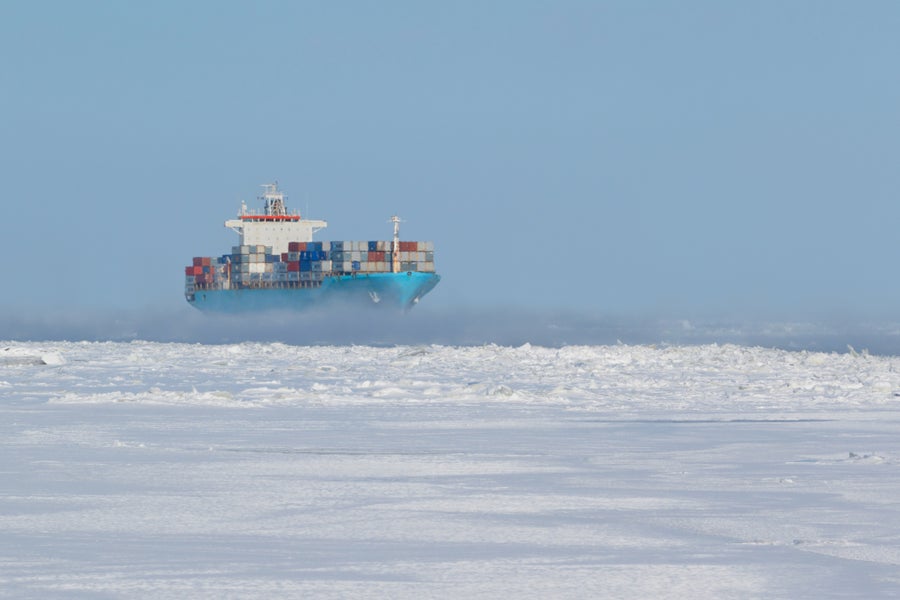
Large cargo ship filled with containers navigating through ice. Jean Landry/Getty Images
.
.
Click the link below for the article:
.
__________________________________________
August 10, 2024
Business, Food For Thought, Human Interest, Political, Science, Technical amazon, business, Business News, current-events, Future, Hotels, human-rights, medicine, mental-health, research, Science, Science News, technology, Technology News, travel, vacation Leave a comment

Click the link below the picture
.
Someone told me recently, “If you’re like me, you’re watching the Olympic games thinking, ‘Why can’t I get motivated to get in shape?’” I responded, “I feel your pain. I have a book deadline October 1st, but I catch myself rearranging the spice rack, surfing online, or cleaning out a cabinet that doesn’t really need it.
Unfortunately, motivation doesn’t simply show up when you’re waiting for the mood to strike. If you are waiting for the urge to finish that report, reach a deadline, or send an important email, you might be waiting a long time. And according to experts, it’s not motivation that’s needed to reach conclusion. It’s something else.
What’s holding us back? It’s the myths that are inconsistent with science that me believe in, according to Dr. Wendy Grolnick, professor of psychology at Clark University and an expert on motivation. I spoke with her by email, and she told me, “A common motivation myth is that we should wait for motivation to strike.” Grolnick, coauthor of the new book, Motivation Myth Busters: Science-Based Strategies to Boost Motivation in Yourself and Others, added that there are several things you can do instead of waiting for that magic moment.
“We all struggle with motivating ourselves and others at times,” Grolnick explained to me. “My coauthors and I argue that some of the problem is that we may hold beliefs about motivation that are not consistent with science. Our book busts 10 myths and provides scientifically supported strategies to boost motivation.” She shares examples of four common myths along with information to bust them.
Myth 1: Some People Are Motivated—Others Aren’t
The Science: You are motivated and so is everyone else. The idea that motivation is a characteristic of a person is not supported by science, Grolnick informs us. “Motivation varies by the domain (e.g., sports versus academics), context (some situations or people in them prime your motivation and others don’t), task (some tasks are more motivating than others), and the person’s interests.
Grolnick’s suggestions for action:
Assume everyone is motivated. When you see someone who seems to lack motivation, try to understand why and tap into their motivation.
Try to understand why the person feels unmotivated. For example, do they feel pushed to do something, unable to succeed? Disconnected from others?
Tie the task to the person’s interests or goals.
Make the task more interesting.
.

Many of us spend an inordinate amount of time waiting to get motivated, but experts inform us that … [+] Getty
.
.
Click the link below for the article:
.
__________________________________________
August 9, 2024
Business, Food For Thought, Human Interest, Political, Science, Technical amazon, business, Business News, current-events, Future, Hotels, human-rights, medicine, mental-health, research, Science, Science News, technology, Technology News, travel, vacation 1 Comment
Click the link below the picture
.
The percentage of people who say they’ve tried to end a pregnancy without medical assistance increased after the Supreme Court overturned Roe v. Wade. That’s according to a study published Tuesday in the online journal JAMA Network Open.
Tia Freeman, a reproductive health organizer, leads workshops for Tennesseans on how to safely take medication abortion pills outside of medical settings.
Abortion is almost entirely illegal in Tennessee. Freeman, who lives near Nashville, said people planning to stop pregnancies have all sorts of reasons for wanting to do so without help from the formal health care system — including the cost of traveling to another state, challenge of finding child care, and fear of lost wages.
“Some people, it’s that they don’t have the support networks in their families where they would need to have someone drive them to a clinic and then sit with them,” said Freeman, who works for Self-Managed Abortion; Safe and Supported, a U.S.-based project of Women Help Women, an international nonprofit that advocates for abortion access.
“Maybe their family is superconservative, and they would rather get the pills in their home and do it by themselves,” she said.
The new study is from Advancing New Standards in Reproductive Health, a research group based at the University of California-San Francisco. The researchers surveyed more than 7,000 people ages 15 to 49 from December 2021 to January 2022 and another 7,000-plus from June 2023 to July 2023.
Of the respondents who had attempted self-managed abortions, they found the percentage who used the abortion pill mifepristone was 11 in 2023 — up from 6.6 before the Supreme Court ended federal abortion rights in 2022.
One of the most common reasons for seeking a self-administered abortion was privacy concerns, said a study co-author, epidemiologist Lauren Ralph.
“So not wanting others to know that they were seeking or in need of an abortion or wanted to maintain autonomy in the decision,” Ralph said. “They liked it was something under their control that they could do on their own.”
Kristi Hamrick, vice president of media and policy at Students for Life Action, a national anti-abortion group, said she doesn’t believe the study findings, which she said benefit people who provide abortion pills.
“It should surprise no one that the abortion lobby reports their business is doing well, without problems,” Hamrick said in an emailed statement.
Ralph said in addition to privacy concerns, state laws criminalizing abortion also weighed heavily on women’s minds.
“We found 6% of people said the reason they self-managed was because abortion was illegal where they lived,” Ralph said.
In the JAMA study, women who self-managed abortion attempts reported using a range of methods, including using drugs or alcohol, lifting heavy objects, and taking a hot bath. In addition, about 22% reported hitting themselves in the stomach. Nearly 4% reported inserting an object in their body.
.

The percentage of people seeking to end their own pregnancies who used the abortion pill mifepristone has increased since the Supreme Court overturned the federal right to an abortion. Soumyabrata Roy/NurPhoto via Getty Images
.
.
Click the link below for the article:
.
__________________________________________
August 9, 2024
Business, Food For Thought, Human Interest, Political, Science, Technical amazon, business, Business News, current-events, Future, Hotels, human-rights, medicine, mental-health, research, Science, Science News, technology, Technology News, travel, vacation Leave a comment

Click the link below the picture
.
It doesn’t matter what you do for a living. Welcoming a child and then getting back to work is one of the most complicated things for a mother to adjust to. It’s especially complex if you’re an athlete.
Constant travel for competitions and games and the consistent training required, there are so many aspects of being a sportswoman that can take you away from home and away from your children. But many athletes are making it work, including at this year’s summer Olympics in Paris. With the addition of support like a nursery in Olympic Village for athlete mothers, quite a few Olympians brought their children along for the unforgettable experience.
Whether they’ve become champions after delivering a child or grapple with the emotions of having to leave their kids back home to play for their country, these moms are superheroes. And whether they take home gold or not, they’re winners for what they’re accomplishing and the inspiration they are to their children and mothers everywhere.
Dearica Hamby
Hamby, a mother of two to daughter Amaya and son Legend, is representing USA in Paris. The WNBA All-Star earned a bronze medal playing 3×3 basketball. “Unfortunately, our society and work culture perpetuate ‘mom guilt’ as they go back to work, or making moms feel like they can’t both parent and provide,” Hamby told ESSENCE in 2023. “It’s a false choice, and I’m proud to show just how strong moms are and to support other mothers going back to work. Being a mom and doing what I love is really special.”
Shelly-Ann Fraser-Pryce
In what has been a stellar career on the track, “The Pocket Rocket,” a mother to soon-to-be 6-year-old son Zyon, is competing in her last Olympics. She knows she has more in her, but the 37-year-old said she plans to hang up her spikes for her family. “My son needs me,” she told ESSENCE in our January/February 2024 issue. “My husband and I have been together since before I won in 2008. He has sacrificed for me. We’re a partnership, a team. And it’s because of that support that I’m able to do the things that I have been doing for all these years. And I think I now owe it to them to do something else.”
Clarisse Agbegnenou
The French judoka, who took home a bronze in the individual competition and gold with the French mixed team, is a mother to daughter Athéna, who would come with her to train in preparation for the Olympic Games in her home city. “I want women athletes who follow me to feel free and legitimate, to break codes to change mentalities and change the rules,” she told Le Parisien. “We can have a life as a woman and mother as well as champion at the same time.”
.
 Luis Robayo/AFP/Getty Images; Richard Heathcote/Getty Images Sport; Brad Smith/ISI Photos/USSF/Getty Images Sport
.
.
Click the link below for the article:
.
__________________________________________
August 9, 2024
Business, Food For Thought, Human Interest, Political, Science, Technical amazon, business, Business News, current-events, Future, Hotels, human-rights, medicine, mental-health, research, Science, Science News, technology, Technology News, travel, vacation Leave a comment

.
.

.
.
Click the link below for music:
https://music.apple.com/us/album/love-how-many-ways-can-love-happen-ep/1642574248
.
__________________________________________
August 8, 2024
Business, Food For Thought, Human Interest, Political, Science, Technical amazon, business, Business News, current-events, Future, Hotels, human-rights, medicine, mental-health, research, Science, Science News, technology, Technology News, travel, vacation 1 Comment
Click the link below the picture
.
It’s a very strange experience to watch a play in which you are a character—and to shake hands with the person who plays you. I did both this July while attending a performance of Kyoto at the Swan Theatre in Stratford-upon-Avon in England. The moment meant more, of course, than just a glimpse of oneself on history’s stage. The play shows how science won out over climate denial in a critical face-off between scientists and industry over the future of the planet.
Kyoto is a play about the Kyoto Protocol—an agreement made more than 25 years ago that, as summarized by the United Nations, committed “industrialized countries and economies in transition to limit and reduce greenhouse gases (GHG) emissions in accordance with agreed individual targets.” Written by Joe Murphy and Joe Robertson, the play is a co-production of Good Chance and the Royal Shakespeare Company that provides a dramatic retelling of a historic meeting in Kyoto, Japan, in December 1997, where the protocol was finalized.
At this meeting, a key Intergovernmental Panel on Climate Change (IPCC) scientific assessment helped to inform the international emissions reduction negotiations—the Working Group I part of the IPCC Second Assessment Report, which was completed in 1995 and published in early 1996. I was convening lead author of chapter eight, “Detection of Climate Change and Attribution of Causes.” The role of the IPCC, back in 1995 and today, was to advise the governments of the world on the science and impacts of climate change, as well as on strategies for mitigating and adapting to those impacts.
In 1990 the first IPCC scientific assessment had concluded that the jury was still out on whether a human-caused climate change signal could be identified in real-world climate data. The 1995 assessment’s chapter reached a very different conclusion, encapsulated in 12 simple words: “The balance of evidence suggests a discernible human influence on global climate.” This was a powerful, historic statement from cautious scientists and a rather conservative organization.
Multiple factors contributed to this dramatic transition. Advances in the science of climate fingerprinting, for example, made a big difference in climate research during the five years between the two reports.
Fingerprinting seeks to understand the unique signatures of different human and natural influences on Earth’s climate. This uniqueness becomes apparent if we probe beyond a single number—such as the average temperature of Earth’s surface, including land and oceans—and look instead at complex patterns of climate change. Patterns have discriminatory power and allow scientists to separate the signature of human-caused fossil-fuel burning from the signatures of purely natural phenomena (such as El Niño and La Niña climate patterns, changes in the sun’s energy output, and effects of volcanic eruptions).
Kyoto describes some of the fingerprint evidence that was presented during a key meeting in Madrid in November 1995, ahead of the Kyoto face-off dramatized in the performance. The “discernible human influence on global climate” conclusion was finalized in Madrid, where the participants included 177 delegates from 96 countries, representatives from 14 nongovernmental organizations, and 28 lead authors of the IPCC Second Assessment Report. As a lead author of the evidence chapter, I was there among them in that Madrid plenary room. So were several of the other characters in Kyoto, including the play’s central one—Donald Pearlman, who was a lawyer and lobbyist for the Climate Council, a consortium of energy interests.
Pearlman and I were on opposite sides of the Madrid chessboard. My efforts were directed toward synthesizing and assessing complex science and ensuring that the science was accurately represented in the IPCC report. His were directed toward delaying international efforts to reduce emissions of heat-trapping greenhouse gases. Such reductions were bad for the business interests he represented and for the revenues of oil-producing countries, such as Saudi Arabia and Kuwait.
Pearlman, who passed away in 2005, understood the singular importance of the Madrid “discernible human influence” conclusion. He knew it was the scientific equivalent of the Biblical handwriting on the wall. The jury was no longer out. Human-caused fingerprints had been identified in records of Earth’s surface and atmospheric temperature. Humans were no longer innocent bystanders in the climate system; they were active participants. Burning fossil fuels had changed the chemistry of Earth’s atmosphere, thereby warming the planet and sending Earth’s vital signs into concerning territory. The Madrid conclusion meant that the days of unfettered fossil-fuel use and carbon pollution were numbered.
.

Kyoto production photo at the Swan Theatre, June 17, 2024. Manuel Harlan/RSC
.
.
Click the link below for the article:
.
__________________________________________
Publicație umoristică dedicată glumeților de pretutindeni
Faith saved us from the savages that we were, losing faith makes us savages again
Where Trends Meet Truth
https://www.tangietwoods
Freelance poetry writing
Zalai Betti
INOVATION BLOG PEOPLE AND NEWS
Németh György
Konsultan Lingkungan Hidup di Lombok - NTB
Lea Krasznai (LeaArt21) – Idezetek (Idézetek) WordPress (Budapest, Hungary)
Appunti, spunti e passioni in liberta'
Gyorgy Nemeth
تعنى بتقديم نصائح للمعلمين المبتدئين، والطلبة الممتحنين، ومشاركة الاخرين تجربة الادخار في المال، بترشيد الاستهلاك المنزلي، وترتيب البيت، والحفاظ على البيئة، وتشجيع السيارات صديقةالبيئة، والسياحة والاسفار، ونماء رؤوس الاموال، والطب البديل وتشجيع التعليم الرقمي والذكاء الاصطناعي، والعناية بالنحل وتربية الاسماك، والاسثمار في رؤوس الاموال، الزراعة العضوية، والعناية باسنان الرضع، و صحة الحوامل، وتفسير القران
apprendre pour évoluer
Thoughts on books, language, meaning, and the culture around it.
Outdoor Recreation & Adventure in the Great Lakes Region
News, Info, Bio, Articles, Reviews, Lyrics, Technology, Science, Inspiration, Motivation, Philosphy and many more...
Christian Lifestyle Blogger
CEO and president of The Mullins Companies
Two Cultures. One Life. Endless Stories
Real Estate Development Specialist
¡Bienvenido de vuelta viajero!
so looking to the sky ¡ sing and from my heart to YOU ¡ bring...
CEO and Founder of Nsight Health
Catholic News, Prayers, HD Images, Rosary, Music, Videos, Holy Mass, Homily, Saints, Lyrics, Novenas, Retreats, Talks, Devotionals and Many More
Decoding Power. Defying Narratives.
A creative collaboration introducing the art of nature and nature's art.
The Home Of Entertainment News, Reviews and Reactions
•Whenever you are confronted with an opponent, conquer him with love.(Gandhi)
Algotrader at TRADING-CLUBS.COM
Film and Writing Festival for Comedy. Showcasing best of comedy short films at the FEEDBACK Film Festival. Plus, showcasing best of comedy novels, short stories, poems, screenplays (TV, short, feature) at the festival performed by professional actors.
Peace. Tranquility. Insanity.
Take a ride on the wild side
Découvre des musiques prometteuses (principalement) dans la sphère musicale française.
No tiene que Ser una Pesadilla.
Life in Kana-text (er... CONtext)
Where feelings meet metaphors and make questionable choices.
Finding hope and peace through writing, art, photography, and faith in Jesus.
Eyasu
Eyasu The Wonderful
A former medical student's journey through healthcare challenges and personal growth


