
James H. Bronson, Congressional Medal of Honor
Assorted human interest posts.
August 31, 2024
August 30, 2024
Business, Food For Thought, Human Interest, Political, Science, Technical amazon, business, Business News, current-events, Future, Hotels, human-rights, medicine, mental-health, research, Science, Science News, technology, Technology News, travel, vacation Leave a comment

Click the link below the picture
.
John McFall, a Paralympic sprinter who later became an orthopedic and trauma surgeon, has had an esteemed career fueled by his intense drive and curiosity. Now he’s adding yet another acclaimed career to the mix: astronaut.
Following a serious motorcycle accident when he was 19, doctors amputated McFall’s right leg above the knee. With the use of a prosthetic leg, which he has worn ever since, he won a bronze medal in the 100-meter sprint event at the 2008 Paralympic Games, where he represented the U.K. In 2022, after a competitive selection process, the European Space Agency (ESA) inducted McFall into its astronaut corps, making him its first physically disabled member, or parastronaut. McFall was specifically chosen to participate in ESA’s groundbreaking “Fly!” feasibility study, which aims to systematically assess the barriers that exist in spaceflight for individuals with physical disabilities. The Fly! study is set to conclude this autumn. McFall has yet to fly in space, let alone to be assigned a slot on any upcoming mission, but that could soon change.
He now awaits his chance to launch and continues his training. Scientific American spoke with McFall about the process of becoming an astronaut and the unique physiological challenges uncovered in the latest feasibility study.
Why did you apply to participate in this study? What aspects of your background made you feel particularly suited for this project?
What was interesting about the application for this study was that there was never any guarantee of a flight to space. The notice was just for a candidate with a physical disability to participate in a feasibility study, with ESA’s goal being to hopefully create an opportunity to fly someone with such a disability to space. For me, it was like, “What have I got to lose?” I didn’t have going to space on my radar at all, but a friend of mine sent me a message suggesting that I look into it. I saw it as a bold and innovative opportunity, and it’s commendable that ESA is the first space agency to take on such a brave initiative. In the back of my mind, I thought that if I could get selected, this would tick all the boxes for things I love doing in my life: being curious while challenging myself academically, physically, and emotionally.
In terms of my background: As an amputee and surgeon, I know a lot about medicine and my disability specifically—especially what is and isn’t feasible with my condition. As an athlete, I know that I’m fit and physically capable—probably an ideal person to demonstrate how capable people with physical disabilities can be. I thought I might be an ideal candidate to help answer this question.
It’s somewhat surprising that we haven’t had someone with a physical disability in space yet. Before doing this study, why do you think other groups hadn’t tried to do this?
I don’t think there is a definitive answer. If you look at the history of human spaceflight, especially in the last 20 years, the space station has been inhabited with a constant human presence since the year 2000. In the first decade [after 2000], essentially until the end of the shuttle era, the space station was still being built. We were also learning a lot about long-term human habitation in orbit. Around 2014 or 2015 we started gathering good long-term data on the effects of living in low-Earth orbit with microgravity on astronauts. Since then, the idea of whether this would be possible for someone with a physical disability has been floating around. Dave Parker, then director of human and robotic space exploration for ESA, went to all the ESA member states to get approval for selecting someone with a physical disability in 2021. It takes time, but I think the idea has been there for a while. Now that we’ve learned more about human spaceflight and how the body responds to prolonged microgravity, we’re ready to move to the next step.
.
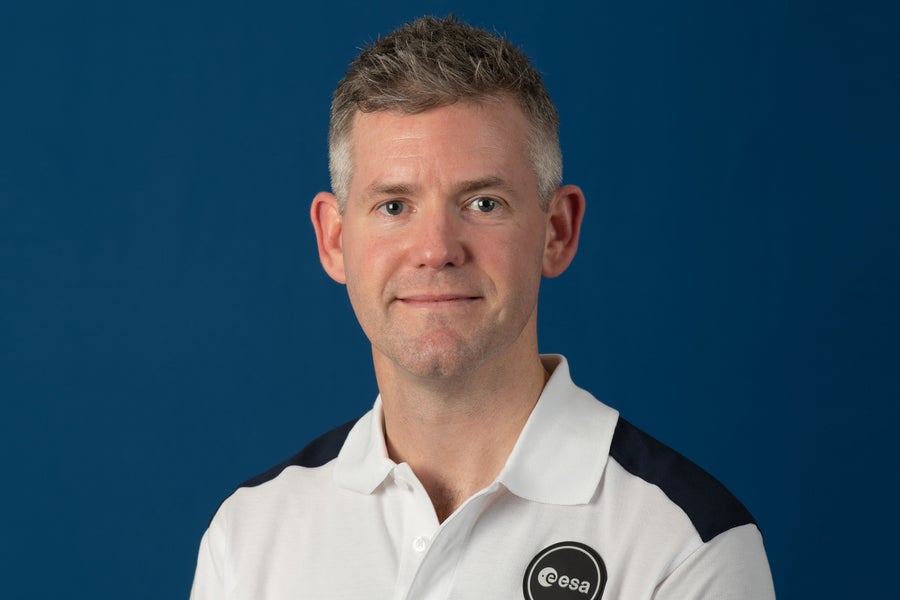
John McFall, member of the European Space Agency’s astronaut class of 2022. ESA – P. Sebirot
.
.
Click the link below for the article:
.
__________________________________________
August 30, 2024
Business, Food For Thought, Human Interest, Political, Science, Technical amazon, business, Business News, current-events, Future, Hotels, human-rights, medicine, mental-health, research, Science, Science News, technology, Technology News, travel, vacation Leave a comment

Click the link below the picture
.
Conventional wisdom has it that only children are smarter and less sociable. Parents, freed from the shackles of constantly settling sibling disputes, devote more time and money to the singleton, exposing them to a greater variety of higher-level activities (there’s a term for what happens when you spread that time and money over more kids: resource dilution). Conversely, since those only children never have to share a toy, a bedroom, or a parent’s attention, it is assumed they miss out on that critical life skill of forever-having-to-get-along.
But are their actual brains different?
Jiang Qiu, a professor of psychology at Southwest University in Chongqing, China, and director of the Key Laboratory of Cognition and Personality in the ministry of education, led a team of Chinese researchers that sought to answer this question with more than 250 college-aged Chinese students. They used standard tests of intelligence, creativity, and personality type to measure their creativity, IQ, and agreeableness. They also studied their brains, to see if growing up as an only child affects the structure of them. It did.
On the behavioral tests, only children displayed no differences in terms of IQ, but higher levels of flexibility—one measure of creativity—and lower levels of agreeableness than kids with siblings.
The brain scans then confirmed these findings, showing significant differences between only children and non-only children in the brain regions associated with flexibility, imagination, and planning (supramarginal gyrus) and with agreeableness and emotional regulation (medial prefrontal cortex). The scans also revealed differences in the parahippocampal gyrus, which helps manage emotional and mood regulation.
The study concluded that the family size we choose, or end up with, affects not only the environment in which children grow up, but also the architecture of their brains. The research was published in Brain Imaging and Behavior.
The idea that only children are somehow deficient was started 125 years ago by Granville Stanley Hall, a leader in the child-study movement, writes Lauren Sandler, author of One and Only: The Freedom of Having an Only Child, and the Joys of Being One. Having worked on the 1896 study “Of Peculiar and Exceptional Children,” Hall cast only children as “oddballs” as “permanent misfits,” descriptions that have stuck over the years with remarkable persistence. “Being an only child is a disease in itself,” he claimed.
There is ample evidence suggesting the stereotypes of the “lonely only” are wrong. Toni Falbo, a professor of educational psychology at the University of Texas at Austin and research methodologist Denise Polit undertook a meta-study looking at only children and intelligence and personality. They found that only children, along with firstborns and people who have only one sibling, score higher IQ marks and achieve more, but aren’t markedly different personality-wise (context matters: an only child in an unhappy household may be disagreeable; so might a child with five siblings in a poor family).
Jiang and his co-authors hypothesized a few reasons for their findings. Creativity —defined as having original ideas that have value—is strongly influenced by everything from family structure and parental views, to interactions and expectations (one older study showed that children were more likely to excel if they had a mother whose abilities matched her expectations). Parents of only children may interact more with their children, and seek out more opportunities to extend their children’s creativity. A parent might also have higher expectations of an only child, or they might give the child more independence, and some studies have shown that independence fosters creativity.
.

Creative genius or budding misanthrope? Photo by Reuters/Navesh Chitrakar.
.
.
Click the link below for the article:
.
__________________________________________
August 29, 2024
Business, Food For Thought, Human Interest, Political, Science, Technical amazon, business, Business News, current-events, Future, Hotels, human-rights, medicine, mental-health, research, Science, Science News, technology, Technology News, travel, vacation 3 Comments
Click the link below the picture
.
There is a glaring gap in our knowledge of the physical world: none of our well-established theories describe gravity’s quantum nature. Yet physicists expect that this quantum nature is essential for explaining extreme situations such as the very early universe and the deep interior of black holes. The need to understand it is called the problem of “quantum gravity.”
The established classical concept of gravity is Einstein’s general theory of relativity. This spectacularly successful theory has correctly predicted phenomena from the bending of light and the orbit of Mercury to black holes and gravitational waves. It teaches us that the geometry of space and time—spacetime—is determined by gravity. So when we talk about the quantum behavior of gravity, we’re really talking about the quantum behavior of spacetime.
We don’t currently have an established theory of quantum gravity, but we do have some tentative theories. Among them, loop quantum gravity (which one of us, Rovelli, helped to develop) and string theory are two leading contenders. The former predicts that the fabric of spacetime is woven from a network of tiny loops, whereas the latter posits that particles are fundamentally vibrating strings.
Testing these theories is difficult because we can’t study the early universe or black hole interiors in a laboratory. Physicists have mostly assumed that experiments that could directly tell us something about quantum gravity require technology that is many years away.
This situation might be changing. Recent developments suggest it may be possible to perform laboratory experiments that will reveal something about the quantum behavior of gravity. This potential is extremely exciting, and it has raised real enthusiasm among theoretical and experimental physicists, who are actively trying to develop the means to carry out the investigations. The proposed experiments could test the predictions of quantum gravity theories and provide support for the assumptions they’re based on.
The experiments all involve events happening at low energies, where the predictions of strings, loops, and the like agree, so they aren’t going to tell us which specific theory of quantum gravity is correct. Still, experimental evidence that gravity is actually quantized would be groundbreaking.
We already have plenty of observations about gravity’s effects on the quantum behavior of matter. Albert Einstein’s theory works fine in these situations, from stellar dynamics, to the cosmological formation of galaxy clusters, all the way to laboratory experiments on the effect of Earth’s gravity on quantum systems. But in all these scenarios, gravity itself behaves in a way that is consistent with classical physics; its quantum features are irrelevant. What’s much more difficult is to observe phenomena in which we expect gravity to behave quantum mechanically.
.
 Mark Ross
.
.
Click the link below for the article:
.
__________________________________________
August 29, 2024
Business, Food For Thought, Human Interest, Political, Science, Technical amazon, business, Business News, current-events, Future, Hotels, human-rights, medicine, mental-health, research, Science, Science News, technology, Technology News, travel, vacation Leave a comment

Click the link below the picture
.
From our earliest days, guys are overcome with urges that cause others to raise an eyebrow or shake their heads. As babies and toddlers, we instinctively and mindlessly twiddle our boy parts. When adolescence sets in, we impulsively jump up to smack every door jam we pass under. And when we reach fatherhood, something deep inside us yearns to throw our babies in the air playfully.
The paternal urge to toss babies is an outlier, as it runs antithetical to most parenting practices. Babies are securely buckled in car seats at the beginning of each road trip, even those just a couple of blocks in length, to pick up older siblings from school. They are gently cradled like footballs and strapped into chest carriers to keep them safe wherever we move about the house.
And yet, so many fathers at some point in time look their baby square in the eye, flash a big grin, employ their best baby babble voice, and gently give their baby a toss before making the catch and then asking some version of “Wasn’t that fun?”
The most generous reading of this routine is that it’s related to the paternal longing for rough-and-tumble play that kids grow to love. It’s the precursor to family wrestling matches in the living room and seemingly unending requests for dads to launch their kids across the swimming pool.
“When I was looking forward to becoming a dad, one of the things I was most excited about was playing with my kids and making them laugh,” shared Jacob, a father of three young kids who admitted to tossing at least one of his babies without incident. “But babies aren’t interactive at first, and occasionally, I’d give my kid a little toss out of this desire to have a fun connective moment.”
I actually don’t think I ever did a baby toss when my wife wasn’t in the room … So yeah, part of it was knowing that my wife would freak out…
But the adrenaline rush of the baby toss must inform our understanding of where this urge originates. Alex, whose son just turned 3, remembers the warm wave of excitement that came over him on the couple of occasions he gently tossed his son in the air.
“I wasn’t getting wild and crazy with the tosses. But I think so many aspects of life slowed down in the year after my son was born that the toss felt like a needed quick hit of stimulus,” he says.
There’s also an ornery side to the baby toss for many dads. They know it will garner a reaction from others — especially partners and spouses — making the practice a bid for connection. But, and this is the age-old question when dads attempt to deploy humor, is something truly funny if you’re the only one laughing?
“I actually don’t think I ever did a baby toss when my wife wasn’t in the room,”
Alex recalls. “So yeah, part of it was knowing that my wife would freak out a little bit, and we’d have an interaction that, in hindsight, I probably viewed as funnier and much more playful than she did. Having an audience also probably upped the adrenaline factor.”To be clear, the dirty looks, gasps, and even full-on freak-outs from worried parties are justified, especially concerning babies. Not only are guys notorious for overestimating their athletic prowess — in this case, their surehandedness under pressure — but babies are fragile. Perhaps one of the reasons the baby toss feels exciting is because, on a deep instinctual level, we know it’s dangerous.
.
.
.
Click the link below for the article:
.
__________________________________________
August 29, 2024
August 28, 2024
Business, Food For Thought, Human Interest, Political, Science, Technical amazon, business, Business News, current-events, Future, Hotels, human-rights, medicine, mental-health, research, Science, Science News, technology, Technology News, travel, vacation Leave a comment
Click the link below the picture
.
Voting in local elections is critical for ensuring the best possible representation in the laws and actions that affect your daily life. But once your ballot is cast, getting involved in a local project allows you to flex your strengths for the betterment of society. Using your voice at public hearings or organizing neighbors can be invigorating and informative, and the actions you take on behalf of your town or city can deeply tie you to your community in a way that few other actions can.
Take environmental issues, for instance. Recent U.S. Supreme Court rulings have weakened the Environmental Protection Agency’s ability to fight pollution and to use the best available science in enacting regulations. The situation makes it seem like efforts to fight climate change are hopeless. Even the most stubborn optimists—people who fight against apathy and encourage others to do the same—would be forgiven for wanting to tune out.
But depending on where you live, opportunities for involvement might be vast. Many cities already have made commitments to reduce greenhouse gases, but smaller, rural municipalities may not. One place to begin, if your town doesn’t have a plan, is with the Global Covenant of Mayors for Climate and Energy, which provides municipalities of any size with tools and guidance to help limit climate change.
If your town already has a climate committee dedicated to setting goals and systems for tracking progress, reach out to see how you can help. There may be a local advocacy group you can join or, if time is an issue, support. If nothing like that exists, attend a town board meeting and ask your elected officials about their plans for developing resilience and adaptation strategies. Check for grants at the county, state and even federal level that can be applied to a local project. Town officials aren’t necessarily stonewalling progress—they might be genuinely overwhelmed or unfamiliar with possible resources, and you can help bridge that gap. This work will give you clarity into the specific challenges of your community, which is often how people end up running for a board seat themselves.
Local environmental projects rooted in science will be trickier to find in areas where the phrase “climate change” is synonymous with “liberal agenda.” You may even be in a place, such as Florida, where the state government is openly adverse to climate mitigation. But these obstacles give you a chance to get creative. If you live in a hilly area that has experienced repeated economic losses from river flooding, for example, speak out about how trees and shrubs are excellent forms of erosion control and should be protected as critical infrastructure. Look at meeting agendas to see what development projects are being proposed—and then organize your neighbors to fight extractive ones that will harm the environment while leaving your community more vulnerable.
Use the weight of your professional background to be powerfully persuasive: Civil engineers can poke holes in developers’ plans, landscape architects can encourage native planting, wildlife biologists can explain why a certain habitat that might look unimportant plays a critical role for an endangered species, and attorneys can point out the disingenuous use of environmental laws that block climate-friendly policies such as congestion pricing and high-density housing. Medical professionals can speak to the harmful effects of pollution and excessive heat on health, and people who work in communications can write press releases and keep their communities informed on social media.
.
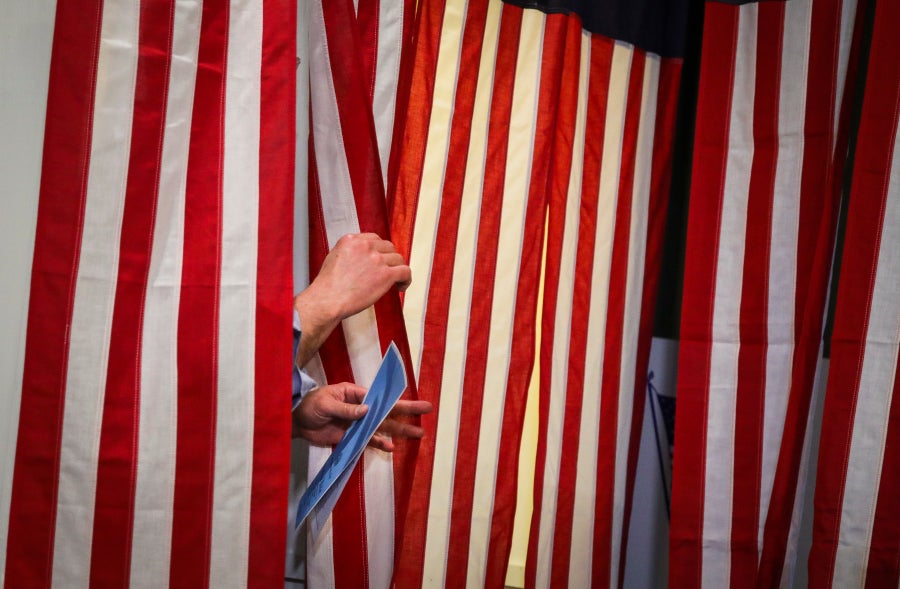 Erin Clark/The Boston Globe via Getty Images
.
.
Click the link below for the article:
.
__________________________________________
August 28, 2024
Business, Food For Thought, Human Interest, Political, Science, Technical amazon, business, Business News, current-events, Future, Hotels, human-rights, medicine, mental-health, research, Science, Science News, technology, Technology News, travel, vacation Leave a comment

Click the link below the picture
.
Five hundred years ago, writing in The Prince, Nicolo Machiavelli offered advice to leaders trying to grow their power. “It would serve [the Prince] to appear pious, faithful, humane, true, religious, and even to be so,” he wrote, “but only if he is willing, should it become necessary, to act in the opposite manner.”
In other words, don’t hold on tightly to your values, because no one else will either.
Centuries later, that passage still perfectly encapsulates a cynical world view. Cynics believe that human beings are fundamentally self-interested. This also means that interactions between people are at their core a ruthless, Darwinian struggle for survival, where the path to success requires stepping past, over, or on the people around you.
Many of us follow this bleak logic. More than half of parents believe that to succeed, their children should think of the world as harsh and dangerous. According to the legendary management professor Sumantra Goshal, MBA students are taught that “companies must compete not only with their competitors but also with their suppliers, employees, and regulators.” In Silicon Valley, where I work, brilliant but toxic leaders such as Steve Jobs are celebrated and — too often — emulated.
Following Machiavelli’s advice, cynics sacrifice relationships and principle to win. Instead, research demonstrates they lose. A wave of new behavioral science has found that, over the course of one’s career, cynical thinking stands in the way of success. Parents might think their kids will thrive if they see the world as competitive, but people with that mindset earn less money and report lower satisfaction at work.
Other research follows people over time, testing their cynicism at one point and following up years later to measure professional outcomes. The news here is clearer, and even worse for cynics. Over a decade-long span, their salary grows at barely a third the rate of non-cynics, and they are less likely to be elevated to leadership positions.
Why? Compared to their more trusting counterparts, cynics report a greater hunger for power and pursue it in different ways. Confident that others will take advantage of them if given the chance, they go on the offensive, manipulating others first. Machiavelli would be proud. He urges leaders to dominate others, preferring to be feared than loved. Researchdoes find that dominant actions, such as intimidating coworkers and kissing up to higher-ups, tend to build people’s power in the workplace. But so do communal actions, such as sharing generously with colleagues. Research on disagreeable people who share cynics’ competitive streak finds that they use only dominant strategies to get ahead. This leaves them isolated and eventually puts a ceiling on their success.
Put simply, cynics are playing the wrong game. Success is not a winner-take-all battle royale. People most often win by building trusting connections and alliances. And even if an individual manages to shove their way to the top, their team often pays the price. Psychologists recently analyzed levels of narcissism in NBA players’ tweets and found that teams with higher levels of narcissism won fewer games. Why? To compete at the highest level, teammates must first stop trying to outdo each other. If they hog the ball, narcissistic players cost their teams a cooperativeadvantage. As the NBA champion Bill Bradley put it, “the success of the group assures the success of the individual, but not the other way around.”
Cynicism can bleed workplaces of creativity, openness, and morale, and the bottom line. The good news is that cynicism is not a life sentence. Researchsuggests that barely a quarter of it is genetic, meaning that the social environment significantly shapes our willingness to give and earn trust. Through the right habits, cynics can build new mindsets and lean into connection.
As a research psychologist and author, I’ve studied the science of cynicism for years. I also work with organizations and leaders to help them fight cynicism and bring the cooperative advantage to their teams. Here are a few places to begin.
.
 keithsutherland/Getty Images
.
.
Click the link below for the article:
.
__________________________________________
August 28, 2024
“Blink Twice” is a psychological thriller directed by Zoë Kravitz, in her directorial debut, from a script she co-wrote with E.T. Feigenbaum and was released in the United States on August 23 by Amazon MGM Studios through Metro-Goldwyn-Mayer. The trailers featured an excellent presentation, which I found alluring. The plot of “Blink Twice” is not […]
BLINK TWICE (2024) – My rating: 8.5/10
Publicație umoristică dedicată glumeților de pretutindeni
Faith saved us from the savages that we were, losing faith makes us savages again
Where Trends Meet Truth
https://www.tangietwoods
Freelance poetry writing
Zalai Betti
INOVATION BLOG PEOPLE AND NEWS
Németh György
Konsultan Lingkungan Hidup di Lombok - NTB
Lea Krasznai (LeaArt21) – Idezetek (Idézetek) WordPress (Budapest, Hungary)
Appunti, spunti e passioni in liberta'
Gyorgy Nemeth
تعنى بتقديم نصائح للمعلمين المبتدئين، والطلبة الممتحنين، ومشاركة الاخرين تجربة الادخار في المال، بترشيد الاستهلاك المنزلي، وترتيب البيت، والحفاظ على البيئة، وتشجيع السيارات صديقةالبيئة، والسياحة والاسفار، ونماء رؤوس الاموال، والطب البديل وتشجيع التعليم الرقمي والذكاء الاصطناعي، والعناية بالنحل وتربية الاسماك، والاسثمار في رؤوس الاموال، الزراعة العضوية، والعناية باسنان الرضع، و صحة الحوامل، وتفسير القران
apprendre pour évoluer
Thoughts on books, language, meaning, and the culture around it.
Outdoor Recreation & Adventure in the Great Lakes Region
News, Info, Bio, Articles, Reviews, Lyrics, Technology, Science, Inspiration, Motivation, Philosphy and many more...
Christian Lifestyle Blogger
CEO and president of The Mullins Companies
Two Cultures. One Life. Endless Stories
Real Estate Development Specialist
¡Bienvenido de vuelta viajero!
so looking to the sky ¡ sing and from my heart to YOU ¡ bring...
CEO and Founder of Nsight Health
Catholic News, Prayers, HD Images, Rosary, Music, Videos, Holy Mass, Homily, Saints, Lyrics, Novenas, Retreats, Talks, Devotionals and Many More
Decoding Power. Defying Narratives.
A creative collaboration introducing the art of nature and nature's art.
The Home Of Entertainment News, Reviews and Reactions
•Whenever you are confronted with an opponent, conquer him with love.(Gandhi)
Algotrader at TRADING-CLUBS.COM
Film and Writing Festival for Comedy. Showcasing best of comedy short films at the FEEDBACK Film Festival. Plus, showcasing best of comedy novels, short stories, poems, screenplays (TV, short, feature) at the festival performed by professional actors.
Peace. Tranquility. Insanity.
Take a ride on the wild side
Découvre des musiques prometteuses (principalement) dans la sphère musicale française.
No tiene que Ser una Pesadilla.
Life in Kana-text (er... CONtext)
Where feelings meet metaphors and make questionable choices.
Finding hope and peace through writing, art, photography, and faith in Jesus.
Eyasu
Eyasu The Wonderful
A former medical student's journey through healthcare challenges and personal growth


