
Wilson Brown, Congressional Medal of Honor
Assorted human interest posts.
August 28, 2024
August 27, 2024
Business, Food For Thought, Human Interest, Political, Science, Technical amazon, business, Business News, current-events, Future, Hotels, human-rights, medicine, mental-health, research, Science, Science News, technology, Technology News, travel, vacation Leave a comment

Click the link below the picture
.
We cover Mars mission updates, a new brain implant that shows promise for Parkinson’s, the latest on the mpox outbreak, and more in this week’s new roundup.
Happy Monday, listeners! Let’s kick off the week by catching up on the latest science news. For Scientific American’s Science Quickly, I’m Rachel Feltman.
Last week, NASA’s Perseverance rover started a slow but steady slog. The bot landed in Jezero Crater when it first arrived on Mars back in February 2021. Now it’s busting out—but very slowly and cautiously. NASA says it will take Perseverance months to ascend the rough terrain of the crater’s western rim. The hope is that Perseverance will persevere (sorry) long enough to study a couple sites at the top of the crater.
Speaking of Mars, the Red Planet has really been popping off lately. Earlier this month, a study suggested that Mars might be hiding an ocean’s worth of water deep below its surface. Data from NASA’s late Insight lander revealed seismic signals of liquid water some six to 12 miles beneath the planet’s crust. Then, just a couple of weeks ago, a study showed that rock samples taken by Perseverance contained sulfates. That indicates they probably used to sit in salty water. And back in May, NASA’s tried-and-true Curiosity rover drove over and cracked open a rock that turned out to be packed with pure sulfur. Scientists can’t actually explain how sulfur would have formed in that area, which means there must be something about its past that they don’t know yet.
Now, let’s get into some health news. Last Monday, a study in Nature Medicine described an implant that acts like a pacemaker for the brain. The device builds on the idea of using deep-brain stimulation to treat Parkinson’s, and that generally works by delivering a constant electrical current. Instead, this new treatment uses algorithms to track symptoms, and it delivers brain stimulation only as needed. In a study of four people with Parkinson’s, the researchers said that the tech reduced each person’s most bothersome motor symptom by half when compared with conventional deep-brain stimulation.
Now onto weight-loss drugs. Now, most of the headlines about weight-loss drugs hype a growing number of proposed benefits, but a study out last week argues that doctors should be on the lookout for a troubling side effect. Researchers say that a statistical analysis flagged that people taking semaglutide, which is sold under the brand name Ozempic for diabetes and Wegovy for weight loss, have a higher chance of reporting suicidal thoughts than folks taking other kinds of medication. This was especially true for people who were also taking antidepressants. Now, this is, of course, a preliminary finding that doesn’t prove causation. But some experts say it’s smart to be cautious—especially if you start experiencing new feelings of depression after starting this medication. And honestly, that’s true for any medication and any new signs of depression.
.
 Anaissa Ruiz Tejada/Scientific American
.
.
Click the link below for the article:
.
__________________________________________
August 27, 2024
Business, Food For Thought, Human Interest, Political, Science, Technical amazon, business, Business News, current-events, Future, Hotels, human-rights, medicine, mental-health, research, Science, Science News, technology, Technology News, travel, vacation Leave a comment

Click the link below the picture
.
I’m a full-time freelancer, which means I spend my days writing articles from my house. But once upon a time, I commuted to an office every day where I was bombarded with meetings, assignments, Slack channels, and project check-ins.
I like to give each task my full undivided attention, so when something ripped my focus away—like a Slack DM or a coworker walking by—I felt like I got major attention whiplash. I’d lose my flow, and it’d take me a few minutes to get back in it. For a long time, I felt like something was wrong with me because I couldn’t flip between tasks like some of my coworkers, who seemed gifted at doing multiple things at once. But I’ve since learned I’m not a freak (at least not in this way) and that human brains aren’t built for multitasking.
In fact, your brain can only really handle one thing at a time, so when you go through your inbox during a team meeting, you’re not really effectively doing both of these things at the same time. Instead, “your attention is switching—and if your attention is on email then you’re not paying attention to the Zoom meeting,” says Gloria Mark, PhD, Chancellor’s Professor of Informatics at UC Irvine and author of Attention Span and the Substack The Future of Attention. As a result, you’re not accomplishing as much as you think you are (and, most likely, even less than you could be if you were zeroed in on one thing).
So if you feel like you need to do it all, all the time, you might want to rethink your approach. Here’s why multitasking won’t actually help you get ahead.
First, what even is multitasking?
It’s not like doing two things at once is always a recipe for disaster. In fact, people are actually really good at it when one or more of those things is automatic (think: walking and texting at the same time), Dr. Mark says.
But when one of your tasks requires you to think? That’s where so-called multitasking can go south (fast). Your brain can only pay attention to one thing—that requires any kind of mental effort—at a time. So, even if it seems like you’re making progress by juggling a few to-dos, you’re kind of half-assing multiple tasks at once.
Take the case above of emailing during a Zoom call. Dr. Mark says you’re either listening to what your manager is saying or you’re all in on crafting that email. Sure, you might hear a keyword—like your name—but you won’t really be able to digest what’s being said. In this sense, “multitasking really means switching your attention between things,” Dr. Mark says.
Here’s why multitasking doesn’t work—and can actually work against you
Not only is your brain incapable of completing congruous mental tasks, but attempting to do so is terrible for your performance and well-being.
People make more mistakes when they try to do multiple things at once. “There’ve been decades of laboratory studies that show when people are multitasking—again, they’re switching their attention between different tasks—they make more errors,” Dr. Mark says. One study, for example, found that physicians were more likely to write an incorrect prescription when they did two things at once, like typing on a computer while answering a patient’s question. (Making a mental note to force my doctor to 100% focus on me during appointments).
The consequences can get pretty dire: If you’re driving and talking on the phone, even if it’s hands-free, you’re not fully dialed into what’s happening around you. As a result, you might not see a car drift into your lane as quickly as you would if the road had your full focus, says Anthony Wagner, PhD, deputy director of the Stanford Wu Tsai Neurosciences Institute.
.
 Asiya Hotaman/Getty Images
.
.
Click the link below for the article:
.
__________________________________________
August 27, 2024

Recognizing the difference between good and bad touch is a critical aspect of safeguarding the well-being and development of adolescents. In a time of significant physical and emotional change, understanding what constitutes appropriate physical contact and being able to distinguish it from unwanted or harmful touch is paramount. This article delves into the importance of […]
Adolescent Well-being: Strategies for Recognizing and Addressing Good and Bad Touch.
August 27, 2024
August 26, 2024
Business, Food For Thought, Human Interest, Political, Science, Technical amazon, business, Business News, current-events, Future, Hotels, human-rights, medicine, mental-health, research, Science, Science News, technology, Technology News, travel, vacation Leave a comment
Click the link below the picture
.
When it came time for Itzy Morales Pantoja to start her Ph.D. in cellular and molecular medicine, she chose a laboratory that used stem cells—not only animals—for its research. Morales Pantoja had just spent two years studying multiple sclerosis in mouse models. As an undergraduate, she’d been responsible for giving the animals painful injections to induce the disease and then observing as they lost their ability to move. She did her best to treat the mice gently, but she knew they were suffering. “As soon as I got close to them, they’d start peeing—a sign of stress,” she says. “They knew what was coming.”
Even though the mouse work was emotionally “very, very difficult,” Morales Pantoja remained committed to her research out of a desire to help her sister, who has multiple sclerosis. Three years after the project wrapped up, however, Morales Pantoja was crushed to find that none of her results would be of any direct help to people like her sister. An antioxidant she’d tested seemed promising in mice, but in human samples it was ineffective.
This was a disappointment but not a surprise. Around 90 percent of novel drugs that work in animal models fail in human clinical trials—an attrition rate that contributes to a $2.3-billion average price tag for every new drug that comes to market.
Today Morales Pantoja is a postdoctoral fellow at the Johns Hopkins Center for Alternatives to Animal Testing, where she is helping to develop lab-grown models of the human brain. The goal is to advance scientific understanding of neurodegeneration while moving the field beyond what some researchers see as an antiquated reliance on animal models.
Millions of rodents, dogs, monkeys, rabbits, birds, cats, fish, and other animals are used every year for research purposes worldwide. Exact numbers are hard to come by, but advocacy group Cruelty Free International estimated that 192 million animals were used in 2015. Most of this work occurs in four broad domains: cosmetics and personal products, chemical toxicity testing, drug development, and drug-discovery research.
Animal-based studies have contributed to important findings and lifesaving medical advancements. The COVID vaccines, for instance, were developed in animals, including mice and nonhuman primates. Animal models have also been critical in advancing AIDS drugs and in developing treatments for leukemia and other cancers, among many other uses.
But animal studies often fall short of producing useful results. They may weed out possibly effective drugs or miss toxicity in humans. They have failed to deliver breakthroughs in certain fields of medicine, including neurological conditions. A 2014 study estimated that candidate therapies for Alzheimer’s disease developed in animal models have failed in clinical trials about 99.6 percent of the time. “As questions about human biology and variability get more complex, we are bumping up against the limits of animal models,” says Paul Locke, an environmental health scientist and attorney at the Johns Hopkins Bloomberg School of Public Health. “The thing you run into with animals—and there’s no way to get around this—is that animal biology is just too different from human biology.” Other species are no longer providing the insights about human biology—including at the cellular and subcellular levels—that scientists today need to achieve innovation.
A growing, multidisciplinary community of researchers around the world is investigating alternatives to animal models. Some are motivated by concerns about animal welfare, but for many, sparing the lives of millions of creatures is just an added bonus. They are driven primarily to create technologies and methods that will approximate human biology and variability better than animals do.
.
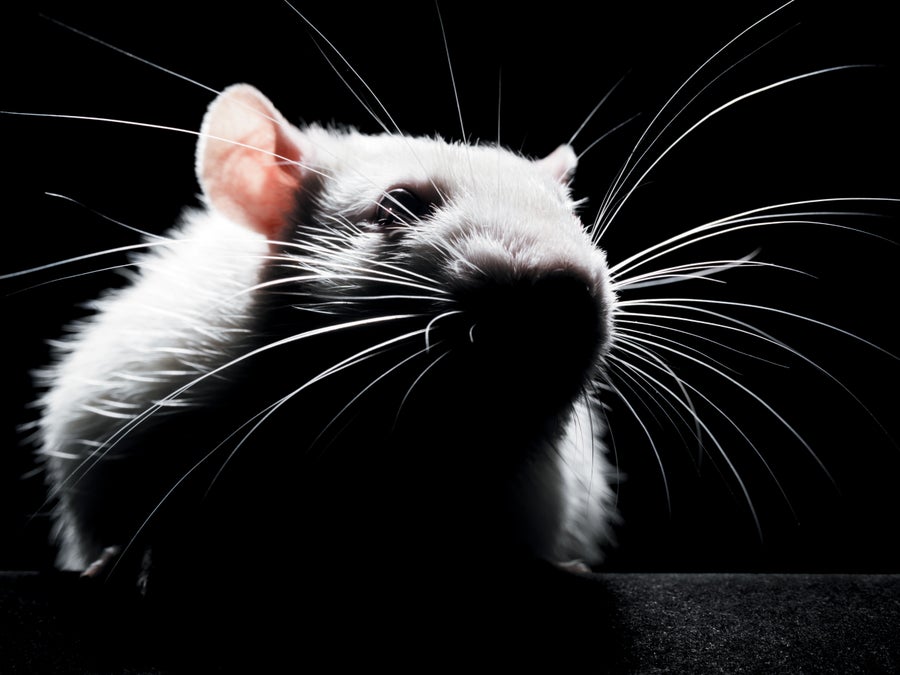
Millions of animals are used for research purposes every year, but their efficacy is increasingly limited. Henrik Sorensen/Getty Images
.
.
Click the link below for the article:
.
__________________________________________
August 26, 2024
Business, Food For Thought, Human Interest, Political, Science, Technical amazon, business, Business News, current-events, Future, Hotels, human-rights, medicine, mental-health, research, Science, Science News, technology, Technology News, travel, vacation Leave a comment

Click the link below the picture
.
When people think of remote jobs, rarely do they think they’ll be making a substantial salary. However, there are several industries that offer fully remote, in-demand jobs that have salaries of more than $100,000.
If you’re looking to land a six-figure job or are asking yourself what jobs are in demand, look no further. FlexJobs analyzed its job database from February 1, 2024, through July 30, 2024, to find the most in-demand, fully remote jobs that offer high salaries. The list below features jobs that offer $100,000-plus annual salaries, according to Payscale.
Fully Remote Jobs With $100K+ Salaries
Are you looking to make a high salary, but not sure where to start? These in-demand jobs are a great launching point for your job search.
1. Senior Customer Success Manager
Median salary: $101,184
Senior customer success managers oversee the relationships between a brand and its clients, ensuring satisfaction, retention, and growth. These professionals work closely with sales and support teams to provide strategic solutions, address client needs, and help clients meet their goals with the company’s products or services.
2. Account Director
Median salary: $104,053
Account directors develop and execute strategies to meet clients’ business objectives, ensuring client satisfaction while driving revenue growth. This role often involves coordinating internal teams to manage key client accounts and deliver high-quality services.
.
 Source Photos: Artem Podrez/Pexels and Mackenzie Marco/Unsplash]
.
.
Click the link below for the article:
.
__________________________________________
August 26, 2024
August 26, 2024
August 25, 2024
Business, Food For Thought, Human Interest, Political, Science, Technical amazon, business, Business News, current-events, Future, Hotels, human-rights, medicine, mental-health, research, Science, Science News, technology, Technology News, travel, vacation Leave a comment
Click the link below the picture
.
When doctors ask Sara Gehrig to describe her pain, she often says it is indescribable. Stabbing, burning, aching—those words frequently fail to depict sensations that have persisted for so long they are now a part of her, like her bones and skin. “My pain is like an extra limb that comes along with me every day.”
Gehrig, a former yoga instructor and personal trainer who lives in Wisconsin, is 44 years old. At the age of 17, she discovered she had spinal stenosis, a narrowing of the spinal cord that puts pressure on the nerves there. She experienced bursts of excruciating pain in her back and buttocks and running down her legs. That pain has spread over the years, despite attempts to fend it off with physical therapy, anti-inflammatory injections, and multiple surgeries. Over-the-counter medications such as ibuprofen (Advil) provide little relief. And she is allergic to the most potent painkillers—prescription opioids—which can induce violent vomiting.
Today her agony typically hovers at a 7 out of 10 on the standard numerical scale used to rate pain, where 0 is no pain and 10 is the most severe imaginable. Occasionally her pain flares to a 9 or 10. At one point, before her doctor convinced her to take antidepressants, Gehrig struggled with thoughts of suicide. “For many with chronic pain, it’s always in their back pocket,” she says. “It’s not that we want to die. We want the pain to go away.”
Gehrig says she would be willing to try another type of painkiller, but only if she knew it was safe. She keeps up with the latest research, so she was interested to hear earlier this year that Vertex Pharmaceuticals was testing a new drug that works differently than opioids and other pain medications.
That drug, a pill called VX-548, blocks pain signals before they can reach the brain. It gums up sodium channels in peripheral nerve cells, and obstructed channels make it hard for those cells to transmit pain sensations. Because the drug acts only on the peripheral nerves, it does not carry the potential for addiction associated with opioids—oxycodone (OxyContin) and similar drugs exert their effects on the brain and spinal cord and thus can trigger the brain’s reward centers and an addiction cycle.
In January Vertex announced promising results of clinical trials of VX-548, which it is calling suzetrigine, showing that it dampened acute pain levels by about one half on that 0-to-10 scale. The company is applying for U.S. Food and Drug Administration approval for the drug this year.
Other pain drugs that target sodium channels are now being developed, some by firms motivated by Vertex’s success. Navega Therapeutics, led by biomedical engineer Ana Moreno, is even using molecular-editing tools such as CRISPR to suppress genes involved in chronic pain. “We are definitely hopeful that we can replace opioids, and that’s the goal here,” she says.
One in five U.S. adults—51.6 million people as of 2021—is living with chronic pain. New cases arise more often than other common conditions, such as diabetes, depression, and high blood pressure. Yet pain treatments have not kept pace with the need. There are over-the-counter pills such as aspirin, acetaminophen (Tylenol), and nonsteroidal anti-inflammatories (NSAIDs) such as Advil. And there are opioids. The glaring inadequacy of existing medications to alleviate human suffering has fueled the ongoing opioid epidemic, which has led to more than 730,000 overdose deaths since its start.
. Samantha Mash
.
.
Click the link below for the article:
.
__________________________________________
Publicație umoristică dedicată glumeților de pretutindeni
Faith saved us from the savages that we were, losing faith makes us savages again
Where Trends Meet Truth
https://www.tangietwoods
Freelance poetry writing
Zalai Betti
INOVATION BLOG PEOPLE AND NEWS
Németh György
Konsultan Lingkungan Hidup di Lombok - NTB
Lea Krasznai (LeaArt21) – Idezetek (Idézetek) WordPress (Budapest, Hungary)
Appunti, spunti e passioni in liberta'
Gyorgy Nemeth
تعنى بتقديم نصائح للمعلمين المبتدئين، والطلبة الممتحنين، ومشاركة الاخرين تجربة الادخار في المال، بترشيد الاستهلاك المنزلي، وترتيب البيت، والحفاظ على البيئة، وتشجيع السيارات صديقةالبيئة، والسياحة والاسفار، ونماء رؤوس الاموال، والطب البديل وتشجيع التعليم الرقمي والذكاء الاصطناعي، والعناية بالنحل وتربية الاسماك، والاسثمار في رؤوس الاموال، الزراعة العضوية، والعناية باسنان الرضع، و صحة الحوامل، وتفسير القران
apprendre pour évoluer
Thoughts on books, language, meaning, and the culture around it.
Outdoor Recreation & Adventure in the Great Lakes Region
News, Info, Bio, Articles, Reviews, Lyrics, Technology, Science, Inspiration, Motivation, Philosphy and many more...
Christian Lifestyle Blogger
CEO and president of The Mullins Companies
Two Cultures. One Life. Endless Stories
Real Estate Development Specialist
¡Bienvenido de vuelta viajero!
so looking to the sky ¡ sing and from my heart to YOU ¡ bring...
CEO and Founder of Nsight Health
Catholic News, Prayers, HD Images, Rosary, Music, Videos, Holy Mass, Homily, Saints, Lyrics, Novenas, Retreats, Talks, Devotionals and Many More
Decoding Power. Defying Narratives.
A creative collaboration introducing the art of nature and nature's art.
The Home Of Entertainment News, Reviews and Reactions
•Whenever you are confronted with an opponent, conquer him with love.(Gandhi)
Algotrader at TRADING-CLUBS.COM
Film and Writing Festival for Comedy. Showcasing best of comedy short films at the FEEDBACK Film Festival. Plus, showcasing best of comedy novels, short stories, poems, screenplays (TV, short, feature) at the festival performed by professional actors.
Peace. Tranquility. Insanity.
Take a ride on the wild side
Découvre des musiques prometteuses (principalement) dans la sphère musicale française.
No tiene que Ser una Pesadilla.
Life in Kana-text (er... CONtext)
Where feelings meet metaphors and make questionable choices.
Finding hope and peace through writing, art, photography, and faith in Jesus.
Eyasu
Eyasu The Wonderful
A former medical student's journey through healthcare challenges and personal growth

