Scientists and engineers are developing big machines to suck carbon dioxide out of the atmosphere, but the technology sucks up a lot of energy and money as well—as much as $1,000 per metric ton of captured CO2. Chemists at the University of California, Berkeley, have created a yellow powder they claim could boost this field by absorbing CO2 much more efficiently.
Detailed climate projections indicate the world will need to remove far more CO2 than it is doing now to achieve climate targets. The U.S. is investing billions of dollars in start-ups developing direct air capture (DAC) technology, which uses fans to blow air through alkaline materials that bond with the slightly acidic CO2. Along with lye and crushed limestone, a popular alkaline material is an amine, a compound that is typically manufactured from ammonia.
Graduate student Zihui Zhou and professor Omar Yaghi, both at U.C. Berkeley, embedded amines in a crystalline compound known as a covalent organic framework, which has extensive surface area. The resulting powder, which they named COF-999, is a microscopic scaffolding of hydrocarbons held together by superstrong carbon-nitrogen and carbon-carbon bonds, such as those found in diamonds. The amines sit in the scaffolding’s open spaces, ready to snag CO2 molecules passing by. When Zhou and Yaghi pumped air through a tube packed with the powder, it captured CO2 at the greatest rate ever measured, they wrote in a recent Nature study in October. “We were scrubbing the CO2 out of the air entirely,” Yaghi says.
Besides equipment, the biggest cost for DAC is often energy to heat the absorbent material so it releases the captured CO2, which is collected in tanks and later injected underground or sold to industry. The powder released CO2 when heated to 60 degrees Celsius—much less than the more than 100 degrees C needed at current DAC plants. The powder was deployed again to grab CO2 from the air. After more than 100 catch-and-release cycles, it showed no significant decline in capacity, according to the study.
The COF-999 compound might also compete with liquid amines used in carbon capture and storage scrubbers on refinery and power plant smokestacks, Yaghi says. It’s light enough—200 grams can draw down as much CO2 in a year as a large tree—that it could potentially strip carbon from the exhaust onboard ships, too.
Companies already manufacture a similar material, metal organic frameworks, to capture CO2 from smokestacks, as well as for gas masks to protect against hazardous chemicals. In these crystalline structures, the superstrong bonds are formed between metal compounds rather than hydrocarbons. But Yaghi, who owns a company that produces both types of materials, says COF-999 can be more durable, water-resistant and efficient at removing CO2 than leading metal organic frameworks. A Nature Communications study published in September reported that another covalent organic framework based on phosphate bonds also had potential for carbon capture.
The COF-999 powder hasn’t yet been tested for real-life applications, notes Jennifer Wilcox, a University of Pennsylvania chemical engineer who formerly worked on carbon removal at the U.S. Department of Energy. For example, if it restricts airflow too much when coated on a filter or formed into pellets, that could increase energy consumption by the fans. These kinds of engineering properties, Wilcox says, “will ultimately dictate costs.”
Archaeologists have unearthed an first-of-its-kind ancient Egyptian tomb that dates back nearly 4,000 years.The burial chamber contained the remains of 11 men, women, and children, suggesting it was a family cemetery used for generations during the 12th and 13th Dynasty.
Whether it’s dating, at work or within families, we’ve become pretty adept at identifying red flags from a mile off.
They don’t make time for you? Red flag. They constantly offload their issues onto you? Red flag. They rarely take responsibility for their own actions? Huge. Red. Flag.
All of these behaviours indicate a lack of self-awareness, boundaries and probably a bit of selfishness.
But, if we’re really honest with ourselves, don’t we sometimes act that way too? Haven’t we all gotten defensive when feeling under attack, or excused bad behaviour because we didn’t want to make a scene?
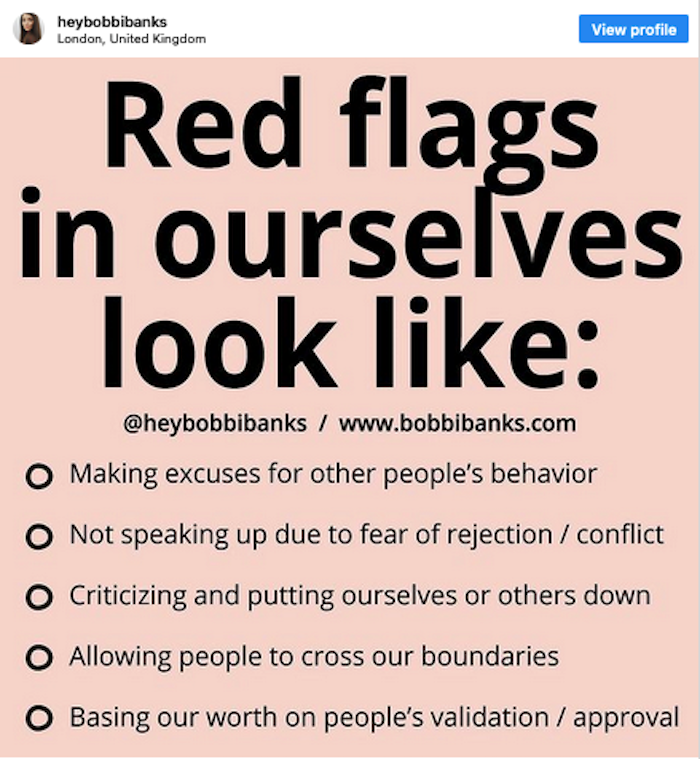
As neuroscientist Bobbi Banks explains in an Instagram post, we often talk about red flags in relationships and friendships, but rarely do we open a discussion around red flags in ourselves.
The truth is, we all have them, and highlighting them isn’t about scolding ourselves for being complex human beings. It’s about identifying the things we want to work on and taking positive action.
Source: Instagram
Banks goes on to identify five behaviours that could be considered red flags within ourselves.
Firstly, she suggests that making excuses for other people’s behaviour is an early red flag, as it creates an open environment for toxic actions to take place unchallenged.
Next, she identifies not speaking up due to fear of rejection or conflict as another self red-flag. This can often interplay with our people-pleasing tendencies, as we feel overly responsible for others’ feelings, and will go to any length to not cause pain – even if that means not standing up for ourselves.
Criticising and putting ourselves or others down is another trait Banks suggests could be a self red flag. This is often rooted in insecurity and is more of a reflection of our confidence and self-esteem than it is our nature.
Allowing people to cross our boundaries is another example of potentially toxic behaviour to be mindful of. Healthy boundaries are necessary components for self-care because without them, we can feel depleted, taken advantage of, taken for granted or intruded upon.
Finally, Banks writes that basing our worth on people’s validation is another unhealthy habit we should watch out for. We come from a society that gains confidence in the approval of others, be that our family, partners or wider community, IRL and online. However, it can easily lead to jealousy, self-deprication and low self-esteem if left unchecked.
If any of these self red flags have resonated with you, don’t panic. Everybody has parts of themselves that they consider less than ideal, and how we respond to pressure is often influenced heavily by our upbringing.
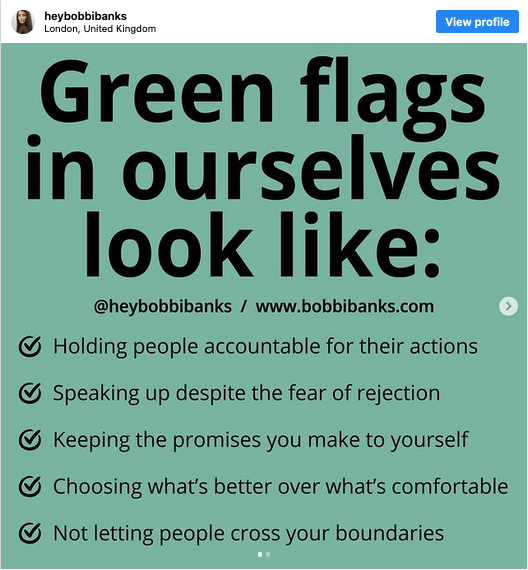
As well as considering which red flags you may exhibit, Banks also notes the “green flags” that we can recognise in ourselves.
Positive behaviours like speaking up for ourselves, maintaining our boundaries, giving within our capacity and choosing what’s better over what’s comfortable are all just as important to look out for.
To describe the destructive effects of intense health anxiety to his young doctors in training at Columbia University Irving Medical Center in New York City, psychiatrist Brian Fallon likes to quote 19th-century English psychiatrist Henry Maudsley: “The sorrow which has no vent in tears may make other organs weep.”
That weeping from other parts of the body may come in the form of a headache that, in the mind of its sufferer, is flagging a brain tumor. It may be a rapid heartbeat a person wrongly interprets as a brewing heart attack. The fast beats may be driven by overwhelming, incapacitating anxiety.
Hal Rosenbluth, a businessman in the Philadelphia area, says he used to seek medical care for the slightest symptom. In his recent book Hypochondria, he describes chest pains, breathing difficulties, and vertigo that came on after he switched from a daily diabetes drug to a weekly one. He ended up going to the hospital by ambulance for blood tests, multiple electrocardiograms, a chest x-
ray, a cardiac catheterization, and an endoscopy, all of which were normal. Rosenbluth’s worries about glucose levels had led him to push for the new diabetes drug, and its side effects were responsible for many of his cardiac symptoms. His own extreme anxiety had induced doctors to order the extra care.
Recent medical research has shown that hypochondria is as much a real illness as depression and post-traumatic stress disorder.
Hypochondria can, in extreme cases, leave people unable to hold down a job or make it impossible for them to leave the house, cook meals, or care for themselves and their families. Recent medical research has shown that hypochondria is as much a real illness as depression and post-traumatic stress
This work, scientists hope, will convince doctors who believed the disorder was some kind of character flaw that their patients are truly ill—and in danger. A study published just last year showed that people with hypochondria have higher death rates than similar but nonafflicted people, and the leading nonnatural cause of death was suicide. It was relatively rare, but the heightened risk was clear.
The research has also shown that the condition is actually two syndromes. One is illness anxiety disorder, Fallon says, in which the general idea of a sickness prompts excessive fear and preoccupation. The second syndrome is somatic symptom disorder, in which people worry about actual symptoms—a rapid heartbeat, say, or high blood pressure. The leading psychiatry handbook, the Diagnostic and Statistical Manual of Mental Disorders, now uses these two more specific diagnoses. (When referring to aspects that both conditions have in common, I use the word “hypochondria,” which is widely used by doctors and many patients, or the phrase “intense health anxiety.”) In addition, a new feature of hypochondria has garnered attention: cyberchondria, in which people spend an inordinate amount of time on the web researching medical conditions they think they might be suffering from.
Studies have also pointed to more effective treatments. Short-term cognitive-behavioral therapy (CBT) provides people with techniques to more rigorously evaluate the causes of their concerns—particular physical responses, in the case of somatic symptom disorder, or general fears about contracting a disease, for illness anxiety—and quell their spiraling sense of terror. Antidepressant drugs also help. Dismissing a patient with comments such as “it’s all in your head,” however, only makes things worse.Estimates of hypochondria’s frequency range from as high as 8.5 percent to as low as 0.03 percent in medical settings. The COVID pandemic, which combined a real health scare with isolation and more time to ruminate, may have pushed the incidence up. In Australia, it jumped from 3.4 percent before the emergency to 21.1 percent during it.
The ancient Greeks thought hypochondria originated in a region of the body just under the rib cage that produced “black bile,” an ill-defined substance that caused a variety of physical ailments. Eventually, hypochondria came to be associated with the nervous system, and in the early 20th century Sigmund Freud termed it an “actual” neurosis. He tied it, as he did many things, to feelings of guilt and sexual repression. It wasn’t until the 1990s, after clinical treatment studies with talk therapy and drugs, that psychiatrists stopped linking hypochondria to guilt about sexual and aggressive feelings.
Despite the pain and anguish it causes, “for centuries, hypochondria was deemed a fashionable, even a desirable disorder,” perhaps as a sign of an intellectual, thoughtful disposition, according to hypochondria reference material from the Wellcome Collection.
Watching football has long been a staple of Thanksgiving day for many American families, but it’s not always a hit with younger kids. In recent years, many families prefer watching movies to keep busy during the holiday. In fact, a survey found that four in 10 Americans binge watch movies during the season.1
For those looking to add a dash of Turkey Day spirit and entertain everyone during the post-dinner lull, here are 10 lighthearted, kid-friendly films perfect for a cozy Thanksgiving day.
1. A Charlie Brown Thanksgiving
This classic Charles Schultz favorite remains one of our favorite Thanksgiving movies of all time. A Charlie Brown Thanksgiving follows Charlie Brown, Snoopy, and the Peanuts pals as they prepare an unconventional Thanksgiving meal featuring popcorn, toast, and jelly beans. Its simple humor and heartwarming message about friendship and gratitude makes it a timeless choice.
Appropriate for: Ages 4+
Perfect for: Families seeking a mix of holiday fun and a touch of history for Thanksgiving.
2. Rudy
Though not directly related to Thanksgiving, the combination of football and a heartfelt underdog story makes this 1993 film a Turkey Day favorite. Rudy follows a young man (Sean Astin) as he overcomes numerous obstacles to fulfill his dreams of playing football for Notre Dame. Based on a true story, it has been called one of the greatest sports movies ever, capturing themes of perseverance that resonate across generations. Watching it might even inspire your family to get off the couch and play some touch football after the meal!
Appropriate for: Ages 11+
Perfect for: Inspiring the whole family with an uplifting story of grit and determination
3. Addams Family Values
One memorable scene makes this movie more appropriate for Thanksgiving than Halloween: when Wednesday Addams (Christina Ricci) hilariously takes over her summer camp’s play of the first Thanksgiving. This campy sequel to The Addams Family features an all-star cast that includes Angelica Huston, Joan Cusack, and Christopher Lloyd bringing a satirical twist to the traditional Thanksgiving narrative.
Appropriate for: Ages 12+
Perfect for: Families who enjoy a quirky, offbeat twist on the Thanksgiving story.
4. Turkey Hollow
In this 2015 film inspired by Jim Henson’s unfinished works, two kids track an elusive monster called the “Howling Hoodoo” in the small town of Turkey Hollow. The Lifetime original movie stars Mary Steenburgen as the kids’ eccentric aunt, and Chris “Ludacris” Bridges is the narrator. Packed with laughs, Turkey Hollow will have your family in stitches as the adventure unfolds.
Appropriate for: Ages 8+
Perfect for: Families looking for a lighthearted Thanksgiving-themed adventure.
5. Free Birds
In this 2013 animated comedy, two turkeys embark on a time travel adventure to remove turkeys from the Thanksgiving menu forever. Free Birds features an all-star voice cast, including the voices of comedic legends like Amy Poehler, Owen Wilson, and Woody Harrelson, bringing humor and heart to this unique Thanksgiving story.
Appropriate for: Ages 6+
Perfect for: Families seeking a fun, action-packed twist on the Thanksgiving tradition.
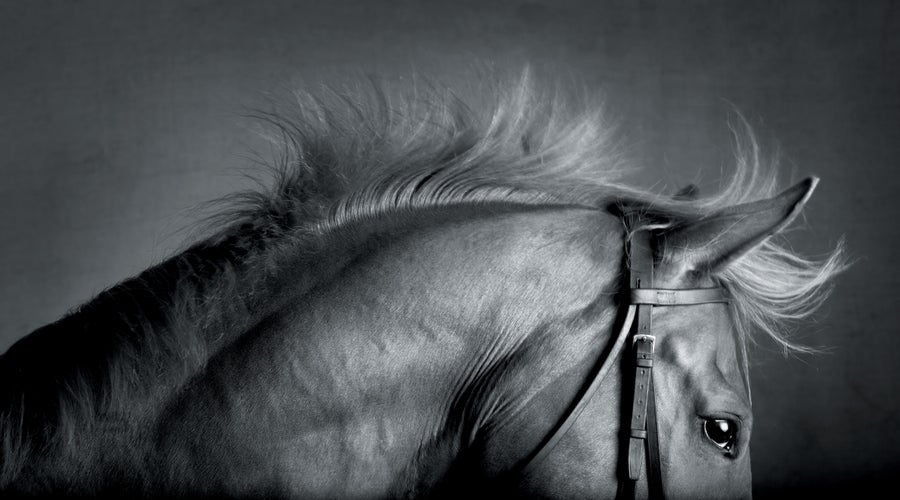
The world we live in was built on horseback. Many people today rarely encounter horses, but this is a recent development. Only a few decades ago domestic horses formed the fabric of societies around the globe. Almost every aspect of daily life was linked to horses in an important way. Mail was delivered by postal riders, people traveled by horse-drawn carriage, merchants used horses to transport goods across continents, farmers cultivated their land with horsepower, and soldiers rode horses into battle.
Scholars have long sought to understand how the unique partnership between humans and horses got its start. Until recently, the conventional wisdom was that horses were gradually domesticated by the Yamnaya people beginning more than 5,000 years ago in the grassy plains of western Asia and that this development allowed these people to populate Eurasia, carrying their early Indo-European language and cultural traditions with them.
Now new kinds of archaeological evidence, in conjunction with interdisciplinary collaborations, are overturning some basic assumptions about when—and why—horses were first domesticated and how rapidly they spread across the globe. These insights dramatically change our understanding of not only horses but also people, who used this important relationship to their
advantage in everything from herding to warfare. This revised view of the past also has lessons for us today as we consider the fate of endangered wild horses in the steppes. And it highlights the essential value of Indigenous knowledge in piecing together later chapters of the horse-human story, when domesticated horses moved from Eurasia into the rest of the world.
The genus Equus, which includes horses, asses, and zebras, originated around four million years ago in North America. Over the next few million years its members began dispersing across the Beringia land bridge between what is now Russia and Alaska and into Asia, Europe and Africa. Horses are among humanity’s oldest and most prized prey animals. Perhaps the first indisputable evidence for hunting with weapons by early members of the human family comes from horse-rich archaeological sites such as Schöningen in Germany, dating to some 300,000 years ago. The unique lakeshore environment there preserved not only the remains of a band of horses but also the immaculately crafted wood spears that humans used to dispatch them. For millennia wild horses remained a dietary staple for early Homo sapiens living in northern Eurasia. People were keen observers of these animals they depended on for food: horses featured prominently in Ice Age art, including in spectacular images rendered in charcoal on the limestone walls of France’s Chauvet Cave more than 30,000 years ago.
Tracking the transition from this ancient predator-prey connection to early domestication—which includes such activities as raising, herding, milking, and riding horses—can be challenging. Researchers studying the deep past rarely have the luxury of written documents or detailed imagery to chronicle changing relationships between people and animals. This is especially true in the Eurasian steppes—the cold, dry, remote grasslands where scientists suspect that the first horse herders emerged, which stretch from eastern Europe nearly to the Pacific. In the steppes, cultures have long been highly mobile, moving herds to fresh pastures with the changing seasons. Their way of life left behind archaeological assemblages that can be shallow, poorly preserved and difficult to study. Indeed, much of what we know about the origins of horse domestication comes from a single, powerful scientific source: the bones of ancient horses themselves.
As an archaeozoologist, I seek to understand the origins of domestication through the study of horse bones from archaeological sites. In the early days of this kind of scientific inquiry into domestication, some researchers looked for patterns in the size, shape, or frequency of these bones over time. The basic logic behind this approach is that if horses were living in close contact with people, their bones might have become more widespread or more variable in shape and size than in earlier periods, whether because people were breeding them for particular traits or because they were putting the horses to work in ways that altered the animals’ bodies over the course of their life, among other factors.
PARENTING IS SO fucking hard!! Actually, life and work are hard because I decided to become a chef, and now I am parenting as a newly single dad, in short bursts, every week. And you guys, I have never struggled so hard to be an adult. Even with a therapist, I have to constantly work to maintain the abundant mindset we talk about each week.
My daughter Barbara is seven, and getting easier to manage in a lot of ways. I can explain why her needs are often unreasonable, at least in the moment, but she now has the language to argue with me over every single thing: What we are doing, where we are going, what we will do when we get there, and what we will eat. Actually, that one isn’t really an argument. She wants pizza from Rocco’s, around the corner from where we’re currently staying, and I usually cave because I too want pizza from Rocco’s and also I like to smoke weed and eat her crust after she falls asleep.
Also, I am dealing with a lot of anxiety and depression, and having Barbara with me can be a stark reminder of how drastically my life has changed this year. And the changes keep coming, abrupt and challenging every single time. I work 13 to 14 hours a day, four days a week, running a restaurant kitchen. The three days I have “off” I do ordering, receiving, and I boil out the deep fryer every Tuesday. Any time my staff is in the building I am “on,” keeping everybody’s energy up so that we can get through a long and sometimes grueling, sometimes boring service. I shout a lot about
socialism and abundance and I try to keep my team laughing and on track.
It’s hard, but you know that from everything you’ve ever heard about a restaurant kitchen, and so the last thing I am equipped to deal with in my little down time is an argument with my child. It hurts my soul, but so does caving to her demands. So I try to find my sense of abundance while being realistic about my own capabilities when I am stressed, sad, and hurting, and sometimes I say passive-aggressive things to her. Things like, “Babe, if we can’t figure out how to live together we may not be able to do nights at my apartment anymore.” Or, “If you can’t eat breakfast a little faster my whole body will explode and it will be your fault.” Once I told her that it’s illegal to buy kids candy before school because I couldn’t just tell her no, because I’ve never had boundaries for myself, and I am struggling to create them for my child, and I hate that for both of us, even when I’m being kind to myself.
I get frustrated when Barbara is being argumentative over the walk to school, and I get mad when she brushes off my rules about bedtime, but
I get inwardly furious, with both her and myself, when she won’t eat the food I’ve made for her. Sometimes I work up the energy to cook for her and she understands that it’s not going to be anything elaborate. I’ll make rice and beans or roasted chicken thighs, simple things that make me feel cared for. But every time, unless it’s pasta with butter or instant ramen noodles, she’s not interested and I still end up going to get her pizza from Rocco’s because I don’t want to be a bad parent who puts his child to bed hungry on the few nights I get with her. But I also don’t want her memories from this time to just be of eating pizza while daddy stares deeper and deeper into the void of scarcity, barely holding his shit together.
And that’s not to say she’s a picky eater. She is, but at her mom’s house she eats all kinds of different stuff! Pork chops! Bacon! Sausage! Really any kind of pig parts and I’m realizing now that my next dinner with her will be pork jowls or pig’s ears or whatever and then I’ll dip her pizza crust in the broth. I am the chef of my own popular restaurant! I cook for famous people sometimes and I cook for Barbara’s friends’ parents a lot so I’m like a local celebrity. AND YET, nothing has really changed since she was little. She still gets whatever she wants but instead of pushing what she deems as sketchy food to the floor, now she hides from it under the table.
“The Wild Robot” is an animated science fiction adventure produced by DreamWorks Animation and distributed by Universal Pictures. It’s based on the 2016 novel, “The Wild Robot,” written by Peter Brown. It was written for the screen and directed by Chris Sanders. The film follows a service robot shipwrecked on an uninhabited island who must […]
Film and Writing Festival for Comedy. Showcasing best of comedy short films at the FEEDBACK Film Festival. Plus, showcasing best of comedy novels, short stories, poems, screenplays (TV, short, feature) at the festival performed by professional actors.

 Boris Zhitkov/Getty Images




:max_bytes(150000):strip_icc()/Parents-ThanksgivingMovies-142d9b2945d646e4a0099695a3850c09.jpg)
 Mark Harvey


