November 25, 2024
Mohenjo
Business, Food For Thought, Human Interest, Political, Science, Technical
amazon, business, Business News, current-events, Future, Hotels, human-rights, medicine, mental-health, research, Science, Science News, technology, Technology News, travel, vacation

Click the link below the picture
.
Before I became a mother, I was certain I’d have two children — possibly three. In our many conversations about our future family, my husband wasn’t sure about a second. “Let’s see how we’re doing with one,” he would say, “then decide.”
“I already know I want two,” I said. “I’m already sure.”
My daughter was born in the spring of 2020. We spent nearly two years on all the day care waitlists in town, desperate for help, as my husband and I both worked from home. My daughter did not nap; she did not sleep; breastfeeding did not come easy. I was totally in love with my baby, totally isolated, and totally overwhelmed. While feverish with my third bout of mastitis, at the onset of the most dangerous depression of my life, I had the thought: I can’t do this again. It would be the death of me.
We had no money to spare; no more hours in the day to work; no sleep to lose. I was so humbled, so in awe that anyone had more than one child. I didn’t understand how they were making it through the day with everyone intact. As I looked closer, I saw they weren’t. They were falling apart.
My vision of having two or more children was not a fantasy, I realized, so much as a received image of what a family should look like. Having two children seemed more inevitable than desirable. I hadn’t considered having one child as a real option — and now I couldn’t imagine it any other way.
I was very fortunate that my husband agreed. We were obsessed with our daughter, we were so happy we’d made parents of ourselves, and we were at capacity. We were a kingdom of three.
My mother says that after I was born, she felt another child waiting for her.
Three years later, a baby began appearing in my dreams. I didn’t know this dream baby; she wasn’t my daughter, and she wasn’t the pregnancies I’d lost — those had a different feeling when I dreamed of them. Soon I was having constant, intrusive thoughts about this baby, both while asleep and awake. I didn’t know this baby, but I knew she was mine.
My mother says that after I was born, she felt another child waiting for her. When I was two years old, she became pregnant with my sister, heeding the call. What was it she felt? I’d imagined it was what I was feeling now — a haunting from the unborn ether. I was afraid to ask her. If these dreams were that call, I wasn’t sure I could heed it. I wasn’t sure what that said about me.
“I don’t know if I want another baby,” I told my husband, when I could no longer keep it from him. “All my reasons for not having another haven’t changed. I just keep seeing her. I don’t know what it means. I want the thoughts to go away, but they won’t go away.”
He confessed he’d been having thoughts of his own. He wasn’t sure he wanted another baby, either, but he’d also been having thoughts.
.
 PeopleImages/Getty Images
.
.
Click the link below for the article:
.
__________________________________________
November 24, 2024
Mohenjo
Business, Food For Thought, Human Interest, Political, Science, Technical
amazon, business, Business News, current-events, Future, Hotels, human-rights, medicine, mental-health, research, Science, Science News, technology, Technology News, travel, vacation

Click the link below the picture
.
President-elect Donald Trump’s return to the White House could embolden Republicans who want to weaken or repeal the Affordable Care Act, but implementing such sweeping changes would still require overcoming procedural and political hurdles.
Trump, long an ACA opponent, expressed interest during the campaign in retooling the health law. In addition, some high-ranking Republican lawmakers — who will now have control over both the House and the Senate — have said revamping the landmark 2010 legislation known as Obamacare would be a priority. They say the law is too expensive and represents government overreach.
The governing trifecta sets the stage for potentially seismic changes that could curtail the law’s Medicaid expansion, raise the uninsured rate, weaken patient protections, and increase premium costs for millions of people.
“The Republican plans — they don’t say they are going to repeal the ACA, but their collection of policies could amount to the same thing or worse,” said Sarah Lueck, vice president for health policy at the Center on Budget and Policy Priorities, a research and policy institute. “It could happen through legislation and regulation. We’re on alert for anything and everything. It could take many forms.”
Congressional Republicans have held dozens of votes over the years to try to repeal the law. They were unable to get it done in 2017 after Trump became president, even though they held both chambers and the White House, in large part because some GOP lawmakers wouldn’t support legislation they said would cause such a marked increase in the uninsured rate.
Similar opposition to revamping the law could emerge again, especially because polls show the ACA’s protections are popular.
While neither Trump nor his GOP allies have elaborated on what they would change, House Speaker Mike Johnson said last month that the ACA needs “massive reform” and would be on the party’s agenda should Trump win.
Congress could theoretically change the ACA without a single Democratic vote, using a process known as “reconciliation.” The narrow margins by which Republicans control the House and Senate mean just a handful of “no” votes could sink that effort, though.
Many of the more ambitious goals would require Congress. Some conservatives have called for changing the funding formula for Medicaid, a federal-state government health insurance program for low-income and disabled people. The idea would be to use budget reconciliation to gain lawmakers’ approval to reduce the share paid by the federal government for the expansion population. The group that would be most affected is made up largely of higher-income adults and adults who don’t have children rather than “traditional” Medicaid beneficiaries such as pregnant women, children, and people with disabilities.
A conservative idea that would let individuals use ACA subsidies for plans on the exchange that don’t comply with the health law would likely require Congress. That could cause healthier people to use the subsidies to buy cheaper and skimpier plans, raising premiums for older and sicker consumers who need more comprehensive coverage.
“It’s similar to an ACA repeal plan,” said Cynthia Cox, a vice president and the director of the Affordable Care Act program at KFF, a health information nonprofit that includes KFF Health News. “It’s repeal with a different name.”
.
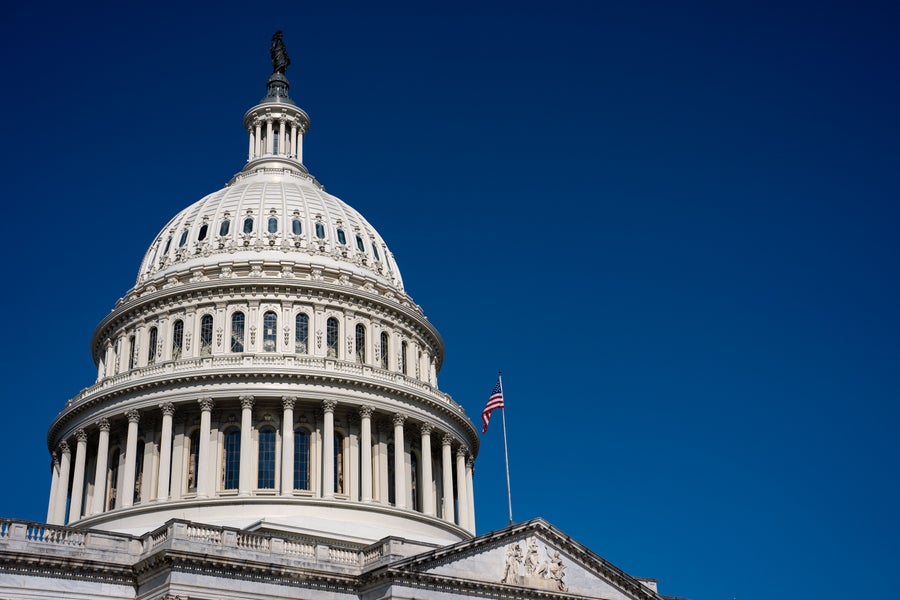
President-elect Donald Trump’s return to the White House could embolden Republicans who want to weaken or repeal the Affordable Care Act, but implementing such sweeping changes would still require overcoming procedural and political hurdles. Kent Nishimura/Getty Images
.
.
Click the link below for the article:
.
__________________________________________
November 24, 2024
Mohenjo
Business, Food For Thought, Human Interest, Political
amazon, business, Business News, current-events, Future, Hotels, human-rights, medicine, mental-health, research, Science, Science News, technology, Technology News, travel, vacation

Click the link below the picture
.
It seems obvious that there would be a Temple dedicated to the Ancient Greek God of water, Poseidon. But for many years, the temple was lost and was only re-discovered very recently. The ancient ruins were found in Elis, Greece, and identified by archeologists to be the lost Temple of Poseidon of Samikon, described by the ancient Greek geographer Strabo. And now, researchers have revealed that the Temple is even larger than they initially thought (Picture: OeAW-OeAI/Marie Kräker)
.
 Slide 1
.
.
Click the link below for the slideshow:
.
__________________________________________
November 24, 2024
Mohenjo
Business, Food For Thought, Human Interest, Political, Science, Technical
amazon, business, Business News, current-events, Future, Hotels, human-rights, medicine, mental-health, research, Science, Science News, technology, Technology News, travel, vacation

Click the link below the picture
.
It’s impossible to read about modern parenting, especially material intended for the highly educated, middle-class contingent, without coming to one conclusion: Parenting has become needlessly hard, and it would be easier (and better) if we had a “village.”
The “village,” of course, comes from the phrase “It takes a village to raise a child.” In the idealized village, parents might be a child’s primary caregivers, but children are also passed around to relatives and neighbors. This village—primarily composed of women—plays a big role in postpartum families, too, helping clean or cook while the mom rests. You can see the appeal.
I’m going to say something that might sound a bit mean, but bear with me: I don’t think modern parents really want the village, because most parents don’t behave in a village-y way.
Slowly But Surely, the Right Is Taking One of My Heroes for Their Own. It’s Very Hard to Watch.Slowly But Surely, the Right Is Taking One of My Heroes for Their Own. It’s Very Hard to Watch.
Read More
Part of it is simple: Educated people live farther away from their extended families. Twenty-one-year-old college grads starting their careers are probably not thinking about who would watch their older child during the birth of their second. But if you want a village, and your parents don’t live close, you need to socialize with neighbors and friends. And when it comes to this, people repeatedly reveal their preferences: They are “too busy” to meet people. Things are “crazy over here” and they’re “going out of town.” Community is not a priority.
What takes priority over community, for people who claim to want it? A lot of the time, it’s spending time with the nuclear family (parents spend more active parenting time with their kids now than ever before) or the evergreen “going out of town,” which is what I hear every time I try to plan something. Yes, people work, but not more than they used to. At the end of the day, “going out of town” seems to be a far bigger priority than building a community. This is compounded by the fact that (again) the people I’m around are more likely than ever to live far from their parents or other relatives, and if you live far away, you need to travel to visit. Alternatively, maybe nobody likes me!
I’m not saying it’s bad or shameful to enjoy leisure time with your nuclear family. This applies to me, too. Creating community, especially when nobody else is participating, eats up a lot of time. I have some free time, but I spend it at home with my husband and kids, or on hobbies. Yes, I would enjoy having more of a community, but would I rather spend a Saturday playing with my own children, or helping my neighbor move? Building community isn’t my top priority either, despite my occasional attempts to manufacture it by hosting gatherings (the invitations to which are often ignored and never reciprocated).
There’s another element too: Our standards for caregivers are higher than ever. Social media is awash with mothers who decree it’s dangerous to let anyone watch their children, including relatives. People no longer feel comfortable with the 14-year-old neighbor babysitting (our teenage neighbor offered, and we declined). Grandparents can be presented with an email with a list of “boundaries” before the birth of a child, a custom that seems to have become increasingly popular since COVID, when everyone got increasingly worried about vaccines and baby-kissing. As a new mom asked a Parents advice column, “I’m worried about how to set baby boundaries within a family that doesn’t seem to have many. I don’t want my newborn passed around from relative to relative. What do I do?” On the other side of the aisle, a grandmother wrote in to Newsweek expressing dismay that her daughter-in-law won’t let her babysit, or even hold, her 5-month-old grandson.
Rules aren’t necessarily unreasonable—I had a few myself—but the trend is clear. We don’t really want a village, we want a free caretaker or cleaning crew who does things exactly the way we wish.
.
 Monkeybusinessimages/Getty Images Plus.
.
.
Click the link below for the article:
.
__________________________________________
November 23, 2024
Mohenjo
Business, Food For Thought, Human Interest, Political, Science, Technical
amazon, business, Business News, current-events, Future, Hotels, human-rights, medicine, mental-health, research, Science, Science News, technology, Technology News, travel, vacation
Click the link below the picture
.
Even before I could make out the silhouette of Platform Holly on the foggy horizon, I could see and smell oil. Ripples of iridescent liquid floated on the sea’s surface, reflecting the cloudy sky. But the oil wasn’t coming from a leak or some other failure of the rig. Milton Love, a biologist at the Marine Science Institute at the University of California, Santa Barbara, explained that it was “kind of bubbling up out of the seafloor.” Our boat, less than two miles from the central California coast, was sailing above a natural oil seep where the offshore energy boom first began.For thousands of years the Chumash, an Indigenous group native to the region, identified these oceanic seeps and their naturally occurring soft tar, known as malak, which washed up on the shore. Sixteenth-century European explorers noted oil off the coast of modern-day Santa Barbara, and in the 1870s the U.S. oil boom reached California. In the late 1890s the first offshore oil wells in the world were drilled from piers off of Summerland Beach; 60 years later the state’s first offshore oil platform was deployed to drill the Summerland Offshore Field.
Since then, 34 other oil platforms have been installed along the coast, and more than 12,000 have been installed around the world. These hulking pieces of infrastructure, however, have finite lifetimes. Eventually their oil-producing capacities tail off to the point where it is no longer economically viable to operate them—that, or there’s a spill. Today 13 of California’s 27 remaining offshore platforms are what’s known as shut-in, or no longer producing oil.
Platform Holly is among the dead platforms awaiting their afterlives. At the time of its installation in 1966, everyone knew a platform situated directly over a natural oil and gas seep was going to be a success. And for nearly five decades it was. Then, in 2015, a corroded pipeline near Refugio State Beach owned by Plains All American Pipeline cracked, spilling 142,800 gallons of crude oil into the Santa Barbara Channel. The spill killed sea lions, pelicans and perch, among other creatures; closed fisheries and beaches; and permanently severed Platform Holly from its market.
Venoco, the oil company that owned Holly at the time, was not responsible, but it was bankrupted by the event. Because Holly is positioned within three miles of the coast, it was transferred into the hands of the California State Lands Commission (SLC) in 2017. The SLC is now responsible for managing the process of decommissioning the platform and determining its fate.
Because Holly is already owned by the state, not an oil company, its transition could illuminate how to evaluate the fate of rigs worldwide based on science, not politics.
According to platform-decommissioning consultant John Bridges Smith, a former leasing specialist with the Bureau of Ocean Energy Management who counts ExxonMobil, ConocoPhillips and Chevron among his clients, Holly and the eight other platforms whose leases are terminated or expired will be decommissioned by the end of the decade. Based on the original contracts between the oil companies and the state and federal governments, which date to the 1960s, this means the structures will have to be fully removed. In December 2023 the Bureau of Safety and Environmental Enforcement recommended that all 23 California platforms standing in federal waters be fully removed.
Doing so will incur a great expense. That’s true everywhere but especially in California, where some of the platforms are in very deep water. According to one conservative estimate, completely removing all of California’s platforms would cost the responsible oil companies $1.5 billion. Smith says these companies would prefer to delay that process for as long as possible. Some environmental groups in California, meanwhile, are pushing to hold them to the speediest timeline.
Love, who has spent the past three decades studying the aquatic life that now calls southern California’s oil platforms home, would prefer a third alternative.
In the decades since they were installed, the steel support structures of California’s oil platforms have become vibrant ecosystems isolated from fishing pressures—de facto marine sanctuaries. Rather than being removed, aging fossil-fuel infrastructure and its serendipitously associated habitats can be salvaged in the ocean as state-managed artificial reefs. The entire topside—
the above-water portion of steel, offices and cranes—and shallow section of a rig are removed, but part of the submerged base may remain. A pathway for doing so already exists in the U.S. and has been successfully followed 573 times in the Gulf of Mexico. Similar examples can be found around the world, from Gabon to Australia. Because Holly is already owned by the state, not an oil company, its transition could illuminate how to evaluate the fate of rigs worldwide based on science, not politics.
When an oil platform is decommissioned, the process goes like this: First, in a phase known as plugging and abandoning, its oil wells are filled with concrete and sealed. Next, scientists conduct an environmental review and consider the various merits and risks of different removal strategies. The results determine a platform’s final resting place, which in most cases has been in a scrap metal yard. A platform’s support structure is called its jacket—hundreds of vertical feet of woven steel that is affixed to the bottom of the ocean. Most of the time engineers will use explosives to sever a platform jacket from the seafloor. The steel is then hauled to shore for disposal and recycling. Decommissioning is considered complete when a platform has been removed down to 15 feet below the mud line and the seafloor has been returned to preplatform conditions.
.
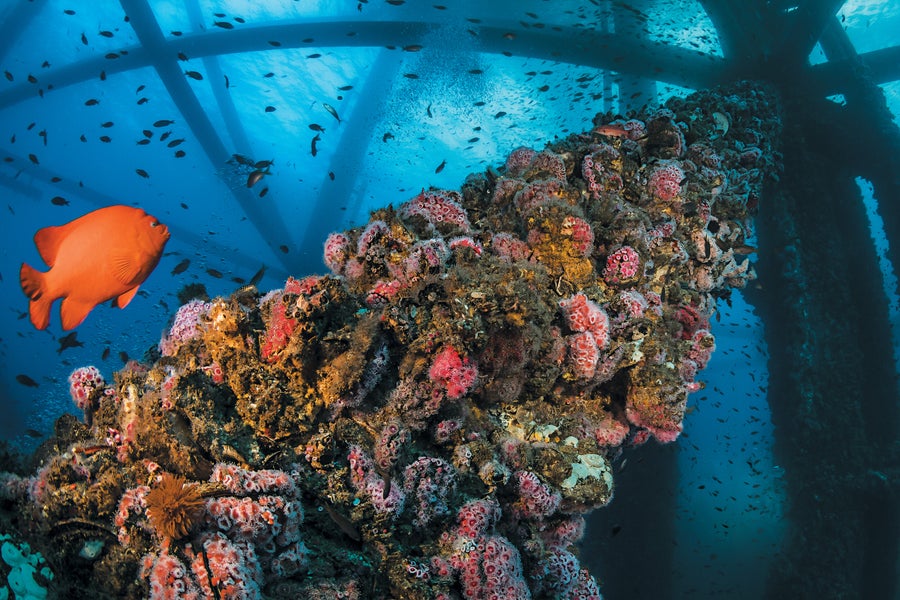
The steel “jackets” that support California’s offshore oil platforms are covered in millions of organisms and provide habitat for thousands of fish. Joe Platko
.
.
Click the link below for the article:
.
__________________________________________
November 23, 2024
Mohenjo
Business, Food For Thought, Human Interest, Political, Science, Technical
amazon, business, Business News, current-events, Future, Hotels, human-rights, medicine, mental-health, research, Science, Science News, technology, Technology News, travel, vacation

Click the link below the picture
.
Roblox is the latest platform amping up its parental controls in an attempt to keep its young users safe.
The gaming platform, which features thousands of free user-created games that people can access, announced several new protections for users under 13, on November 18, 2024.
“These changes were developed and implemented after multiple rounds of internal research, including interviews, usability studies, and international surveys with parents and kids, and consultation with experts from child safety and media literacy organizations,” Matt Kaufman, Roblox’s chief safety officer, shares in a statement announcing the new parental controls.
Stephen Balkam, CEO of the Family Online Safety Institute, who supported Roblox’s work, tells Parents, “Parents need help navigating the online world with their kids. Roblox’s new labels and tools will go a long way to provide peace of mind and assurance to busy parents wanting to protect their children from unwanted content or contact.”
Rblox Parental Controls Updates
Parents will now be able to access parental controls from their own devices instead of through their child’s. That means they’ll be able to manage their kid’s account even if they aren’t physically together. They will need to verify themselves through credit card or ID.
Here’s the breakdown of what caregivers will have access to:
-
Friends list: Parents will be able to view who their child is friends with on Roblox.
-
Screen time control: They’ll be able to set limits on how long their child can play Roblox. Children will receive a pop-up once their time for the day is up.
-
Chat settings: In a game, the built-in setting is now no direct messaging for users under 13, which can be changed through parental controls. (Direct messaging outside of a game is restricted and can’t be changed by parental controls.) But users under 13 can access public broadcast messages within a game or experience.
.
:max_bytes(150000):strip_icc()/Parents-Roblox-Photo-79dbcf17d4db4acf8b425f13d89d1cbc.jpg) GettyImages/Bloomberg
GettyImages/Bloomberg
.
.
Click the link below for the article:
.
__________________________________________
Older Entries
Newer Entries


