Home

Can Babies Safely Sleep on Their Sides? We Asked the Experts.

Leave a comment

Click the link below the picture

.

Whether you’re a new parent or a seasoned pro, you probably spend a lot of time thinking about your baby’s sleep. You may have even wondered if babies can safely sleep on their sides—especially if they’re having trouble staying asleep. But according to pediatricians, parents should start all naps and bedtime by putting their baby on their back—even if they’ve mastered the art of rolling over.

“Parents should always offer sleep with babies starting on their backs from birth through 12 months old in order to reduce the risk of SIDS (sudden infant death syndrome),” says Sarah Bossio, certified pediatric sleep expert and owner of Your Zen Baby Sleep.1

But what about babies that roll to their side after they’re asleep? Should you move them to their back, or can those babies sleep on their sides? We turned to experts to learn everything you need to know.

Risks of Babies Sleeping on Their Sides

The American Academy of Pediatrics recommends that all babies are put to sleep on their backs.2 Not only is this the safest position for your baby, but it also reduces the risk of SIDS and other potential complications. In fact, some research shows that putting a baby on their side to sleep, even for a nap, increases their risk of SIDS by up to 45 times.3

“The ‘Back to Sleep’ campaign that began in 1994 (and was renamed to Safe to Sleep in 2012) has been one of the single largest contributors to decreasing the risk of sleep-related infant deaths,” says Jenelle Ferry, MD, board-certified neonatologist at Pediatrix Medical Group in Tampa, Florida.

While Side-Sleeping, Babies Can Roll Further

When babies sleep on their side, it is much easier for them to slip onto their stomach, which also can increase their risk of SIDS. Researchers have found that sleeping on the belly lowers your baby’s blood pressure and reduces their ability to get oxygen to their brain. And, for babies between 2 and 4 months old, the reflex to breathe is even more repressed when they are asleep on their belly.4

Side-Sleeping and Positional Torticollis

Babies who sleep on their sides may develop positional torticollis, or wry neck. This condition is caused by your baby’s head being kept in one primary position. It also can occur if your baby has a preference for having their head in a specific position.5

“Torticllis is a condition caused by a tightening of the sternocleidomastoid muscle in the neck, which results in the turning of the head to one side and tilting it to the other, and sometimes limits full rotation of the neck,” says Ferry.6

This condition can be present at birth or develop later, she says. “If an infant sleeps repeatedly on their side, they may develop a preference to turn their head in one direction that could potentially develop into torticollis with tightening of the muscles on one side, although this is not common.” 

When Is It Safe for Babies to Sleep on Their Sides?

Once a baby is developmentally ready to find their comfortable spot and has the skill of rolling from belly to back and vice versa, they may try to sleep on their side, says Bossio. This milestone typically occurs between 4 and 6 months. However, regardless of their abilities, you should still always place your baby to sleep initially on their back.

It’s also imperative to make sure your baby is in a safe sleep environment, adds Kandra Becerra, a pediatric sleep specialist and owner of Rocky Mountain Sleeping Baby. It can be dangerous if your baby rolls to their side while next to a blanket or in a baby swing. “If the baby is in a crib that is flat, and nothing in the crib, they are fine to sleep on their side, as long as they got there on their own.”

.

https://www.parents.com/thmb/XabENqRYi2q8pv_-bBnGV9AAFiQ=/750x0/filters:no_upscale():max_bytes(150000):strip_icc()/parentscanbabiessleepsides-4572398d49f541a7b9043adaa7a43718.pngParents/Getty Images

.

.

Click the link below for the complete article:

https://www.parents.com/can-babies-safely-sleep-on-their-sides-we-asked-the-experts-8780848?utm_source=pocket_discover_parenting

.

__________________________________________

Horace King, Architect, Member, Alabama House of Representative (1868-1872)

Leave a comment

Horace King, Architect, Member, Alabama House of Representative (1868-1872)

On This Day: February 07, 1904

Leave a comment

On This Day: February 07, 1904

Mysterious Blobs Found inside Cells Are Rewriting the Story of How Life Works

Leave a comment

Click the link below the picture

.

No one saw the blob takeover coming. In 2009 a team of biophysicists led by Anthony A. Hyman of the Max Planck Institute of Molecular Cell Biology and Genetics in Dresden, Germany, were studying specklelike structures called P granules in the single-celled embryo of a tiny, soil-dwelling worm. These specks were known to accumulate only at one end of the cell, making it lopsided so that, when it divides, the two daughter cells are different. The researchers wanted to know how that uneven distribution of P granules arises.

They discovered that these blobs, made from protein and RNA, were condensing on one side of the cell like raindrops in moist air, and dissolving again on the other side. In other words, the molecular components of the granules were undergoing phase transitions like those that switch a substance between liquid and gas.

That was a weird thing to be happening in cell biology. But at first it seemed to many researchers little more than a quirk and didn’t excite much attention. Then these little blobs—now called biomolecular condensates—began popping up just about anywhere researchers looked in the cell, doing a myriad of vital tasks.

Biologists had long believed that bringing order and organization to the chaos of molecules inside a cell depended on membrane-bound compartments called organelles, such as the mitochondria. But condensates, it turns out, offer “order for free” without the need for membranes. They provide an easy, general-purpose organization that cells can turn on or off. This arrangement permits many of the things on which life depends, explains biophysicist Petra Schwille of the Max Planck Institute of Biochemistry in Martinsried, Germany.

These little blobs inside living cells now appear to feature across all domains of the living world and are “connected to just about every aspect of cellular function,” says biophysical engineer Cliff Bran­gwynne, who was part of the 2009 Dresden team and now runs his own lab at Princeton University. They protect cells from dangerously high or low temperatures; they repair DNA damage; they control the way DNA gets turned into crucial proteins. And when they go bad, they may trigger diseases.

Biomolecular condensates now seem to be a key part of how life gets its countless molecular components to coordinate and cooperate, to form committees that make the group decisions on which our very existence depends. “The ultimate problem in cell biology is not how a few puzzle pieces fit together,” Brang­wynne says, “but how collections of billions of them give rise to emergent, dynamic structures on larger scales.”

These ubiquitous specks have “completely taken over cell biology,” says biophysicist Simon Alberti of the Technical University of Dresden. The challenge now is to understand how they form, what they do—and perhaps how to control them to devise new medical therapies and cures.

Initially researchers studying condensates thought they formed by coalescing as one liquid phase became insoluble in another—like vinegar droplets in the oil of salad dressing. But condensates aren’t always simply phase-separated liquids.

.

https://static.scientificamerican.com/dam/m/2c54c09a4e6a5881/original/sa0225Ball01.jpg?m=1736174431.311&w=1000Mark Ross

.

.

Click the link below for the complete article:

https://www.scientificamerican.com/article/mysterious-blobs-found-in-cells-are-rewriting-how-life-works/

.

__________________________________________

‘Bigorexia’ Is On The Rise. Here’s What Parents Should Know.

Leave a comment

Click the link below the picture

.

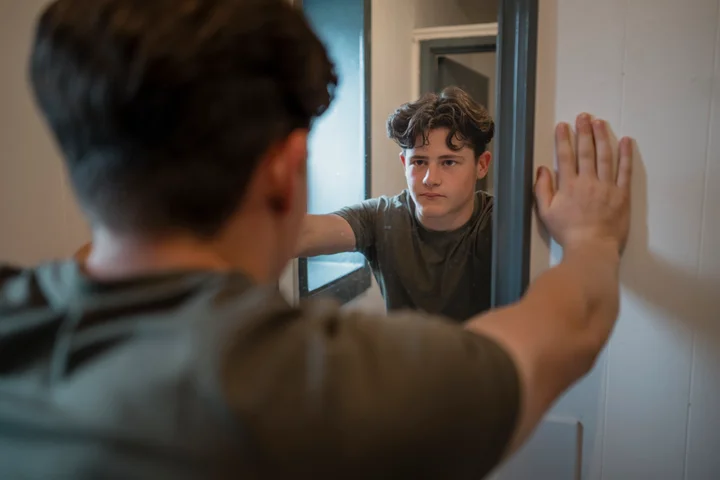
Parents today are generally aware of mental health conditions that relate to body image, including common disorders like anorexia. But experts warn a lesser-known issue is on the rise, particularly among boys: muscle dysmorphia, aka “bigorexia.”

“Bigorexia is a psychological condition and type of body dysmorphic disorder which involves a distorted self-image that focuses specifically on muscle size and physical appearance,” Kara Becker, a certified eating disorder therapist and national director of eating disorder programs at Newport Healthcare, told HuffPost.

With bigorexia, the afflicted person is obsessed with becoming more muscular and preoccupied with the idea that their body isn’t brawny enough ― even if they actually have the physique of a bodybuilder.

“Individuals may have an inaccurate view of their bodies, often believing they are smaller or less muscular,” said Amy Gooding, a clinical psychologist at Eating Recovery Center, Baltimore. “This belief and subsequent preoccupation can lead to unhealthy behaviors, including obsessive exercise, and may lead to changing one’s eating to be as lean as possible.”

Although muscle dysmorphia can affect anyone, it’s more common in males, and research suggests the disorder is on the rise. A 2019 study indicated that 22% of adolescent boys engaged in “muscularity-oriented disordered eating behaviors” in an attempt to bulk up or gain weight and found that supplements, dietary changes and even steroid use were common among young adult males.

“Eating disorders in boys are often under-recognized and under-diagnosed, said Jason Nagata, a pediatrician specializing in eating disorders in boys and men, who co-authored the study.

He noted that a recent Canadian study found that hospitalizations for eating disorders in male patients had risen dramatically since 2002.

“While there’s more awareness around eating disorders, muscle dysmorphia can be overlooked for several reasons ― one reason being that it can lead to behaviors often encouraged in the weight room,” Gooding said. “Lack of awareness of the disorder may lead to the disorder being missed in someone who is struggling, as this is one of the less well-known disorders. Those who struggle may hesitate to reach out for help due to shame, secrecy or the normalization of the behaviors in the community.”

.

https://img.huffingtonpost.com/asset/679d39031600002500636a0d.jpeg?cache=2TDITYOiii&ops=scalefit_720_noupscale&format=webp

SolStock via Getty Images Social media has become a dangerous influence on young people’s body image and self-esteem.

.

.

Click the link below for the complete article:

https://www.huffpost.com/entry/bigorexia-parents-boys_l_6786dc1ee4b0a673540f92d2?utm_source=pocket_discover_parenting

.

__________________________________________

On This Day: February 06, 1902

Leave a comment

On This Day: February 06, 1902

Barrington Irving, Jamaican-Born Pilot

Leave a comment

Barrington Irving, Jamaican-Born Pilot

SING SING (2023) – My rating: 8.5/10

Leave a comment

“Sing Sing” is an American prison drama directed by Greg Kwedar and written by Clint Bentley and Kwedar. Based on the real-life Rehabilitation Through the Arts program at Sing Sing Maximum Security Prison, the film centers on a group of incarcerated men who create theatrical stage shows through the program. I’m a huge fan of […]

SING SING (2023) – My rating: 8.5/10

Tuberculosis Outbreak, Highly Pathogenic Bird Flu Strain and Polar Bear Hair

Leave a comment

Click the link below the picture

.

Rachel Feltman: Happy Monday, listeners! For Scientific American’s Science Quickly, I’m Rachel Feltman. Hope your February is off to a great start. Let’s kick off the week by catching up on all the science news you might have missed.

First, a quick note on some presidential moves that might impact health and science. Robert F. Kennedy Jr. faced at least some bipartisan pushback during confirmation hearings for his nomination for secretary of the U.S. Department of Health and Human Services. On Thursday the chair of the Senate Committee on Health, Education, Labor and Pensions, Republican Bill Cassidy, pressed Kennedy to take a definitive pro-vaccine stance. Cassidy, who practiced medicine for decades, claims he has constituents who credit Kennedy—at least in part—for their decision not to vaccinate.

After a lot of back and forth, Cassidy asked Kennedy to agree that if he were to be confirmed, the U.S. Food and Drug Administration would not “deprioritize or delay review and/or approval of new vaccines and that vaccine review standards will not change from historical norms.” Kennedy replied in the affirmative—but it’s important to note that the nominee has a long history of promoting vaccine misinformation.

You can read more about RFK Jr.’s health care track record at ScientificAmerican.com, and we’ll keep you updated on the confirmation hearings as they proceed.

Last week was also pretty chaotic in terms of executive orders, a federal funding freeze, and more. As of last Friday afternoon, there were reports of webpages disappearing from government health agency sites. Stat News reported that data from the Youth Risk Behavior Surveillance System, a large national survey on youth behavioral habits that includes information on gender and sexual identities, had disappeared and was no longer accessible to researchers. The CDC’s Social Vulnerability Index, which highlights groups particularly vulnerable to disasters because of factors like poverty, also appeared to be down on Friday, as did some resources about HIV. That’s not an exhaustive list by any means, and this story was very much still developing as of the time of this recording on the afternoon of January 31. We’re working on a deeper dive on these changes and their implications for this week’s Friday episode, so let us know if you have any specific questions. You can send those over to us at sciencequickly@sciam.com.

Feltman: Now let’s get into some public health news. You may have seen some headlines last week about a record-breaking outbreak of tuberculosis in Kansas. Initial reports dubbing it the nation’s largest TB outbreak since the CDC started keeping track of cases seem to have stemmed from an incorrect statement from the state health department. After the CDC refuted that, a state health official offered clarification, claiming this outbreak has seen the country’s highest case numbers over a one-year period.

The discrepancy has led to some confusion about the nature of this—very real and serious—outbreak. The health department says that as of January 31, more than 60 people in Wyandotte and Johnson counties have been diagnosed with active TB associated with the outbreak, though some have completed treatment since their diagnoses; “active” refers to a type of tuberculosis, not whether someone currently has the illness—more on that shortly. According to a state official, two people have died in the outbreak. Here to unpack the situation for us is Bek Shackelford-Nwanganga, a health equity reporter for the Kansas News Service and KCUR.

Bek Shackelford-Nwanganga: The first cases related to this specific outbreak were, we’ve been told, recorded in January of 2024. There was a pretty large spike over the summer, which is actually when the state came in and started assisting, and that’s when the CDC also came in and started assisting.

Shackelford-Nwanganga: They’re pretty confident that they’ve got the situation under control. They do expect to find more cases. They have to do a lot of contact tracing and a lot of investigations to try and figure out who is in touch with who. But for the most part, they are happy with how numbers are trending downward, and they are monitoring it pretty closely.

Tuberculosis is a bacterial infection. It can settle in other places in your body, but typically it settles in a person’s lungs. You know, when that person coughs or is singing, things like that, it can spread that way. Tuberculosis requires a lot of extended, close contact with a person to catch it.

And then there are two types of tuberculosis. There’s one that’s known as active tuberculosis. This is when a person is displaying symptoms—you know, persistent cough, coughing up blood, pain in the lungs, and then things like night sweats and fevers and weight loss. That means they have an active infection and they can spread it to others. For the other version of tuberculosis, latent tuberculosis—people sometimes call it sleeping tuberculosis—this means that someone has the bacteria in their body, but it’s not causing an active infection. It has to become active for it to spread to others. And if you have a latent case, you won’t be experiencing symptoms.

.

https://static.scientificamerican.com/dam/m/450fc996fe659a91/original/SQ-Monday-EP-Art.png?m=1717792183.71&w=1000Anaissa Ruiz Tejada/Scientific American

.

.

Click the link below for the complete article:

https://www.scientificamerican.com/podcast/episode/h5n9-in-poultry-tuberculosis-outbreak-in-kansas-and-rfk-jr-s-confirmation/

.

__________________________________________

Can a child legally take puberty blockers? What if their parents disagree?

Leave a comment

Click the link below the picture

.

Young people’s access to gender-affirming medical care has been making headlines this week.

Today, federal Health Minister Mark Butler announced a review into health care for trans and gender-diverse children and adolescents. The National Health and Medical Research Council will conduct the review.

Yesterday, The Australian published an open letter to Prime Minister Anthony Albanese calling for a federal inquiry, and a nationwide pause on puberty blockers and hormone therapy for minors.

This followed Queensland Health Minister Tim Nicholls earlier this week announcing an immediate pause on access to puberty blockers and hormone therapies for new patients under 18 in the state’s public health system, pending a review.

In the United States, President Donald Trump signed an executive order this week directing federal agencies to restrict access to gender-affirming care for anyone under 19.

This recent wave of political attention might imply gender-affirming care for young people is risky, controversial, perhaps even new.

But Australian courts have already extensively tested questions about its legitimacy, the conditions under which it can be provided, and the scope and limits of parental powers to authorise it.

What are puberty blockers?

Puberty blockers suppress the release of oestrogen and testosterone, which are primarily responsible for the physical changes associated with puberty. They are generally safe and used in paediatric medicine for various conditions, including precocious (early) puberty, hormone disorders and some hormone-sensitive cancers.

International and domestic standards of care state that puberty blockers are reversible, non-harmful, and can prevent young people from experiencing the distress of undergoing a puberty that does not align with their gender identity. They also give young people time to develop the maturity needed to make informed decisions about more permanent medical interventions further down the line.

Puberty blockers are one type of gender-affirming care. This care includes medical, psychological and social interventions to support transgender, gender-diverse and, in some cases, intersex people.

Young people in Australia need a medical diagnosis of gender dysphoria to receive this care. Gender dysphoria is defined as the psychological distress that can arise when a person’s gender identity does not align with their sex assigned at birth. This diagnosis is only granted after an exhaustive and often onerous medical assessment.

After a diagnosis, treatment may involve hormones such as oestrogen or testosterone and/or puberty-blocking medications.

Hormone therapies involving oestrogen and testosterone are only prescribed in Australia once a young person has been deemed capable of giving informed consent, usually around the age of 16. For puberty blockers, parents can consent at a younger age.

In the United States, President Donald Trump signed an executive order this week directing federal agencies to restrict access to gender-affirming care for anyone under 19.

This recent wave of political attention might imply gender-affirming care for young people is risky, controversial, perhaps even new.

But Australian courts have already extensively tested questions about its legitimacy, the conditions under which it can be provided, and the scope and limits of parental powers to authorise it.

What are puberty blockers?

Puberty blockers suppress the release of oestrogen and testosterone, which are primarily responsible for the physical changes associated with puberty. They are generally safe and used in paediatric medicine for various conditions, including precocious (early) puberty, hormone disorders and some hormone-sensitive cancers.

International and domestic standards of care state that puberty blockers are reversible, non-harmful, and can prevent young people from experiencing the distress of undergoing a puberty that does not align with their gender identity. They also give young people time to develop the maturity needed to make informed decisions about more permanent medical interventions further down the line.

Puberty blockers are one type of gender-affirming care. This care includes medical, psychological and social interventions to support transgender, gender-diverse and, in some cases, intersex people.

Young people in Australia need a medical diagnosis of gender dysphoria to receive this care. Gender dysphoria is defined as the psychological distress that can arise when a person’s gender identity does not align with their sex assigned at birth. This diagnosis is only granted after an exhaustive and often onerous medical assessment.

After a diagnosis, treatment may involve hormones such as oestrogen or testosterone and/or puberty-blocking medications.

Hormone therapies involving oestrogen and testosterone are only prescribed in Australia once a young person has been deemed capable of giving informed consent, usually around the age of 16. For puberty blockers, parents can consent at a younger age.

Can a child legally access puberty blockers?

Gender-affirming care has been the subject of extensive debate in the Family Court of Australia (now the Federal Circuit and Family Court).

Between 2004 and 2017, every minor who wanted to access gender-affirming care had to apply for a judge to approve it. However, medical professionals, human rights organisations and some judges condemned this process.

In research for my forthcoming book, I found the Family Court has heard at least 99 cases about a young person’s gender-affirming care since 2004. Across these cases, the court examined the potential risks of gender-affirming treatment and considered whether parents should have the authority to consent on their child’s behalf.

When determining whether parents can consent to a particular medical procedure for their child, the court must consider whether the treatment is “therapeutic” and whether there is a significant risk of a wrong decision being made.

.

https://images.theconversation.com/files/645943/original/file-20250130-15-og5rwc.jpg?ixlib=rb-4.1.0&rect=1%2C68%2C997%2C498&q=45&auto=format&w=1356&h=668&fit=cropMirasWonderland/Shutterstock

.

.

Click the link below for the complete article:

https://theconversation.com/can-a-child-legally-take-puberty-blockers-what-if-their-parents-disagree-248651?utm_source=pocket_discover_parenting

.

__________________________________________

Older Entries Newer Entries

Gazeta cuiburilor de cuc

Publicație umoristică dedicată glumeților de pretutindeni

JaZzArt en València

Faith saved us from the savages that we were, losing faith makes us savages again

PeopleTalky

Where Trends Meet Truth

MRS. T’S CORNER

https://www.tangietwoods

Srikanth’s poetry

Freelance poetry writing

MediaNegy

Zalai Betti

INOVATION BLOG AND NEWS

INOVATION BLOG PEOPLE AND NEWS

szigetingy | budapest

Németh György

PT. LPPL Lombok

Konsultan Lingkungan Hidup di Lombok - NTB

Idézetek – LeaArt21

Lea Krasznai (LeaArt21) – Idezetek (Idézetek) WordPress (Budapest, Hungary)

danielecolleoni

Appunti, spunti e passioni in liberta'

تعلم وعلم، ادخر،سافر واستجمم .

تعنى بتقديم نصائح للمعلمين المبتدئين، والطلبة الممتحنين، ومشاركة الاخرين تجربة الادخار في المال، بترشيد الاستهلاك المنزلي، وترتيب البيت، والحفاظ على البيئة، وتشجيع السيارات صديقةالبيئة، والسياحة والاسفار، ونماء رؤوس الاموال، والطب البديل وتشجيع التعليم الرقمي والذكاء الاصطناعي، والعناية بالنحل وتربية الاسماك، والاسثمار في رؤوس الاموال، الزراعة العضوية، والعناية باسنان الرضع، و صحة الحوامل، وتفسير القران

scientifique

apprendre pour évoluer

In Between the Lines

Thoughts on books, language, meaning, and the culture around it.

Great Lakes Mindset

Outdoor Recreation & Adventure in the Great Lakes Region

Nelsapy

News, Info, Bio, Articles, Reviews, Lyrics, Technology, Science, Inspiration, Motivation, Philosphy and many more...

Becoming HIS Tapestry

Christian Lifestyle Blogger

Joe Mullins Commissioner

CEO and president of The Mullins Companies

The Luttie Board

Two Cultures. One Life. Endless Stories

Charles Maxwell DeCook

Real Estate Development Specialist

amorentreestrellas.wordpress.com/

¡Bienvenido de vuelta viajero!

Heart of Loia `'.,°~

so looking to the sky ¡ sing and from my heart to YOU ¡ bring...

Michael Ciullo

CEO and Founder of Nsight Health

Nelson MCBS

Catholic News, Prayers, HD Images, Rosary, Music, Videos, Holy Mass, Homily, Saints, Lyrics, Novenas, Retreats, Talks, Devotionals and Many More

global geopolitics

Decoding Power. Defying Narratives.

Talk Photo

A creative collaboration introducing the art of nature and nature's art.

Movie Burner Entertainment

The Home Of Entertainment News, Reviews and Reactions

C r i s t i a n a' s Fine Arts ⛄️

•Whenever you are confronted with an opponent, conquer him with love.(Gandhi)

TradingClubsMan

Algotrader at TRADING-CLUBS.COM

Comedy FESTIVAL

Film and Writing Festival for Comedy. Showcasing best of comedy short films at the FEEDBACK Film Festival. Plus, showcasing best of comedy novels, short stories, poems, screenplays (TV, short, feature) at the festival performed by professional actors.

Bonnywood Manor

Peace. Tranquility. Insanity.

Warum ich Rad fahre

Take a ride on the wild side

Madame-Radio

Découvre des musiques prometteuses (principalement) dans la sphère musicale française.

Ir de Compras Online

No tiene que Ser una Pesadilla.

Kana's Chronicles

Life in Kana-text (er... CONtext)

Jam Writes

Where feelings meet metaphors and make questionable choices.

emotionalpeace

Finding hope and peace through writing, art, photography, and faith in Jesus.

Essu Center

Eyasu The Wonderful

Wearing2Gowns.Blog

A former medical student's journey through healthcare challenges and personal growth