
On This Day: March 12, 1956
Assorted human interest posts.
March 13, 2025
March 12, 2025
Business, Food For Thought, Human Interest, Political, Science, Technical amazon, business, Business News, current-events, Future, Hotels, human-rights, medicine, mental-health, research, Science, Science News, technology, Technology News, travel, vacation Leave a comment

Click the link below the picture
.
We have discovered the oldest meteorite impact crater on Earth, in the very heart of the Pilbara region of Western Australia. The crater formed more than 3.5 billion years ago, making it the oldest known by more than a billion years. Our discovery is published today in Nature Communications.
Curiously enough, the crater was exactly where we had hoped it would be, and its discovery supports a theory about the birth of Earth’s first continents.
The very first rocks
The oldest rocks on Earth formed more than 3 billion years ago, and are found in the cores of most modern continents. However, geologists still cannot agree how or why they formed.
Nonetheless, there is agreement that these early continents were critical for many chemical and biological processes on Earth.
Many geologists think these ancient rocks formed above hot plumes that rose from above Earth’s molten metallic core, rather like wax in a lava lamp. Others maintain they formed by plate tectonic processes similar to modern Earth, where rocks collide and push each other over and under.
Although these two scenarios are very different, both are driven by the loss of heat from within the interior of our planet.
We think rather differently.
A few years ago, we published a paper suggesting that the energy required to make continents in the Pilbara came from outside Earth, in the form of one or more collisions with meteorites many kilometres in diameter.
As the impacts blasted up enormous volumes of material and melted the rocks around them, the mantle below produced thick “blobs” of volcanic material that evolved into continental crust.
Our evidence then lay in the chemical composition of tiny crystals of the mineral zircon, about the size of sand grains. But to persuade other geologists, we needed more convincing evidence, preferably something people could see without needing a microscope.
So, in May 2021, we began the long drive north from Perth for two weeks of fieldwork in the Pilbara, where we would meet up with our partners from the Geological Survey of Western Australia (GSWA) to hunt for the crater. But where to start?
.
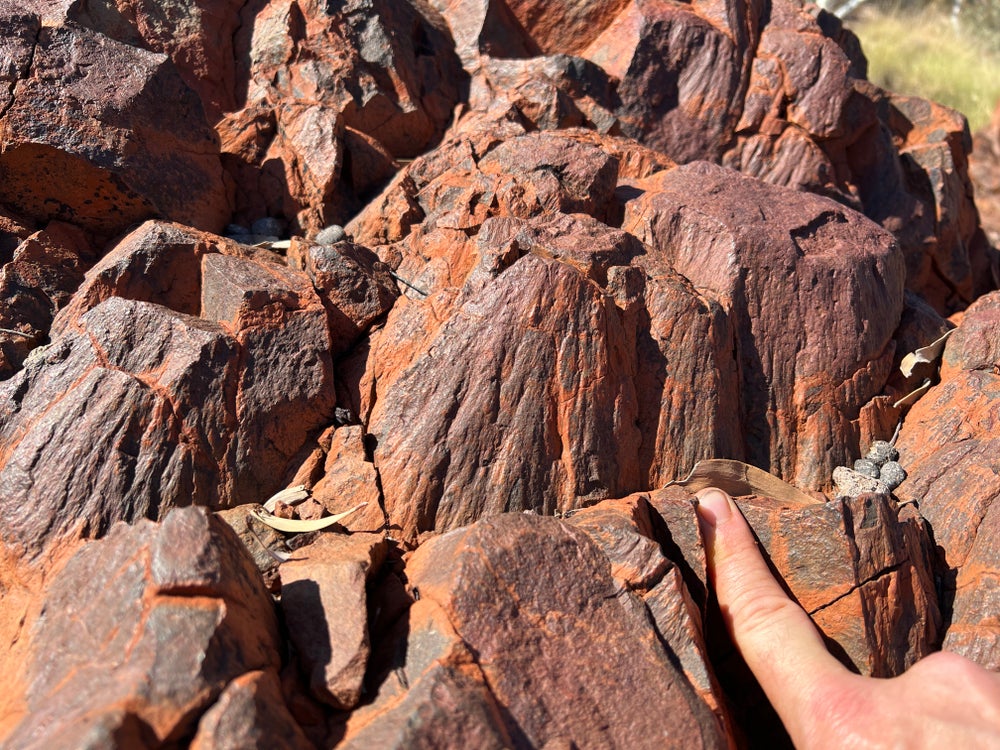
Shatter cones in ancient rocks of the Pilbara, Western Australia. Tim Johnson, Curtin University
.
.
Click the link below for the complete article:
.
__________________________________________
March 12, 2025
Business, Food For Thought, Human Interest, Political, Science, Technical amazon, business, Business News, current-events, Future, Hotels, human-rights, medicine, mental-health, research, Science, Science News, technology, Technology News, travel, vacation Leave a comment

Click the link below the picture
.
In 1971, a British doctor was trying to puzzle out a mystery: How can a child with no signs of external trauma or injury present with bleeding between the skull and brain? That doctor, A. Norman Guthkelch, was part of a wave of physicians and researchers newly concerned that an epidemic of severe child abuse had been passing, undetected, beneath doctors’ noses.
As one law-review article recounts, “Prior to the 1960s, medical schools provided little or no training on child abuse, and medical texts were largely silent on the issue.” A turning point was the publication of the 1962 article “The Battered-Child Syndrome,” which urged physicians to consider that severe child abuse may be at play when children came in with injuries such as bone fractures, subdural hematomas, and bruising.
The article goes beyond offering medical advice to prescribing an ethical framework that would take hold: “The bias should be in favor of the child’s safety; everything should be done to prevent repeated trauma, and the physician should not be satisfied to return the child to an environment where even a moderate risk of repetition exists.”
Armed with these new insights, Guthkelch hypothesized that the children showing up to his hospital were being abusively shaken. Although they did not show up with the usual fractures or visible forms of physical trauma, the presence of a subdural hematoma could indicate what would come to be widely known as “shaken baby syndrome.”
Decades later, Guthkelch would publicly worry that his hypothesis had been taken too far. After reviewing the trial record and medical reports from one case in Arizona, NPR reported that he was “troubled” that the conclusion was abusive shaking when there were other potential causes. “I wouldn’t hang a cat on the evidence of shaking, as presented,” Guthkelch quipped.
The narrow claim that shaking a baby abusively can result in certain internal injuries morphed into the claim that if a set of internal injuries were present, then shaking must be the cause. On today’s episode of Good on Paper, I talk with a neuroscientist who found himself personally embroiled in this scientific and legal controversy when a caretaker was accused of shaking his child.
Cyrille Rossant is a researcher and software engineer at the International Brain Laboratory and University College London whose Ph.D. in neuroscience came in handy when he delved into the research behind shaken baby syndrome and published a textbook with Cambridge University Press on the scientific controversy that embroiled his family.
Jerusalem Demsas: Many forms of scientific expertise in criminal-justice proceedings have been debunked or come under scrutiny in recent years. Things like bite-mark analysis and blood-spatter analysis used to be commonly understood as rigorous empirical analysis. But these questionable theories often fall apart on closer inspection.
This is how science is supposed to work. Experts observe, they hypothesize, they test, and they revise their previous understandings of the world. And in academia and in scientific journals, that’s all well and good—but what happens when evolving science is brought into the courtroom? In a courtroom, no one is well positioned to rigorously evaluate a scientific debate: not judges, not jurors, and not even the people calling expert witnesses.
.
 Illustration by The Atlantic. Source: Getty.
.
.
Click the link below for the complete article:
.
__________________________________________
March 11, 2025
March 11, 2025

“To whom God would make known what isthe riches of the glory of this mystery among the Gentiles; which is Christ in you, the hope of glory” (Colossians 1:27). Christianity is the manifestation of Christ’s presence and power in your life. As a Christian, you’re the tangible expression of God’s Word, reflecting His image and […]
Do You Express Christianity?
March 11, 2025
Business, Food For Thought, Human Interest, Political, Science, Technical amazon, business, Business News, current-events, Future, Hotels, human-rights, medicine, mental-health, research, Science, Science News, technology, Technology News, travel, vacation Leave a comment
Click the link below the picture
.
Solar flares are bursts of radiation from the sun’s surface, sometimes followed by a bubble of magnetized plasma particles called a coronal mass ejection (CME). If they happen to spray out in Earth’s direction, CMEs can cause geomagnetic storms that damage power systems on the ground or spacecraft in orbit. And solar flare radiation itself can disrupt communication networks and satellite operations.
Unfortunately, solar scientists cannot reliably predict when the sun will belch out a flare. After one is observed, every minute counts in the ensuing scramble to adjust power grids or move satellites before they get damaged.
Now researchers have used data from NASA’s Solar Dynamics Observatory to show that distinctive flickering in the huge loops of roiling plasma that arch up out of the sun’s atmosphere, called the corona, seems to signal that a large flare could soon occur. This link could help researchers brace for the flare and look out for signs that an incoming CME could hit Earth within a couple of days.
Emily Mason, a heliophysicist at San Diego-based research firm Predictive Science, and her colleagues observed coronal loops in magnetically active regions where 50 strong solar flares occurred. They found that the loops’ ultraviolet light output varied erratically a few hours before a flare, the team told a recent meeting of the American Astronomical Society in Maryland. “It gives us one to two hours’ warning, with 60 to 80 percent accuracy, that a flare is coming,” Mason says.
“If we want to be able to predict solar storms earlier, then we have to predict when the flare will happen,” says Mathew Owens, a space physicist at the University of Reading in England. “Small gains there are valuable.”
Crucially, the researchers used a near-real-time data stream with just an hour’s lag rather than working with data that have been processed to improve quality, which can take weeks. Mason and her team observed flares on the sun’s outer edges from our perspective, or limbs, because that is where their light can best be seen from Earth. Flares on the sun’s eastern limb will head away from Earth as the sun rotates, but those on the western limb may hit the planet’s atmosphere, Mason says.
For now, our viewpoint means we can’t easily see loops emanating from elsewhere on the sun. But the European Space Agency is planning to launch a spacecraft called Vigil in 2031 that should give us a side-on perspective. “Being able to see the sun from more different angles is the single most important thing that we can do to improve our predictions,” Mason says. She hopes predicting big flares can help keep astronauts and electrical systems safe.
.
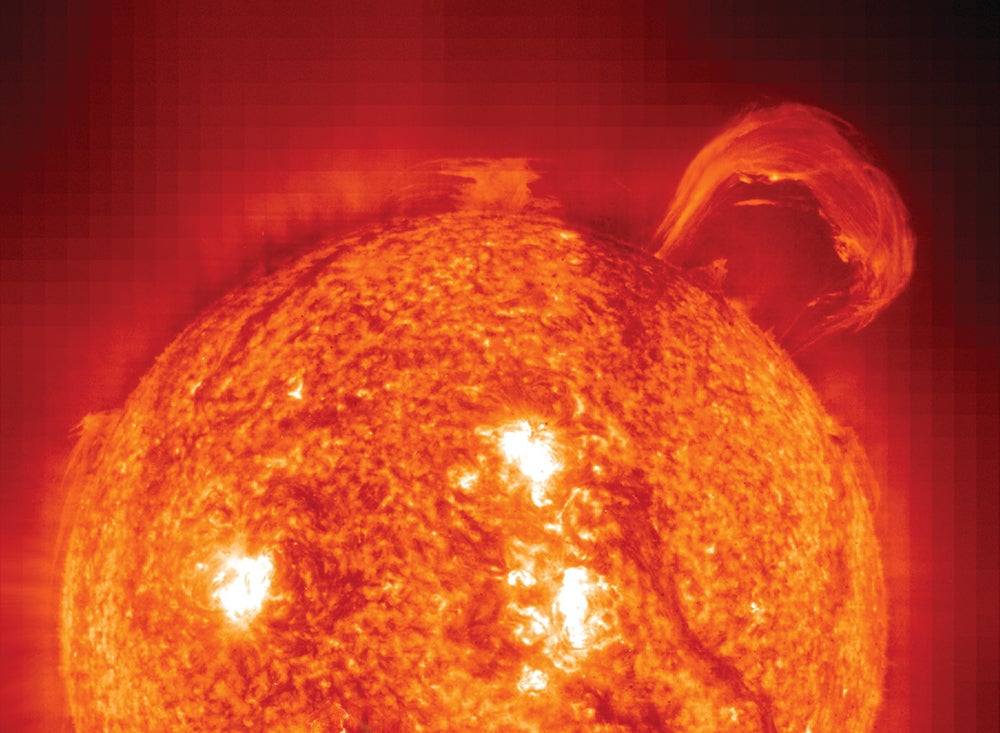
Analyzing huge loops in the sun’s corona (its atmosphere) can predict potentially dangerous solar flares. DETLEV VAN RAVENSWAAY/Science Source
.
.
Click the link below for the complete article:
.
__________________________________________
March 11, 2025
Business, Food For Thought, Human Interest, Political, Science, Technical amazon, business, Business News, current-events, Future, Hotels, human-rights, medicine, mental-health, research, Science, Science News, technology, Technology News, travel, vacation Leave a comment
From

Click the link below the picture
.
When we think of concrete, water is usually a key ingredient that comes to mind. But what if I told you it’s possible to create concrete without a single drop of water? This innovative approach is transforming the construction industry by offering sustainability and efficiency in areas where water is scarce or conservation is a priority.
In this article, I’ll explore the fascinating world of waterless concrete and how it’s changing the way we build. We’ll delve into:
- The science behind waterless concrete: Understanding its composition and how it works.
- Benefits and challenges: What makes it a game-changer and the hurdles it faces.
- Applications and future potential: Where it’s being used today and what the future holds.
Join me as we uncover the potential of this groundbreaking material and its impact on modern construction.
Understanding Concrete Without Water
Concrete without water is a surprising twist on a staple construction material. Instead of liquid, it uses a dry mix activated by alternative binding agents. This innovative approach cuts down on water use, addressing scarcity issues. According to a study by Chen et al., waterless concrete can achieve strength comparable to traditional mixtures when specific polymers are introduced during mixing.
The core of this technique revolves around polymers and other chemical compounds that replace water. They initiate the hardening process, reducing the dependency on water. Research highlights that this method can decrease construction time, as some dry-mix formulas set faster. For instance, tests revealed that a polymer-based dry mix showed a 30% faster setting time compared to typical concrete.
By cutting water dependency, this technology not only offers sustainability but also expands construction possibilities in arid regions where water’s a vital yet scarce resource. It’s an exciting aspect of construction that could reshape how we think about building materials.
The Science Behind Dry Concrete
Dry concrete, or waterless concrete, relies on innovative technology to enable binding without liquid. The transformation from traditional to waterless methods represents a significant shift in construction.
Components and Composition
Dry concrete consists of cement, aggregates like sand or crushed stone, and specialized additives. These additives play a crucial role. Polymers and other chemicals replace water, allowing dry concrete to achieve necessary strength and durability. According to a study in the Journal of Advanced Concrete Technology, using polymers can lead to compressive strengths of up to 60 MPa, comparable to conventional concrete. This advanced composition reduces reliance on water while maintaining structural integrity.
Chemical Reaction Process
The chemical reactions in dry concrete differ from those in regular concrete. In standard mixes, water triggers hydration, bonding the cement particles. Here, polymers and other additives initiate the curing process. A report by Construction and Building Materials indicates that certain dry mixes set up to 30% faster due to this alternative reaction. These rapid reactions offer practical and logistical advantages, particularly in environments with limited water availability.
Benefits of Using Concrete Without Water
Concrete without water offers several benefits, making it an appealing choice in modern construction. By using innovative alternatives, it addresses sustainability and efficiency.
Environmental Advantages
Concrete without water significantly reduces water consumption, leading to greater sustainability. Producing traditional concrete consumes a substantial amount of potable water, sometimes up to 200 liters per cubic meter according to USGS data. In contrast, waterless concrete eliminates this need, conserving precious water resources, especially crucial in arid regions. Additionally, this type of concrete often involves less dust emissions during mixing and handling, decreasing air pollution and contributing to cleaner project sites.
.
 .
.
.
Click the link below for the complete article:
.
__________________________________________
Publicație umoristică dedicată glumeților de pretutindeni
Faith saved us from the savages that we were, losing faith makes us savages again
Where Trends Meet Truth
https://www.tangietwoods
Freelance poetry writing
Zalai Betti
INOVATION BLOG PEOPLE AND NEWS
Németh György
Konsultan Lingkungan Hidup di Lombok - NTB
Lea Krasznai (LeaArt21) – Idezetek (Idézetek) WordPress (Budapest, Hungary)
Appunti, spunti e passioni in liberta'
Gyorgy Nemeth
تعنى بتقديم نصائح للمعلمين المبتدئين، والطلبة الممتحنين، ومشاركة الاخرين تجربة الادخار في المال، بترشيد الاستهلاك المنزلي، وترتيب البيت، والحفاظ على البيئة، وتشجيع السيارات صديقةالبيئة، والسياحة والاسفار، ونماء رؤوس الاموال، والطب البديل وتشجيع التعليم الرقمي والذكاء الاصطناعي، والعناية بالنحل وتربية الاسماك، والاسثمار في رؤوس الاموال، الزراعة العضوية، والعناية باسنان الرضع، و صحة الحوامل، وتفسير القران
apprendre pour évoluer
Thoughts on books, language, meaning, and the culture around it.
Outdoor Recreation & Adventure in the Great Lakes Region
News, Info, Bio, Articles, Reviews, Lyrics, Technology, Science, Inspiration, Motivation, Philosphy and many more...
Christian Lifestyle Blogger
CEO and president of The Mullins Companies
Two Cultures. One Life. Endless Stories
Real Estate Development Specialist
¡Bienvenido de vuelta viajero!
so looking to the sky ¡ sing and from my heart to YOU ¡ bring...
CEO and Founder of Nsight Health
Catholic News, Prayers, HD Images, Rosary, Music, Videos, Holy Mass, Homily, Saints, Lyrics, Novenas, Retreats, Talks, Devotionals and Many More
Decoding Power. Defying Narratives.
A creative collaboration introducing the art of nature and nature's art.
The Home Of Entertainment News, Reviews and Reactions
•Whenever you are confronted with an opponent, conquer him with love.(Gandhi)
Algotrader at TRADING-CLUBS.COM
Film and Writing Festival for Comedy. Showcasing best of comedy short films at the FEEDBACK Film Festival. Plus, showcasing best of comedy novels, short stories, poems, screenplays (TV, short, feature) at the festival performed by professional actors.
Peace. Tranquility. Insanity.
Take a ride on the wild side
Découvre des musiques prometteuses (principalement) dans la sphère musicale française.
No tiene que Ser una Pesadilla.
Life in Kana-text (er... CONtext)
Where feelings meet metaphors and make questionable choices.
Finding hope and peace through writing, art, photography, and faith in Jesus.
Eyasu
Eyasu The Wonderful
A former medical student's journey through healthcare challenges and personal growth

