Home

NEVER LET GO (2024) – My rating: 5.5/10

Leave a comment

“Never Let Go” is a survival horror thriller directed by Alexandre Aja and written by Kevin Coughlin and Ryan Grassby. The trailers for the film seemed intriguing, so I bought into a semi-quasi-horror film despite my dislike for this genre. I’m sorry, Halle Berry, but my opinion of the film is unfavorable—I came close to […]

NEVER LET GO (2024) – My rating: 5.5/10

Declutter Your Life: A Step-by-Step Guide to Prioritizing What to Keep, Donate, or Throw Away

Leave a comment

Organizing your belongings can be a rewarding process! Here are some steps that will help you prioritize what to keep, donate, or throw away: Throw: Items that are broken, damaged, or no longer work. 1. Ask the critical questions:

Declutter Your Life: A Step-by-Step Guide to Prioritizing What to Keep, Donate, or Throw Away

Moses Williams, Buffalo Soldiers, Congressional Medal of Honor

Leave a comment

Moses Williams, Buffalo Soldiers, Congressional Medal of Honor

Interracial Wisdom: Where is Systemic Racism Found in America?

2 Comments

Systemic racism in America is embedded in various institutions and structures, influencing many aspects of Foundational Black Americans. Here are some key areas where systemic racism is prevalent: 1. Criminal Justice System Policing Practices: Disproportionate targeting of Foundational Black Americans, racial profiling, and higher rates of arrest for Black individuals compared to white individuals for […]

Interracial Wisdom: Where is Systemic Racism Found in America?

How Hurricanes Batter Mental Health

Leave a comment

Click the link below the picture

.

As Hurricane Rita bore down on the bayous of southeastern Texas in 2005, Caitlin Eaves’s family made the wrenching decision to evacuate and leave their longtime home to an uncertain fate. After they returned, they spent several months sleeping on what was left of their floor and repairing the extensively flood-damaged house bit by bit, hampered in part by the long delay in restoring power. The storm also destroyed the local high school, leaving then-16-year-old Eaves and her peers in their 200-person rice-farming community without any formal schooling for weeks.

When Hurricane Harvey barreled toward the same area in 2017, Eaves’s parents and her then 91-year-old grandmother opted to stay put based on the forecasts. But the storm stalled over the region, inundating some areas with more than 60 inches of rain. The resulting floods trapped her family in their home. Eaves, by then grown and living elsewhere, frantically called local high school friends. Within minutes they rushed to successfully rescue the family by airboat.

The experiences exacted a mental toll on the family. “These kinds of things keep happening over and over, and I think my parents are finally getting worn down with everything they have to do,” Eaves says. But people such as her parents can’t just sell a house in small-town Texas for enough to buy a home farther inland, away from the danger of future storms. Their story is one of thousands of similar accounts among hurricane survivors. Almost 300 hurricane-related disasters have struck the U.S. since 2001, and such events are predicted to become increasingly frequent and ferocious. Two massive storms—Fiona and Ian—recently wrought their damage within days of each other, stressing already stricken places such as Puerto Rico to the breaking point.

Just one major destructive event such as this has immediate and sometimes long-term mental health effects, which can worsen when the disaster and its aftermath are severe and lingering. And research shows that people who are subjected to a conveyor belt of catastrophes are at even greater risk for mental health struggles related to anxiety, post-traumatic stress disorder (PTSD), and mood disorders. The level of support and resources available in an affected location can determine how resilient residents are to these difficulties—and a key strategy may rely on developing what are called “concentric circles of community.” With the individual at the center, family and friends form the closest such circle, followed by neighborhood acquaintances and then the support structures around these communities, from government policies to literal structures that can protect them. “Local government and local organizations need to be active, along with targeted states and national government,” says Sarah Lowe, a social and behavioral scientist at the Yale School of Public Health.

Immediate Aftermath

Many people suffer acute stress in the immediate aftermath of a massive disaster, Lowe says. They might have nightmares or want to avoid reality completely, and they can experience a heightened sense of watchfulness that leaves them jumpy and struggling to fall asleep. As a teen, Eaves stopped buying things that wouldn’t fit into her emergency “go bag.” “You catch yourself doing weird things like that,” she says, “and being used to the ongoing inconvenience of it, never feeling stable.”

.

https://static.scientificamerican.com/sciam/cache/file/32A04F71-0D73-4F15-96BDCF1D1747BD50_source.jpg?w=900

Residents return to their homes in Port Arthur, Texas to survey the damage wrought by Hurricane Harvey in September 2017. Michael Robinson Chavez/The Washington Post via Getty Images

.

.

Click the link below for the article:

https://www.scientificamerican.com/article/how-hurricanes-batter-mental-health/

.

__________________________________________

You win, night owls — new sleep study suggests staying up late makes you mentally sharper

Leave a comment

Click the link below the picture

.

If you are naturally more focused and proactive in the evenings, with your preferred bedtime anywhere beyond the 12am mark, then you might consider yourself a ‘night owl’. However, if you’re among the population who struggle to keep your eyes open past 10pm, you’re probably a ‘morning lark’.

A new study by Imperial College London analysed the data of 26,000 people and found that night owls performed better in cognitive tests compared to those who enjoy an early morning, leading them to the conclusion that night owls are generally more mentally sharp than morning larks.

Key takeaways from the study

  • Study showed ‘night owls’ generally performed better in cognitive tests
  • early-risers consistently showed the lowest cognitive scores in both groups analysed
  • Sleeping for fewer than 7 hours had detrimental effects on brain function

The study, published in BMJ Public Health in July, found that our natural bedtime preferences can have a big impact on our mental alertness. These finding come from 26,000 people who took part in cognitive tests that included Fluid intelligence/reasoning, Pairs Matching, Reaction Time and Prospective Memory.

The results showed that self confessed ‘night owls’ generally performed better in cognitive tests compared to ‘morning larks.’

Here, we’ll explore in finer detail the findings of the study and take a closer look at whether you can change the time you naturally feel inclined to sleep and what that means for your mental alertness.

What are night owls?

Night owls and morning larks are colloquial names for specific chronotypes, which are determined by genetics, age and other factors. A chronotype is the body’s natural waking and sleeping schedule. Night owls generally refers to people who sleep between the hours of 12am and 11am.

This can be influenced by genetics and circadian rhythms. So, if you feel naturally energised in the morning, but your partner struggles to get out of bed, it’s likely you have different chronotypes. While there are no right or wrong chronotypes, this study has found that they can impact cognitive ability.

Researchers looked at the data from 26,000 people who described themselves as ‘morning people’ or ‘evening people’ to find out how different aspects of sleep – including duration, patterns, and quality – affected mental sharpness and overall cognitive ability.

A woman looking at her laptop and taking notes in bed at night time

What did the study find?

The results from the study were highly significant, due to the notable differences in test scores. Night owls scored about 13.5% higher than morning types in one group and 7.5% higher than morning types in another group.

.

https://cdn.mos.cms.futurecdn.net/ou29mscPksPWh4kXHguRCK-650-80.jpg.webp(Image credit: Getty Images)

.

.

Click the link below for the article:

https://www.tomsguide.com/wellness/sleep/you-win-night-owls-new-sleep-study-suggests-staying-up-late-makes-you-mentally-sharper?utm_source=pocket_discover_health

.

__________________________________________

John Ward, Congressional Medal of Honor

Leave a comment

John Ward, Congressional Medal of Honor

Augustus Walley, Buffalo Soldier, Congressional Medal of Honor

Leave a comment


Augustus Walley, Buffalo Soldier, Congressional Medal of Honor

BREAKING: Democratic star Congresswoman Jasmine Crockett

Leave a comment

Click the link below the picture

.

Democratic star Congresswoman Jasmine Crockett goes viral with a fiery speech about why every patriotic American must vote for Kamala Harris this election — and what’s really at stake.

This is how it’s done…

“This is a very real thing. This isn’t about games for me. It’s not about games for the Harris-Walz ticket. We are literally trying to save lives because we’re losing them,” Crockett said during an appearance on MSNBC.

“Whether we’re talking about the storms that are caused because we have people that want to pretend as if climate change isn’t real,” she continued. “They don’t want to make the investments and make sure that we can protect our environment.”

“Or whether we’re talking about women that have been degraded to second rate citizens in this country, that will not have an opportunity to number one determine whether or not they can live,” she said.

“Number two, determine whether or not they bring forth a family when they can afford one,” she continued. “Or determine that when they have been victimized, whether or not the government will then seek to victimize them again.”

“This isn’t a game for us because we know what lies on the other side,” she went on. “We know that we weren’t necessarily born with $400 million that was given to use and therefore we may end up in a situation where even if there’s a national abortion ban, there’s people on Trump’s side that can always go somewhere else. That’s not a reality for all of us, and honestly, we shouldn’t have to leave our states.”

“We should have elected officials that will take care of us because that is what they have promised to do,” added Crockett. “Once you swear that oath, you are supposed to protect and defend against all enemies. And right now it definitely feels as if we have a lot of people that are working against us and not for us.”

We couldn’t agree more. If you care about the future of this country, you have a moral duty to vote for Kamala Harris and Tim Walz! Together, we can defeat MAGA fascism.

.

.

.

Click the link below for the article:

https://x.com/OccupyDemocrats/status/1841189062662623492?t=LtU1z0ZkYHIW8a0KLDd0VQ&s=03

.

__________________________________________
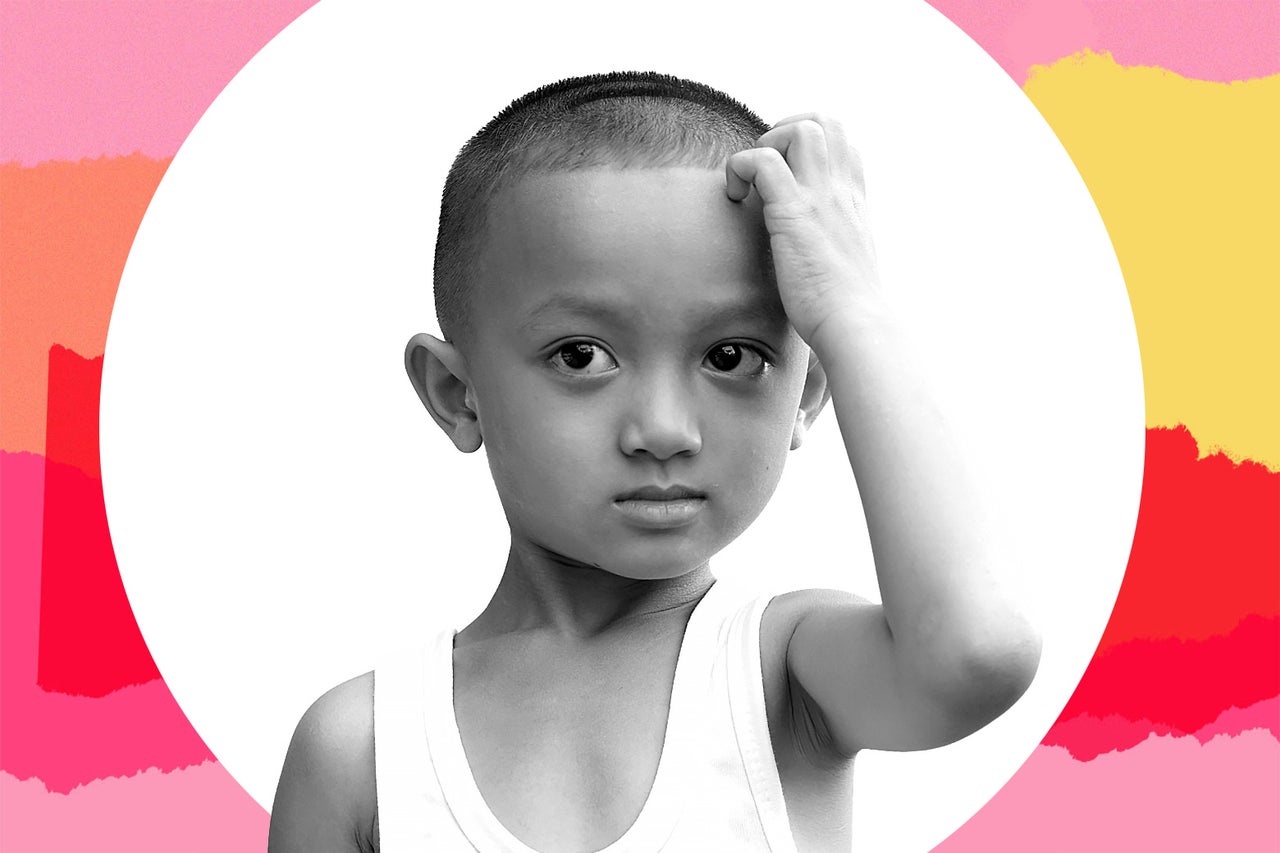
An Effort to Fight against the Spread of Misinformation in Science and an Overwhelming Number of Plastic Water Bottles

Leave a comment

Click the link below the picture

.

Rachel Feltman: Happy Monday, listeners! And happy autumn. I hope you’re enjoying some lovely crisp sweater weather wherever you are right now. For Scientific American’s Science Quickly, I’m Rachel Feltman. You’re listening to our weekly science news roundup. But before we get into some of the science stories you might have missed last week, we’ve actually got a special little segment to share with you —so let’s just dive right in.

The SciAm multimedia team spent part of last week at the General Assembly of the United Nations, we were hanging out to hear updates on the U.N.’s 17 Sustainable Development Goals. I got to chat with the U.N.’s undersecretary-general for global communications Melissa Fleming, who shared her thoughts on how misinformation and distrust in science are impacting global well-being—plus, what we can do about it. Here’s our conversation:

Feltman: Melissa, thanks so much for taking the time to chat.

Melissa Fleming: It’s great to be with you.

Feltman: What’s your sense of how public trust of science has changed in recent years?

Melissa Fleming: Well, I think with the rise of social media and the potential for anyone to claim to know science or to communicate science, it’s really in trouble because science can be uncomfortable, especially when it relates to a global pandemic and youre having to give guidelines to people who don’t want to receive it or around climate, for example, and actions that people are afraid to take. So it’s easier for certain actors to say #climatescam and climate change isn’t real than it is for a scientist to say, “Yes, manmade climate change is real.”

The challenge for scientists is going to be, now, not just how do we navigate in this toxic information ecosystem where we have an infodemic of good information mixed with bad information, and people finding it impossible to navigate, and how do we communicate more effectively as scientists?

Feltman: And so, what is the U.N. doing? What tactics have you found success with?

Fleming: Well, we study the disinformation trends and we design our communications not to debunk those trends or to fact check them because if they’re already out there, nobody really pays attention to your correction. What we can do is look at where that information is traveling and to also be in those spaces as an alternative source of information.

And then we also work with influencers, similar to what disinformation actors do. And there are so many out there who wanted to help be forces for spreading good information, information you can trust, information that will help inform people, get them to care about the issues that really matter to them, and also to get them to act.

So we have people, you know, communicating in languages that people speak, all over the world, trying to help us just deliver information that we think is really needed.

Feltman: Yeah, and what are the ways that misinformation and distrust in science is impacting people in their everyday lives?

Fleming: Well, I mean, we saw this very clearly during the COVID-19 pandemic, but I mean, I remember I had breast cancer and one of the first things I did was go online. And one of the first websites I encountered in my search was one called The Truth About Cancer. It had a million followers in this group on Facebook, and it was all over the Internet.

.

https://static.scientificamerican.com/dam/m/450fc996fe659a91/original/SQ-Monday-EP-Art.png?w=900Anaissa Ruiz Tejada/Scientific American

.

.

Click the link below for the article:

https://www.scientificamerican.com/podcast/episode/how-the-u-n-is-fighting-misinformation-in-science/

.

__________________________________________

Older Entries Newer Entries

MRS. T’S CORNER

https://www.tangietwoods

Amor Entre Estrellas

¡Bienvenido de vuelta viajero!

Heart of Loia `'.,°~

so looking to the sky ¡ will sing and from my heart to YOU ¡ bring...

Michael Ciullo

CEO and Founder of Nsight Health

Nelson MCBS

Catholic News, Prayers, HD Images, Rosary, Music, Videos, Holy Mass, Homily, Saints, Lyrics, Novenas, Retreats, Talks, Devotionals and Many More

Global geopolitics

Decoding Power. Defying Narratives.

Talk Photo

A creative collaboration introducing the art of nature and nature's art.

Movie Burner Entertainment

The Home Of Entertainment News, Reviews and Reactions

Le Notti di Agarthi

Hollow Earth Society

C r i s t i a n a' s Fine Arts ⛄️

•Whenever you are confronted with an opponent, conquer him with love.(Gandhi)

TradingClubsMan

Algotrader at TRADING-CLUBS.COM

Comedy FESTIVAL

Film and Writing Festival for Comedy. Showcasing best of comedy short films at the FEEDBACK Film Festival. Plus, showcasing best of comedy novels, short stories, poems, screenplays (TV, short, feature) at the festival performed by professional actors.

Bonnywood Manor

Peace. Tranquility. Insanity.

Warum ich Rad fahre

Take a ride on the wild side

Madame-Radio

Découvre des musiques prometteuses (principalement) dans la sphère musicale française.

Ir de Compras Online

No tiene que Ser una Pesadilla.

Kana's Chronicles

Life in Kana-text (er... CONtext)

Jam Writes

Where feelings meet metaphors and make questionable choices.

emotionalpeace

Finding hope and peace through writing, art, photography, and faith in Jesus.

WearingTwoGowns

A former medical student's journey through healthcare challenges and personal growth

...

love each other like you're the lyric to their music

Luca nel laboratorio di Dexter

Comprendere il mondo per cambiarlo.

Tales from a Mid-Lifer

Mid-Life Ponderings

Creative

Travel,Tourism, Life style "Now in hundreds of languages for you."

freedomdailywriting

I speak the honest truth. I share my honest opinions. I share my thoughts. A platform to grow and get surprised.

The Green Stars Project

User-generated ratings for ethical consumerism

Cherryl's Blog

Travel and Lifestyle Blog

Sogni e poesie di una donna qualunque

Questo è un piccolo angolo di poesie, canzoni, immagini, video che raccontano le nostre emozioni

My Awesome Blog

“Log your journey to success.” “Where goals turn into progress.”

pierobarbato.com

scrivo per dare forma ai silenzi e anima alle storie che il mondo dimentica | Sito Gratuito No-Profit

Thinkbigwithbukonla

“Dream deeper. Believe bolder. Live transformed.”

Vichar Darshanam

Vichar, Motivation, Kadwi Baat ( विचार दर्शनम्)

Komfort bad heizung

Traum zur Realität

Chic Bites and Flights

Savor. Style. See the world.

ومضات في تطوير الذات

معا نحو النجاح

Broker True Ratings

Best Forex Broker Ratings & Reviews

Blog by ThE NoThInG DrOnEs

art, writing and music by James McFarlane and other musicians

fauxcroft

living life in conscious reality

Srikanth’s poetry

Freelance poetry writing

JupiterPlanet

Peace 🕊️ | Spiritual 🌠 | 📚 Non-fiction | Motivation🔥 | Self-Love💕