Stephen L. Carter, Legal Scholar Professor of Law at Yale Law School
Assorted human interest posts.
July 12, 2025
July 11, 2025
Business, Food For Thought, Human Interest, Political, Science, Technical amazon, business, Business News, current-events, Future, Hotels, human-rights, medicine, mental-health, research, Science, Science News, technology, Technology News, travel, vacation Leave a comment

Click the link below the picture
.
Grant cancellations and budget reductions at the National Institutes of Health have put millions of dollars in research for promising new cancer treatments, tuberculosis therapies, and much more in jeopardy. Our elected officials could intervene if all Americans, not just academics, were to send a clear signal that they should. Instead, much of the public has shrugged its shoulders.
University and Princeton University. The Department of Education has opened investigations into 60 universities over allegations of antisemitism, using these inquiries to justify funding cuts and impose policy mandates. The administration has also placed international students under scrutiny, threatening visa revocations and deportations for those participating in campus protests deemed hostile to government interests. The administration has detained foreign-born academics such as Kseniia Petrova, a researcher at Harvard, who was recently released after she was placed in criminal custody for failing to declare research materials at customs.
Collectively, we’re witnessing unprecedented attempts to bully academic institutions with the administration’s ideological aims. These attempts challenge long-standing norms of academic freedom—that is, the ability of a teacher or researcher in higher education to investigate and discuss subjects without fear of political interference. Our elected officials should stand up for scientific research and those who produce it in the face of politically motivated attacks. But public apathy is making it easier for legislators to ignore the problem.
In late March, we worked with YouGov to conduct a nationally representative online survey of 1,500 U.S. adults. We found that while few Americans actively support the president’s attacks on science, many more are unbothered by them.
For example, 65 percent of Americans either have no position (31 percent) or outright support (34 percent) the possibility that the Trump administration might revoke federal funding to universities that support “pro-Palestine / anti-Israel protests”. That possibility became very real on April 21, when the NIH suggested making grant awards conditional on compliance with anti-boycott provisions regarding Israeli companies . Similarly, a majority (67 percent) either take no issue with or outright support revoking funding to universities (like the White House did to the University of Pennsylvania) that allow transgender athletes to compete.
More urgently, defunding and censoring science could have dramatically negative consequences for all Americans. Canceling research on vaccine communication hinders not just our preparedness for future pandemics, but also our response to seasonal flu and COVID. Curtailing studies of health disparities weakens efforts to improve maternal mortality rates, particularly in communities of color, people who have low income and gender-diverse communities. Cutting international academic exchange isolates the U.S. from global scientific collaboration, including partnerships with entities, such as the World Health Organization, that are trying to promote access to lifesaving medical treatments and preventatives.
The costs of academic repression, in other words, are not confined to elite institutions—they are borne by everyone. Yet very few Americans seem to be concerned.
Why is that so? Politically motivated distrust in academic institutions, particularly on the ideological right, may help explain the attitude and why the Trump administration is taking these actions.
.
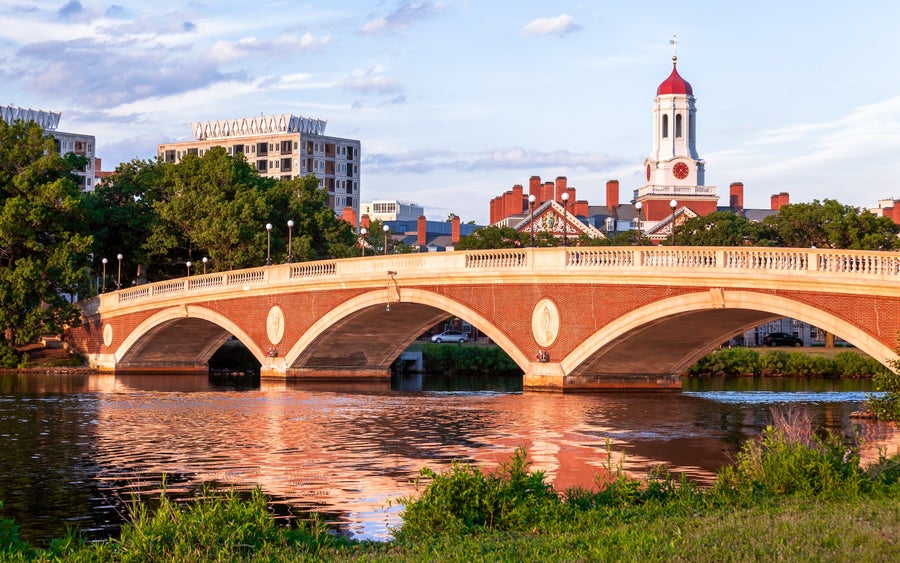
The John W. Weeks Bridge at Harvard University in Cambridge, Massachusetts. Joe Daniel Price
.
.
Click the link below for the complete article:
.
__________________________________________
July 11, 2025
Business, Food For Thought, Human Interest, Science, Technical amazon, business, Business News, current-events, Future, Hotels, human-rights, medicine, mental-health, research, Science, Science News, technology, Technology News, travel, vacation Leave a comment

Click the link below the picture
.
People are not born racist. As former U.S. President Barack Obama, quoting Nelson Mandela, former president of South Africa, tweeted shortly after the tragic events in Charlottesville August 12, 2017 in which the university town was overtaken by white supremacists and hate groups, resulting in the killing of a counter protester, Heather Heyer, “No one is born hating another person because of the color of his skin or his background or his religion. People must learn to hate, and if they can learn to hate, they can be taught to love, for love comes more naturally to the human heart than its opposite.”
Very young children do not naturally choose friends based on the color of their skin. In a video created by the BBC children’s network CBeebies, Everyone’s Welcome, pairs of children explain the differences between themselves without referring to the color of their skin or ethnicity, even though those differences exist. As Nick Arnold writes in What Adults Can Learn About Discrimination From Kids, according to Sally Palmer, Ph.D., lecturer in the Department of Human Psychology and Human Development at University College London, it is not that they don’t notice the color of their skin, it is that the color of their skin is not what is important to them.
Racism is Learned
Racism is learned behavior. A 2012 study by Harvard University researchers showed that children as young as three years of age can adopt racist behavior when exposed to it, even though they may not understand “why.” According to renowned social psychologist Mazarin Banaji, Ph.D., children are quick to pick up on racist and prejudicial cues from adults and their environment. When white children were shown faces of different skin colors with ambiguous facial expressions, they showed a pro-white bias. This was determined by the fact that they ascribed a happy face to a perceived white skin color and an angry face to a face that they perceived to be black or brown. In the study, Black children who were tested showed no color-bias. Banaji maintains that racial bias can be unlearned, though, when children are in situations where they are exposed to diversity and they witness and are part of positive interactions between different groups of people acting as equals.
Racism is learned by the example of one’s parents, caregivers, and other influential adults, through personal experience, and through the systems of our society that promulgate it, both explicitly and implicitly. These implicit biases permeate not only our individual decisions but also our societal structure. The New York Times has created a series of informative videos explaining implicit biases.
There are Different Types of Racism
According to social science, there are seven main forms of racism: representational, ideological, discursive, interactional, institutional, structural, and systemic. Racism can be defined in other ways as well — reverse racism, subtle racism, internalized racism, colorism.
In 1968, the day after Martin Luther King was shot, the anti-racism expert and former third-grade teacher, Jane Elliott, devised a now-famous but then-controversial experiment for her all-white third-grade class in Iowa to teach the children about racism, in which she separated them by eye color into blue and brown, and showed extreme favoritism toward the group with blue eyes. She has conducted this experiment repeatedly for different groups since then, including the audience for an Oprah Winfrey show in 1992, known as The Anti-Racism Experiment That Transformed an Oprah Show. People in the audience were separated by eye color; those with blue eyes were discriminated against while those with brown eyes were treated favorably. The reactions of the audience were illuminating, showing how quickly some people came to identify with their eye color group and behave prejudicially, and what it felt like to be the ones who were being treated unfairly.
There are Different Types of Racism
According to social science, there are seven main forms of racism: representational, ideological, discursive, interactional, institutional, structural, and systemic. Racism can be defined in other ways as well — reverse racism, subtle racism, internalized racism, colorism.
In 1968, the day after Martin Luther King was shot, the anti-racism expert and former third-grade teacher, Jane Elliott, devised a now-famous but then-controversial experiment for her all-white third-grade class in Iowa to teach the children about racism, in which she separated them by eye color into blue and brown, and showed extreme favoritism toward the group with blue eyes. She has conducted this experiment repeatedly for different groups since then, including the audience for an Oprah Winfrey show in 1992, known as The Anti-Racism Experiment That Transformed an Oprah Show. People in the audience were separated by eye color; those with blue eyes were discriminated against while those with brown eyes were treated favorably. The reactions of the audience were illuminating, showing how quickly some people came to identify with their eye color group and behave prejudicially, and what it felt like to be the ones who were being treated unfairly.
Microaggressions are another expression of racism. As explained in Racial Microagressions in Everyday Life, “Racial microaggressions are brief and commonplace daily verbal, behavioral, or environmental indignities, whether intentional or unintentional, that communicate hostile, derogatory, or negative racial slights and insults toward people of color.” An example of microaggression falls under “assumption of criminal status” and includes someone crossing to the other side of the street to avoid a person of color. This list of microagressions serves as a tool to recognize them and the messages they send.
Unlearning RacismRacism in the extreme is manifested by groups such as the KKK and other white supremacist groups. Christoper Picciolini is the founder of the group Life After Hate. Picciolini is a former member of a hate group, as are all the members of Life After Hate. On Face the Nation in Aug. 2017, Picciolini said that the people who are radicalized and join hate groups are “not motivated by ideology” but rather “a search for identity, community, and purpose.” He stated that “if there’s a brokenness underneath that person, they tend to search for those in really negative pathways.” As this group proves, even extreme racism can be unlearned, and the mission of this organization is to help counter violent extremism and to help those participating in hate groups find pathways out of them.
Congressman John Lewis, a prominent Civil Rights leader, said, “The scars and stains of racism are still deeply embedded in the American society.”
But as experience shows us, and leaders remind us, what people learn, they can also unlearn, including racism. While racial progress is real, so is racism. The need for anti-racist education is also real.
Following are some anti-racism resources that may be of interest to educators, parents, caregivers, church groups, and individuals for use in schools, churches, businesses, organizations, and for self-assessment and awareness.
.
:max_bytes(150000):strip_icc()/TeachingAnti-Racism-59a4732b6f53ba0011b9eb30.jpg) Multi-ethnic young adults’ hands holding pieces from the same puzzle. Nullplus/E+/Getty Images
Multi-ethnic young adults’ hands holding pieces from the same puzzle. Nullplus/E+/Getty Images
.
.
Click the link below for the complete article:
.
__________________________________________
July 11, 2025
Business, Food For Thought, Human Interest, Political, Science, Technical amazon, business, Business News, current-events, Future, Hotels, human-rights, medicine, mental-health, research, Science, Science News, technology, Technology News, travel, vacation Leave a comment

Click the link below the picture
.
President Donald Trump wants to cut NASA’s budget by 24%, but senators on both sides of the aisle claim that would have devastating consequences on the agency’s ability to advance vital scientific research, Bloomberg reported.
In addition, the president is seeking to slash NASA’s science portfolio funding “nearly in half” while canceling “dozens of science missions,” the report stated.
But during an appropriations committee hearing this week, Republicans and Democrats alike dismissed Trump’s cuts, and proposed their own $24.9 billion budget for 2026, which is “roughly” the same amount NASA received for 2025.
Want more breaking political news? Click for the latest headlines at Raw Story.
Sen. Chris Van Hollen (D-MD) told Bloomberg, “We rejected cuts that would have devastated NASA science by 47% and would have terminated 55 operating and planned missions.” Instead, he said, “We provide $7.3 billion” to fund those measures.
“Senators also rejected the Trump administration’s call to cancel NASA’s giant Space Launch System (SLS) rocket and Orion crew capsule, the centerpieces of the Artemis program to return humans to the moon,” according to the report.
These proposed cancellations seem at odds with Trump’s first-term moonshot goal, where he directed “NASA to land humans on the moon within five years ‘by any means necessary.’”
Now, in his desire to cut government “waste, fraud, and abuse,” Trump’s proposed budget is all for phasing out “the grossly expensive and delayed” SLS and Orion programs “after their third flights.” But Sen. Ted Cruz (R-TX) made a provision in Trump’s “big, beautiful” tax bill to provide an extra $4.1 billion so SLS could be used up through its fourth and fifth flights.
Sen. Jerry Moran (R-KS) said the bipartisan bill “reflects an ambitious approach to space exploration, prioritizing the agency’s flagship program, Artemis, and rejecting premature termination of systems like SLS and Orion before commercial replacements are ready.”
On Wednesday, Trump announced that he was appointing Transportation Secretary Sean Duffy, a former Fox News host, to serve as Interim Administrator of NASA.”
.
.
.
Click the link below for the complete article:
.
__________________________________________
July 11, 2025
Faith saved us from the savages that we were, losing faith makes us savages again
Where Trends Meet Truth
https://www.tangietwoods
Freelance poetry writing
Zalai Betti
INOVATION BLOG PEOPLE AND NEWS
Németh György
Konsultan Lingkungan Hidup di Lombok - NTB
Lea Krasznai (LeaArt21) – Idezetek (Idézetek) WordPress (Budapest, Hungary)
Appunti, spunti e passioni in liberta'
Gyorgy Nemeth
تعنى بتقديم نصائح للمعلمين المبتدئين، والطلبة الممتحنين، ومشاركة الاخرين تجربة الادخار في المال، بترشيد الاستهلاك المنزلي، وترتيب البيت، والحفاظ على البيئة، وتشجيع السيارات صديقةالبيئة، والسياحة والاسفار، ونماء رؤوس الاموال، والطب البديل وتشجيع التعليم الرقمي والذكاء الاصطناعي، والعناية بالنحل وتربية الاسماك، والاسثمار في رؤوس الاموال، الزراعة العضوية، والعناية باسنان الرضع، و صحة الحوامل، وتفسير القران
apprendre pour évoluer
Thoughts on books, language, meaning, and the culture around it.
Outdoor Recreation & Adventure in the Great Lakes Region
News, Info, Bio, Articles, Reviews, Lyrics, Technology, Science, Inspiration, Motivation, Philosphy and many more...
Christian Lifestyle Blogger
CEO and president of The Mullins Companies
Two Cultures. One Life. Endless Stories
Real Estate Development Specialist
¡Bienvenido de vuelta viajero!
so looking to the sky ¡ sing and from my heart to YOU ¡ bring...
CEO and Founder of Nsight Health
Catholic News, Prayers, HD Images, Rosary, Music, Videos, Holy Mass, Homily, Saints, Lyrics, Novenas, Retreats, Talks, Devotionals and Many More
Decoding Power. Defying Narratives.
A creative collaboration introducing the art of nature and nature's art.
The Home Of Entertainment News, Reviews and Reactions
•Whenever you are confronted with an opponent, conquer him with love.(Gandhi)
Algotrader at TRADING-CLUBS.COM
Film and Writing Festival for Comedy. Showcasing best of comedy short films at the FEEDBACK Film Festival. Plus, showcasing best of comedy novels, short stories, poems, screenplays (TV, short, feature) at the festival performed by professional actors.
Peace. Tranquility. Insanity.
Take a ride on the wild side
Découvre des musiques prometteuses (principalement) dans la sphère musicale française.
No tiene que Ser una Pesadilla.
Life in Kana-text (er... CONtext)
Where feelings meet metaphors and make questionable choices.
Finding hope and peace through writing, art, photography, and faith in Jesus.
Eyasu
Eyasu The Wonderful
A former medical student's journey through healthcare challenges and personal growth
love each other like you're the lyric to their music