August 11, 2025
Mohenjo
Business, Food For Thought, Human Interest, Political, Science, Technical
amazon, business, Business News, current-events, Future, Hotels, human-rights, medicine, mental-health, research, Science, Science News, technology, Technology News, travel, vacation

Click the link below the picture
.
An expert warned that U.S. President’s Donald Trump “astonishing U-turn” after agreeing to meet with Putin to discuss ending the war in Ukraine is an “alarming development”.
Nigel Gould-Davies, a senior fellow for Russia and Eurasia at the International Institute for Strategic Studies, told The Associated Press the “symbology” of holding the summit in Alaska was clear, and that the location “naturally favors Russia.”
“It’s easy to imagine Putin making the point. … We once had this territory and we gave it to you, therefore Ukraine had this territory and now should give it to us,” he said, referring to the 1867 transaction known as the Alaska Purchase when Russia sold Alaska to the United States for $7.2 million.
A U-turn to finally make progress?
Prior to Trump announcing the meeting with Putin, his efforts to pressure Russia into stopping the fighting had delivered no progress. The Kremlin’s bigger army is slowly advancing deeper into Ukraine at great cost in troops and armor while it relentlessly bombards Ukrainian cities.
Meanwhile, the Kremlin on Saturday confirmed that Russian President Vladimir Putin will meet U.S. President Donald Trump next Friday in Alaska to discuss ending the conflict in Ukraine.
“It seems entirely logical for our delegation to simply fly across the Bering Strait, and for such an important and anticipated summit of the leaders of the two countries to be held in Alaska,” Putin’s foreign affairs adviser, Yuri Ushakov, said.
The meeting would be the first US-Russia summit since 2021, when former President Joe Biden met Putin in Geneva and could mean a breakthrough in Trump’s effort to end the fighting, although there’s no guarantee it would stop the conflict since Moscow and Kyiv remain far apart on their conditions for peace. Ushakov added the next meeting between the two leaders could be held in Russia and an invitation had already been sent to the US President.
.
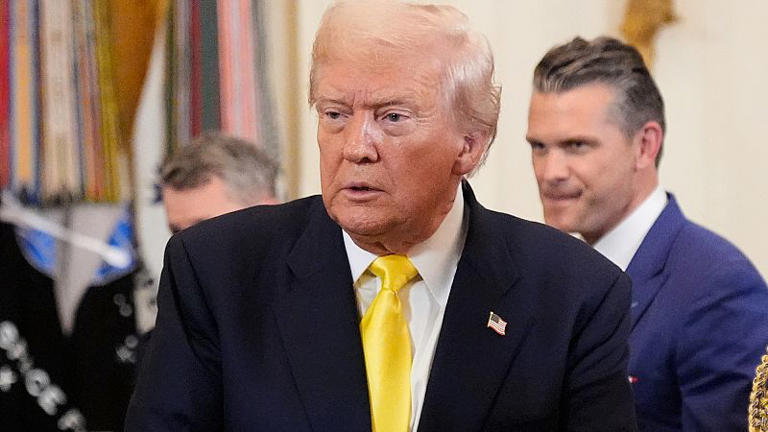
President Donald Trump departs an event to mark National Purple Heart Day in the East Room of the White House, Thursday, Aug. 7, 2025, in Washington. © Copyright 2025 The Associated Press. All rights reserved.
.
.
Click the link below for the complete article:
.
__________________________________________
August 10, 2025
Mohenjo
Business, Food For Thought, Human Interest, Political, Science, Technical
amazon, business, Business News, current-events, Future, Hotels, human-rights, medicine, mental-health, research, Science, Science News, technology, Technology News, travel, vacation

Click the link below the picture
.
Five years ago, electrical engineer Sun Hongbin was given what many would consider an impossible task: build a full-fledged clean-energy system amid some of the coldest temperatures on Earth, screaming winds, and half-year darkness.
China was then building its fifth Antarctic research station, called Qinling, on Inexpressible Island in Terra Nova Bay. And the nation’s government was pushing the concept of “green expeditions” to protect Antarctica’s uniquely fragile environment while studying and surveying the continent. “So having a system that would provide the bulk of Qinling’s energy with renewable power fit that goal,” Sun says.
But conventional solar and wind installations are no match for temperatures that plummet below –40 degrees Celsius, winds of up to 300 kilometers per hour (kmh), and ferocious blizzards. Such conditions can snap wind turbine blades, sharply reduce the performance of solar panels, and prevent batteries from charging and discharging properly. And of course, there are the six months of polar night, when the sun never rises above the horizon.“It was a huge challenge” to build a system for the Earth’s coldest, darkest and most remote continent, says Sun, now president of Taiyuan University of Technology in China and chief scientist for polar clean energy at the Polar Research Institute of China.
But in late 2024, his team traveled to the station to install a system that took $14 million to develop. It consists of 10 wind turbines, 26 solar modules, a hydrogen energy system, a container full of frost-resistant lithium-ion batteries, and a smart grid that can predict and balance supply and demand. The entire renewable system is now running and, according to Sun, should provide half of the base’s average annual energy needs.
“The use of clean energy is a huge advancement to keep the continent clean,” says Kim Yeadong, chair of the Korean National Committee on Polar Research in South Korea, who was not involved with the project. “Other stations will probably have to learn how they achieve that much clean energy. I think it’s remarkable.”
Where Diesel Power Is King
A 2024 preprint analysis of 81 Antarctic research bases found that 37 had installed renewable-energy sources such as solar panels and wind turbines. But the proportion of renewable energy these bases used was “often low,” the researchers wrote. An exception so far has been Belgium’s Princess Elisabeth Station, which is only staffed during the Antarctic summer. It runs completely on wind and solar power, taking advantage of the almost 24-hour daylight. Even so, the vast majority of stations still depend on diesel-powered generators to keep their crews warm, fed, and safe. The main reason this is the case is simply that “they are used to using diesel,” says Daniel Kammen, a professor of energy at the University of California, Berkeley.
.
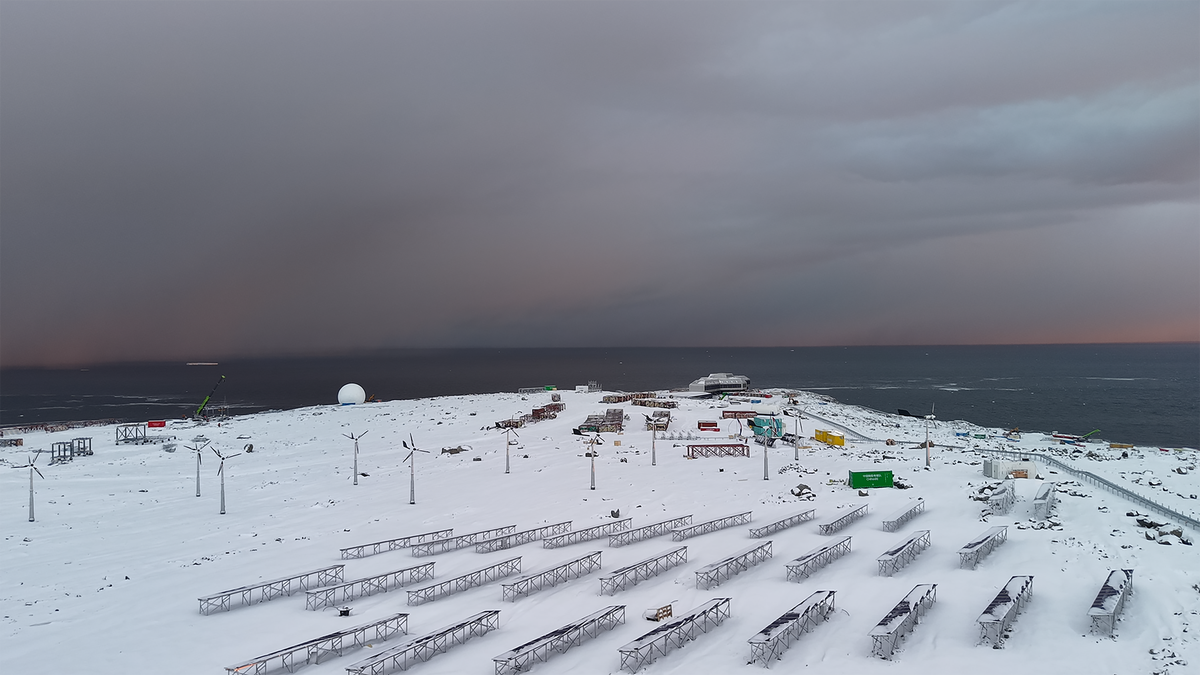
The majority of power at China’s Qinling research station in Antarctica now comes from clean energy. Members of China’s 41st Antarctic expedition team
.
.
Click the link below for the complete article:
.
__________________________________________
August 10, 2025
Mohenjo
Business, Food For Thought, Human Interest, Political, Science, Technical
amazon, business, Business News, current-events, Future, Hotels, human-rights, medicine, mental-health, research, Science, Science News, technology, Technology News, travel, vacation

Click the link below the picture
.
Tens of millions of Americans voted for President Donald Trump in the belief that he would be competent. They might not have been thrilled that Trump is a convicted felon, or pleased with his role in the violent attack on the Capitol on January 6, 2021. Many worried that he posed a threat to democracy. But enough were willing to overlook all that, because they convinced themselves that Trump would be an effective chief executive, that under his stewardship their lives would get better, and the country would prosper.
A survey from the Democratic pollsters Douglas Schoen and Carly Cooperman, conducted shortly after the election, helps illustrate the point. By an 11-point margin, independents said they would be less confident that the Trump administration would share accurate information compared with the Biden administration. Yet, by a 10-point margin, those same voters said that they thought the Trump administration would be more effective at getting things done.
.

Al Drago / Bloomberg / Getty
.
.
Click the link below for the complete article:
.
__________________________________________
August 10, 2025
Mohenjo
Business, Food For Thought, Human Interest, Political, Science, Technical
amazon, business, Business News, current-events, Future, Hotels, human-rights, medicine, mental-health, research, Science, Science News, technology, Technology News, travel, vacation

Click the link below the picture
.
Russia is running out of precision-guided missiles. But here’s the thing: while many view this as a good thing, in reality, this could be really bad news for Ukraine. But the reason, is #NotWhatYouThink
.

.
.
Click the link below for the complete video (sound on):
.
__________________________________________
August 9, 2025
Mohenjo
Business, Food For Thought, Human Interest, Political, Science, Technical
amazon, business, Business News, current-events, Future, Hotels, human-rights, medicine, mental-health, research, Science, Science News, technology, Technology News, travel, vacation
Click the link below the picture
.
The U.S. Department of Health and Human Services announced on Tuesday that it will cancel $500 million worth of projects dedicated to designing messenger RNA (mRNA) vaccines for pandemic preparedness.
The move drew sharp criticism from medical and health experts. “Scrapping the fastest platform we have is a reckless move rooted in a fundamental misunderstanding of vaccinology,” wrote Jake Scott, an infectious diseases specialist and clinical associate professor of medicine at Stanford University, on the social media site Bluesky.
The use of mRNA in vaccines has opened new doors beyond infectious disease. Researchers are investigating promising mRNA vaccines for pancreatic cancer, which currently has a five-year survival rate of just 13 percent. They’re also studying mRNA treatments for multiple other types of cancer, autoimmune disorders, and genetic diseases such as sickle cell anemia.
What makes mRNA so valuable is its programmability—and, for pandemics, the speed at which it can be programmed.
Traditional vaccines introduce an inactivated or dead pathogen into the body so that the immune system can learn to recognize and fight it: the immune system stores that memory in case it should ever run across the real thing. Vaccines that use mRNA, on the other hand, instruct the body’s own cells to make parts of a protein in or on a pathogen. The body will then learn to recognize this protein without having to fight off the full infectious agent.
These vaccines do not interfere with cellular DNA, which is the permanent blueprint, tucked away in the cell nucleus, that tells the cell’s machinery what proteins to make. Those proteins, considered the cells’ workhorses, then carry out various and critical functions throughout the body. Messenger RNA is a middle step in the process: DNA produces this single-stranded RNA, which then tells the cell how to assemble amino acids into proteins. The mRNA instructions from vaccination degrade within a few days, and studies suggest the spike protein generated by such vaccination against COVID lasts about a month in the body.
When making a traditional vaccine, researchers have to manufacture the antigens, or proteins that stimulate the immune system. They might do this by growing a whole virus in bacteria or chicken eggs and then weakening or killing the pathogen with heat or chemicals. In other cases, they use organisms such as yeast that are genetically engineered to churn out pieces of a virus that
are familiar to the immune system. In these cases, the manufacturing process takes time, testing, and tweaking. For mRNA vaccines, developers design the genetic instructions for an antigen on a computer. The manufacturing process remains the same from vaccine to vaccine, with only the genetic instructions changing. This allows researchers to develop multiple vaccines at once, as well as to develop vaccines that contain mRNA to make multiple antigens for different infections.
“We are working on about 30 different mRNA vaccines, including ones for influenza, HIV, hepatitis C, malaria, tuberculosis, and many others,” said Drew Weissman, a physician-scientist at the Perelman School of Medicine at the University of Pennsylvania, who shared the 2023 Nobel Prize in Physiology or Medicine with biochemist Katalin Karikó for their work on mRNA, in an interview with Nature Medicine in 2021.
The loss of HHS funding won’t stop all mRNA work in the U.S., but it will stymy research designed to get mRNA vaccines out quickly in a public health emergency. The canceled grants include one to develop an mRNA-based vaccine against H5N1 avian influenza, the strain of bird flu that is currently one of the most salient pandemic threats for people. Researchers who study vaccines had previously warned that current federal officials might target the technology.
.

Lipid nanoparticles, like the one shown in this illustration, are used as vehicles to deliver mRNA-based vaccines. Tumeggy/Science Photo Library/Getty Images
.
.
Click the link below for the complete article:
.
__________________________________________
August 9, 2025
Mohenjo
Business, Food For Thought, Human Interest, Political, Science, Technical
amazon, business, Business News, current-events, Future, Hotels, human-rights, medicine, mental-health, research, Science, Science News, technology, Technology News, travel, vacation

Click the link below the picture
.
Police have identified the suspected gunman who killed a police officer in a shooting near the Emory University campus in Atlanta, Georgia, on Friday.
The suspected gunman, who opened fire and struck the Centers for Disease Control and Prevention building near Emory, has been identified as 30-year-old Patrick Joseph White from Kennesaw, Georgia. The gunman was found dead in the CVS, though officials don’t know “whether that was from officers or if it was self-inflicted,” Atlanta Police Chief Darin Schierbaum said Friday.
DeKalb County Police Department confirmed officer David Rose was fatally shot in the line of duty. He was a 33-year-old father of two, with a third on the way.
“Officer Rose served DeKalb County with courage, integrity, and unwavering dedication,” the DeKalb County police said in a tribute. “Even in the face of danger, was he diligent in his duty to protect our community.”
Police are reportedly working on the theory that the CDC was the shooter’s target, who “blamed his illness on the Covid-19 vaccine,” a law enforcement official told CNN. The gunman’s identity has not yet been released.
No one inside the CDC building was harmed, and no civilians were killed in the shooting, officials confirmed.
Where is the suspected shooter from?
The Georgia Bureau of Investigation says Patrick Joseph White, 30, is from Kennesaw, Georgia.
The town is about 30 miles away from the CDC campus where Friday’s shooting unfolded.
How did the Emory University shooting unfold?
A gunman, who reportedly believed he was sick from the COVID-19 vaccine, is dead after opening fire at Emory University, near the Centers for Disease Control and Prevention headquarters, on Friday.
Here’s how the incident unfolded:
Gunman identified as Patrick Joseph White
The Georgia Bureau of Investigation has identified the gunman as 30-year-old Patrick Joseph White of Kennesaw, Georgia.
White died during the incident. DeKalb County Police Officer David Rose was also killed.
Gunman struck CDC campus building
Police say a gunman opened fire in a CVS across the street from the Centers for Disease Control and Prevention campus in Atlanta, Georgia on Friday afternoon.
The gunman fired several shots at the agency’s building, breaking windows. DeKalb County Police Officer David Rose was killed in the shooting.
Officials have declined to comment on the gunman’s motive. However, the gunman may have targeted the CDC because he believed he was sick from the COVID-19 vaccine, a law enforcement official told CNN.
ICYMI: Gunman opened fire outside CDC HQ
A man opened fire outside the headquarters of the U.S. Centers for Disease Control and Prevention in Atlanta on Friday, leaving bullet marks in windows across the sprawling campus and killing a police officer before he was found dead in a nearby building, authorities said.
The attack, which unfolded near neighboring Emory University, prompted a massive law enforcement response to one of the nation’s most prominent public health institutions, but no one else was reported to be injured.
At least four CDC buildings were hit, Director Susan Monarez said in a post on X. Images shared by employees showed multiple agency buildings with bullet-pocked windows, underscoring the breadth of the damage to a site where thousands of scientists and staff work on critical disease research.
The gunman was found on the second floor of a building across the street from the CDC campus and died at the scene, Atlanta Police Chief Darin Schierbaum said.
He added that “we do not know at this time whether that was from officers or if it was self-inflicted.”
.

Suspect in Emory University shooting dead after killing one police officer. Students were told to ‘run, hide, fight’ as police swarmed the area Friday afternoon
.
.
Click the link below for the complete article:
.
__________________________________________
Older Entries
Newer Entries


