December 31, 2023
Mohenjo
Business, Food For Thought, Human Interest, Political, Science, Technical
amazon, business, Business News, current-events, Future, Hotels, human-rights, medicine, mental-health, research, Science, Science News, technology, Technology News, travel, vacation

Click the link below the picture
.
Do you poop like clockwork, or are you backed up (pardon the pun) on the regular? If daily bowel movements are the stuff of dreams, know that achieving this goal won’t only ease digestive discomfort; it can also support long-term cognitive health.
According to a study presented at the Alzheimer’s Association International Conference in July, chronic constipation (i.e., not having a bowel movement for three-plus days) was associated with a 73 percent higher chance of subjective cognitive decline—or the equivalent of three years of advanced cognitive aging—compared to participants who had a single BM daily.
To unpack this info, we reached out to Kenneth Brown, MD, a board-certified gastroenterologist based in Plano, Texas. Ahead, see if constipation actually worsens cognitive function and how to achieve real relief from brain-bowel blues in no time.
The link between long-term constipation, cognition, and mood
According to Dr. Brown, constipation doesn’t directly cause cognitive impairment. Instead, it’s symptomatic of underlying causes, such as:
- Side effects of medication
- Dehydration
- Underlying health conditions, such as hypothyroidism
Moreover, he says recent research illustrates that gut imbalances (aka dysbiosis) are often at play when constipation and issues with cognition intersect. “With a healthy microbiome, anti-inflammatory bioactive metabolites keep inflammation down and can cross the blood-brain barrier,” Dr. Brown explains. “The exact opposite happens, where an inflamed gut can produce inflammatory cytokines. These can have a direct effect by crossing the blood-brain barrier, leading to localized inflammation in the brain, resulting in decreased production of neurologic transmitters and increased oxidative stress.”
.
 Photo: Stocksy/Emily Triggs
.
.
Click the link below for article:
.
__________________________________________
December 30, 2023
Mohenjo
Business, Food For Thought, Human Interest, Political, Science, Technical
amazon, business, Business News, current-events, Future, Hotels, human-rights, medicine, mental-health, research, Science, Science News, technology, Technology News, travel, vacation

Click the link below the picture
.
My beloved 10-year-old black bra finally broke last Christmas. The elastic had some slack, and it’d been fraying for a while, but its death sentence came when the underwire popped out the side. While it wasn’t particularly special — just a normal T-shirt bra — it was comfortable and had clearly lasted a long time. So, I did what any sensible person who is afraid of change would do: bought the exact same thing, from the same brand, again.
I eagerly waited for my shipment of my new bras (in two trendy colorways!) to come in. When they arrived, I noticed that there were a few key differences: there was a new fourth clasp, the band was tighter, and the material was a whole lot softer. Certainly, these were improvements, I thought.
I was wrong.
Within a few washes, the hooks had become mangled, unable to neatly adhere themselves to the clasps. Instead, they would claw at my back. The straps frayed quicker than I expected. Nothing changed in my care; I had assumed that because I treated my previous bra carelessly throughout my teens and college years, these new versions could withstand similar conditions.
I felt unmoored for months. Why would the same item be worse years later? Shouldn’t it be better? But here’s the thing: My lackluster bra is far from the only consumer good that’s faced a dip in comparative quality. All manner of things we wear, plus kitchen appliances, personal tech devices, and construction tools, are among the objects that have been stunted by a concerted effort to simultaneously expedite the rate of production while making it more difficult to easily repair what we already own, experts say.
In the 10 years since I bought that old bra, new design norms, shifting consumer expectations, and emboldened trend cycles have all coalesced into a monster of seemingly endless growth. We buy, buy, buy, and we’ve been tricked — for far longer than the last decade — into believing that buying more stuff, new stuff is the way. By swapping out slightly used items so frequently, we’re barely pausing to consider if the replacement items are an upgrade, or if we even have the option to repair what we already have. Worse yet, we’re playing into corporate narratives that undercut the labor that makes our items worth keeping.
“If you change the style regularly, people get tired of the style,” says Matthew Bird, a professor of industrial design at the Rhode Island School of Design. “They start to treat cars like sweaters — it’s become grossly accelerated. The pressure to make more stuff, of course, lowers the quality of what’s being made, because the development and testing is just accelerated even more.”
The design process explained
Design is more than the mere aesthetics of an object; it can also be a solution to a problem. These problems do not necessarily have to be physical or tangible — systems and virtual environments are also subject to design. Ideally, design is the marriage of appearance and utility that creates a considered end result.
.
:format(webp)/cdn.vox-cdn.com/uploads/chorus_image/image/71821670/GettyImages_152832047.0.jpg) Walter Zerma/Getty Images
Walter Zerma/Getty Images
.
.
Click the link below for the article:
.
__________________________________________
December 30, 2023
Mohenjo
Business, Food For Thought, Human Interest, Political, Science, Technical
amazon, business, Business News, current-events, Future, Hotels, human-rights, medicine, mental-health, research, Science, Science News, technology, Technology News, travel, vacation

Click the link below the picture
.
Last summer, I got a tip about a curious scientific finding. “I’m sorry, it cracks me up every time I think about this,” my tipster said.
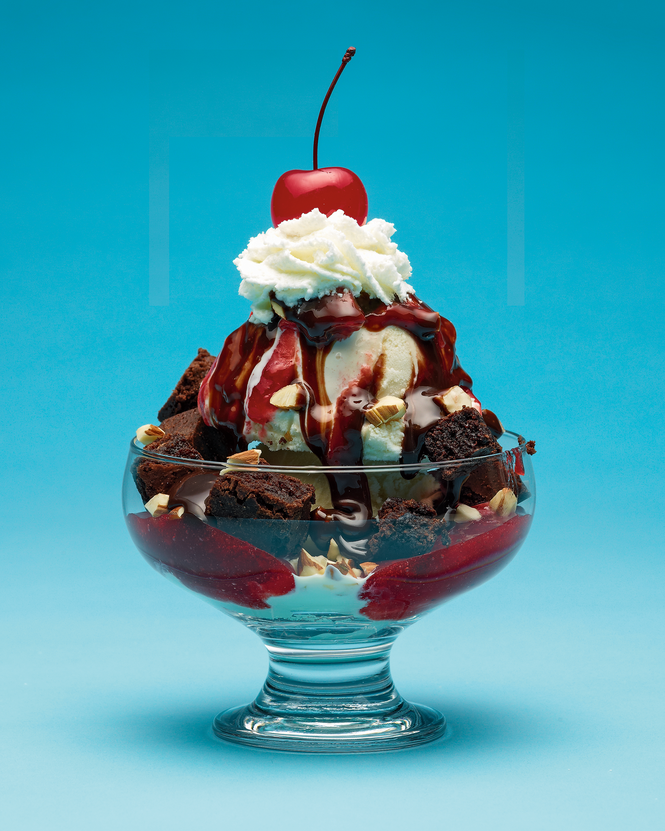
Back in 2018, a Harvard doctoral student named Andres Ardisson Korat was presenting his research on the relationship between dairy foods and chronic disease to his thesis committee. One of his studies had led him to an unusual conclusion: Among diabetics, eating half a cup of ice cream a day was associated with a lower risk of heart problems. Needless to say, the idea that a dessert loaded with saturated fat and sugar might actually be good for you raised some eyebrows at the nation’s most influential department of nutrition.
Earlier, the department chair, Frank Hu, had instructed Ardisson Korat to do some further digging: Could his research have been led astray by an artifact of chance, or a hidden source of bias, or a computational error? As Ardisson Korat spelled out on the day of his defense, his debunking efforts had been largely futile. The ice-cream signal was robust.
It was robust, and kind of hilarious. “I do sort of remember the vibe being like Hahaha, this ice-cream thing won’t go away; that’s pretty funny,” recalled my tipster, who’d attended the presentation. This was obviously not what a budding nutrition expert or his super-credentialed committee members were hoping to discover. “He and his committee had done, like, every type of analysis—they had thrown every possible test at this finding to try to make it go away. And there was nothing they could do to make it go away.”
.
 Levi Brown / Trunk Archive
.
.
Click the link below for the article:
.
__________________________________________
December 29, 2023
Mohenjo
Business, Food For Thought, Human Interest, Political, Science, Technical
amazon, business, Business News, current-events, Future, Hotels, human-rights, medicine, mental-health, research, Science, Science News, technology, Technology News, travel, vacation

Click the link below the picture
.
Justice Samuel Alito challenged voters to decide the future of abortion when he wrote the U.S. Supreme Court opinion overturning Roe v. Wade last year.
“We do not pretend to know how our political system or society will respond,” he noted as he threw out half a century of precedent.
Now, 17 months later, the court has an answer: Americans want to preserve or restore Roe-like protections. In contest after contest, including a major victory in Ohio this week, voters decisively chose abortion rights over limitations — even in deep-red pockets of the country.
When the right to abortion is on the ballot, it wins. It wins in red states that voted for President Donald Trump. It wins in counties President Joe Biden lost by more than 20 points. It wins when popular Republican officials campaign for it and when they ignore it. And it wins even when the outcome has no immediate effect on abortion access.
Support for abortion cuts across party lines, performing significantly better at the ballot box than Biden and other Democrats. In fact, abortion outruns Biden most in the most Republican areas, according to a POLITICO analysis of election results from the five states that have had direct votes on abortion rights. In those five states — California, Kansas, Kentucky, Michigan and Ohio — every county that voted for Biden also voted for abortion rights.
In the counties where Biden received less than 20 percent of the vote in 2020, the abortion-rights side has averaged 31 percent in referendums — an 11-point gap.
The pattern of cross-partisan support for abortion is so strong, the analysis found, that it suggests only a small handful of states, such as Wyoming or Alabama, might be uniformly conservative enough to vote against abortion if given the opportunity.
.
 Issue 1 supporters cheer as they watch election results come in, Tuesday, Nov. 7, 2023, in Columbus, Ohio. | Sue Ogrocki/AP
.
.
Click the link below for the article:
.
__________________________________________
December 29, 2023
Mohenjo
Business, Food For Thought, Human Interest, Political, Science, Technical
amazon, business, Business News, current-events, Future, Hotels, human-rights, medicine, mental-health, research, Science, Science News, technology, Technology News, travel, vacation

Click the link below the picture
.
Long before Pauline Clance developed the idea of the impostor phenomenon—now, to her frustration, more commonly referred to as impostor syndrome—she was known by the nickname Tiny. Born in 1938 and raised in Baptist Valley, in Appalachian Virginia, she was the youngest of six children, the daughter of a sawmill operator who struggled to keep food on the table and gas in the tank of his timber truck. Tiny was ambitious—her photograph appeared in the local newspaper after she climbed onto a table to deliver her rebuttal during a debate tournament—but she was always second-guessing herself. After nearly every test she took (and usually aced), she would tell her mother, “I think I failed it.” She was shocked when she beat the football-team captain for class president. She was the first in her family to go to college—a high-school counselor warned her, “You’ll be doing well if you get C’s”—after which she earned a Ph.D. in psychology, at the University of Kentucky. But, everywhere she went, Clance felt the same nagging sense of self-doubt, the suspicion that she’d somehow tricked everyone else into thinking she belonged.
In the early seventies, as an assistant professor at Oberlin College, Clance kept hearing female students confessing experiences that reminded her of her own: they were sure they’d failed exams, even if they always did well; they were convinced that they’d been admitted because there had been an error on their test scores or that they’d fooled authority figures into thinking they were smarter than they actually were. Clance began comparing notes with one of her colleagues, Suzanne Imes, about their shared feelings of fraudulence. Imes had grown up in Abilene, Texas, with an older sister who early on had been deemed “the smart one”; as a high schooler, Imes had confessed anxieties to her mother that sounded exactly like the ones Clance had to hers. Imes particularly remembered crying after a Latin test, telling her mother, “I know I failed” (among other things, she’d forgotten the word for “farmer”). When it turned out that she’d got an A, her mother said, “I never want to hear about this again.” But her accomplishment didn’t make the feelings go away; it only made her stop talking about them. Until she met Clance.
One evening, they threw a party for some of the Oberlin students, complete with strobe lights and dancing. But the students looked disappointed and said, “We thought we were going to be learning something.” They were hypervigilant, so intent on staving off the possibility of failure that they couldn’t let loose for even a night. So Clance and Imes turned the party into a class, setting up a circle of chairs and encouraging the students to talk. After some of them confessed that they felt like “impostors” among their brilliant classmates, Clance and Imes started referring to the feelings they were observing as “the impostor phenomenon.”
The pair spent five years talking to more than a hundred and fifty “successful” women: students and faculty members at several universities; professionals in fields including law, nursing, and social work. Then they recorded their findings in a paper, “The Impostor Phenomenon in High Achieving Women: Dynamics and Therapeutic Intervention.” They wrote that women in their sample were particularly prone to “an internal experience of intellectual phoniness,” living in perpetual fear that “some significant person will discover that they are indeed intellectual impostors.” But it was precisely this process of discovery that helped Clance and Imes formulate the concept—as they recognized feelings in each other, and in their students, that they’d been experiencing all their lives.
.

.
.
Click the link below for the article:
.
__________________________________________
December 28, 2023
Mohenjo
Business, Food For Thought, Human Interest, Political, Science, Technical
amazon, business, Business News, current-events, Future, Hotels, human-rights, medicine, mental-health, research, Science, Science News, technology, Technology News, travel, vacation

Click the link below the picture
.
New York Attorney General Letitia James’ lawsuit alleges Trump and top executives at his company, the Trump Organization, conspired to pad his net worth by billions of dollars on financial statements given to banks, insurers, and others to make deals and secure loans.
In a pretrial court filing, James’ office estimated that Trump exaggerated his wealth by as much as $3.6 billion. State lawyers contend Trump used the inflated numbers to get lower insurance premiums and favorable loan terms, saving at least $168 million on interest alone.
They’re seeking the return of more than $300 million of what they say are ill-gotten gains and a ban on Trump and other defendants from doing business in New York. Because it is a civil case, there is no possibility of prison time.
The lawsuit, which cuts to the heart of Trump’s image as a wealthy and successful businessman, went to trial in New York in October. Trump testified on Nov. 6. His three eldest children, Don Jr., Eric, and Ivanka, also testified. Closing arguments are expected in mid-to-late December.
.
 Trump
Trump
.
.
Click the link below for the article:
.
__________________________________________
December 28, 2023
Mohenjo
Business, Food For Thought, Human Interest, Political, Science, Technical
amazon, business, Business News, current-events, Future, Hotels, human-rights, medicine, mental-health, research, Science, Science News, technology, Technology News, travel, vacation

Click the link below the picture
.
The ideal female body of the past decade, born through the godless alliance of Instagram and the Kardashian family, was as juicy and uncanny as a silicone-injected peach. Young women all over the Internet copied the shape—a sculpted waist, an enormous ass, hips that spread generously underneath a high-cut bikini—and also the face atop it, a contoured hybrid of recognizably human mannequin and sexy feline. This prototype was as technologically mediated as the era that produced it; women attained the look by injecting artificial substances, removing natural ones, and altering photographic evidence.
Dana Omari, a registered dietitian and an Instagram influencer in Houston, has accumulated a quarter of a million followers by documenting the blepharoplasties, breast implants, and Brazilian butt lifts of the rich and famous. Recently, she noticed that the human weathervanes of the social-media beauty standard were spinning in a new direction. The Kardashians were shrinking. Having previously appropriated styles created by Black women, they were now leaning into a skinnier, whiter ideal. Kim dropped twenty-one pounds before the Met Gala, where she wore a dress made famous by Marilyn Monroe; Khloé, who has spoken in the past about struggling with her weight, posted fortieth-birthday photos in which she looked as slim and blond as a Barbie. All over Instagram, the wealthy and the professionally attractive were showing newly prominent clavicles and rib cages. Last spring, Omari shared with her followers the open secret behind such striking thinness: the Kardashians and others, she insisted, were likely taking semaglutide, the active ingredient in the medication Ozempic. “This is the ‘diabetic shot’ for weight loss everyone’s been talking about,” she wrote. “Really good sources have told me that Kim and Khloé allegedly started on their Ozempic journey last year.” Omari was about to start taking a version of the medication herself.
Ozempic, which is manufactured by Novo Nordisk, is part of an expanding class of drugs called GLP-1 receptor agonists, which have dramatically altered the treatment of diabetes and obesity. Ozempic is approved by the Food and Drug Administration only for the treatment of Type 2 diabetes—a condition that accounts for ninety per cent of all diabetes cases—and has been available since 2017. Its name is now shorthand for the entire category of weight-loss injections. In 2021, Novo Nordisk received approval for Wegovy, which has the same active ingredient as Ozempic but comes with a higher maximum dose, as an anti-obesity drug. On a year-end earnings call in 2022, Novo Nordisk cited worldwide market growth of fifty per cent, with almost forty thousand new Wegovy prescriptions being written every week.
.

.
.
Click the link below for the article:
.
__________________________________________
December 27, 2023
Mohenjo
Business, Human Interest, Political, Science, Technical
amazon, business, Business News, current-events, Future, Hotels, human-rights, medicine, mental-health, research, Science, Science News, technology, Technology News, travel, vacation

Click the link below the picture
.
One of my most heartening moviegoing experiences this year fell on July 24, the night I attended a press screening of Disney’s “Haunted Mansion” at the AMC Burbank 16. The movie was lousy, but the preshow in the lobby was thrilling. I first sensed something was up when, after several minutes of driving in circles, I managed to grab the last rooftop spot in a parking structure that rarely reached capacity — on a Monday night, no less. What was going on?
The answer became clear once I made my way into the multiplex and saw more moviegoers than I’d seen in some time. They milled in groups, poured out the doors, and scattered popcorn trails down ugly-carpeted hallways. Some wore pink (a lot of it). They jammed concession lines, bathroom lines, and possibly cellphone lines. (The modern scourge of mid-movie texting keeps growing worse.) Some of them, like me, were journalists who had dutifully showed up to watch Tiffany Haddish trade wisecracks with digital ectoplasm. Everyone else was there for a mighty spectacle of plastic, plutonium, or both: They were there for “Barbenheimer.”
Ah, “Barbenheimer” (a.k.a. “Science Guys and Dolls”), that happy accident of a blockbuster love child conceived by two rival studios, Warner Bros. and Universal, and by two filmmakers, Greta Gerwig and Christopher Nolan, who had succeeded in putting their highly personal stamps on improbable material. For the first time in a while, too, it clearly felt personal for a mass audience. For many of us, words could hardly describe the excitement of seeing people flock giddily to theaters en masse, seeking out pictures without the imprimatur of a Marvel or a DC universe, or even the more benign franchise imprint of an “Avatar” or “Top Gun” sequel. Perhaps originality at the movies wasn’t dead after all.
.
 (Matt Talbot / For The Times)
.
.
Click the link below for article:
.
__________________________________________
December 27, 2023
Mohenjo
Business, Food For Thought, Human Interest, Political, Science, Technical
amazon, business, Business News, current-events, Future, Hotels, human-rights, medicine, mental-health, research, Science, Science News, technology, Technology News, travel, vacation

Click the link below the picture
.
Beyoncé told us that girls run the world. This summer, she and Taylor Swift seemed to prove it.
Both Beyoncé’s “Renaissance” and Ms. Swift’s “Eras” tours have become cultural phenomena that have swept across social media and are poised to shatter real-world records. “Eras” could top $1 billion in sales, making it the first concert in history to cross that mark. Some estimates suggest that Beyoncé’s world tour could gross even more than that by the time it wraps in October.
It is the latest — and some economists think final — iteration of the “revenge spending” trend that took hold after the pandemic, in which people shifted their spending away from goods and toward experiences. Taylor Swift and Beyoncé fans have been shelling out on everything from secondhand tickets that cost more than a flight to Europe to fancy fingernails to match the singers’ wardrobe.
While event spending overall is still just recovering to pre pandemic levels, the marquee concerts this summer are spurring a lot of consumption.
The survey company QuestionPro estimates that Ms. Swift’s concert could generate some $4.6 billion in economic activity in North America alone, taking into account both stadium capacity and people’s reported spending plans on things like tickets, merchandise and travel. That would be roughly on par with the revenues the Beijing Olympics generated in 2008, after adjusting for inflation. Beyoncé’s shows are expected to spur $4.5 billion in spending, based on a separate QuestionPro survey.
Cosmeticians, Cruises and Cocktails
It isn’t just tickets that have motivated people to open their wallets. They are staying in hotel rooms, buying elaborate outfits, spending on flashy manicures, and attending sideline parties that are generating business and boosting spending in host cities.
Shade Hotel, in Manhattan Beach, Calif., held a Taylor Swift pre-party where guests sported costumes, wore Swift-themed temporary tattoos, and sipped on a signature “Lavender Haze” cocktail, a reference to one of the most popular songs on her latest album. Both the hotel and its neighbors reported surging demand that pushed up room rates and sold out many properties.
.


.
.
Click the link below for the article:
.
__________________________________________
December 26, 2023
Mohenjo
Business, Food For Thought, Human Interest, Political, Science, Technical
amazon, business, Business News, current-events, Future, Hotels, human-rights, medicine, mental-health, research, Science, Science News, technology, Technology News, travel, vacation

Click the link below the picture
.
The concert is in London. You’re watching it live from your home in Atlanta. What makes that possible is a network of subsea cables draped across the cold, dark contours of the ocean floor, transmitting sights and sounds at the speed of light through strands of glass fiber as thin as your hair but thousands of miles long.
These cables, only about as thick as a garden hose, are high-tech marvels. The fastest, the newly completed transatlantic cable called Amitié and funded by Microsoft, Meta, and others, can carry 400 terabits of data per second. That’s 400,000 times faster than your home broadband if you’re lucky enough to have high-end gigabit service.
And yet subsea cables are low-tech, too, coated in tar and unspooled by ships employing basically the same process used in the 1850s to lay the first transatlantic telegraph cable. SubCom, a subsea-cable maker based in New Jersey, evolved from a rope manufacturer with a factory next to a deep-water port for easy loading onto ships.
Though satellite links are becoming more important with orbiting systems like SpaceX’s Starlink, subsea cables are the workhorses of global commerce and communications, carrying more than 99% of traffic between continents. TeleGeography, an analyst firm that tracks the business, knows of 552 existing and planned subsea cables, and more are on the way as the internet spreads to every part of the globe and every corner of our lives.
You probably know that tech giants like Meta, Microsoft, Amazon, and Google run the brains of the internet. They’re called “hyperscalers” for operating hundreds of data centers packed with millions of servers. You might not know that they also increasingly run the internet’s nervous system, too.
.
 Zooey Liao/CNET
.
.
Click the link below for the article:
.
__________________________________________
Older Entries
Newer Entries
 James' World 2