There was a time when entering couples therapy was seen as the death knell of a relationship – a last-ditch attempt to save a partnership beyond salvation.
“People are afraid that once you’ve gone to couples therapy, you’re on a negative track,” says Dr Matthew Siblo, a licensed professional counselor in Washington, DC.
Now, couples therapy is more commonplace. One 2023 survey found that 37% of US couples who live together have been to couples therapy. In 2022, nearly 30% of UK therapists reported a rise in the number of inquiries for couples counseling.
It’s also more successful. “Success, how we define it, is the couple establishing a closer friendship, a closer sense of connection … and better conflict management,” says Dr Julie Gottman, a clinical psychologist and co-founder of the Gottman Institute. According to Gottman, the success rate of couples therapy used to be about 17%. Now, the Gottman Institute’s methods have about a 75% success rate.
But what about when a relationship truly seems to be on its last legs? Will a couples therapist ever tell a pair to break up?
“I would not, personally,” says Siblo.
Siblo says he has never directly told a couple that he thinks they should break up, because he doesn’t think it would be appropriate or productive.
“I’m there to create a space of greater understanding,” he says. If that leads to people deciding to separate, Siblo can help them navigate that process. But telling a couple their relationship is not viable risks distracting them from the issues at hand; the focus becomes the therapist’s opinion rather than the pair’s relationship. Not only that, it could end up pushing the couple closer together by uniting them against a common enemy: the therapist.
“It would backfire,” Siblo says.
Telling clients what to do puts them in an “infantilized position”, says Gottman. If a couple is at a complete loss on how to move forward, Gottman might present them with several different options – including separation, in some cases – and talk them through each.
The goal is to empathize and disarm some of the defensiveness or critical ways of communicating
Gottman has intervened more directly in certain situations, she says, including cases involving domestic violence. There are two types of domestic violence, Gottman explains.
Roughly 80% is “situational”, meaning both people are involved and the violence is mild to moderate – for example, pushing, shoving or slapping. In these cases, Gottman says, “both people really want to change” and “they both might feel deeply ashamed and guilty”. Situational domestic violence is often the result of both partners getting emotionally “flooded” – going into fight-or-flight mode – during conflict. This dynamic can be successfully resolved with proper couples therapy, Gottman says.
But in the 20% of cases that are “characterological” – meaning there’s a clear victim and a perpetrator who takes no responsibility for the violence and inflicts major injuries – Gottman says intervention is appropriate.
“It’s crucial that the couple break up and the [victim], typically the wife, get somewhere safe,” she says.
In these instances, Gottman says she talks to the couple separately, and works with the victims on a safety plan to extricate themselves and any children from the relationships.
.
Couples therapy has become more commonplace; a 2023 survey found that 37% of US couples who live together had tried it. Illustration: Angelica Alzona/Guardian Design
CLIMATEWIRE | The Trump administration is canceling a popular grant program that has given states and communities billions of dollars to protect against natural disasters, according to an internal document obtained by POLITICO’s E&E News.
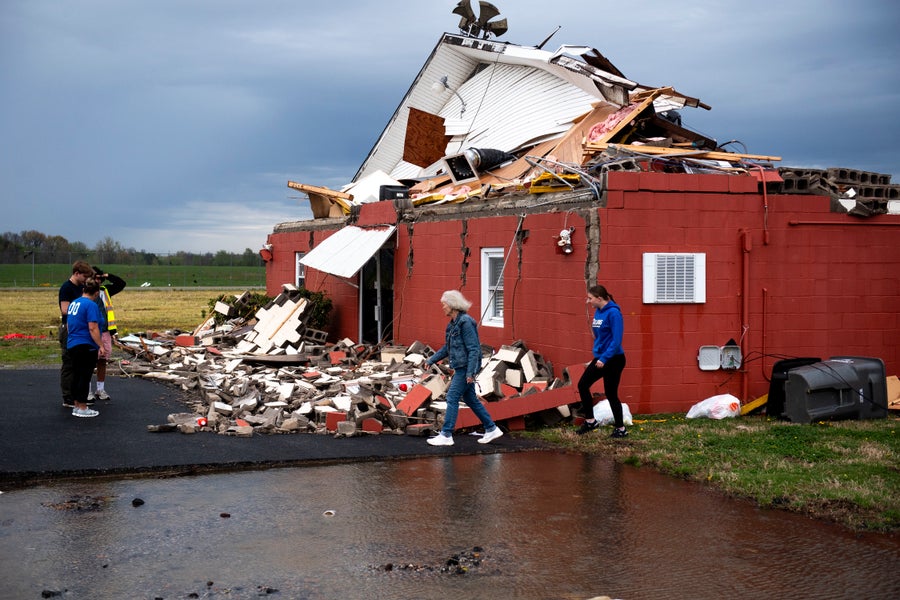
Federal Emergency Management Agency acting Administrator Cameron Hamilton wrote in a memo Thursday that the agency will not allocate the $750 million that was planned this year for Building Resilient Infrastructure and Communities grants. The BRIC program funds local projects that reduce damage from flooding, tornadoes, and other weather-related events.
FEMA also will stop funding projects that were previously approved for BRIC grants and are still underway, Hamilton wrote.
The cancellation is the Trump administration’s latest blow to FEMA, which provides tens of billions of dollars a year in disaster aid and grants. The administration has also frozen $10 billion in disaster aid for nonprofits, including hospitals, as it scrutinizes FEMA programs for potentially helping undocumented migrants.
Homeland Security Secretary Kristi Noem has floated shrinking or dissolving the agency, saying in March, “We’re going to eliminate FEMA.”
Although the agency has faced criticism — notably from President Donald Trump — for its response to major disasters, BRIC drew wide praise as an effort to make communities better able to withstand natural disasters and climate impacts.
BRIC has distributed $5 billion in grants since it began in 2020 during the first Trump administration, FEMA records show. The grants typically pay 75 percent of a project’s cost and have given some projects as much as $50 million.
The program was so popular that FEMA had to reject nearly 2,000 applicants seeking $13 billion in BRIC grants. The agency itself touts BRIC for helping states, localities, and native tribes “reduce their hazard risk” and “build capacity and capability.”
But Hamilton wrote Thursday that “BRIC grants have not increased the level of hazard mitigation as much as desired, and may supplant state, local, tribal and territorial capital investment planning.”
“With that in mind, I am providing new direction for the BRIC Program,” Hamilton added in his two-page memo.
Former senior FEMA officials expressed concern over the decision to stop releasing previously approved BRIC grant money.
“All of those things that were selected but had not begun will get canceled,” said one former senior official who asked not to be named to avoid alienating FEMA. The cancellation could apply to entire projects or to the second half of a project that is halfway completed.
“That will crush projects that are underway,” a second former senior FEMA official said.
Although BRIC is supported by Congress and coveted by states, the program has become a target of the Trump administration because of its focus during the Biden administration on addressing climate change and promoting equity.
.
Parishioners and community members look over damage after a tornado struck the Christ Community Church on April 3, 2025, in Paducah, Kentucky. Kentucky Governor Andy Beshear issued a state of emergency ahead of the storms that are expected to cause flash flooding and tornadoes across Kentucky. Michael Swensen/Getty Images
When I was pregnant with my daughter, my husband and I were already discussing being “one and done.” We’re both the oldest of three siblings in our respective families and knew the stressors that multiple kids placed on our parents. Yet, the door wasn’t totally shut on having more than one child.
Until I lost my job when I was six months pregnant.
The unexpected financial hardship was overwhelming. We were preparing to move into a larger apartment and were shocked by the high prices of baby essentials. We were already concerned about affording a baby with two incomes, so losing one without warning was our worst nightmare. Although my career and our finances eventually recovered, it became clear that we could comfortably only afford one child, especially given the uncertain job market and economy.
In the 10 years since I’ve had my daughter, I’ve encountered more and more parents, particularly millennials, who are choosing to have only one child. This trend may contradict recent research on people’s ideal family structure: a 2023 Gallup poll found that 47% of U.S. adults believe one or two children is the ideal family size, while 45% prefer three or more children. What’s more, the preference for larger families (three or more children) is currently at its highest point since 1971.
But the reality of what it costs to raise a child in the U.S. today makes plans for multiple children unattainable for many parents. On a positive note, there’s a silver lining to having one child, even if you wanted more.
The Rising Cost of Raising Children
The fertility rate in the U.S. has steadily declined since the Great Recession of 2007, according to Kent Bausman, PhD, professor of sociology at Maryville University in St. Louis. This pattern has been consistent for both millennials and Gen Z (who entered prime childbearing age in 2015).
In the two decades prior to the recession, the fertility rate in the U.S. remained relatively stable at just above replacement levels, fluctuating from 2.08 in 1990 to 2.12 in 2007.2However, the fertility rate has fallen below replacement levels every year since 2010 and has continued a steady decline from 1.9 in 2010 to 1.7 in 2024.
Dr. Bausman believes structural factors, such as skyrocketing housing costs, rising medical expenses, and the high price of child care, are playing a significant role in the decision to have one child.
“Child care was not as substantial a portion of the household budget for baby boomers and early Gen Xers,” Dr. Bausman explains. “For many millennials, having multiple children feels financially impossible.”
Estimates suggest the annual cost of raising a child in 2023 ranged from $15,512.52 to $17,459.43. For families with multiple children, the estimated cost per child ranged from $12,350 to $13,900 per year. Dr. Bausman adds the cumulative financial burden of another child is often comparable to adding an additional mortgage.
Lack of support
The high cost of living and child care is compounded by the lack of paid parental leave in the United States.
“Women are participating in the workforce more than ever before and their participation is needed for our economy to grow at a healthy pace,” says Setu Shah, founder and CEO of Financial Doula. “However, without proper paid leave and affordable child care, many parents are unable to take the financial burden of raising another child due to the sacrifice they would need to make to their careers, income, and/or lifestyle.”
Child care can be more expensive than rent and in-state college tuition in many states.6 Shah says many families are dipping into savings, taking on debt, and cutting out other major expenses just to afford it.
A mental load increase
Then there is the mental load of raising children. The unpaid, and typically invisible, cognitive labor that comes from handling a household has only intensified in recent years. That’s particularly due to increased demands and societal pressures that are greatly fueled by social media.
Neuroscientists have observed for the first time how structures deep in the brain are activated when the brain becomes aware of its own thoughts, known as conscious perception.
The brain is constantly bombarded with sights, sounds, and other stimuli, but people are only ever aware of a sliver of the world around them—the taste of a piece of chocolate or the sound of someone’s voice, for example. Researchers have long known that the outer layer of the brain, called the cerebral cortex, plays a part in this experience of being aware of specific thoughts.
The involvement of deeper brain structures has been much harder to elucidate, because they can be accessed only with invasive surgery. Designing experiments to test the concept in animals is also tricky. But studying these regions would allow researchers to broaden their theories of consciousness beyond the brain’s outer wrapping, say researchers.
“The field of consciousness studies has evoked a lot of criticism and scepticism because this is a phenomenon that is so hard to study,” says Liad Mudrik, a neuroscientist at Tel Aviv University in Israel. But scientists have increasingly been using systematic and rigorous methods to investigate consciousness, she says.
Aware or not
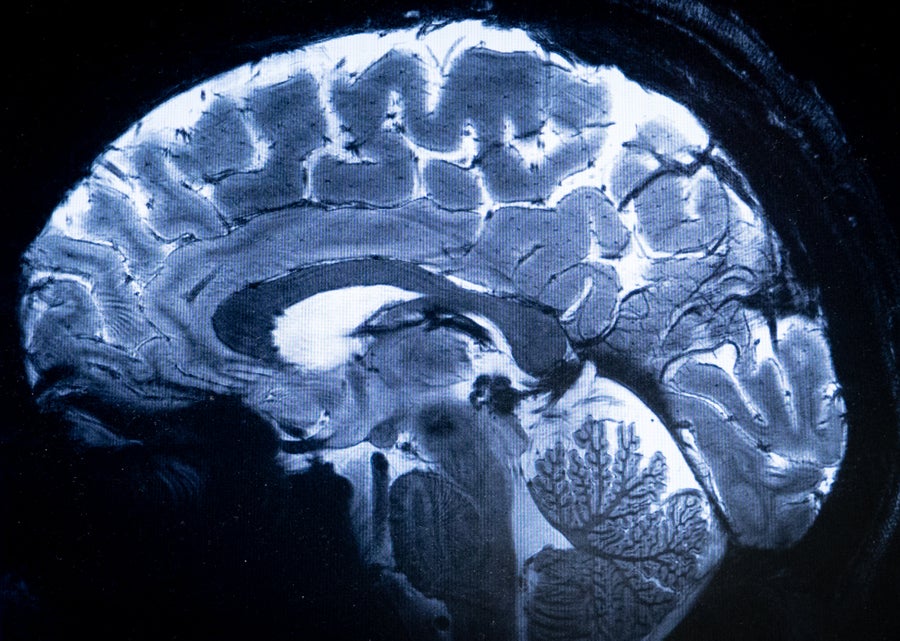
In a study published in Science today, Mingsha Zhang, a neuroscientist at Beijing Normal University, focused on the thalamus. This region at the centre of the brain is involved in processing sensory information and working memory, and is thought to have a role in conscious perception.
Participants were already undergoing therapy for severe and persistent headaches, for which they had thin electrodes injected deep into their brains. This allowed Zhang and his colleagues to study their brain signals and measure conscious awareness.
The participants were asked to move their eyes in a particular way depending on whether they noticed an icon flash onto a screen in front of them. The icon was designed so that the participants would be aware of its appearance only about half of the time.
During the tasks, the researchers recorded neural activity in multiple regions of the brain, including the thalamus and the cortex. This is the first time that such simultaneous recordings have been made in people doing a task that is relevant to consciousness science, says Christopher Whyte, a systems neuroscientist at the University of Sydney in Australia. The work “is really pretty remarkable,” he says, because it allowed the team to look at how the timing of neural activity in different regions varied.
Gatekeeper
The activity in the participants’ thalamus and prefrontal cortex when they were aware of the icon’s appearance was markedly different from the activity when they were not. The activity when they were aware of the icon appeared earlier and was stronger in sections of the thalamus than in sections of the cortex, and seemed to be coordinated across the two areas. This suggests that the thalamus acts as a filter and controls which thoughts get through to awareness and which don’t, says Mac Shine, a systems neuroscientist at the University of Sydney.
.
An MRI image of the human brain. Alain Jocard/AFP via Getty Images
A sunken ‘pyramid’ located near Taiwan has researchers rethinking everything they know about ancient civilizations. Discovered near the Ryukyu Islands of Japan in 1986, the Yonaguni monument is a striking structure with sharp-angled steps and a pyramid shape. Sitting just 82 feet below sea level, it stands roughly 90 feet tall and is made entirely of stone, which has led many to believe it might be a man-made structure.
However, tests of the stone reveal it to be over 10,000 years old, meaning that if this pyramid was built by humans, it would have been constructed before the region sank underwater—more than 12,000 years ago. This would place it several thousand years older than known ancient monuments such as the Egyptian pyramids and Stonehenge. The discovery challenges existing theories about the timeline of human civilization, suggesting the possibility of an advanced society predating known ancient cultures.
Dr. Sam Wainwright was caring for new moms when he noticed a major gap in the health care system.
As an internist and pediatrician, he ran a University of Illinois Health clinic providing primary care and resources for at-risk mothers and their children. When interviewing new moms about their needs, many responded with: “This extra support is really great, but could you see my husband? … Could you see my baby’s father?”
Wainwright realized that to truly help moms at the clinic, they needed to treat postnatal depression in dads, too. So he piloted an innovative study on screening fathers.
“The American Academy of Pediatrics tells us that we should be screening moms, our moms are telling us that we should be talking to dads, so what would it look like to start … integrating fathers into the care we provide?” Wainwright said.
Christine Kowaleski, a psychiatric nurse practitioner at Crouse Health and co-chair of the New York chapter of Postpartum Support International (PSI), receives similar requests. She has found that some men choose not to speak up because they are so focused on providing for their family.
“[Postpartum] is all about mom and baby for dads,” she said. “There’s only so much emotional space in a room, and if mom is taking up that space … dad is kind of left out of that room.”
New dad depression tends to be triggered by difficult situations like trouble conceiving, traumatic births, NICU stays, or supporting mom’s mental health. Research shows at least 10% of fathers are affected, but both Kowaleski and Wainwright say that the real number might be higher. To understand why it gets overlooked, we talked to two dads who lived with it, and we asked the experts to explain the subtle warning signs.
Symptom #1: Acting Withdrawn, Separated Or Distant
When a mom and newborn get attention, dad can feel pushed aside. With no positive reinforcement, he might become insecure in his new role.
“Moms bond very quickly with the baby, but it takes dads about two months, so for those two months they are kind of outside looking in,” said Kowaleski.
One father we spoke to, who wants to remain anonymous, started feeling distant on the day his twins were born. Twin Dad was at the hospital waiting to be brought in for his wife’s routine C-section. When the medical staff came, they said an emergency C-section was performed and the twin boy and girl had already been delivered.
“I missed it all,” he said. “I didn’t get to support and say … ‘You’re doing great!’ I didn’t get to cut an umbilical cord. I didn’t get any of the experiences that you see in the movies or TV.”
When my older son Jack, was in high school, he accepted a summer job selling solar panels door-to-door. My first reaction was to tell him not to do it. I felt protective—afraid of the rejection he would face on doorsteps all summer long. I just couldn’t see how my thoughtful son, a good athlete and straight A student, could cope with so much failure.
As a parent, it’s natural to want to shield your kids from failure. But we often hover over our kids in what are arguably low-stakes situations, inadvertently robbing them of essential learning experiences and causing anxiety rather than the confidence we had intended to build.
Instead, we can learn to let kids fail well.
To be fair, we are in a bind: if we overprotect, we are ridiculed as helicopter parents, but if we underprotect, we suffer the potentially catastrophic consequences of a child’s immature decision-making. Making the job even harder, every few years the parenting pendulum seems to swing: the three-martini playdate replaces the anxious co-piloted playdate and back again. It’s easy to see why parents are torn: Should you let children make their own mistakes, or stay close by, removing obstacles, limiting risks, and preventing failure? Struggling to manage the bind, parents suffer. And so do their kids.
But there is a path forward that avoids either/or thinking and helps kids build good judgment to accompany a learning-oriented, adventuresome spirit. It supports kids in pursuing the right kind of failures, while helping them avoid danger. Extrapolating from my organizational research and personal experience, I think it’s a parent’s responsibility to help children develop the failure muscles they need to stretch and learn, and to grow into responsible members of society. To do this, we need to examine two dimensions of failure science: assessing the context for risk and understanding that failures are not all alike.
Consider three kinds of failure I’ve identified in my research: basic, complex, and intelligent.
Basic failures have single causes—usually a simple mistake. They are preventable. This is why we childproof our homes when children are small, and ensure that medicine bottles can’t be opened without the strength to twist and pinch. Basic failures don’t bring new knowledge, and most of us would be better off avoiding them (such as by paying attention when we’re following a recipe). But they’re part of the experience for any child learning to master a new topic or skill, and it’s good to remind children to take the time to learn from mistakes, so they can keep improving.
Complex failures have multiple causes—each innocuous on its own—that come together to produce havoc. You forget to charge your cell phone, get stuck behind an overturned truck on the highway, can’t reach your spouse, and miss the day care pick up. Most complex failures can be prevented with vigilance, but we’ve all had days where everything goes wrong, and these kinds of failures will continue to slip through in our increasingly complex and interconnected world. We should learn from them and move on.
The intelligent failures are the ones that matter here, the ones parents should let happen to help children thrive.
It starts with learning to reframe failure as a source of discovery and personal development. I believe that most of us, to live the fullest lives, should experience more failures, not fewer. Whether it’s tennis champion Roger Federer winning only 54 percent of the thousands of points he played in his illustrious career (proving that, as he put it, “even top-ranked tennis players win barely more than half of the points they play”) or top chemistry professor Jennifer Heemstra saying that 90 percent of the experiments in her lab end in failure, the most successful among us have long demonstrated that you have to be willing to fail. So why do so many parents feel a need to protect their children from failure?
It was 2016, and I’d been a zookeeper for seven years. I lived with my partner and two stepchildren in a Victorian terrace house in Bristol. We’d met when her kids were four and eight, so I had not experienced the early baby stages, the sleepless nights, nappies, and bottle-feeding.
But that was about to change.
On 15 March, I parked my car outside the house as usual, but rather than bowling inside to shower and eat, I unclipped the car seat and carried a baby gorilla into the lounge. Afia had been born by emergency C-section at Bristol zoo after her mum, Kera, developed pre-eclampsia. I first took her home when she was four weeks old.
On the couch, she nestled in the crook of my arm and clutched my thumb with a delicate fist of wrinkled grey fingers. The trust in her dark eyes snapped awake an instinctive devotion in me – the foundation of the bond that grew between us.
I worked with a family group of seven western lowland gorillas at the zoo. Classified as critically endangered, they are at imminent risk of extinction in the wild. The captive population is managed collectively across Europe by a specialist team: zoos don’t own the species they keep, or sell them, but rather they maintain the genetic diversity within the population by moving animals from one collection to another. I followed industry-wide husbandry guidelines, but what we were doing with Afia had never been tried in the UK before. As a gorilla keeper, I was now part of the team that would hand-rear her.
Hand-rearing is a rare part of zoo keeping, and the goal is always to reunite the baby with its own kind as quickly as possible. As gorillas rely on their mother’s milk for three years, the aim with Afia was to try to get her back with her mother or, failing that, train one of the adult females to become her surrogate mum. Afia would need to be acting like a normal gorilla infant by the time we introduced her into the troop; if we could achieve this within a year, she wouldn’t remember travelling in the car each night or sleeping in a bed with a duvet.
Baby gorillas develop more quickly than humans, so my parenting ride lasted just seven months. I wore a string vest, to replicate a gorilla’s fur, as the first thing Afia needed to learn was to hang on to me wherever I went. She slept on my chest at night, clung to me in fear at unexpected noises, and I helped with her first stiff-legged steps.
y day, we spent time with the adult gorillas, particularly with Kera, Afia’s mum. Adult gorillas are dangerous animals, which meant we would never go into the enclosure with them. Kera remained separated from the rest of the group and struggled to recover from the C-section. Our interactions were through grilled windows and doors in the gorilla house, but Kera was so sick and unresponsive that no maternal bond with Afia could be formed.
Soon, Afia began to ride on my back, furry arms clamped around my neck. She could climb and was trying to master swinging from one rope to another. I recognised her facial expressions – sleepy, solemn, inquisitive – and she had full trust in me, knowing that I would keep her safe. At six months, she was running around the lounge and throwing her toys about. My favourite expression was her play face, a grin that we both knew meant diving off the sofa and wrestling. I would take up my regular spot on the floor and wait for Afia to push the coffee table up against the couch so she could climb on to it more easily. She would spend the next hour leaping on to me or the cushions she’d chucked nearby.
My own family group had to be hands off, as part of the hand-rearing protocol. The kids mentioned later they felt waves of irrational jealousy. When I was rolling around on the floor, Afia chuckling with gorilla laughter, my partner said: “I can see now what sort of parent you’d have been for the kids at that age.”
We ate dinner together as a family, Afia on my lap, enthusiastically drumming her hands on the kitchen table and making grabs for the cutlery. The gorilla troop eats together at the same time, so sharing meals needed to be the norm for Afia, and she would look around the table at us all, squishing fistfuls of steamed sweet potato through her fingers. After dinner, she’d slump across me on the couch, asleep, briefly waking up for a bottle-feed before bed, where she would snuffle and belch cheesy milk breath over me. In bed, Afia had started off sleeping on my chest, but now she was older, she would slide off to snuggle next to me, or roll over and throw a hairy arm over my partner instead.
.
My parenting ride … Alan and Afia in 2016. Photograph: Ryan Walker
Spring has finally arrived in the U.S., bringing its bright spectacle of budding trees and migrating birds, along with more subtle but equally important changes—among them, the first emergence of native bees.
But “native bees” doesn’t actually include the insect most of us picture upon hearing the word “bee.” That yellow-and-black-striped, hive-living, honey-making critter—formally Apis mellifera—hails from Europe. Farmers rely on these tiny imports as, essentially, livestock animals that pollinate food crops and produce honey. But their wild, native counterparts are something completely different.
“Take the majority of what you know about honeybees and throw it away,” says Sydney Shumar, a biologist and manager of the U.S. Geological Survey’s Bee Lab. “It does not apply to our native bee friends.” To celebrate spring, Scientific American spoke with Shumar about North American native bee species’ variety, differences from honeybees, and importance in their ecosystem.
Do I have this right that there are more than 4,000 native bee species in the U.S.? How is that number so big?
The reason why there are so many native bees is you have all these different little things evolving to pollinate groups or species of plants. So they all have very different characteristics. When you look at pictures of our native bees, they look totally different than a honeybee, and you have huge ranges of color, size, how they collect pollen and how they nest.
There are no native bees in North America that live in a hive or produce honey. Most of them live in very small family units, or you could think of it as more like an apartment where you might have families aggregating together.
“If you go anywhere in the United States, you are bound to find some native bees.” —Sydney Shumar, biologist
None of them produce honey; none of them produce wax; none of them make big structures like you would think of with a honeybee. Some are stem-nesting; most of them are ground-nesting, so when you’re walking around in the winter, you are walking on top of millions of ground-nesting bees that are just laying low until it’s time for them to come out with spring.
Is this true even in cities? Do they have preferences or types of ground that they need?
A lot of our native bees are specialists, so they do like a particular type of soil; we have a couple that particularly like sand. In cities and more urban areas, you have a lot of impervious surfaces, so that is going to make it harder for them. But if you have loose soil, if you have native plants, you’re most likely going to find native bees.
Are there any U.S. ecosystems that don’t have native bees, such as deserts or something?
No, we worked on a project on xeric habitat, and when you think of xeric, you think of dry; you think of nothing blooming, just arid—and the researchers caught hundreds—hundreds—of bees. If you go anywhere in the United States, you are bound to find some native bees.
Are there any species or groups that you find particularly cool?
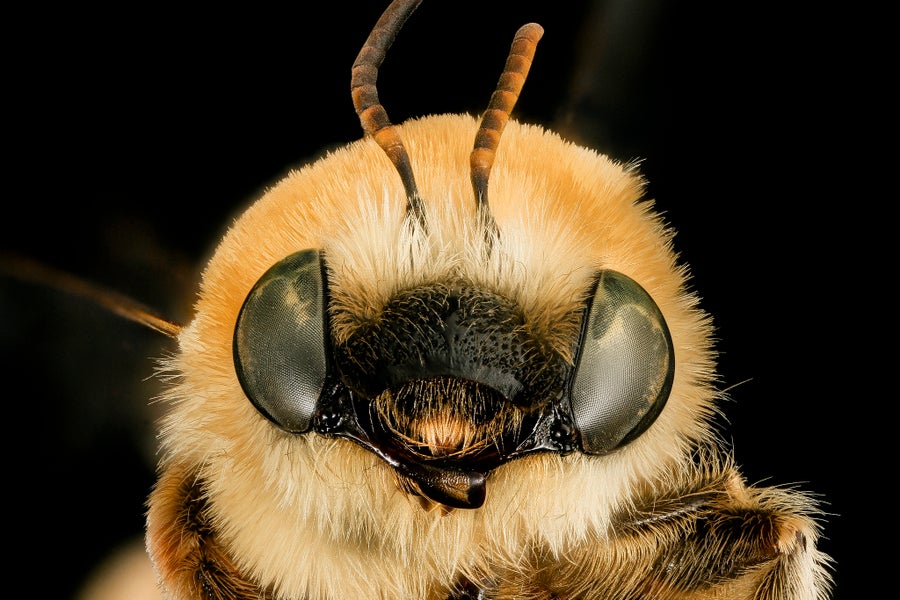
Besides all of them? I am very fond of this group that’s called squash bees. They’re medium-sized; they’re very cute and fluffy. But as you’d guess, they are squash specialists. They come out super early in the morning; you have to get there at first light. And if you have squash plants, then you most likely have them. The scientific name of the most widespread species is Peponapis pruinosa, and you’ll find them just relaxing in the big squash bloom, usually early in the morning.
.
A Martinapis luteicornis bee found in the desert in Cochise County, Arizona.Amanda Robinson//USGS Bee Lab via Flickr
Archaeologists digging under the Church of the Holy Sepulchre in Jerusalem have found signs of an ancient garden that align with biblical descriptions.
Many Christians believe the church is where Jesus was buried and it continues to be a major pilgrimage site.
Now, the discovery of 2,000 year-old olive trees and grapevines are believed to reflect accounts in the Gospel of John of where Jesus was crucified and laid to rest.
“Now in the place where he was crucified there was a garden, and in the garden a new tomb in which no one had yet been laid,” the Gospel of John states.
“The archaeobotanical findings have been especially interesting for us, in light of what is mentioned in the Gospel of John, whose information is considered written or collected by someone familiar with Jerusalem at the time,” Professor Francesca Romana Stasolla told the Times of Israel.
“The Gospel mentions a green area between the Calvary and the tomb, and we identified these cultivated fields.”
Excavations have since been as the churches expect crowds of pilgrims over Easter celebrations.
The 2022 project marked the first major restoration since the 19th century and was headed by a Sapienza University of Rome professor.The restoration had to be agreed on by the Roman Catholic, Armenian, and Greek Orthodox custodians. It also needed an Israel Antiquities Authority licence.“With the renovation works, the religious communities decided to also allow archaeological excavations under the floor,” Professor Stasolla said.
The team found layers dating from the Iron Age under the basilica, including pottery, oil lamps, and soil samples.
The presence of pre-Christian artefacts suggests the land changed over time from a quarry, through cultivated land to a burial site over time.
The Independent is the world’s most free-thinking news brand, providing global news, commentary and analysis for the independently-minded. We have grown a huge, global readership of independently minded individuals, who value our trusted voice and commitment to positive change. Our mission, making change happen, has never been as important as it is today.
.
Many Christians believe the church is where Jesus was crucified and buried and it continues to be a major pilgrimage site (AFP/Getty)
Film and Writing Festival for Comedy. Showcasing best of comedy short films at the FEEDBACK Film Festival. Plus, showcasing best of comedy novels, short stories, poems, screenplays (TV, short, feature) at the festival performed by professional actors.

 Couples therapy has become more commonplace; a 2023 survey found that 37% of US couples who live together had tried it. Illustration: Angelica Alzona/Guardian Design

:max_bytes(150000):strip_icc()/PARENTS-mom-with-daughter-one-and-done-be4b089f38d644a19c8646b2ea68ced8.jpg)



 AzmanL/Getty Images