For more than half a century planetary exploration and space science have been a hallmark of American achievement and excellence. From Mercury to Pluto and beyond, we have gained enormous understanding about planetary origins and evolution. We have learned about the atmospheric, surface and interior dynamics of other worlds. All those discoveries have carried implications for what’s happening here on Earth. In classrooms around the world, exploring new worlds and probing the mysteries of the universe is an emblem of America.
But that may now end; the Trump administration is poised to take the chainsaw to space science, just as it has to almost everything else in the U.S. science portfolio. Trump officials are planning huge, destructive cuts for space science, according to news reports, likely killing all new mission plans for this decade, including the long-sought, all-important Mars Sample Return mission. This flight was meant to return now-waiting samples from the red planet.
China is already leading the way to the moon and Mars with robotic vehiclelike rovers and sample returns and is also likely to do so with human missions. The U.S. human space program, meanwhile, is bogged down with a stumbling Artemis program, built with a convoluted architecture marked so far by failures and delays in nearly every major component. The latest is the repeated failure of SpaceX’s Starship, which twice now has exploded in flight. Reminiscent of the 1980s, when we paused planetary exploration after the success of Viking and launch of Voyager 1 and 2, the U.S. has iced new Mars missions, with plans to cancel Mars Sample Return, and redirected our once great lunar capability to small experimental landers built by inexperienced new companies. Beyond specific missions, the loss of space science research capability will be a generational calamity.
So what? Does it matter if the U.S. is No. 2 on other worlds? Space is a pretty distant arena—even more distant if it is the moon, Mars and beyond you are thinking of. Compared with the “America First” emphasis on AI chips, rare earth metals, tariffs and trade wars, promoting Teslas and cutting foreign aid, space is a minor political and economic player. But we are becoming No. 2 in such areas of focus too (see China’s advances in DeepSeek AI, BYD electric cars and developing hydropower in Africa). Our failures on Earth are not unrelated to our narrow and shortsighted vision for the moon and Mars, and the broader dismissal of science.
Focusing inward is what China’s Ming dynasty did in the 15th century and the Portuguese and Dutch did in the 18th. Our step back from exploration of new worlds is one deep into mediocrity or even obscurity. It’s tied together—the Apollo program was not about a race to the moon; it was about a race between geopolitical powers to prove their economic and technological superiority to the world. So too now. Africans will feel the U.S. retreat as we withdraw humanitarian and infrastructure aid. They will also feel the U.S. retreat from science and exploration just as China goes forward with theirs.
I don’t think it matters to Africans if it is Chinese or Americans there, engaged and helping them. I also don’t think it matters to the moon or Mars whether it is China or the U.S. building things there. But if we accept mediocrity and turn our focus inward, it will matter to us, especially to our children. The isolationist or island mentality expresses to our children and to the world that we have given up on ambition and growth and understanding the universe, that we will be satisfied with being less than we can be.
.
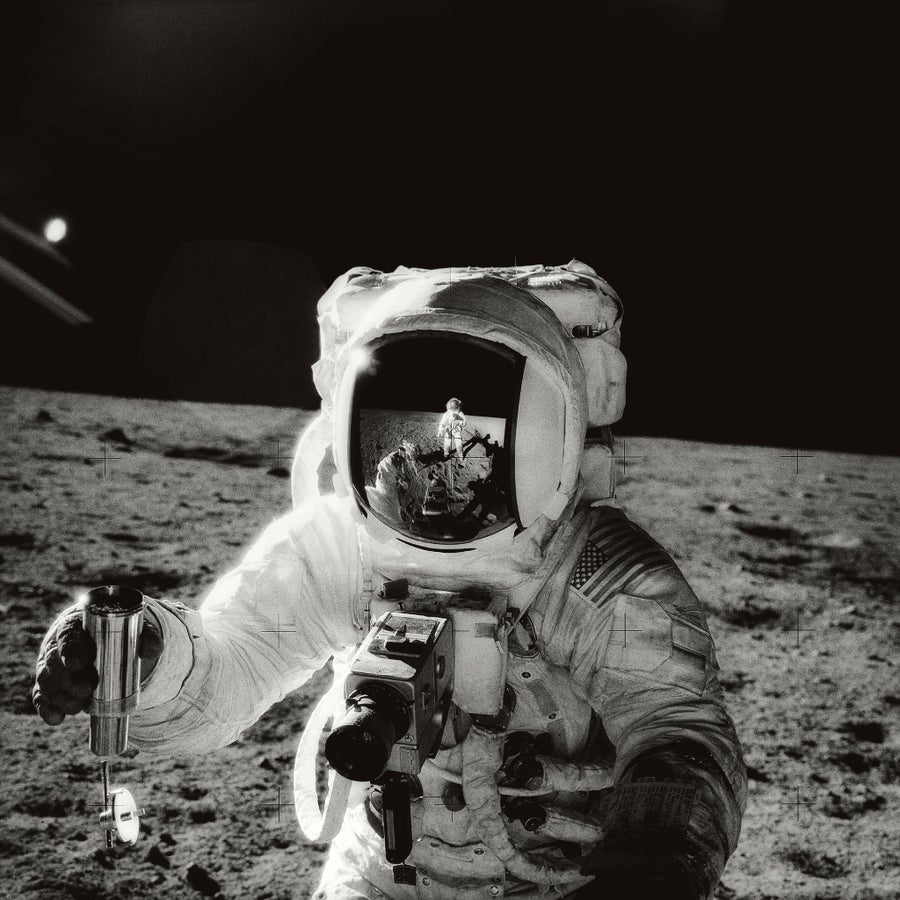
Apollo 12 astronaut Alan Bean during the second moonwalk EVA. NASA/Recall Pictures/Alamy Stock Photo
As the famous saying goes, “The brightest flame burns the quickest“. There are plenty of successful entrepreneurs who quickly rise to financial success, only to lose everything just as abruptly.
Life in the fast lane is not without its speed bumps, and here are some of the people who went from rags to riches – and then vice-versa.
The Millionaires & Billionaires Who Lost It All
1. Jordan Belfort
The once was Multi-Millionaire stockbroker had it all. Yachts, planes, women, midget throwing parties & drugs where just a few of the high life activities on Jordans agenda. Jordan was reported to be making $250 Million at the age of 25 through his stockbroking firm Stratton Oakmont which functioned like a boiler room and later served as inspiration for the creation of the film also known as ‘Boiler Room‘, starring Vin Diesel & Giovanni Ribisi. Jordan Belfort’s multi millions where stripped from him when the FBI pinned him for securities fraud and money laundering.
After Jordan Belforts release from jail and paying back the 100 millions of dollars he owed other stock brokers Jordan decided to turn his life around releasing the New York Best Seller ‘Catching The Wolf Of Wall Street‘ which was written by Jordan himself about his Wall Street sagas and his run ins with the law. This Book has been developed into a movie which will be directed by Martin Scorsese starring Leonardo DiCaprio as Jordan Belfort. Jordan also has toured the world discussing how to achieve success without sacrificing integrity and ethics.
The lesson here is that there is always room for change, if Jordan can change his life for the good, you can too.
2. Kim Dotcom
This German internet millionaire is most popularly known as the founder of Megaupload, an online file sharing service. Kim Dotcom’s fall from grace isn’t really because of bad business decisions as much as he was involved in a lot of suspected criminal activities. While his website is being accused of copyright infringement, he’s also been charged with insider trading, embezzlement, and computer fraud. The problem with Kim is not only that he couldn’t handle his rock star lifestyle, but also the fact that he amassed his fortune through suspected illegal means.
UPDATE: Kim Dotcom has returned with a more legit way of sharing with his new online company MEGA. We will keep you updated with his progress. Good on you Kim for having another go and doing things right.
3. Allen Stanford
Currently in jail and awaiting trial, this former billionaire was charged with running a multi-billion dollar Ponzi Scheme. Having acted as the Chairman of Stanford Financial Group, he’s been accused of masterminding a financial conspiracy to rob investors out of their hard-earned money and misused their funds to sustain his extravagant lifestyle. Like Kim Dotcom, he tried living the good life at the expense of others and is now reaping the consequences of his actions. As of today, Allen Stanford is taking a number of medications for his depression and is even partially blind after an inmate assaulted him.
4. M.C. Hammer
MC Hammer rose to fame in the 1990s and earned around $30 Million during the peak of his musical career. Shortly after his success, M.C. Hammer wasted no time squandering his fortune on mansions, sharing money with friends and expensive toys. Before the decade was over, he filed for bankruptcy due to an enormous debt. He’s a classic example of someone earning his wealth too fast and too soon, which made it hard for him to handle his finances. Now living as a pastor in California, he learned the hard way that one should learn from their mistakes and consider the consequences of a decision before making it.
5. Sean Quinn
Only a few years ago, this Irish businessman was worth $6 Billion. However, he quickly lost it all after he invested twenty five percent (25%) in Anglo Irish Bank. However, his mistake was to use money he borrowed from his own insurance company. When a financial crisis swept his country, his Anglo Irish shares suffered and caused him billions in debt. What people can learn from Sean Quinn’s example is that itís alright to take risks only if youíve done your homework to avoid getting burned after taking the plunge.
I’m a bit of a masochist. I can’t help but read the comments whenever the local news posts anything political on social media — especially when it’s related to public education.
I’ve spent most of my life building a career as a public educator who emphatically embraces and promotes diversity, equity and inclusion, and I live in Florida, where public education is very much on the chopping block and our pouty, petulant goblin of a governor has made the classroom the front line of his culture war.
In recent years, whenever I read the comment section of these stories, there are scores of MAGA folks screeching in chorus about evil liberal teachers indoctrinating kids with vegan transgender socialism.
“Their [sic] teaching are [sic] kids CRT [critical race theory]!” insists one commenter. “They want white kids to feel guilty about their race!” cries another. On and on they go — affirming, commiserating and spreading their noxious grievances.
And almost none of what they claim is true.
Although I’m in public higher education now, I was a public high school teacher for over a decade. I worked at three radically different schools in three radically different counties. Most of my social circle is made up of teachers. If indoctrination were occurring at scale, I’d know about it.
It’s just not happening.
Almost every teacher I’ve ever met (and that number is in the high hundreds at this point) is exceedingly careful not to discuss politics or religion while at school — even with other adults, even in the relative privacy of the break room, even one-on-one in their own classrooms during lunch or planning. It’s a simple matter of self-preservation — if a single student were to hear you say, “God, I hate Gov. Ron DeSantis,” they’d tell their friends, those friends would pass it on, and by the end of the day, you’d be in the principal’s office explaining that no, you do not, in fact, have a “Fuck DeSantis” tattoo on your chest.
There are exceptions, of course. In the 13 years I spent teaching high school, a handful of teachers have been openly political. I was helping a fresh-out-of-college teacher set up his classroom in 2014 when he asked me, “Can you believe they let these Muslim kids wear their habibs [sic] in class?” This was within 15 minutes of meeting him for the first time.
“I guess the dress code doesn’t apply to them. I don’t know why we bend the rules for them,” he continued. He had no idea if I was Muslim. He also didn’t know if I was an immigrant — even though I’m visibly Hispanic — before he then went on a rant about “the ESOL kids,” aka students in an English for Speakers of Other Languages program, who were “probably illegal.”
Another teacher I worked with at least had the patience to ratchet his way up to vocal bigotry. He started off slow, talking about the kids with “crazy hair colors,” and later, “the alphabet kids,” his way of labeling students who identified as LGBTQ+. Within a few weeks, he had started complaining about “how sick and stupid” pronouns are. “They can call themselves whatever they want,” he said, “just don’t expect me to play pretend too.”
Those two cases are essentially the extent of educators expressing their personal beliefs at work that I ever encountered. Most teachers simply don’t want to risk termination by talking about potentially contentious topics at work. To this day, aside from teachers who I’ve befriended and spoken with outside of work, I don’t know the political or religious affiliation of nearly any of my former colleagues. Teachers are that averse to potentially career-ending conflict.
Of course, that’s my experience with teachers interacting with other teachers. But what about inside the classroom? I couldn’t possibly know what happens in every other class while I’m busy teaching my own, right?
Preliminary copies of some of the US government’s spending plans suggest that President Donald Trump’s administration intends to slash climate and space science across some US agencies.
At risk is research that would develop next-generation climate models, track the planet’s changing oceans and explore the Solar System. NASA’s science budget for the fiscal year 2026 would be cut nearly in half, to US$3.9 billion. The US National Oceanic and Atmospheric Administration (NOAA), which monitors Earth’s climate and makes weather forecasts, would have its 2026 budget cut by 27%, to $4.5 billion. The leaked documents containing this information were sent by the White House to federal agencies last week; they were reported by other media outlets and obtained by Nature.
Although the proposed cuts aren’t final, they have alarmed scientists and science advocates alike. “We’re talking about a wholesale dismantling of NASA’s scientific fleet and the pipeline of future missions,” says Casey Dreier, chief of space policy for the Planetary Society, a non-profit space organization in Pasadena, California. “Trump’s budget plan for NOAA is both outrageous and dangerous,” says a statement released by Zoe Lofgren, a member of the US House of Representatives from California, who is the ranking Democrat on the House Committee on Science, Space, and Technology. “This budget will leave NOAA hollowed out.”
“No final funding decisions have been made,” says Alexandra McCandless, a spokesperson for the US Office of Management and Budget. The proposed cuts come as Trump’s team has tried to downsize the US government markedly, firing federal workers en masse and axing programmes, purportedly in the name of government efficiency.
Here, Nature looks at some of the programmes and projects that, according to the documents, are on the chopping block.
Crucial climate science
NOAA’s Office of Oceanic and Atmospheric Research (OAR), which funds numerous scientific endeavours, including climate modelling, cloud monitoring and hurricane forecasting, would be slashed by 74%, to $171 million. OAR is the agency’s main research arm, with 11 laboratories and 16 cooperative institutes that collaborate with scientists at various universities; the budget proposal would defund any of them that work on climate, weather or the ocean. The draft budget also appears to terminate funding for “Regional Climate Data and Information”, a $50 million programme to help communities with climate science, such as tracking droughts and heat waves. In total, the cuts would eliminate OAR as an independent office and disperse its remaining activities to other parts of NOAA. For many scientists, it’s a sign that the Trump administration is planning to turn its back on research that is needed to help understand long-term climate and environmental effects. “This is a huge threat to research at NOAA, but also to the safety and economic security of the American public,” says Craig McLean, a former assistant administrator for research at NOAA.
A next-generation space telescope
The Hubble and James Webb space telescopes, iconic for their views of the cosmos, won’t last forever. And now, their successor could be in trouble. The $4.3-billion Nancy Grace Roman Space Telescope is nearing completion at NASA’s Goddard Space Flight Center in Greenbelt, Maryland, but Trump’s preliminary proposal would cancel all funding for it, as well as for many other Goddard projects. During his first term as president in 2017–21, Trump, a Republican, tried repeatedly to eliminate funding for the Roman telescope, but was blocked by the US Congress in each case. The same could happen this time: “I will fight tooth and nail against these cuts,” said Chris Van Hollen, a Democratic senator from Maryland, whose district includes the Goddard centre and who is the ranking member of the congressional spending committee that oversees NASA.
Earth-observing satellites
Trump’s proposals would cancel next-generation Earth-observing satellites at both NASA and NOAA. At NASA, the Earth-science budget would be cut in half, to just over $1 billion; that would almost certainly derail efforts to launch a fleet of new satellites to monitor factors crucial to weather and climate forecasting, including aerosols, clouds and sea-level rise. At NOAA, preliminary plans call for the cancellation of a programme to build and launch new weather satellites in geostationary orbits, which is a backbone of US weather-forecasting efforts. Trump would also remove climate instruments on future weather satellites, and end the long-standing agreement through which NASA launches NOAA’s weather satellites.
.
Severe mothership shaped thunderstorm races across Kansas, USA. john finney photography/Getty Images
It starts off small. Maybe you promise an extra 15 minutes of tablet time if your kid finishes their veggies. Or you hold the TV remote hostage until all the toys are picked up. Before long, screen time becomes the ultimate currency in parenting. Sound familiar? You’re not alone.
A recent report by Bright Horizons found that 55% of parents use technology as a bargaining chip to get their children to do things like chores or homework. Fifty-eight percent of parents use technology as a parenting tool to keep their children quiet while shopping or in a restaurant.1
As screens become more intertwined with daily life, it’s worth asking: is this strategy helping us, or could it be creating more problems than it solves?
How Using Screen Time to Control Behavior Can Impact Kids
Sanam Hafeez PsyD, New York City-based neuropsychologist director of Comprehend the Mind, explains that when screen time turns into the go-to reward for good behavior or the main method for emotional relief, it can establish harmful routines.
“Digital rewards for tasks may prevent children from learning internal coping strategies and cause reward expectations for every action,” she says. “Extended exposure to screens as a reward system may eventually impair their capacity to wait for rewards, handle frustration, and enjoy activities that don’t involve screens.”
Dr. Hafeez adds that the use of screen time to control children’s behavior, such as reducing tantrums or rewarding good performance, teaches them to link screen usage with emotional control and seeking approval from outside sources.
“Digital devices become essential to their emotional well-being as children develop dependencies for comfort and validation through screen time. The regular use of screens as behavioral management tools may disrupt children’s development of patience and their ability to tolerate boredom, while also undermining their acquisition of healthy coping mechanisms.”
Helen Egger, MD, co-founder and chief scientific and medical officer of Little Otter, shares similar concerns, saying it’s less about the occasional use and more about the pattern that emerges. “When screen time becomes the go-to strategy for navigating every challenge—the primary bargaining chip, the constant distraction, the expected reward—that’s when we start to see potential impacts on a child’s emotional growth.”
She continues by explaining how children learn to understand and manage their feelings through experience and guidance. “If screens are consistently used to bypass those feelings—to distract from sadness, to reward good behavior instead of intrinsic satisfaction—they might miss out on developing those crucial internal coping mechanisms. They might also learn that screens are the primary source of pleasure or the only way to avoid discomfort.”
Similar to any reward system used to manage behavior, Dr. Egger says parents can cause children to unintentionally assigning a high emotional value to screen time, which leads to dependence.
How Screen Time Incentives Can Impact a Parent’s Effectiveness With Their Child
Gilly Kahn PhD, a psychologist based in Atlanta, warns that when parents use screen time as a literal bargaining chip—wherein it becomes part of a punishment or a “bribe”—that’s when the parent-child relationship can be affected negatively.
“For example, if a child refuses to comply with a parent’s command and the parent says, ‘Fine. If you clean your room, you’ll get another hour of video game time,’ that would be an ineffective way to implement electronics as a tool,” she says.
She explains how this approach is reactive, and may send the message that as long as a task is complete—even if it’s delayed or first met with complaints—a reward will still come.
.
Mother is sharing tablet PC with boy at home. Parents/Morsa Images via getty
Today mathematician Alan Turing is world-famous because he helped the Allies achieve victory against the Axis powers by deciphering an encryption that was considered unbreakable. That story inspired the 2014 film The Imitation Game. Turing’s cryptographic work remained under wraps until the 1970s, however, so his incredible achievements only became known after his death.During his lifetime, Turing was known among certain experts. He developed the mathematical model of a computer and explained which mathematical
quantities it could calculate—and which tasks would exceed even the most sophisticated algorithms. He is also well known for a test that he developed, later named after him, that assesses how “human” artificial intelligence appears to be. For instance, if people cannot tell whether they are chatting to a real person or an AI, then the machine has passed the Turing test.
The list of Turing’s scientific contributions is long. But one area of his research is rarely mentioned: his work on mathematical biology that dealt with the formation of patterns. He was interested in the question of how animals develop their impressive stripes and spots, and he was convinced that there must be a mechanism by which pigments in skin cells arrange themselves into these patterns.
How Does the Tiger Get Its Stripes?
When I first heard about this, I was puzzled. One of my physics professors mentioned a link between abstract mathematical operators and a tiger’s stripes in a first-semester lecture, a connection that made me and my fellow students laugh rather than think. After all, what could the pattern of a tiger’s skin have to do with abstract mathematics? Until then, I had assumed that some complex biochemical processes led to the tiger’s impressive patterns of dots and stripes—not something that could be represented by a tensor (a kind of high-dimensional table).
I now realize that I lacked Turing’s imagination. According to his mother, even as a child, he was a dreamer who marveled at the natural world around him. He wanted to understand his surroundings. Mathematics lent itself as a language to reduce even the most complex relationships to the essentials. And so Turing found a very simple mechanism that could explain nature’s patterns.
To understand Turing’s ideas, you first need a little biological background. A tiger’s coat pattern is already determined before it is born. In the embryo, pigment-producing cells emerge at the point where the spinal column will later develop. From there, they migrate through the entire body. Although research into these cells was lacking in Turing’s time, he recognized that there was a developmental process that formed skin patterns, and he wanted to find out how this occurred.
It was impossible to model all the interacting molecules of an animal embryo. Moreover, Turing was not an expert in biochemistry. Therefore, as is usual for mathematicians, he started with a very simple model. He investigated how two different pigment-producing molecules, which he generally called morphogens, spread from cell to cell.
A Story of Two Morphogens
Let’s assume that one morphogen is responsible for the color black and another for orange. The more black or orange morphogens there are, the more of these molecules are generally produced. In addition, these two substances influence each other: the orange morphogens can inhibit the production of the black ones.
I have a photographic memory of the Christmas morning when a 10-year-old me was given the gift she’d been begging for — a Chinese box turtle we named Ping — carried down to the living room in his then-squeaky-clean glass enclosure like a little prince on parade. Despite Ping later being set free by the well-meaning people who had graciously inherited him (and likely killed within five minutes of freedom), Ping had a good life. He ate his lettuce pieces and chicken bits, swam in his plastic pool, occasionally scuttled across our kitchen floor. But, looking back, it’s not like my life was necessarily greatly enhanced by Ping — or by Dandelion the rabbit, or the pair of newts who lived in our bathroom, or Mei Li, the cat who hated people. Which is probably why, as an adult, I have never thought of pets as more than a nuisance.
Given my early cat trauma, I have often cited some combination of landlord restrictions and vague allergies whenever my kids brought up pets. But when we moved out of our two-bedroom apartment into a larger house last fall, I began to run out of excuses. I also began to wonder if I was missing out on something. We had been a little family, not stable by any means but at least consistent, for years now. Couldn’t we stand growing a bit? Around Christmas, I indulged myself in looking at the available cats at the local animal shelter. I imagined something simpler than my kids but more rewarding than my Peloton. In January, we brought home a 6-month-old tuxedo cat we named Midnight. (Sorry, shelter volunteers, but “Jerry” is not a cat name.) I am almost embarrassed to tell you how much I love this cat.
And when I asked my son, who gets easily anxious and dysregulated easily, why he was seeming so chill lately, he answered immediately: “Midnight.” Far from ruining our lives, our kitty does provide the company you are speculating a dog might — he snuggles with the kids when they are upset, provides me with the maternal adoration my children are slowly losing, and regularly serves as a peace offering when we hurt each other. I don’t know that the leopard gecko we tried to talk our kids down to would have achieved all this. With all due respect to goldfish, my experience tells me that they mostly just swim in circles.
But every family is different, and our experience is just our own, I surveyed a few dozen parents, with and without pets, to see what was going on in their households. Plenty of parents are ambivalent about family pets or fully against getting them. Angela, a mom of two, put it like this: “the last thing I need is another dependent!” Other parents who have said no to pets cited being at the limits of caretaking already (“Aren’t kids enough unpaid labor??”), as well as space issues, the expense and logistics of caring for them when traveling, and for one mom, the smell. (After 30 years, I can still perform olfactory teleportation and conjure the rankness of Ping’s cage.) One mother, Kate, admitted that she regrets adopting a cat for her kids: Like Mei Li, the cat’s love language is attacking humans, and Kate’s kids are now begging for a dog instead.
More of the parents I spoke to, however, believed that their animals, and what their animals meant to their children, were well worth it.
When Margaret and Brent, parents to 5-year-old Tycho, first started dating, a central component of their courtship was texting each other pictures of pit bull puppies. But after they had their son, Margaret felt overwhelmed by the idea of taking on another responsibility. “What if we end up with a dog who has medical complications or serious behavioral issues?” she wondered. When she pushed through her worries and adopted Phoebe, a sweet brown pit bull mix, they gained an essential family member. Tycho, who is autistic, took to Phoebe instantly, running alongside her at the beach and adding her name as one of his first spoken words. Phoebe is not only like a sibling to Tycho, whose older half-brothers are out of the house, but she helps him through transitions, something that can often cause him great distress. “If he gets to hold the leash,” Margaret admits, “he’ll kind of go anywhere.”
Several of the parents I surveyed used the terms “sibling” or “best friend” to describe their kids’ relationship with their pets (usually dogs or cats), in all the good and challenging ways, the latter often leading to growth, especially for only children. As one parent of a 19-month-old put it: “Sometimes she wants to smother [the dog] in love, other times she is frustrated by his presence. But he is teaching her to tolerate the existence of another being in our family that requires attention, care, and love.” Another parent referred to their dog as “screen-free entertainment.”
As far as having another dependent, for us, a cat feels like a good balance. Do the kids actually help? Studies are inconclusive, but my anecdotal experience is don’t count on it. While I was surprised to hear from my mom that I was actually a dutiful cleaner of Ping’s cage and attender of his vet appointments, my kids have been a real disappointment in terms of practical help with Midnight. Despite having had a democratic chore-picking session when we first got him, they have pretty much done zero daily feeding or cleaning. But they do care for him on their own unhelpful but sweet timelines, brushing him when they’re in the mood or clearing out his litter box when it feels like a game.
But other kids, it seems, are better than mine! Kim, father to Oscar, 7, and dog-father to Zazzie, claims that Oscar completes dog-related chores each morning. Darina’s 8-year-old actually walks one of their dogs! And Joy’s 9-year-old daughter not only feeds the dogs twice a day (“90% of the time, and only complains/drags her feet some of the time”) but also feeds and cleans the cage of her bearded dragon.
Of course, we couldn’t have had Midnight in our old apartment (there’s the space thing), and he’s already set us back a few hundred bucks. (Margaret told me, unapologetically, that she’s spent at least $10,000 on Phoebe’s medical bills.) But we were gifted a feeder by my sister, we bought some very cheap secondhand toys, and we are hoping keeping him inside will help.
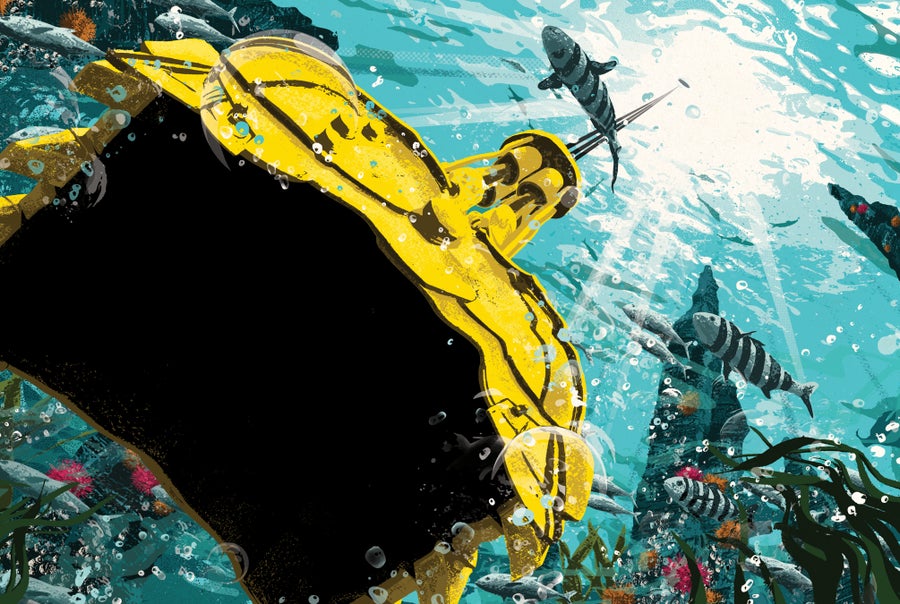
In hindsight, I am still not sure why the operators of the Danish-flagged MV Coco allowed me onboard. By the time I arrived last June, the vessel had been sailing for several weeks in the Bismarck Sea, a part of Papua New Guinea’s territorial waters, digging chunks of metal-rich deposits out of the ocean floor with a 12-ton hydraulic claw. The crew was testing the feasibility of mining seafloor deposits full of copper and some gold. It was probably the closest thing in the world to an operational deep-sea mining site. And the more I learned about the endeavor, the more surprised I became about the project’s very existence.
On that summer morning, I arrived on a red catamaran after rolling over six-foot swells in the South Pacific for two hours, and I clambered up a metal ladder hanging down on the Coco’s starboard side. The 270-foot, 4,000-ton vessel towers at its prow, its vast aft deck full of cranes, winches, and a remotely operated submersible. I was there at the invitation of Richard Parkinson, who founded Magellan, a company that specializes in deep-sea operations. At the top of the ladder, two crew members hauled me onboard the ship, which was roughly 20 miles from the closest shore, and a British manager for Magellan named James Holt greeted me, his smile sun-creased from more than two decades at sea. After a safety briefing, he ushered me through a heavy door into a dark, windowless shipping container on the rear deck that served as a control room.
Inside the hushed cabin was a young Brazilian named Afhonso Perseguin, his face lit by screens displaying digital readings and colorful topographic charts. Gripping a joystick with his right hand, he delicately maneuvered a big, boxy remotely operated vehicle, or ROV, over a patch of seafloor a mile below. I watched on monitors as a robotic arm protruded from the ROV toward a monstrous set of clamshell jaws suspended from a cable that rose all the way up to the ship. Perseguin used the ROV’s arm to steer the jaws as a colleague beside him radioed instructions to a winch operator on deck.
Hydraulics drove the open clamshell into a gray chunk of flat seafloor ringed by rocky mounds and jagged slopes. The opposing teeth dug in, throwing up clouds of silt that filled the video feeds from the ROV. The robotic arm released, and the winch started hauling the jaws, clamped shut around their rocky cargo, on an hour-long journey up to the ship.
Within minutes, Perseguin reversed the ROV to survey the wider scene, revealing chimneys of rock looming up from the seafloor, pale yellow and gray in the submersible’s powerful lights. Small mollusk shells dotted their surface; a crab scuttled out of frame. “Quite amazing, really, isn’t it?” murmured John Matheson, a shaven-headed Scot supervising the ROV team. As Perseguin steered the ROV slowly around a column, the cameras suddenly captured a glassy plume of unmistakably warmer water spewing up from a hidden crevice.
Hydraulics drove the monstrous clamshell jaws into a gray chunk of seafloor, throwing up clouds of silt that filled the video feeds from the remotely operated vehicle.
That hydrothermal vent marked the edge of a tectonic plate in the Bismarck Sea. The metal-rich magma ejected over millennia from several such vents—some dormant, some still active like this one—was Magellan’s prize. The teams on the ship, hired by a company called Deep Sea Mining Finance (DSMF), were conducting bulk seafloor mining tests under a 2011 mining license issued by the Papua New Guinea (PNG) mining regulator. I was the only reporter onboard to witness the operation.
Worldwide, oceanographers have found three distinct types of mineral deposits on the deep seafloor. Manganese crust is an inches-thick, metal-rich pavement that builds up over millions of years as dissolved metallic compounds in seawater gradually precipitate on certain seafloor regions. Polymetallic nodules are softball-size, metal-rich rocks strewn across enormous seafloor fields. And massive sulfide deposits, such as the ones being mined by the crew of the Coco, are big mounds and stacks of rock formed around hydrothermal vents. Over the past decade, several companies have developed detailed but still hypothetical plans to profit from these deposits, hoping to help meet the world’s surging demand for the valuable metals necessary for batteries, electric cars, electronics, and many other products. Scientists have warned that these efforts risk destroying unique deep-sea habitats that we do not yet fully understand, and governments have been reluctant to grant exploration licenses in their territorial waters. But from what I saw during my two days and one night onboard the Coco, DSMF was digging in, and a new era of deep-sea mining had all but begun.
Holt, one of Magellan’s offshore managers, said the aim was to test the physical requirements and environmental impacts of pulling up sulfide deposits. What would soon become unclear, however, was why the operators were stockpiling mounds of excavated rock on the seabed, and who in PNG knew the Coco was there.
A 6.2-magnitude earthquake struck off the coast of Istanbul on Wednesday, leading to scenes of panic in the Turkish metropolis, officials said.
The quake occurred in the Sea of Marmara close to Silivri, which lies around 70 kilometers (40 miles) to the west of the city, and aftershocks are continuing, according to Turkey’s Disaster and Emergency Management Agency (AFAD).
Istanbul authorities said there had been no loss of life but that 151 people were injured after “jumping from heights due to panic.”
No residential buildings were damaged, the authorities added, but one abandoned building collapsed in the central Fatih District.
Turkey’s interior minister, Ali Yerlikaya, said the quake lasted a total of 13 seconds at a depth of seven kilometers, with 51 aftershocks recorded so far, the largest of which was of 5.9 magnitude.
“Let’s not let down our guard against possible aftershocks,” Yerlikaya said on X.
Some 6,100 emergency calls were received, he added, most of which were information inquiries.
CNN Turk anchor Meltem BozbeyoÄlu was live on air when the quake struck, with the studio visibly shaking on camera.
In February 2023, Turkey experienced one of its deadliest earthquakes in the last century, when a 7.8 magnitude quake struck 23 kilometers (14.2 miles) east of Nurdagi, in the southern Gaziantep province, at a depth of 24.1 kilometers (14.9 miles).
That quake also hit northern Syria, killing more 50,000 people across both countries.
With two key fault lines in its vicinity – the North Anatolian and the East Anatolian – Turkey is one of the most seismically active regions in the world, a reality that has amplified concern over Istanbul’s earthquake preparedness.
Most of K’s newborn clothes arrived inside a white trash bag left outside our two-bedroom Oakland house. We bought her bite-marked crib on Craigslist. I meant to take monthly photos to show her growth, but when I look back, there is only one, from 3 months. I’ve scribbled “3” in ballpoint pen on a piece of paper torn from a spiral notebook. It looks like a ransom note.
I was 34 when I became K’s foster mom. We got the call at bedtime on a Tuesday; a newborn needed a place to stay. The next morning, I went to the hospital to meet her in the NICU. She was home with me by noon. We weren’t expecting a newborn, and while she slept on my chest, I started a list of what we needed: supplies, a schedule, help.
If (and only if) K was touching me or my husband, David, she was content. And so, I held her. For six months, I moved from my bed to the sofa and back again. She napped on me and babbled on me, and played on me. In one day, I transitioned from a childless grad student to someone who never stopped cuddling, feeding, and changing a newborn. By the time she was a few weeks old, it was clear she might be with us long-term. When she was 1, we adopted her.
While our home life during K’s early days was not social-media polished, our joy and connection felt like a miracle. I have never been as at ease in my body and life as when I was parenting her during those first months.
Meeting K wasn’t the first time my life shifted over the course of a day. One August, when I was 28, I woke up a runner and went to bed disabled. I co-owned a real estate firm at the time and, through relentless professional effort, was flush with cash. My then-husband and I decided to take a luxury trip to Greece. This was pre-Instagram, but you’d never know it from our perfectly orchestrated itinerary. Linen halter-dresses and straw hats, and beers in the ocean. My young body was toned and tan. We were committed to having the best vacation. It probably goes without saying: I was profoundly unhappy.
While hiking on the island of Santorini, we encountered a pack of wild dogs baring their teeth. The sun was more punishing than we had anticipated, and we had run out of water. We scrambled up the hillside, away from the dogs, shins scraping on the brush. The detour led to heat exhaustion, which led to an electrolyte imbalance, which activated a latent neurological condition. The day after the hike, I could hardly stand and spent the day wracked with nausea, dizziness, and pain. It’s been 14 years, and my health has not measurably improved.
It took me a year to admit I was sick and two to get diagnosed. I didn’t accept my diagnosis for another year, and it was longer still before I would call myself disabled. During that time, I had to stop working, ended my long-term relationship, and moved into a tiny one-bedroom apartment. Instead of wild parties at our sprawling loft, I watched Lifetime shows with my little sister. My life shrank. My body suffered.
Inside the agony, I found my way to something true within myself. The pursuit of perfection in my 20s had been caustic. Of course, I didn’t invent the framework in which I operated at that time. Thinking that beauty and wealth will make our lives good is an edict of capitalism. Our economic system reinforces that our worth is directly related to our ability to work and produce. It’s no coincidence that this manically attractive life was very expensive.
Admitting to the inevitability of suffering and fragility in my 30s was a salve. Pretending that my own performance could insulate me from pain had caused me far more harm than the actual limitations of my body.
Film and Writing Festival for Comedy. Showcasing best of comedy short films at the FEEDBACK Film Festival. Plus, showcasing best of comedy novels, short stories, poems, screenplays (TV, short, feature) at the festival performed by professional actors.







:max_bytes(150000):strip_icc()/Parents-UsingScreenTimeasBargainingChip-f6955a4096e34bd8a100c63cf9cb667b.jpg)


 Romper
 Mark Smith
 .
.