It was a case of spies watching spies watching spies: Israeli intelligence officers looked on in real time as Russian government hackers searched computers around the world for the code names of American intelligence programs.
What gave the Russian hacking, detected more than two years ago, such global reach was its improvised search tool — antivirus software made by a Russian company, Kaspersky Lab, that is used by 400 million people worldwide, including by officials at some two dozen American government agencies.
The Israeli officials who had hacked into Kaspersky’s own network alerted the United States to the broad Russian intrusion, which has not been previously reported, leading to a decision just last month to order Kaspersky software removed from government computers.
.
Kaspersky Lab’s products require access to everything stored on a computer in order to scour it for viruses or other dangers.Credit Sergei Ilnitsky/European Pressphoto Agency
Y. A. Tittle, the Hall of Fame quarterback who led the Giants to three consecutive National Football League championship games in the early 1960s after the San Francisco 49ers had discarded him as too old and too slow, died on Sunday night in Stanford, Calif. He was 90.
Louisiana State University, where he played his college ball, announced his death.
Tittle threw for dozens of touchdowns and thousands of yards, won a Most Valuable Player Award and was selected to seven Pro Bowls. But he endeared himself to New York not as a golden boy but as a muddied, grass-stained scrapper.
He was a balding field general with a fringe of gray who, at 34, in his old-fashioned high-topped shoes, had undeniably lost a step or two, but kept picking himself up off the ground to find a way to beat you, and New York cheered.
.
Giants quarterback Y.A. Tittle after being slammed to the ground by a Pittsburgh Steelers lineman in Pittsburgh on Sept. 20, 1964. The photograph immortalized Tittle in football lore as an image of the aging warrior who had finally fallen.Credit Morris Berman/Pittsburgh Post-Gazette, via Associated Press
YouTube videos of police beatings on American streets. A widely circulated internet hoax about Muslim men in Michigan collecting welfare for multiple wives. A local news story about two veterans brutally mugged on a freezing winter night.
All of these were recorded, posted or written by Americans. Yet all ended up becoming grist for a network of Facebook pages linked to a shadowy Russian company that has carried out propaganda campaigns for the Kremlin, and which is now believed to be at the center of a far-reaching Russian program to influence the 2016 presidential election.
A New York Times examination of hundreds of those posts shows that one of the most powerful weapons that Russian agents used to reshape American politics was the anger, passion and misinformation that real Americans were broadcasting across social media platforms.
The Russian pages — with names like “Being Patriotic,” “Secured Borders” and “Blacktivist” — cribbed complaints about federal agents from one conservative website, and a gauzy article about a veteran who became an entrepreneur from People magazine. They took descriptions and videos of police beatings from genuine YouTube and Facebook accounts and reposted them, sometimes lightly edited for maximum effect.
.
During the 2016 campaigns, Russian agents harvested posts and videos from Americans and used them on social media to sow division. Here supporters cheered a year ago for then-Democratic candidate Hillary Clinton.Credit Doug Mills/The New York Times
Senator Bob Corker, the Republican chairman of the Senate Foreign Relations Committee, charged in an interview on Sunday that President Trump was treating his office like “a reality show,” with reckless threats toward other countries that could set the nation “on the path to World War III.”
In an extraordinary rebuke of a president of his own party, Mr. Corker said he was alarmed about a president who acts “like he’s doing ‘The Apprentice’ or something.”
“He concerns me,” Mr. Corker added. “He would have to concern anyone who cares about our nation.”
Mr. Corker’s comments capped a remarkable day of sulfurous insults between the president and the Tennessee senator — a powerful, if lame-duck, lawmaker, whose support will be critical to the president on tax reform and the fate of the Iran nuclear deal.
It began on Sunday morning when Mr. Trump, posting on Twitter, accused Mr. Corker of deciding not to run for re-election because he “didn’t have the guts.” Mr. Corker shot back in his own tweet: “It’s a shame the White House has become an adult day care center. Someone obviously missed their shift this morning.”
.
In audio excerpts from an interview with Jonathan Martin, a New York Times reporter, Senator Bob Corker, Republican of Tennessee, spoke about President Trump’s tweets and what Mr. Trump’s twitter feed means for diplomacy.
The number of murders the Honduran drug lord admitted to orchestrating over 10 years was stunning.
The dead included people he described as killers, rapists and gang members. Then there were the innocents: a lawyer, two journalists, a Honduran refugee in Canada, an official who was serving as Honduras’s antidrug czar and a politician who became his adviser; there were even two children caught in a shootout.
In all, the drug lord, Devis Leonel Rivera Maradiaga, said that, working in concert with drug traffickers and others, he had “caused” the deaths of 78 people — a number that posed a dilemma for United States officials when Mr. Rivera came to them offering to expose high-level corruption in this Central American nation of some nine million people.
Knowing that he was already in the sights of United States investigators, Mr. Rivera sought to help the Drug Enforcement Administration root out corrupt Honduran politicians and other elites who had made Honduras a gateway for massive amounts of cocaine headed for the United States through Mexico.
.
Devis Leonel Rivera Maradiaga, left, and Javier Eriberto Rivera Maradiaga. The brothers led a drug trafficking organization called Los Cachiros that was said to be responsible for dozens of murders.Credit Department of the Treasury Office of Foreign Assets Control
Justice Anthony M. Kennedy has long been troubled by extreme partisan gerrymandering, where the party in power draws voting districts to give itself a lopsided advantage in elections. But he has never found a satisfactory way to determine when voting maps are so warped by politics that they cross a constitutional line.
After spirited Supreme Court arguments on Tuesday, there was reason to think Justice Kennedy may be ready to join the court’s more liberal members in a groundbreaking decision that could reshape American democracy by letting courts determine when lawmakers have gone too far.
Justice Kennedy asked skeptical questions of lawyers defending a Wisconsin legislative map that gave Republicans many more seats in the State Assembly than their statewide vote tallies would have predicted. He asked no questions of the lawyer representing the Democratic voters challenging the map.
.
People including Bill Millhouser protesting gerrymandering outside the Supreme Court on Tuesday. The court was hearing a case based on voting district maps in Wisconsin.Credit Tom Brenner/The New York Times
Rainer Weiss, a professor at the Massachusetts Institute of Technology, and Kip Thorne and Barry Barish, both of the California Institute of Technology, were awarded the Nobel Prize in Physics on Tuesday for the discovery of ripples in space-time known as gravitational waves, which were predicted by Albert Einstein a century ago but had never been directly seen.
In announcing the award, the Royal Swedish Academy called it “a discovery that shook the world.”
That shaking happened in February 2016, when an international collaboration of physicists and astronomers announced that they had recorded gravitational waves emanating from the collision of a pair of massive black holes a billion light years away, it mesmerized the world. The work validated Einstein’s longstanding prediction that space-time can shake like a bowlful of jelly when massive objects swing their weight around, and it has put astronomers on intimate terms with the deepest levels of physical reality, of a void booming and rocking with invisible cataclysms.
.
From left: Rainer Weiss, Barry Barish and Kip Thorne, the architects and leaders of LIGO, the Laser Interferometer Gravitational-wave Observatory.Credit Molly Riley/Agence France-Presse — Getty Images
Three European-born scientists were awarded the Nobel Prize in Chemistry on Wednesday for developing a new way to assemble precise three-dimensional images of biological molecules like proteins, DNA and RNA.
Their work has helped scientists decipher processes within cells that were previously invisible, and has led to better understanding of viruses like Zika. In the future, their techniques could offer road maps in the development of drugs to treat diseases.
The winners are Jacques Dubochet, a retired biophysicist at the University of Lausanne in Switzerland; Joachim Frank, a professor at Columbia University in New York; and Richard Henderson, a scientist at the British Medical Research Council’s Laboratory of Molecular Biology in Cambridge, England.
The Nobel committee said the technique, cryo-electron microscopy, produces “detailed images of life’s complex machineries in atomic resolution.”
.
From left, Dr. Dubochet, Dr. Frank and Dr. Henderson.Credit From left: University of Lausanne, Columbia University and Cambridge University, via European Pressphoto Agency
On a Tuesday morning in June 2016, Nathan Brown, a reporter for The Times-News, the local paper in Twin Falls, Idaho, strolled into the office and cleared off a spot for his coffee cup amid the documents and notebooks piled on his desk.Brown, 32, started his career at a paper in upstate New York, where he grew up, and looks the part of a local reporter, clad in a fresh oxford and khakis that tend to become disheveled over the course of his long days. His first order of business was an article about a City Council meeting from the night before, which he hadn’t attended. Brown pulled up a recording of the proceedings and began punching out notes for his weekly article. Because most governing in Twin Falls is done by a city manager, these meetings tend to deal with trivial subjects like lawn-watering and potholes, but Brown could tell immediately that this one was different.
“We have been made aware of a situation,” said the first speaker, an older man with a scraggly white beard who had hobbled up to the lectern. “An alleged assault of a minor child and we can’t get any information on it. Apparently, it’s been indicated that the perpetrators were foreign Muslim youth that conducted this — I guess it was a rape.” Brown recognized the man as Terry Edwards. About a year earlier, after The Times-News reported that Syrian refugees would very likely be resettled in Twin Falls, Edwards joined a movement to shut the resettlement program down. The group circulated a petition to put the proposal before voters. They failed to get enough signatures to force a referendum, but Brown was struck by how much support around town the movement attracted. In bars after work, he began to overhear conversations about the dangers of Islam. One night, he heard a man joke about dousing the entrance to the local mosque with pig’s blood.
Film and Writing Festival for Comedy. Showcasing best of comedy short films at the FEEDBACK Film Festival. Plus, showcasing best of comedy novels, short stories, poems, screenplays (TV, short, feature) at the festival performed by professional actors.







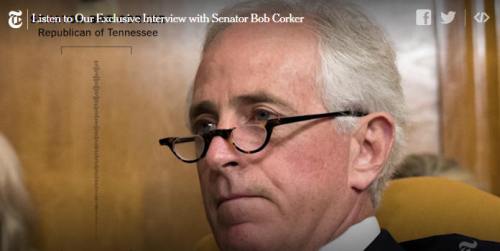 In audio excerpts from an interview with Jonathan Martin, a New York Times reporter, Senator Bob Corker, Republican of Tennessee, spoke about President Trump’s tweets and what Mr. Trump’s twitter feed means for diplomacy.



 2016
2016

 James' World 2