May 1, 2021
Mohenjo
Business, Enthralling, Human Interest, Photographs
amazon, business, Business News, current-events, Future, Hotels, human-rights, medicine, mental-health, research, Science, Science News, technology, Technology News, travel, vacation

Click the link below the picture
.
Naples is a city on the Gulf of Mexico in southwest Florida that’s known for high-end shopping and golf courses. The Naples Pier, first erected in 1888, is the city’s symbol and is a popular fishing and dolphin-spotting destination. It’s flanked by miles of beaches with calm waters and fine white “sugar” sand, including those at Clam Pass Park and Delnor-Wiggins Pass State Park. ― Google
.
 An image from Naples, FL, USA
.
.
Click the link below for images:
.
__________________________________________
May 1, 2021
Mohenjo
Business, Human Interest, Science, Technical
amazon, business, Business News, current-events, Future, Hotels, human-rights, medicine, mental-health, research, Science, Science News, technology, Technology News, travel, vacation

Click the link below the picture
.
You might see noise-canceling headphones most often on the domes of frequent travelers, shielding their ears as they try to tune out the many other sounds on the plane or train. But they certainly aren’t the only ones who can benefit from tuning out ambient noise. Many people who work in open offices turn to noise-canceling headphones when they need to focus. And if you still find yourself working from home, a good pair may be essential to drown out your housemates’ chatter and get to work. Here, we’ve rounded up some of the best, as well as provide some background on the tech.
How Noise Cancelation Works
More headphones than ever come equipped with noise-cancellation features, including regular over-ear models and compact, wireless earbuds. They do more than simply physically block sounds from entering your ear canal—active noise cancellation (ANC) actually uses a microphone to process the ambient sound, and then the circuitry produces “opposite” sound waves to reduce the unwanted vibrations. While this doesn’t necessarily eliminate all external sound, it can block about 70 percent of ambient noise, effectively dulling lower-frequency tones like the roar of an airplane or traffic or the bustling of a coffee shop.
For many people who just want to play music or podcasts to block sound, a pair of regular headphones or earbuds may do the trick for simply drowning out the babble. But, according to The Guardian, exposure to too much background noise for several hours a day can raise stress levels and even cause permanent hearing damage over time. So many travelers and big-city commuters may find the extra cost of ANC worthwhile for their general health and wellness.
.
 Staff
Staff
.
.
Click the link below for the article:
.
__________________________________________
May 1, 2021
Mohenjo
Business, Food For Thought, Human Interest, Political, Technical
amazon, business, Business News, current-events, Future, Hotels, human-rights, medicine, mental-health, research, Science, Science News, technology, Technology News, travel, vacation

Click the link below the picture
.
‘I got a couple of billion dollars rolling around through here,” Al Putre says, gesturing downward toward the floors below. We are sitting in the conference room next to his office, which is on one of the upper levels of a blocky, nearly unmarked building in southwest Queens. (He has asked me not to reveal where it is more precisely — “Call it a secret location. They like that” — although you can probably figure it out with Google.) On your way there, you pass mostly businesses that sell steel pipe and cinder blocks from behind barbed wire, plus the odd strip club. Every nickel’s worth of cash that comes into the MTA, and every MetroCard that goes out, passes through this building and thus under Putre’s eye. Although the agency’s income is down a lot owing to the pandemic, the amount of cash that passes through most years, give or take, is about $1.5 billion.
Putre talks fast — and I mean fast — in a Queens accent that is on the endangered-species list, and has a high-and-tight graying haircut that would not be out of place in a precinct house. He’s been with the MTA for 34 years, and in charge of the division of revenue — the money rooms and their associated operations — since 1999. On the day we meet, he’s a couple of days from retirement. He started in the era of subway tokens in cloth sacks and overnight runs of the money train; he wraps up his career managing a digital river of electronic payments and the launch of OMNY, the system that will soon replace the MetroCard. What he clearly loves, even more than the job or the agency or the piles of cash is a system. Ask him about the change that riders drop into the farebox on the bus, which gets picked up at the depots and brought to the money room, and here’s what he’ll tell you, in the space of 90 seconds, incorporating a quick hallway encounter with a colleague:
“We suck all the money out of fareboxes via a Keene vacuum system. There’s only one other agency in the world I’m aware of that does that. Philly was at one time, but I’m not even sure if they do anymore. You need to have high volumes of coins and large numbers of buses. We fit that bill — Hey, partner, how are you? You’ll see the vaults here: They look old, they are old, but they last very, very well. They’re durable. And the system is set up so it’s sealed. So from the moment a bus pulls in, the money gets vacuumed out via a port, and that port is connected to a vacuum hose and a probe. The probe takes the data from the farebox, sends it up to the AFC [automated fare collection]. The vacuum sucks it up into the ceiling to a shaker-sorter, a sifter. The coin goes into the vaults by denomination. Why is that important? You can count separated coin extremely fast, 10,000 pieces per minute. If you get the coin unseparated and you have to sort it, the speed goes down to 2,500 pieces per minute, and it wears the machines out. The TA separating this coin makes this operation smooth as silk. You’ll see what I mean.”
.
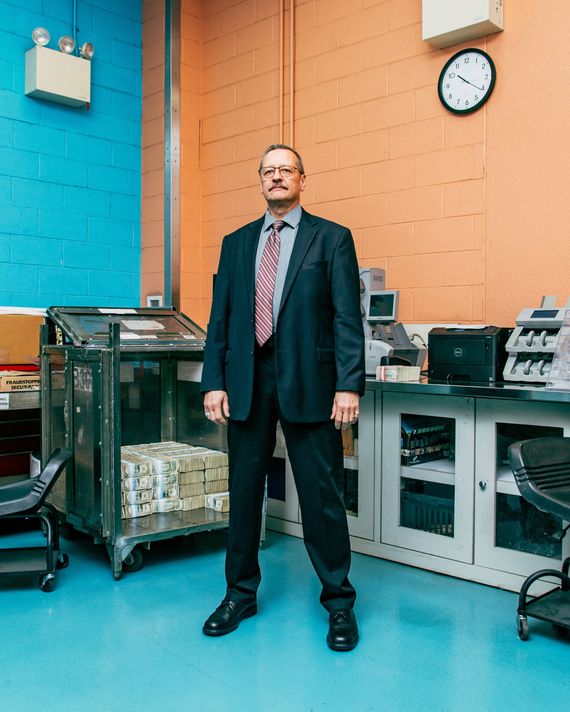 The MTA’s Al Putre, in his final week on the job. Photo: DeSean McClinton-Holland
.
.
Click the link below for the article:
.
__________________________________________
May 1, 2021
Mohenjo
Crime, Finance, Food For Thought, Human Interest, Medical, missed News, Political, Science, Technical
amazon, business, Business News, current-events, Future, Hotels, human-rights, medicine, mental-health, research, Science, Science News, technology, Technology News, travel, vacation

.
News You might have missed!
Use your browser or smartphone back arrow (<-) to return to this table for your next selection.
.
__________________________________________
April 30, 2021
Mohenjo
Business, Enthralling, Human Interest, Photographs
amazon, business, Business News, current-events, Future, Hotels, human-rights, medicine, mental-health, research, Science, Science News, technology, Technology News, travel, vacation

Click the link below the picture
.
Beilstein is an Ortsgemeinde – a municipality belonging to a Verbandsgemeinde, a kind of collective municipality – in the Cochem-Zell district in Rhineland-Palatinate, Germany. It belongs to the Verbandsgemeinde of Cochem, whose seat is in the like-named town. Wikipedia
.
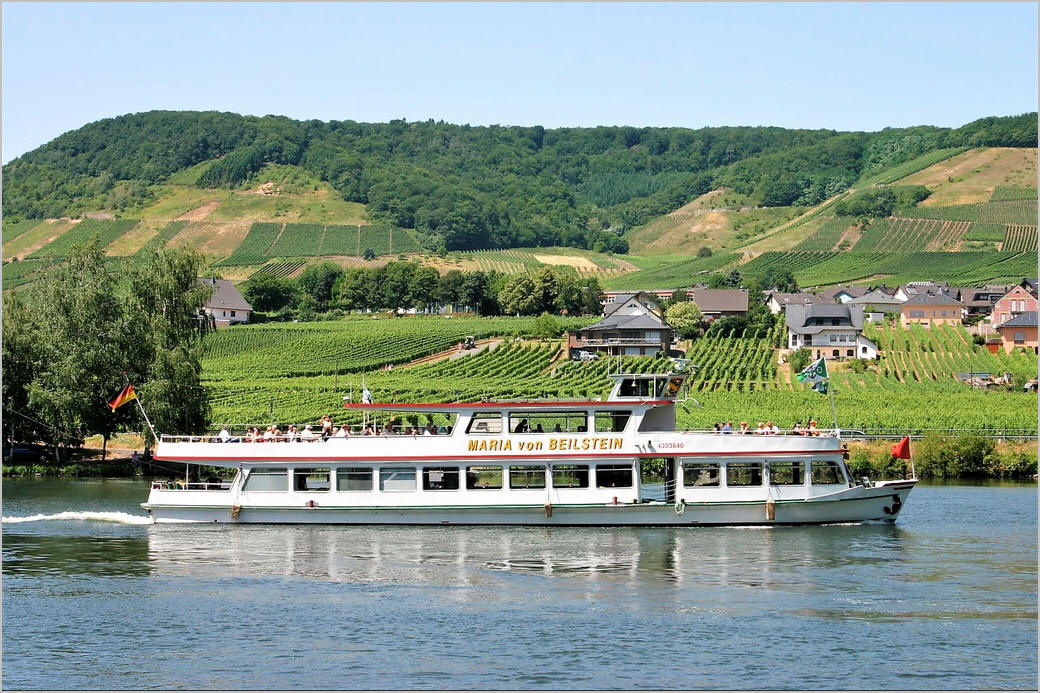 An image from Beilstein Rhineland Palatinate
.
.
Click the link below for images:
.
__________________________________________
April 30, 2021
Mohenjo
Business, Food For Thought, Human Interest, Science, Technical
amazon, business, Business News, current-events, Future, Hotels, human-rights, medicine, mental-health, research, Science, Science News, technology, Technology News, travel, vacation

Click the link below the picture
.
We spend a lot of time staring at screens. There’s the small screen in our pocket, the big screen we watch our shows on, and the medium screen that many of us stare into for eight hours a day to help pay for those other screens. Are all of these screens ruining our eyes?
Probably not, although rumors abound. If you grew up with big ol’ tube TVs, you probably remember being told that sitting too close would ruin your eyes. Scientific American traces that myth to a 1967 recall of early color TVs that emitted radiation (like, actual radiation) that were probably harmful to health, as well as to a misunderstanding about nearsighted kids who sat close to the TV. Most likely, they sat close so they could see better; the TV didn’t cause their nearsightedness.
When it comes to the variously sized screens we stare at all day, there are some new myths (and facts!) about how they affect our vision.
.
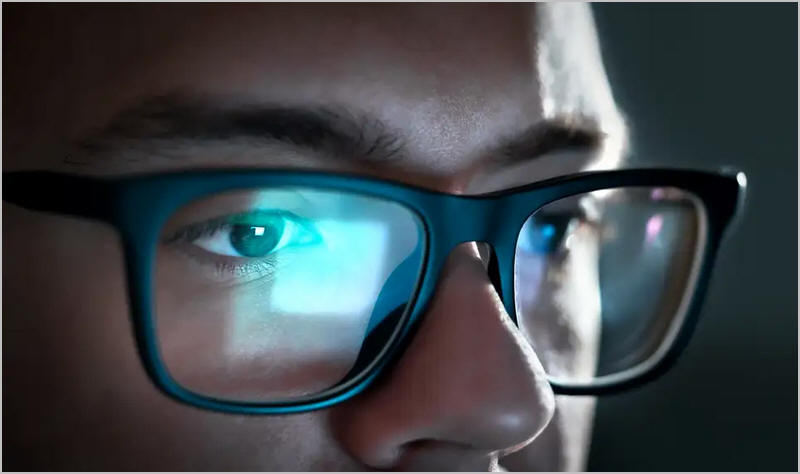 Photo: Tero Vesalainen (Shutterstock)
.
.
Click the link below for the article:
.
__________________________________________
April 30, 2021
Mohenjo
Business, Food For Thought, Human Interest, Science, Technical
amazon, business, Business News, current-events, Future, Hotels, human-rights, medicine, mental-health, research, Science, Science News, technology, Technology News, travel, vacation
Click the link below the picture
.
Like motorcyclists, U.S. Navy pilots “dress for the slide, not the ride.” Their gear is meant for frost, flames, and flotation. Even the very first pilot to operate from a ship carried safety equipment: Eugene Ely, attempting his landing on the deck of the armored cruiser USS Pennsylvania in 1911, took the controls of his Curtiss Pusher wearing a leather football helmet, bug-eyed motoring goggles, and a makeshift life vest fashioned from bicycle inner tubes.
The odds of a mission ending with an ejection from the cockpit are slim—it happens precisely 1.33 times per 100,000 hours of flying, according to the Navy. But naval flight officers still carry equipment for just such a scenario. “Most of the gear is only for emergency use,” says Lt. Luke “Oslo” DeLisio, a flight officer from Strike Fighter Squadron (VFA) 106. “But when you need it, you’re glad it’s there.”
.

Dan KitwoodGetty Images
.
.
Click the link below for the article:
.
__________________________________________
April 30, 2021
Mohenjo
Crime, Human Interest, Medical, missed News, Political, Science, Technical
amazon, business, Business News, current-events, Future, Hotels, human-rights, medicine, mental-health, research, Science, Science News, technology, Technology News, travel, vacation
.
News You might have missed!
Use your browser or smartphone back arrow (<-) to return to this table for your next selection.
.
__________________________________________
April 29, 2021
Mohenjo
Business, Enthralling, Human Interest, Photographs
amazon, business, Business News, current-events, Future, Hotels, human-rights, medicine, mental-health, research, Science, Science News, technology, Technology News, travel, vacation
Click the link below the picture
.
Nagpur is a large city in the central Indian state of Maharashtra. The 19th-century Nagpur Central Museum displays items found locally, including fossils, sarcophagi, and Mughal weaponry. The Raman Science Centre has hands-on exhibits and a planetarium. Sitabuldi Fort, in the Sitabuldi Hills, was the site of an 1817 battle. To the southwest, the immense, domed Deekshabhoomi is a Buddhist monument and pilgrimage site. ― Google
.
 An image from Nagpur, Maharashtra, India
.
.
Click the link below for images:
.
__________________________________________
April 29, 2021
Mohenjo
Business, Food For Thought, Human Interest, Science, Technical
amazon, business, Business News, current-events, Future, Hotels, human-rights, medicine, mental-health, research, Science, Science News, technology, Technology News, travel, vacation

Click the link below the picture
.
Even as hope appears on the horizon with respect to the COVID-19 pandemic now that vaccine rollout is ramping up, Americans remain besieged by unprecedented anxiety. As such, your personal threshold for stress is probably lower right now, which means you may find yourself going from zero to panic in mere moments. To combat this overwhelm, it’s helpful to have a number of tools on tap—and you’d be hard-pressed to find one with a better endorsement than box breathing, a calming technique used by elite U.S. Navy SEALs.
.
Box breathing is rooted in an Ayurvedic form of breathwork called pranayama that originated in India and is practiced in yoga, explains Tal Rabinowitz, founder, and CEO ofThe DEN Meditation in Los Angeles. “It has incredibly ancient roots, with different techniques for calming, bringing in energy, refining focus, and relaxing the nervous system; however, the military popularized it and brought it mainstream,” she says. “Mark Divine, a former Navy SEAL who is also a very experienced martial artist, introduced it to the special operations community in the military, showing the world that by simply breathing, you can achieve the desired calming effects in just moments.”
.
 Photo: Getty/Fizkes
.
.
Click the link below for the article:
.
__________________________________________
Older Entries
Newer Entries

