Over two decades ago, Warren Buffett lectured at the University of Florida’s school of business and gave students life lessons on happiness, careers, finances, and relationships.
Buffett urged students to do the things they know will enjoy throughout their lives and gave good counsel about making business connections with likable people. “I only work with people I like,” Buffett told students. “If I could make $100 million with a guy who causes my stomach to churn, I’d say no.”
Since childhood, our parents have been trying to teach us that beauty comes in different shapes and sizes. Whether we are too tall, too short, or self-conscious about our ears, growing up, many of us wished we look like someone else.Unfortunately, physical appearance has always been an essential part of our lives, and probably always will be. These people struggled with their exceptional appearance growing up, but eventually, their unique features are what made them famous.
After meeting someone for the first time, do you see yourself as a glittering conversationalist, a kind of Wildean wit whose bons mots sparkled and delighted? Or do you find yourself wincing at every possible faux pas, imagining all the ways you may have bored or offended?
If you identify with the former description, you are in the minority. Multiple studies show the average person takes a rather low opinion of their conversational abilities, and the social impressions they leave.
In most situations, we are often much more pleasant company than we imagine, yet we forget all the cues of friendliness towards us and think we were irritating or dull. It is as if we are remembering a completely different conversation from the one that actually happened.
The mismatch between our perceptions of our social performance, and others’ opinions of us, is known as the “liking gap”, and it may limit our ability to form connections in our personal lives, and also stand in the way of mutually beneficial collaborations at work. Like many of our brain’s biases, the liking gap can be hard to correct – but the latest research suggests there are ways to overcome this common form of social anxiety.
Our mushy brains seem a far cry from the solid silicon chips in computer processors, but scientists have a long history of comparing the two. As Alan Turing put it in 1952: “We are not interested in the fact that the brain has the consistency of cold porridge.” In other words, the medium doesn’t matter, only the computational ability.
Today, the most powerful artificial intelligence systems employ a type of machine learning called deep learning. Their algorithms learn by processing massive amounts of data through hidden layers of interconnected nodes, referred to as deep neural networks. As their name suggests, deep neural networks were inspired by the real neural networks in the brain, with the nodes modeled after real neurons — or, at least, after what neuroscientists knew about neurons back in the 1950s, when an influential neuron model called the perceptron was born. Since then, our understanding of the computational complexity of single neurons has dramatically expanded, so biological neurons are known to be more complex than artificial ones. But by how much?
To find out, David Beniaguev, Idan Segev, and Michael London, all at the Hebrew University of Jerusalem, trained an artificial deep neural network to mimic the computations of a simulated biological neuron. They showed that a deep neural network requires between five and eight layers of interconnected “neurons” to represent the complexity of one single biological neuron.
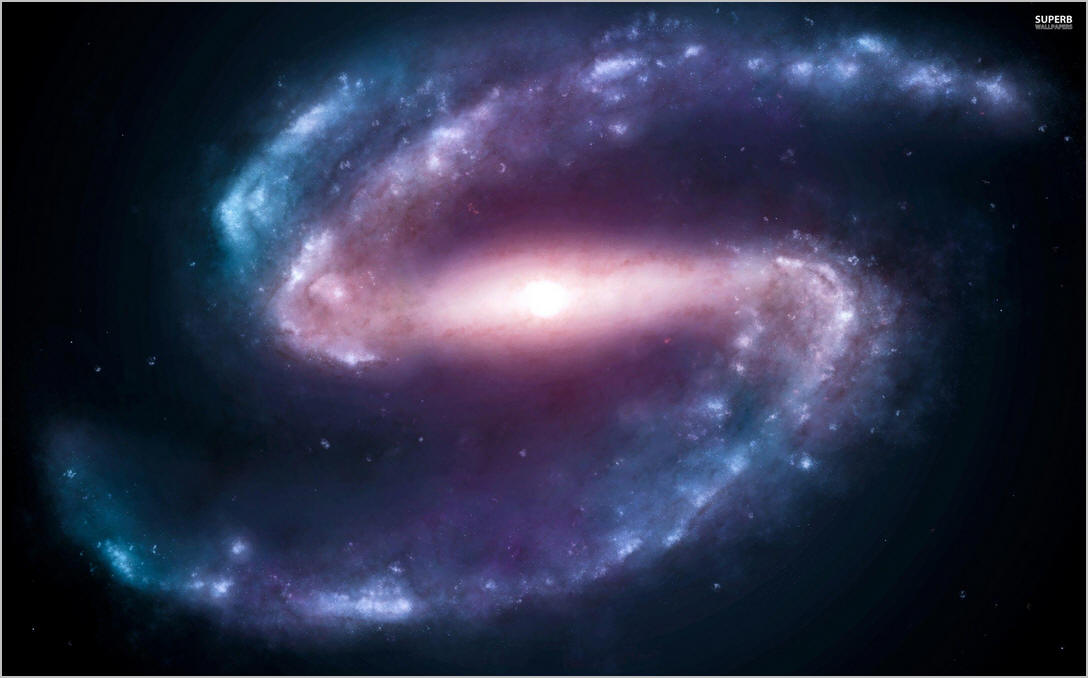
Spiral galaxies form a class of galaxies originally described by Edwin Hubble in his 1936 work The Realm of the Nebulae and, as such, form part of the Hubble sequence. Most spiral galaxies consist of a flat, rotating disk containing stars, gas, and dust, and a central concentration of stars known as the bulge. These are often surrounded by a much fainter halo of stars, many of which reside in globular clusters.
Spiral galaxies are named by their spiral structures that extend from the center into the galactic disc. The spiral arms are sites of ongoing star formation and are brighter than the surrounding disc because of the young, hot OB stars that inhabit them.
Roughly two-thirds of all spirals are observed to have an additional component in the form of a bar-like structure, extending from the central bulge, at the ends of which the spiral arms begin. The proportion of barred spirals relative to barless spirals has likely changed over the history of the universe, with only about 10% containing bars about 8 billion years ago, to roughly a quarter 2.5 billion years ago, until present, where over two-thirds of the galaxies in the visible universe (Hubble volume) have bars.
The Milky Way is a barred spiral, although the bar itself is difficult to observe from Earth’s current position within the galactic disc. The most convincing evidence for the stars forming a bar in the galactic center comes from several recent surveys, including the Spitzer Space Telescope.
Together with irregular galaxies, spiral galaxies make up approximately 60% of galaxies in today’s universe. They are mostly found in low-density regions and are rare in the centers of galaxy clusters. Wikipedia
The math wizards at Numberphile have brought back an age-old multiplying algorithm known as halves and doubles, peasant math, Egyptian math, or—as math presenter Johnny Ball describes it—Russian multiplying.
To do the method, begin by writing the two numbers you want to multiply at the top of two columns. In the left column, you progressively halve the number and take the integer floor of any “and a half” values, all the way down to 1. In the right column, you double the number as many times as there are digits in the left column…
Some content on this page was disabled on April 15, 2025 as a result of a DMCA takedown notice from Guardian Media Group. You can learn more about the DMCA here:
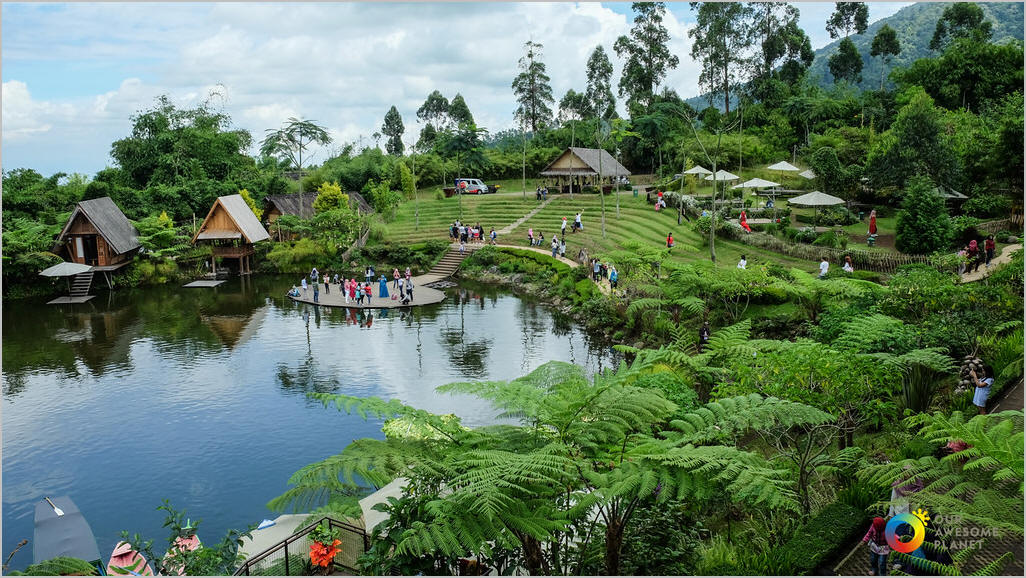
Bandung is the capital of West Java province in Indonesia and the fourth-largest city in Indonesia. Greater Bandung is the country’s second-largest metropolitan area with over 11 million inhabitants. Located 768 meters (2,520 feet) above sea level, the highest point in the North area with an altitude of 1,050 meters and the lowest in the South is 675 meters above sea level, approximately 140 kilometers (87 miles) southeast of Jakarta, Bandung has cooler year-round temperatures than most other Indonesian cities. The city lies on a river basin surrounded by volcanic mountains that provides a natural defense system, which was the primary reason for the Dutch East Indies government’s plan to move the capital from Batavia (modern-day Jakarta) to Bandung.
The Dutch first established tea plantations around the mountains in the 18th century, and a road was constructed to connect the plantation area to the colonial capital Batavia (180 kilometers (112 miles) to the northwest). In the early 20th century the Dutch inhabitants of Bandung demanded the establishment of a municipality (gemeente), which was granted in 1906, and Bandung gradually developed into a resort city for plantation owners. Luxurious hotels, restaurants, cafés, and European boutiques were opened, leading the city to be nicknamed Parijs van Java (Dutch: “The Paris of Java”).
After Indonesia declared independence in 1945, the city has experienced ongoing development and urbanization, transforming from an idyllic town into a dense 16,500 people/km2 (per square kilometer) metropolitan area with living space for over 8 million people. New skyscrapers, high-rise buildings, bridges, and gardens have been constructed. Natural resources have been heavily exploited, particularly by conversion of the protected upland area into highland villas and real estate. Although the city has encountered many problems (ranging from waste disposal and floods to a complicated traffic system resulting from a lack of road infrastructure), it still attracts large numbers of tourists, weekend sightseers, and migrants from other parts of Indonesia. In 2017 the city won a regional environmental sustainability award for having the cleanest air among major cities in ASEAN. The city is also known as a Smart City, leveraging technology to improve government services and social media, that alert residents to issues such as floods or traffic jams. Bandung is Indonesia’s major technology center. The city is part of the UNESCO Creative Cities Network, which it joined in 2015.
The first Asian-African Conference, the Bandung Conference, was hosted in Bandung by President Sukarno in 1955. Redevelopment of the existing Husein Sastranegara International Airport (BDO) was completed in 2016. To improve infrastructure, construction of the Jakarta-Bandung high-speed rail was started in 2016 and is projected to be completed in 2021. This is to be complemented by an indigenous type of Automated People Mover (APM) and Light Rail Transit (LRT). The new larger second airport, Bandung Kertajati International Airport (KJT) opened in June 2018, just in time for the 2018 Asian Games. Wikipedia
.
An image from Bandung, Bandung City, West Java, Indonesia
In the world, human beings are facing various problems. People who are full of greed, anger, and ignorance are seen to be fighting with each other in words and deeds. As the fighting continues, various problems such as civil wars, wars of aggression, and wars of aggression are occurring. As world peace is being destroyed, humans are facing unbearable problems. Innocent children and women are not getting the rights they deserve and deserve. I can't think of one thing every time. What is it? The United Nations. If we look at the responsibilities and duties of the United Nations, I think it is not suitable for solving the problems that are happening in the world today. In fact, the United Nations and the World Security Council, such an organization must rule the world, must be able to give orders, and must have various ways to obey orders. There must be no organization that can influence more than that organization. There should be experts from each country. They can even dominate the superpowers like the US, China, and Britain. Only then will global peace be achieved quickly. Now, if a country with power develops more militarily, economically, or socially than its own country, then powerful countries will jealously seek out enemies and wage war. Or they will attack with fighter jets. In this, innocent people are losing their lives. No one understands the value of a life. You should think about how to achieve global peace by controlling these. If the US continues to be the permanent president of the UN, world peace will never be achieved. If you think carefully, no one sees that they are working for the common good, but for their own benefit, for the benefit of their own country. The permanent president of the UN and the Security Council has rejected this, As a young Rohingya, I have come to realize that only by electing the president and secretary from among the countries in the world through a secret ballot system and governing the world fairly can we achieve global peace. The United Nations and the Security Council are organizations in which any country must govern, give orders, and make them obey their orders. For example, only when a defendant is tried in court can we hold the leaders of the countries in check and control them, can we achieve global peace smoothly. Otherwise, it will not be easy for powerful countries to use various excuses to end this war every year, every year, for the benefit of themselves and their countries. No country's leaders pay any attention to the words of the United Nations and the Security Council. If we look at it in practice, look at the Rohingya issue. Myanmar is a small country. Even that country has been under siege for 8 years. What action can be taken? Why is the UN and the Security Council Powerless? Without such Power, how can the organization bring about global peace? Everyone should think about it. Whether there is a veto or a strong one, all countries in the world can only achieve global peace if they are subject to the UN and the Security Council. Seek peace in the quiet embrace of nature. Peace is an indispensable need of the human race. It is not as if one person can kill another person, and it is as if one country can attack another country, but instead of trying to build peace, we must try to destroy the peace now, and the world is getting hotter and is on the verge of collapse. I especially appeal to all the world experts to urgently try to bring about peace in all parts of the world. Mr, Noor Muhamed Arkhan Rohingya Youth Myanmar
Film and Writing Festival for Comedy. Showcasing best of comedy short films at the FEEDBACK Film Festival. Plus, showcasing best of comedy novels, short stories, poems, screenplays (TV, short, feature) at the festival performed by professional actors.






 ktsdesign/Shutterstock