It may sound far-fetched, but scientists are attempting to build a human heart with a 3-D printer.
Ultimately, the goal is to create a new heart for a patient with their own cells that could be transplanted. It is an ambitious project to first, make a heart and then get it to work in a patient, and it could be years — perhaps decades — before a 3-D printed heart would ever be put in a person.
The technology, though, is not all that futuristic: Researchers have already used 3-D printers to make splints, valves and even a human ear.
.
In this March 6, 2014 photo, a 3-D printer was used to construct these tiny two-ventricle cylinders at the University of Louisville, in Louisville, Ky. Researchers are working on a project to build a human heart using a 3-D printer and human cells. (AP Photo/Dylan Lovan) | ASSOCIATED PRESS
The 21-year-old Australian woman was livid when she slammed into a bicyclist while texting late last year, putting dents in her car. The victim suffered a spinal fracture and would spend the next three months in a hospital, but Davis wasn’t having any of it, The Standard reports.
“I just don’t care because I’ve already been through a lot of bullshit and my car is, like, pretty expensive and now I have to fix it,” she told a responding officer two days after the Sept. 20 collision. “I’m kind of pissed off that the cyclist has hit the side of my car. I don’t agree that people texting and driving could hit a cyclist. I wasn’t on my phone when I hit the cyclist.”
As anyone who’s ever paid a health insurance premium or a hospital bill knows, medical care is expensive. What Americans may not know is that residents of other countries don’t pay nearly as much for the same things.
The latest data from the International Federation of Health Plans, an industry group representing health insurers from 28 countries including the United States, once again illustrates that American patients pay the highest prices in the world for a variety of prescription drugs and common procedures like childbirth and hospital stays.
.
Americans pay higher prices for many prescription drugs and medical treatments than citizens of other nations, a new report shows.
.
.
Click link below for story, video, charts and slideshow:
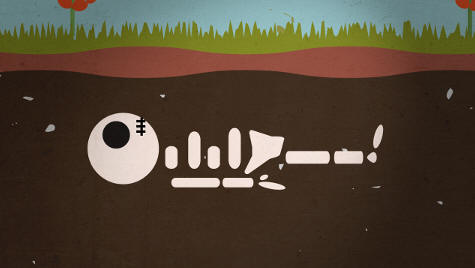
Whatever your beliefs, most people would agree that the body we leave behind when we depart this mortal coil is just a heap of bones and flesh. But what happens to those leftovers? Assuming that nature is left to its own devices, our bodies undergo a fairly standard process of decomposition that can take anywhere from two weeks to two years.
Is a strange speck of light on Mars evidence of intelligent life on the Red Planet?
That’s what some are asking after what appears to be a bright white beam of light shining from behind the Martian dunes showed up in images taken by NASA’s Curiosity rover.
Scott Waring of the website UFO Sightings Daily noticed the mysterious spot in a photo taken by the rover on April 3, or sol 589 (a sol is a day on Mars).
Frazier Glenn Cross, the man suspected of killing three people in two separate shootings at Jewish centers in Overland Park, Kan., on Sunday was captured on camera making pro-Nazi comments.
The video, which was taken by Kansas City news station KMBC, shows the suspected gunman after he was taken into custody in the parking lot of an elementary school near the scene of the attacks at the Jewish Community Center and the Village Shalom assisted living center.
From the back of the police cruiser, Cross shouted what sounded like “Heil Hitler!”
Ali Safran wanted to turn the anniversary of the date she was sexually assaulted into something positive. The Mount Holyoke College senior didn’t expect the resulting project in its first year to grow into a nonprofit corporation that inspired legislation in California and created classroom lessons used as far away as Turkey.
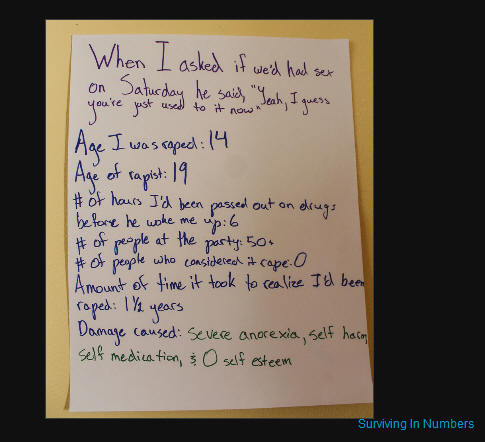
Safran, now 21, launched Surviving In Numbers on April 1, 2013 — the start of Sexual Assault Awareness Month. She invited other victims of sexual assault to write on poster board what happened as a result of the attacks, with numbers, then photographed each person holding the poster in front of their face. She arranged to display the photos on campuses in Massachusetts. Word spread. The number of posters grew.
One year later, Surviving In Numbers has helped tell the story of 410 survivors, collected 2,200 Tumblr followers and has had visitors from 12 countries.
Inspired by research and writings by prolific food-industry researchers like professor Robert Lustig, M.D., and journalist Michael Moss, Eve Schaub decided to try an experiment. She, along with her husband and daughters Greta and Ilsa, spent all of 2011 eating no added sugar.
They combed packaged foods for other names for sugar, including high fructose corn syrup, crystalline fructose, maple syrup, honey, molasses, evaporated cane juice, as well as artificial sweeteners. They started preparing more foods at home. Each family member was allowed one regular exception that contained a small amount of sugar — Eve opted for a glass of red wine — and once a month, the family would have an agreed-upon dessert.
We recently caught up with Eve to chat about the experience, as well as the upcoming memoir of that sugar-free year, Year of No Sugar, available April 8.
Film and Writing Festival for Comedy. Showcasing best of comedy short films at the FEEDBACK Film Festival. Plus, showcasing best of comedy novels, short stories, poems, screenplays (TV, short, feature) at the festival performed by professional actors.








 James' World 2