Home

Facebook deletes millions of accounts in ‘heartbreaking’ purge

Leave a comment

Click the link below the picture

.

Facebook has deleted more than 10 million accounts as part of an ongoing purge of the world’s most popular social network.

Meta, Facebook’s parent company, said the move was aimed at “cracking down on spammy content” and promoting authentic accounts, however some users have complained about being wrongly caught up in the action.

Facebook confirmed the figure in a blog post, revealing that more than a million accounts were deleted each month in the first half of 2025.

“Too often the same meme or video pops up repeatedly – sometimes from accounts pretending to be the creator and other times from different spammy accounts,” the company wrote in the blog post.

“It dulls the experience for all and makes it harder for fresh voices to break through. We’re introducing stronger measures to reduce unoriginal content on Facebook and ultimately protect and elevate creators sharing original content.”

Dozens of users shared similar experiences on social media of their accounts being removed, despite being legitimate accounts, with some blaming AI systems for wrongly identifying their accounts as inauthentic.

“It seems that the ability to connect is being stripped away by an algorithm that lacks understanding,” one user wrote in a post to the Reddit forum MetaLawsuits.

“Our business is currently suffering now as we struggle to reach clients, business contacts and maintain relationships, while my son’s autism support network has been severed, leaving us feeling abandoned… The disconnection feels inhumane, unfair, and utterly heartbreaking.”

Referred to as the “Meta ban wave”, the mass deletions also appear to have impacted people on Instagram, which is also owned by Meta.

The Independent has reached out to the company for further comment about legitimate accounts being deleted.

Any user whose account has been deleted will receive an email informing them of the action.

Facebook users can appeal any account suspension within 180 days, according to the company’s support pages, after which time the profile will be permanently deleted.

The large-scale removal comes as other tech companies take steps to clean up their own platforms.

n 2023, Google announced that it would delete all inactive Gmail, Photos and Drive accounts in a move that continues to impact millions of users.

Meta boss Mark Zuckerberg has previously proposed even more extreme purges of Facebook in an effort to boost engagement.

In 2022, he reportedly sent an internal email that laid out a plan to delete the friends of all Facebook users.

“One potentially crazy idea is to consider wiping everyone’s graphs [connections] and having them start again,” he wrote to company executives, who pushed back on the idea.

The Independent has always had a global perspective. Built on a firm foundation of superb international reporting and analysis, The Independent now enjoys a reach that was inconceivable when it was launched as an upstart player in the British news industry. For the first time since the end of the Second World War, and across the world, pluralism, reason, a progressive and humanitarian agenda, and internationalism – Independent values – are under threat. Yet we, The Independent, continue to grow.

.

https://img-s-msn-com.akamaized.net/tenant/amp/entityid/AA1IZM24.img?w=768&h=512&m=6

Facebook accounts deleted © Getty Images

.

.

Click the link below for the complete article:

https://www.msn.com/en-ca/money/technology/facebook-deletes-millions-of-accounts-in-heartbreaking-purge/ar-AA1IZK81?ocid=hpmsn&cvid=0301993eb90a46a4bfe926ea3cf03a58&ei=32

.

__________________________________________

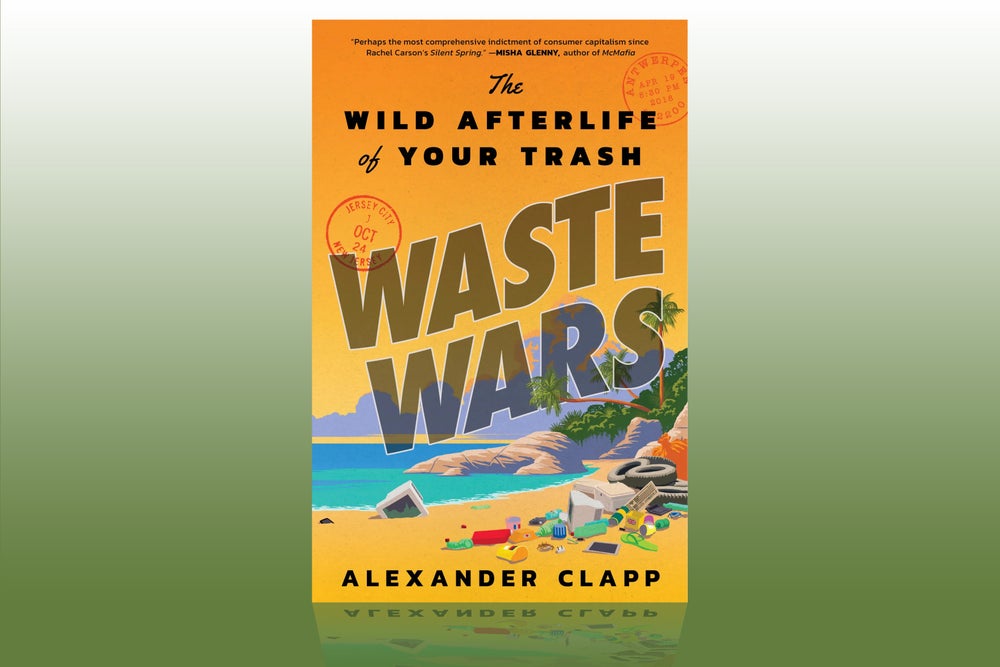
Your Garbage Has a ‘Wild Afterlife’ on the International Black Market

Leave a comment

Click the link below the picture

.

Sorting your trash and recycling is common practice: break down the cardboard boxes, separate the compostable material and plastics and put them into the correct containers, put the trash on the curb, and you’re done. But what happens next is where the story gets interesting. A billion-dollar industry exists around moving countless tons of waste from wealthy countries to poorer ones. For two years journalist Alexander Clapp lived out of a backpack and visited the smelliest parts of the most beautiful places on Earth—looking for hidden dump sites in the Venezuelan jungle and scaling mountains of trash in Ghana—for his new book Waste Wars: The Wild Afterlife of Your Trash. He tracks the massive scope of waste management, from top-level international relations to underground whisper networks, and reveals the dirty underbelly of what happens to our trash.Scientific American spoke with Clapp about the people who break apart and sort our trash all over the world, the growth of the global waste economy, and the future of waste management.

[An edited transcript of the interview follows.]

Can you tell me where our exported garbage and not-quite-recyclable goods end up?

It would depend what type of trash we’re talking about, when we’re talking about it, or from which country it’s being discarded. But a lot of global trash over the last 30 to 40 years has been going to poor countries under the guise that it’s being recycled. That trash will get broken down, or someone will attempt to make some use out of it—to extract some profit from it—and that’s an extremely dangerous an

d often lethal process where all sorts of contaminants and forever chemicals enter local ecosystems. They go into the air, they go into the water, and they do huge amounts of damage—damage to, disproportionately, the most vulnerable populations in the world.

Why would one country ever, under any circumstances, buy the garbage from another country? Is someone getting scammed, or is there a legitimate reason to buy boatloads of biological, technological, or toxic waste?

That is one of the reasons why I got interested in this topic. We send our waste to the very countries that cannot handle their own domestic waste outputs. I think the dichotomy that’s worth keeping in mind with the waste trade is that it’s not necessarily rich countries versus poor countries; within poor countries, you have importers who are actually buying the waste for pennies, and they are very much part of the problem. The most important thing to understand about the waste trade is that in the 1980s, many poor countries felt that they had no option other than to import waste from the so-called global north. They were heavily indebted; they were desperate for factories, ports, industry of any kind. And so I think there’s a really insipid, disturbing history of how and why the waste trade began.

Which leads to the question—how much money is actually involved in this global waste economy?

Let’s say it costs $140 to put a ton of old plastic in a landfill. A waste broker would actually have to pay the landfill in order to bury that plastic. But what if instead you could sell that plastic to an importer in Malaysia for a few dollars? Then you’re not paying $140; you’re actually making $2 or $3. That said, a lot of the waste trade, by nature, is operating underground. If you’re sending waste to another country, you’re not calling it trash on any export document—you’re calling it recyclable material. One thing that I hope my book encourages or leads people to question is how much of our waste is actually moving around the world.

What are you most interested in regarding the future of this waste economy and of waste management on a global scale?

I think what’s really interesting about the global waste trade is that in many ways it’s like the global drug trade. You see organized crime groups that are getting more and more involved in the waste trade because, frankly, the supply of this stuff is endless. The punishment if you get caught moving waste is negligible. I think the future of waste export and waste movement is organized crime. I think they’re going to see this as a monumentally lucrative opportunity.

What was the most shocking story you uncovered while researching for this book?

The most shocking story probably was with the cruise ship-dismantling industry in Türkiye. On the Aegean coast of Türkiye, there’s a [town] called Aliağa where American cruise ship companies disproportionately send a lot of their ships to be dismantled. And you would think that the process of deconstructing a cruise ship would be mechanically refined, but it’s actually kind of this maniacal process done almost entirely by hand, where you have armies of helmeted men filing into these cruise ships and breaking this stuff up. One thing that I found was that most of the men who get recruited into doing this work have little idea of what they’re doing. They’ve never seen the ocean before. They were recruited from the middle of Türkiye and given a week’s worth of training. It’s absolutely excruciating.

What was the most surprisingly common occurrence across all of your research?

In terms of the most common story that I would hear, it’s the extent to which, in poor countries, trash, and especially plastic, is just regarded as another commodity. Generally, [the people I encountered didn’t] think about this stuff as a potentially toxic substance. That was shocking to me. In places such as Java and [other parts of] Indonesia, hundreds of tons of Western plastic are imported every week and used as fuel in tofu factories, and then that tofu gets exported around the world’s most populous island, Java]. I was just struck by how kind of pedestrian it seems to just burn plastic in places to get rid of it or to find some use for it.

.

https://static.scientificamerican.com/dam/m/2d2ada4de20a8964/original/sa0625_Waste_Wars.jpg?m=1752170960.599&w=1000

.

.

Click the link below for the complete article:

https://www.scientificamerican.com/article/waste-wars-tracks-the-wild-afterlife-of-garbage-on-an-international-black/

.

__________________________________________
Malcolm-Jamal Warner, actor who starred as Theo in ‘The Cosby Show,’ dead at 54

Leave a comment

Click the link below the picture

.

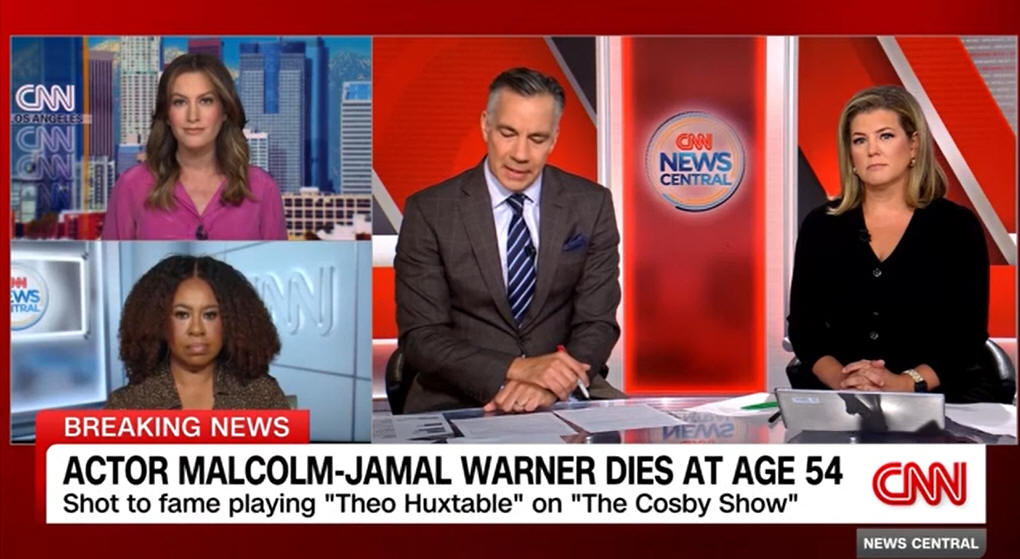
Malcolm-Jamal Warner, an actor and artist who rose to fame as a child as Theodore Huxtable on “The Cosby Show,” has died, according to a source close to the actor.

He was 54.

Warner died in a drowning accident in Costa Rica, where he was on vacation with his family, the source said.

Warner was swimming at Playa Grande near the town of Cahuita in the province of Limón on the Caribbean coast of Costa Rica around 2:30 p.m. local time Sunday, when a current pulled him deeper into the ocean, according to the Associated Press.

Costa Rica’s Judicial Investigation Police told CNN on Monday people who were on the beach tried to help Warner, but he was declared dead by the Red Cross.

CNN has reached out to representatives for Warner for further information.

A native of New Jersey, Warner started acting at age 9, making appearances in shows like “Fame.” He was a young teen when he was cast as the only son of Bill Cosby and Phylicia Rashad’s characters, Heathcliff and Claire Huxtable, in “The Cosby Show,” which ran from 1984 to 1992.

Warner later reflected on the legacy of the popular, Emmy-winning sitcom.

“The fact that the Cosby Show for Black America and White America alike finally legitimized the Black middle class, which has always been around since the inception of this country, but, as with everything, is not legitimate til it’s on television,” Warner said. “When the show first came out, there were White people and Black people talking about (how) the Huxtables don’t really exist, Black people don’t really live like that. Meanwhile, we were getting tens of thousands of fan letters from people saying, thank you so much for this show.”

Warner was nominated for a Primetime Emmy in 1986 for his supporting work on “The Cosby Show.”

By the time the series was over, Warner said in a 2013 interview, “we were still on top enough to go out on top, but we were ready to live our own lives.”

“We were all ready to move on and as Mr. Cosby said, by that point, we had pretty much said all that we could say,” Warner added.

Warner’s comments on Cosby’s misconduct allegations

When dozens of sexual misconduct allegations against Cosby came to light years later, Warner acknowledged his sadness, saying he felt the sitcom’s legacy had been “tarnished.”

“My biggest concern is when it comes to images of people of color on television and film, no matter what … negative stereotypes of people of color, we’ve always had ‘The Cosby Show’ to hold up against that,” Warner told The Associated Press in a 2015 interview. “And the fact that we no longer have that, that’s the thing that saddens me the most because in a few generations the Huxtables will have been just a fairy tale.”

Cosby denied all the allegations. A 2018 sexual assault conviction against him was later overturned.

Later career

As much as he honored playing Theo, Warner also worked hard to show how multifaceted he was, including being a Grammy-winning musician.

He won best traditional R&B performance in 2015 for the song “Jesus Children.” He was also nominated for a Grammy in 2023 for best spoken word poetry album.

Warner spoke with CNN in 2017 about his music and becoming a father.

“Being a new parent, I have a lot of new material for the music,” he said at the time. “It’s really awesome and right now, my daughter’s four months, so I don’t have to tell her ‘no.’”

Warner continued working steadily in television throughout his career, with credits including “Touched by an Angel,” “Community,” “Key and Peele,” “Suits,” “Sons of Anarchy,” and “American Horror Story.”

Warner also starred opposite Eddie Griffin in the series “Malcolm & Eddie” for four seasons between 1996 and 2000.

His more recent acting credits include “The Resident,” “The Wonder Years” reboot, “Grownish,” and “9-1-1.”

Last year, Warner launched his podcast “Not All Hood” with the goal of continuing to be a voice that explores the diverse experiences of the Black community and touch on themes of representation in media.

“When we talk about the Black community, we tend to speak of it as a monolith when the reality is there are so many different facets of the Black community, and we wanted to have a space where we can really explore, discuss, and acknowledge all of those different aspects,” he told People magazine in an interview last year.

.

.

.

Click the link below for the complete article:

https://www.cnn.com/2025/07/21/entertainment/malcolm-jamal-warner-death?fbclid=IwY2xjawLrchVleHRuA2FlbQIxMQABHkI1O5kvKF4XVZQLg9sNNIWHb5C4QuDnj25z71Pt3-V-UUn4o_RTvmamR9Mz_aem_qtYvZKA4KOMt7URuX0hfzQ&sfnsn=mo

.

__________________________________________

The Mistake Parents Make With Chores

Leave a comment

Click the link below the picture

.

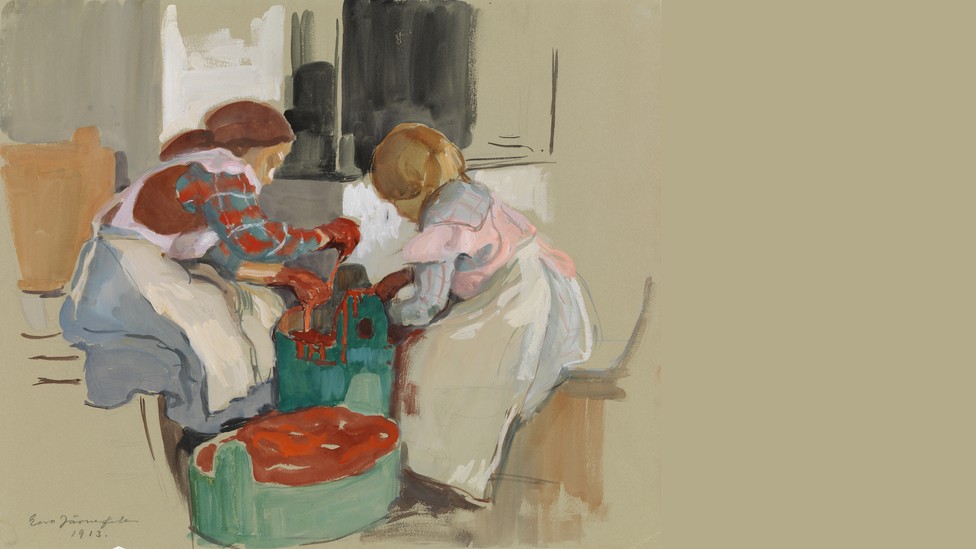
Each September at the Montessori school I run, the preschoolers engage in an elaborate after-lunch cleanup routine. They bustle through the room with sweepers and tiny dustpans, spreading crumbs all over the floor and making a bigger mess than they started with. If any scraps do make it into their dustpans, most of them spill out as the children exuberantly walk to the trash bin.

It would be faster and neater to simply let the teachers do all the tidying up. But our goal is more than achieving a spotless classroom; it’s also helping children develop motor skills, responsibility, confidence, and the ability to clean effectively on their own. Sure enough, by December, the children’s sweeping efforts become more refined. By springtime, if not earlier, they start to pick up other messes throughout the day without a teacher’s prompting. They haven’t just learned to mop and scrub; they’ve taken ownership over their environment.

.

https://cdn.theatlantic.com/thumbor/t3wn-edEzId4T1UKt0aau1LQ80k=/0x0:4800x2700/976x549/media/img/mt/2025/07/2025_07_14_Kids_Do_More_Chores/original.jpgEero Jarnefelt / Heritage Images / Getty

.

.

Click the link below for the complete article:

https://www.theatlantic.com/family/archive/2025/07/children-parents-housework-chores/683606/

.

__________________________________________
A Longevity Expert Breaks Down the Science and Hype of Biological Aging Tests

Leave a comment

Click the link below the picture

.

How old are you really? Counting birthdays may be a common tally, but your “age” isn’t determined by time alone. New research increasingly shows the importance of considering chronological age as something very different from biological age, in which the body and its cells, tissues, and organs all have separate “clocks” that can tick at different speeds.

“Calculating biological age, I think, is core to the advances we’ve made in the science of aging,” says Eric Topol, a cardiologist and genomics professor at Scripps Research in California. “It’s a way you can tell if a person, organ, or any biological unit is at pace of aging—if it’s normal, abnormal, or supernormal.”

In his new book Super Agers: An Evidence-Based Approach to Longevity, Topol delves into the recent surge in public interest in biological aging and the accelerating quest to refine ways to measure it, giving a more precise picture of a person’s longevity prospects and of potential ailments that can be prevented or treated early. Scientific American spoke with Topol about the latest research in biological aging, factors that might speed it up or slow it down, and what it can tell us about our health.

How is biological age determined, and how has the research evolved?

The real beginning of this research started more than a decade ago by geneticist Steven Horvath with his “clock” [test], with which, basically using saliva, you could look at specific genetic markers in a genome and predict a person’s biological age. His clock is really known as an epigenetic clock, or methylation clock. As people age, DNA changes and gets methylated—this is when a methyl group [molecule] attaches to specific nucleotides of DNA. I kind of liken it to the body rusting out. Basically, you’re getting marks at specific parts of the genome that track with aging in humans and every other species of mammal.

In Horvath’s initial test, there clearly was a detection of both alignment with the person’s real age, or chronological age, and when it wasn’t matching up. In other words, if a person’s biological age was off by a few years from their real age, you’d wonder why that is.

Then what’s proliferated in the more than 10 years since has been all these other clocks: protein clocks, RNA clocks, immune system clocks—you name it. Using plasma proteins from a blood sample, we can also clock organs—whether it’s the heart, brain, liver, or kidney. So we have seen just enormous advances in these clocks, and they keep getting refined with added features. There’s a race to get the best clocks to predict survival.

What can biological age tests tell us clinically?

We can detect in an individual if something’s not right at different levels. For example, if your biological age is five years older than your real age, is there an organ that might be linked with that? Then you can use these clocks to see if lifestyle, prevention, or treatment can slow down the pace of aging and get it into alignment with your actual age.

The question is: When will doctors actually start using them? The medical community is very hard to change. So it hasn’t happened yet, but I believe it will eventually. Tests are also made available by commercial companies, but they can be very expensive. You can run an epigenetic test in a very simple way for $10 or $20, while some of these companies are charging $200.

I haven’t seen their publications to be able to say with confidence that they are doing things right, and the lack of standards from one company to the next is disconcerting. They don’t want to shock [customers by telling them] that they’re 10 years older than their real chronological age. Eventually, I believe, we’re going to have high-fidelity epigenetic clocks with no motivation for a provider to hold things back if a person’s data are really bad.

Why might someone biologically age “faster” or “slower” than their actual age?

If you had to pick one mechanism behind why biological age and chronological age are misaligned, it would most likely be because there are some genes that are either protective or linked with accelerated aging, but that’s such a small part of the story. Another root cause appears to be that our immune system gets weaker and less functional as we get older. In the average person, this starts around age 55 to 60. It drops its level of protection, or it gets dysregulated—off track—and it can have an untoward, hyperactive response. Now, when you have that happen, you start to see inflammation in the organs, such as in the arteries of the heart or the brain—it’s what I call “inflammaging.”

Obviously, our lifestyle also has a big impact—eating a really healthy diet that’s not proinflammatory and doesn’t have a lot of ultraprocessed foods or red meat. Good sleep health helps reduce inflammation. There’s only one thing that’s been definitively shown to slow the epigenetic aging process, and that’s exercise. I think these clocks ultimately are going to be very good incentives for people to adopt a healthy lifestyle. We can’t get everybody to do all these things that we know help them, but if they get their own data and they see something’s off track, the hope is that they’d [change their lifestyle]. That’s, of course, just one of the ways to prevent diseases. There are also drugs and other treatments.

.

https://static.scientificamerican.com/dam/m/7accf12072581313/original/figures-and-clockface.jpg?m=1752266126.096&w=1000DNY59/Getty Images

.

.

Click the link below for the complete article:

https://www.scientificamerican.com/article/what-new-biological-age-clocks-say-about-longevity-according-to-eric-topol/

.

__________________________________________

Francisco Bravo Cabrera Art

Leave a comment

From

fineartamerica

Click the link below the picture

.

I have been a professional artist since 2003, after my first exhibition in Istanbul, Turkey. Since then, I have exhibited extensively in New York, Miami, Sarasota, Bradenton, and Key Biscayne, Florida. In Europe, which is my home base, I have exhibited in my city of Valencia as well as Barcelona, Palma, and Sevilla, Spain; Dublin, Ireland, as well as Izmir, Turkiye. My drawings and paintings hang in many private collections throughout Europe, America, and Asia. I work on my paintings in the styles I have developed over the years, being ‘JaZzArT’ and ‘Surreal-Expressionism’. I graduated from Florida International University with a degree in Fine Arts (Theatre) and Psychology. I have created designs for theatre and for dance events. Now I embark in this new adventure and I am very enthusiastic about it. I have created images especially to be transferred as fine art prints. I hope you will like and join with my ‘JaZz DeSigNs’, especially if you love music, especially if you love LIFE! I come to you from my studios in Spain with something I think is new, fresh, different, and exciting.

.

.

.

Click the link below for the complete article:

https://fineartamerica.com/profiles/francisco-bravocabrera

.

__________________________________________
The main differences between Donald Trump and Adolf Hitler

Leave a comment

From

Duckduckgo

Click the link below the picture

.

The main differences between Donald Trump and Adolf Hitler include their backgrounds and paths to power; Trump was a wealthy businessman who took control of an existing political party, while Hitler rose from modest beginnings and built his own party from the ground up. Additionally, their historical contexts and the nature of their leadership styles also differ significantly

.

Trump – Hitler

.

.

Click the link below for the complete article:

https://duckduckgo.com/?q=what+is+the+difference+between+trump+and+hitler&ko=-1&ia=web

.

__________________________________________

Trump’s latest demand: Washington football and Cleveland baseball teams should change names back

Leave a comment

Hmmmm…What is the real reason for this?

Click the link below the picture

.

Trump said Sunday on his Truth Social site that “The Washington ‘Whatever’s’ should IMMEDIATELY change their name back to the Washington Redskins Football Team. There is a big clamoring for this. Likewise, the Cleveland Indians, one of the six original baseball teams, with a storied past. Our great Indian people, in massive numbers, want this to happen. Their heritage and prestige is systematically being taken away from them. Times are different now than they were three or four years ago. We are a Country of passion and common sense. OWNERS, GET IT DONE!!!”

Josh Harris, whose group bought the Commanders from former owner Dan Snyder in 2023, said earlier this year the name was here to stay. Not long after taking over, Harris quieted speculation about going back to Redskins, saying that would not happen.

Guardians president of baseball operations Chris Antonetti indicated before Sunday’s game against the Athletics that there weren’t any plans to revisit the name change.

“We understand there are different perspectives on the decision we made a few years ago, but obviously it’s a decision we made. We’ve got the opportunity to build a brand as the Guardians over the last four years and are excited about the future that’s in front of us,” he said.

Both teams have had their current names since the 2022 seasons. Washington dropped Redskins after the 2019 season and was known as the Washington Football Team for two years before moving to Commanders.

Cleveland announced in December 2020 it would drop Indians. It announced the switch to Guardians in July 2021. In 2018, the team phased out “Chief Wahoo” as its primary logo.

The name changes had their share of supporters and critics as part of national discussions about institutions and teams to drop logos and names considered racist.

The Guardians are the fifth name for Cleveland’s baseball franchise. It joined the American League in 1901 as one of the eight charter franchises as the Blues. It switched to the Bronchos a year later and used the Naps from 1903 through 1914 before moving to the Indians in 1915.

Washington started in Boston as the Redskins in 1933 before moving to the nation’s capital four years later.

Washington and Cleveland share another thing in common. David Blitzer is a member of Harris’ ownership group with the Commanders and holds a minority stake in the Guardians.

.

https://s.yimg.com/ny/api/res/1.2/0GtUVHehuBMAlws21pQMnA--/YXBwaWQ9aGlnaGxhbmRlcjt3PTEyNDI7aD04Mjg-/https://media.zenfs.com/en/ap.org/07f827ade5a070705bb53fe3979a0dfdWorkers finish installing the Cleveland Guardians sign above the scoreboard at Progressive Field, March 17, 2022, in Cleveland. (AP Photo/Ron Schwane, file)

.

.

Click the link below for the complete article:

https://www.aol.com/trumps-latest-demand-washington-football-175224139.html

.

__________________________________________

DeepMind’s AlphaGenome Aims to Decode DNA’s ‘Dark Matter’

Leave a comment

Click the link below the picture

.

The puzzle seems impossible: take a three-billion-letter code and predict what happens if you swap a single letter. The code we’re talking about—the human genome—stores most of its instructions in genetic “dark matter,” the 98 percent of DNA that doesn’t make proteins. AlphaGenome, an artificial intelligence system just released by Google DeepMind in London, aims to show how even tiny changes in those noncoding sections affect gene expression.

AlphaGenome shows promise in predicting how mutations in these regions cause diseases—from certain cancers to rare disorders where crucial proteins never get made. By revealing these hidden control switches, AlphaGenome could help researchers design therapies that target genetic conditions, potentially aiding millions of people.

But to understand the complexity of the task for which AlphaGenome was created, one must consider how the definition of a “gene” has evolved. The term, coined in 1909 to describe invisible units of heredity (as proposed by Gregor Mendel in 1865) initially carried no molecular baggage. But by the 1940s, the “one gene, one enzyme” idea took hold. And by the 1960s, textbooks taught that for a stretch of DNA to be properly called a gene, it had to code for a specific protein.

Over the past two decades, the definition has broadened with the discoveries of genes that code for the numerous types of RNAs that don’t get translated into proteins. Today a gene is considered to be any DNA segment whose RNA or protein product performs a biological function. This conceptual shift underscores the genome’s real estate map: Only about 1 to 2 percent of human DNA directly codes for proteins. But with the broader definition, roughly 40 percent is gene territory.

What remains unaccounted for is significant: more than a billion units of code that can determine how and how often genes get activated. Because relevant clues lie far apart and play out through complex cycles of gene regulation, decoding them has been among biology’s hardest challenges. AlphaGenome’s goal is to understand how these regions affect gene expression—and how even tiny changes can tilt the entire body’s balance between health and disease. To do so, the AI system uses a DNA sequence with a length of up to one million letters as input—and “predicts thousands of molecular properties characterising its regulatory activity,” according to a statement issued by DeepMind.

Already, AlphaGenome has replicated results from genetics labs. In a June 2025 preprint study (which has yet to be peer-reviewed), AlphaGenome’s team described using the model to run a simulation that mirrored known DNA interactions: mutations that act like rogue light switches by cranking a gene into overdrive in a certain type of leukemia. When AlphaGenome simulated interactions on a stretch of DNA containing both the gene and the mutation, it predicted the same complex chain of events that were already observed in lab experiments.

Though AlphaGenome is currently available only for noncommercial testing, responses in the scientific community have been enthusiastic so far, with both biotech start-ups and university researchers publicly expressing excitement about the system’s potential to accelerate research.

Limits remain. AlphaGenome struggles to capture interactions that are more than 100,000 DNA letters away, can miss some tissue-specific nuances and is not designed to predict traits from a complete personal genome. Complex diseases that depend on development or environment also lie outside its direct scope. The system does suggest wide-ranging uses, however: By tracing how minute changes ripple through gene regulation, it could pinpoint the roots of genetic disorders. It could help in the design of synthetic DNA. And above all, it could offer a faster way to chart the genome’s complex regulatory circuitry.

.

https://static.scientificamerican.com/dam/m/c4036a43eb1e2fa/original/dna_sequence_with_magnifying_glass.jpg?m=1752255248.428&w=1000KTSDesign/Science Source

.

.

Click the link below for the complete article:

https://www.scientificamerican.com/article/deepminds-alphagenome-uses-ai-to-decipher-noncoding-dna-for-research/

.

__________________________________________

The Majority of Parents Are Just ‘Getting Through the Day’ Instead of Enjoying It

Leave a comment

Click the link below the picture

.

Last night I attempted (rather unsuccessfully) to sleep through the sound of my son’s incessant coughing from his bedroom. (Far too) Soon, I woke up to a hungry baby, and one daughter who needed help getting ready for dance camp, while another wanted a ride to the gym. It was all in a matter of 10 minutes.

Upon returning from the urgent gym run, I could no longer put off a growing list of doctor and dentist appointments to schedule. At the same time, emails are flooding my inbox about summer math modules, practice schedule changes, and fees for upcoming clinics. 

The day ahead is packed with carpools, errands, feedings, and meals to plan and prepare. All I can think is, “Just let me get through this day.” 

This is why I completely relate to the sentiments in a new report from Duckbill and The Harris Poll. They surveyed American parents and found that most of us (65%) are “just getting through the day” rather than enjoying it.1 Interestingly, while married parents who make more than $100,000 are slightly less burdened by the tasks of modern life, half still report that they are just doing their best to get through the day, too.

As a mom of six, days like the one I mentioned are not the exception. They are the rule. I rush around trying to make life happen for my family. I’m constantly pulled away from conversations and thoughts by requests to find a Lego and questions like, “What can I do?” or “What can I eat?” 

Through it all, I’m also responsible for uplifting six people with problems ranging from getting a boo-boo to getting their heart broken. It’s exhausting and leaves little time to focus on myself.

Finding Joy Amid the Chaos of Modern Parenting

Not all is lost, however. Given that this study and others are finally shining a light on parents’ mental load, a major benefit has emerged: We are also being encouraged to start thinking about ways to refocus our attention on joy.

Here’s what I try and focus on—even when it feels impossible on some days. 

Remembering that this, too, shall pass 

For me, seeing how quickly my kids are growing up gives me an immense sense of appreciation for just how fleeting this time with them really is.

My oldest is about to head off to college—although I swear it was only a few years ago she was a little girl dressing up in Disney princess dresses and asking for string cheese. I also have younger children, with my littlest being just 5 months old.

The kids’ big age gap puts a lot in perspective, and I am able to actually enjoy their challenging stages, rather than just wishing they would move on from teething, tantrums, or middle school. It’ll be over way too soon, I now realize. 

.

https://www.parents.com/thmb/hAbDKLoVqXwRMnkrtCET2-xTSEk=/750x0/filters:no_upscale():max_bytes(150000):strip_icc()/Parents-Getting-Through-the-Day-7ce9e322cdd14beea8d2f4b905a60ff7.jpgPhoto:  Parents/GettyImages/LordHenriVoton

.

.

Click the link below for the complete article:

https://www.parents.com/parents-are-just-getting-through-the-day-11759316

.

__________________________________________

Older Entries Newer Entries

Amor Entre Estrellas

¡Bienvenido de vuelta viajero!

Heart of Loia `'.,°~

so looking to the sky ¡ will sing and from my heart to YOU ¡ bring...

Michael Ciullo

CEO and Founder of Nsight Health

MRS. T’S CORNER

https://www.tangietwoods

Nelson MCBS

Catholic News, Prayers, HD Images, Rosary, Music, Videos, Holy Mass, Homily, Saints, Lyrics, Novenas, Retreats, Talks, Devotionals and Many More

Global geopolitics

Decoding Power. Defying Narratives.

Talk Photo

A creative collaboration introducing the art of nature and nature's art.

Movie Burner Entertainment

The Home Of Entertainment News, Reviews and Reactions

Le Notti di Agarthi

Hollow Earth Society

C r i s t i a n a' s Fine Arts ⛄️

•Whenever you are confronted with an opponent, conquer him with love.(Gandhi)

TradingClubsMan

Algotrader at TRADING-CLUBS.COM

Comedy FESTIVAL

Film and Writing Festival for Comedy. Showcasing best of comedy short films at the FEEDBACK Film Festival. Plus, showcasing best of comedy novels, short stories, poems, screenplays (TV, short, feature) at the festival performed by professional actors.

Bonnywood Manor

Peace. Tranquility. Insanity.

Warum ich Rad fahre

Take a ride on the wild side

Madame-Radio

Découvre des musiques prometteuses (principalement) dans la sphère musicale française.

Ir de Compras Online

No tiene que Ser una Pesadilla.

Kana's Chronicles

Life in Kana-text (er... CONtext)

Cross-Border Currents

Tracking money, power, and meaning across borders.

Jam Writes

Where feelings meet metaphors and make questionable choices.

emotionalpeace

Finding hope and peace through writing, art, photography, and faith in Jesus.

WearingTwoGowns.COM

The Community for Wounded Healers: Former Medical Students, Disabled Nurses, and Faith-Fueled Pivots

...

love each other like you're the lyric to their music

Luca nel laboratorio di Dexter

Comprendere il mondo per cambiarlo.

Tales from a Mid-Lifer

Mid-Life Ponderings

Creative

Travel,Tourism, Life style "Now in hundreds of languages for you."

freedomdailywriting

I speak the honest truth. I share my honest opinions. I share my thoughts. A platform to grow and get surprised.

The Green Stars Project

User-generated ratings for ethical consumerism

Cherryl's Blog

Travel and Lifestyle Blog

Sogni e poesie di una donna qualunque

Questo è un piccolo angolo di poesie, canzoni, immagini, video che raccontano le nostre emozioni

My Awesome Blog

“Log your journey to success.” “Where goals turn into progress.”

pierobarbato.com

scrivo per dare forma ai silenzi e anima alle storie che il mondo dimentica.

Thinkbigwithbukonla

“Dream deeper. Believe bolder. Live transformed.”

Vichar Darshanam

Vichar, Motivation, Kadwi Baat ( विचार दर्शनम्)

Komfort bad heizung

Traum zur Realität

Chic Bites and Flights

Savor. Style. See the world.

ومضات في تطوير الذات

معا نحو النجاح

Broker True Ratings

Best Forex Broker Ratings & Reviews

Blog by ThE NoThInG DrOnEs

art, writing and music by James McFarlane and other musicians

fauxcroft

living life in conscious reality

Srikanth’s poetry

Freelance poetry writing

JupiterPlanet

Peace 🕊️ | Spiritual 🌠 | 📚 Non-fiction | Motivation🔥 | Self-Love💕