Sleep is a semiconscious state, but there are neurons firing in the brain even when all seems quiet. Now brain activity during the deepest sleep phase could make it possible for people to communicate with the waking world during lucid dreaming.
If someone is lucid dreaming, they are aware they are dreaming and able to manipulate what happens in the dream. Sleep expert Michael Raduga of Phase Research Center has developed a “language” that’s intended to allow people to communicate while in that state. Called Remmyo, the first language of its kind, it relies on specific facial muscle movements that can occur during rapid eye movement (REM) sleep. Remmyo can be learned during waking hours like any other language. Anyone capable of lucid dreaming could potentially communicate in Remmyo while asleep.
“You can transfer all important information from lucid dreams using no more than three letters in a word,” Raduga, who founded Phase Research Center in 2007 to study sleep, told Ars. “This level of optimization took a lot of time and intellectual resources.”
Reaching lucidity
It takes about 90 minutes to transition from lighter sleep phases to REM sleep. REM sleep brings on a state of sleep paralysis—arm and leg muscles cannot move, which keeps us from playing out what is happening in the dream. Meanwhile, brain waves, heart rate, and blood pressure all become similar to the levels seen in the awake state. Breathing becomes faster and erratic. Even though eyelids remain closed, the sleeper’s eyes constantly move from side to side, giving the state its name.
This is when most dreams occur, including lucid dreams. Those are still an enigma but thought to be a hybrid of the waking and sleeping states.
Remmyo consists of six sets of facial movements that can be detected by electromyography (EMG) sensors on the face. Slight electrical impulses that reach facial muscles make them capable of movement during sleep paralysis, and these are picked up by sensors and transferred to software that can type, vocalize, and translate Remmyo. Translation depends on which Remmyo letters are used by the sleeper and picked up by the software, which already has information from multiple dictionaries stored in its virtual brain. It can translate Remmyo into another language as it is being “spoken” by the sleeper.
No parent wants their child to know about war. We want our kids to feel safe, loved, and free from worry, but this is not always possible. Wars continue to happen in all corners of the world, and children are going to find out about them whether we want them to or not. They’ll find out at school, from friends, online. And even though it feels terribly difficult, especially when we are deeply afraid ourselves, there will come a time when we need to talk to our kids about frightening world events like war. Here are a few things to consider as you approach these difficult conversations.
Consider their age.
While every child and every family is different, UNICEF recommends that parents try to be mindful of age-appropriateness when discussing big world events like war. Some younger children might not yet have the capacity to comprehend. UNICEF recommends parents “speak calmly and be mindful of your body language” as children are sensitive to our emotional cues and facial expressions.
Stay ahead of the news.
If there is going to be considerable news coverage of a war or conflict, and you know your child will be likely to find out, try to be the first one to explain it to them. Dr. Harold Koplewicz, president of the Child Mind Institute and child psychologist, advises parents and caregivers to try to break the news to their children before they have the chance to stumble across a frightening headline or hear the news from another child. “Don’t delay telling your children about what’s happened … You want to be able to convey the facts, however painful, and set the emotional tone,” Koplewicz suggests.
.
Wars continue to happen in all corners of the world, and children are going to have questions.
Amid the pandemic, TikTok became a fountain of information for, well, just about anything you might be even a little bit curious about. This has brought about a need for social media users to vet their sources, so as to not fall victim to believing and perpetuating the often dangerous misinformation that can go viral. But, thanks to credentialed professionals who have taken to the app, it’s also provided a sense of community, awareness, and access to information about various health-related issues and conditions.
In 2020, Sasha Hamdani, MD, a board-certified psychiatrist and attention deficit hyperactivity disorder (ADHD) specialist based in Kansas City, Missouri, joined TikTok after noticing a need for more evidence-based information about the neurodevelopmental chronic condition on the app. As both a provider and person who has ADHD, Dr. Hamdani is uniquely suited to help others manage their ADHD and understand the way their brain works; she’s also passionate about helping folks with ADHD best care for themselves and prevent burnout.
Posting under the handle @thepsychdoctormd on Instagram and TikTok, Dr. Hamdani’s feed often recounts what living with and treating ADHD is like for her—the ups, the downs, the funny, the wrenching, the frustrating, and all the in-betweens. But the idea that she’d one day share her personal experiences to help so many others manage their ADHD once felt unthinkable.
Dr. Hamdani was diagnosed with ADHD in fourth grade, but didn’t understand what exactly that meant for her until she was in college because her parents had managed her medications and routines—they also hadn’t actually told her what she had.
Like many people I know, I always pee right before I leave the house. This has been a non-negotiable habit ever since the time I was stuck in traffic on the freeway with a painfully full bladder and no relief in sight. It’s become even more important during the pandemic—since many public restrooms are closed, it feels as essential to pee before going out for a social-distanced walk as it is to grab your mask and hand sanitizer.
.
However, while the “just in case” pee seems like a smart strategy, it might actually be pretty bad for your bladder. At least, that’s according to a recent viral TikTok video from Bethany Henry Clark, PT, DPT. In the video, she says that making yourself pee when you don’t feel the immediate need to do so can, over time, actually make you have to pee more and more often. (Mind. Blown.)
I had never heard of this before, so I got in touch with board-certified urologist Lamia Gabal, MD, to get her thoughts on “just in case” peeing.
First off, a normal bladder capacity is about 10-15 ounces, Dr. Gabal says. (Many things can affect this, such as pressure on your bladder from pregnancy or constipation.) In general, it’s normal to pee six to eight times in a 24-hour period if you drink 64 ounces of fluid a day, but this depends on how much you drink. “I often tell my patients, ‘What goes in, must come out!'” she says.
London, a 13-year-old girl who lives in suburban Maryland, took a more considered approach to joining social media than many teenagers do. Knowing her mom was skeptical, London put together a presentation making a case for why she should join TikTok, complete with promises such as allowing her mother to review her posts in advance. It worked: On London’s 13th birthday, she joined TikTok.
Since doing so, she has experienced some of the joys of social media — experiences that were not possible in a less networked world. In her living room, London streams popular dance videos onto a TV, and sometimes her mother (a former dancer) and sister (who has nonverbal autism) join her. TikTok also allows London to stay in closer touch with friends.
Yet the downsides of social media are never far away.
London is constantly confronted with images of people who somehow seem prettier, richer, more fashionable, and more popular. Sometimes, she stumbles on truly disturbing videos, like one claiming to show a woman flushing her baby down a toilet.
Above all, social media takes the normal anxieties of teenage life and hypercharges them. When another girl in London’s school stops replying to her messages at night, London ends up crying. When a group of girls gather to get dressed for a dance, they obsess not only over how they look, but how their before-and-after videos will play on TikTok.
.
London, 13. Credit… Dee Dwyer for The New York Times
When I was a kid in my Alabama hometown, every year brought the same parties in our Nigerian-American community: the Fourth of July cookout in the park; the Christmas throw-down in the hotel banquet hall, where my family and our friends wore our finest traditional clothing, a sea of blinding-bright textures and elaborate head ties, called geles, that stretched toward the ceiling. During those holiday parties, as Fela Kuti and King Sunny Adé played from the speakers, I inevitably ended up staring at my mother’s girlfriends, other married (but sometimes divorced or single) women, as they floated around the hall, eating, talking, laughing. Their hair and makeup were exquisitely done, with big curls and updos, red lipstick, and vivid eye shadow; their outfits, planned weeks in advance, melded glamour and comfort, so they could sweep you up into their folds of crinkly, glittering fabric as they danced; and their jewelry, usually gold or coral, was dramatic. Their shoes and purses matched, obviously. Their swagger seemed both over-the-top and effortless.
I was never exactly sure how to define my relationship to those women in my mom’s life. My mom’s sisters were naturally my aunts, beloved by my brothers and me. But her friends were also a constant part of the background—in our home, at gatherings at the houses of my parents’ friends, and at important moments like birthdays and graduations—and though they weren’t relatives, my mom instructed me to refer to all of them as “Auntie” anyway. The women were not my “age-mate,” as Nigerians like to say, not people I could treat like my school and neighborhood friends, and over time, they became like family. They flooded me with love and praise—and they disciplined me, shouting my name as a warning when I got out of line or ran around like a heathen. (In fact, sometimes I wanted to shout back that they were not my mom.)
.
Model Adut Akech sits pretty in a many-patterned Duro Olowu dress (ikram.com) and up-to-there gele, or head tie. Octave Jewelry earrings. Victoria Beckham boots. In this story: Hair, Shiori Takahashi; makeup, Ammy Drammeh. Photographed by Nadine Ijewere, Vogue, December 2020
Some content on this page was disabled on April 15, 2025 as a result of a DMCA takedown notice from Guardian Media Group. You can learn more about the DMCA here:
Cece Xie doesn’t mince words. “I really do think that I hate quitting,” the 32-year-old says. Although she was raised with the notion that quitting was bad, somehow, the lawyer and writer became an advocate for quitting. She never quite pictured a career outside of law, but when Xie connected with a literary agent, she began to imagine an alternate future, one as an author, beyond the large law firm where she was a sixth-year associate. The problem was, she never had time to work on her book proposal. “The fact that my current career was getting in the way of me even working on this book proposal at all,” Xie says, “I kind of came to a fork in the road, and I was like, it’s stupid for me to not pursue this thing just because I have a career that I have spent time on.”
So, in early 2022, she quit. Stepping away from her day job afforded Xie the time to not only finish her proposal, but to sell it. Now, she has the time and mental space to work on the manuscript and start a new law firm with a former coworker. “It’s kind of fun,” she says, “to just see where life leads and follow the possibilities in a way that I don’t think I ever let myself, or that corporate structures really don’t allow you to do.”
The act of quitting has earned notoriety. In American culture especially, those who give up on a practice, a hobby, or a goal are considered unambitious, lazy, even a failure. In the book Quitting: A Life Strategy, author Julia Keller traces the origins of the negative view of quitting to the Industrial Revolution in the 19th century. Success was equated with hard work and perseverance through adversity. “If you weren’t successful, it just meant you didn’t work hard enough,” Keller says. “That very much served the interests of the people in power, because if you want to say to people, ‘Well, the reason you’re still poor and downtrodden is because you didn’t work hard.’”
Success is hardly won on grit alone. Rather, Keller argues, quitting can help you achieve your goals just as effectively as perseverance. “You abandon old ways and embrace new ways,” she says, “you abandon old things and do new.”
Instead of being seen as a failure, quitting can be an opportunity to reclaim time and to rethink passions, relationships, and accomplishments. There is power in abandoning what no longer serves you — that is, if you’ve given it a fair shot.
“You can’t just be pursuing all the time,” Xie says, “without quitting.”
Maybe you’re inside your house, or walking through the park down the street. The scene around you is vividly real, yet altered in ways that are making you feel uneasy. Family and friends appear, but conversations produce a sense of anxiety or even dread. Disturbing emotions begin to build into fear, and then terror. You’re being chased. You’re trapped. You’re falling. Your life is in grave danger—then you’re suddenly jolted awake.
Emerging from nightmares, sweaty and with a pounding heart, provides at least a momentary sense of relief. It wasn’t real.
But the lasting effects of regular nightmares are very real. Nightmare disorder, a condition in which disturbing dreams are frequent and significantly impact life by producing fatigue or lasting feelings of unease and anxiety, is a surprisingly common ailment. In the United States, around 4 percent of adults—more than 10 million people—are affected. For those with nightmare disorder, lying down for a good night’s sleep can be an ordeal. They know that after they close their eyes, their brains will likely be flooded with negative emotions, and they’ll revisit a dreamworld they’d much rather avoid.
Now, a study published this week in Current Biology suggests an intriguing method that might help sleepers take more control of their dreams. Sounds played during sleep may reduce the frequency of nightmares and promote positive emotions that can help lead to a better slumber.
Existing therapies coach sleepers to imagine and rehearse alternate happy endings to their nightmares before bed, a practice known to significantly reduce bad dreams. Now, Swiss scientists aim to supercharge this idea by associating those happy endings with an audio cue that will trigger them during sleep. When nightmare disorder sufferers listened to a piano chord while they practiced imagining a good dream, then heard that same chord while they were in REM sleep, bad dreams were frequently kept at bay.
“We observed a spectacular clinical improvement, with a fast decrease of nightmares, together with dreams becoming emotionally more positive,” says Sophie Schwartz, a neuroscientist at the University of Geneva and co-author of the study. The decrease in nightmare frequency also showed staying power, lasting for at least three months after the audio experiment ended.
.
Roughly 4 percent of adults in the United States have chronic nightmares. janiecbros via Getty Images
To be a U.S. teenager in 2023 is both the same as it ever was and astoundingly different from even a generation ago. Along with all the classic challenges of growing up—grades, parents first loves—looms a crop of newer ones: TikTok, gun violence, political division, the whipsaw of COVID-19, the not-so-slow creep of climate change.
“The main domains are the same: school, home, family, and peers,” says Dr. Asha Patton-Smith, a child and adolescent psychiatrist at Kaiser Permanente in Virginia. But the stressors that emerge within those domains have changed tremendously in a world where the internet and real life have largely blurred into one, with everything from school to social interaction now happening at least partially online and a fire hose of bad news always only a swipe away.
This new world has taken a toll on U.S. teenagers if the staggering data on adolescent mental health are any indication. In 2020, 16% of U.S. kids ages 12 to 17 had anxiety, depression, or both, a roughly 33% increase since 2016, according to an analysis by health-policy research group KFF. The following year, 42% of U.S. high school students said they felt persistently sad or hopeless, 29% reported experiencing poor mental health, 22% had seriously considered suicide, and 10% had attempted suicide, according to the U.S. Centers for Disease Control and Prevention (CDC).
These data are sometimes used to argue that kids aren’t as tough as they used to be. But kids see it differently. “Other generations are telling us that we’re a weak generation … and we haven’t lived through this and that,” says 16-year-old Jasmine. “But we’re in a new world experiencing new things … They haven’t experienced half of what we’ve experienced.”
It’s not only big, macro-level societal shifts that are having an effect. CDC data also show that personal traumas like sexual violence, bullying, and social isolation are concerningly common, particularly among teen girls and teens who do not identify as straight—two groups at particularly high risk for poor mental health.
.
“Even though they may not be as bad as what adults are dealing with, we still have problems too. Adults shouldn’t disregard our feelings because we go through things as well. [They don’t] get to minimize our problems.”—Malayah, 14, Georgia Photographs and Interviews by Robin Hammond | Text by Jamie Ducharme
Film and Writing Festival for Comedy. Showcasing best of comedy short films at the FEEDBACK Film Festival. Plus, showcasing best of comedy novels, short stories, poems, screenplays (TV, short, feature) at the festival performed by professional actors.


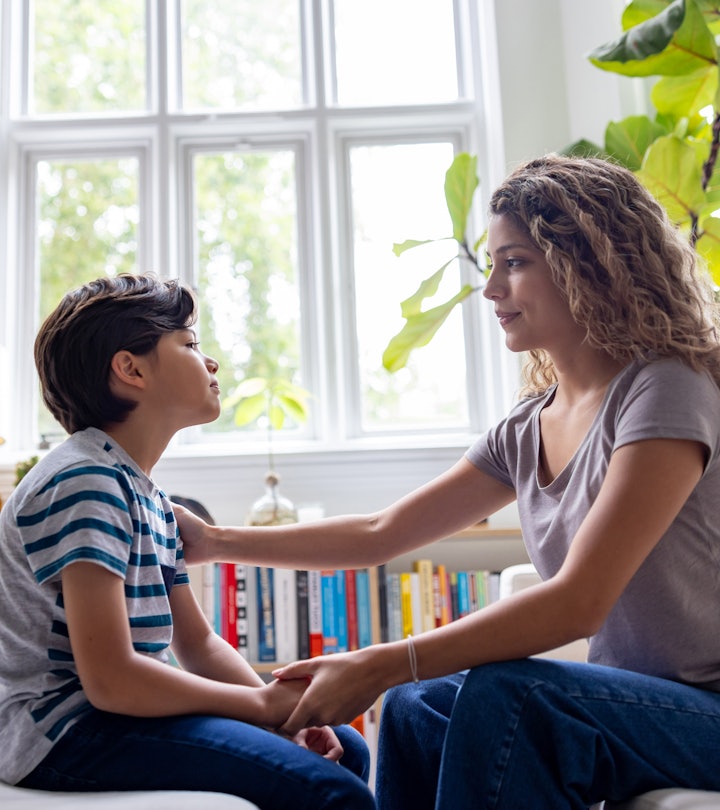 Wars continue to happen in all corners of the world, and children are going to have questions.
 Burnout
 Need to go




:format(webp)/cdn.vox-cdn.com/uploads/chorus_image/image/72634314/PeteGamlen_Vox_Quitting.0.jpg)

:focal(800x602:801x603)/https://tf-cmsv2-smithsonianmag-media.s3.amazonaws.com/filer_public/33/5b/335bac51-8373-439b-bd3d-9b1b8cbe1687/gettyimages-1403850293_web.jpg) Roughly 4 percent of adults in the United States have chronic nightmares.
Roughly 4 percent of adults in the United States have chronic nightmares.