January 10, 2024
Mohenjo
Business, Food For Thought, Human Interest, Political, Science, Technical
amazon, business, Business News, current-events, Future, Hotels, human-rights, medicine, mental-health, research, Science, Science News, technology, Technology News, travel, vacation

Click the link below the picture
.
With the Iowa caucuses days away, politicians will be crisscrossing the state, blowing through small-town Pizza Ranches, filling high school gyms, and flipping pancakes at church breakfasts.
What Iowans will not be seeing are Democrats. President Biden spoke Friday in Pennsylvania, and he and Vice President Kamala Harris both were in South Carolina over the weekend and on Monday. But Iowa, a state that once sizzled with bipartisan politics, launched Barack Obama to the presidency in 2008 and seesawed between Republican and Democratic governors, has largely been ceded to the G.O.P. as part of a remarkable sorting of voters in the Upper Midwest.
There is no single reason that over the past 15 years, the Upper Midwest saw Iowa turn into a beacon of Donald J. Trump’s populism, North and South Dakota shed storied histories of prairie populism for a conservatism that reflected the national G.O.P., and Illinois and Minnesota move dramatically leftward. (Sandwiched in between, Wisconsin found an uncomfortable parity between its conservative rural counties and its more industrial and academic centers in Milwaukee and Madison.)
No state in the nation swung as heavily Republican between 2012 and 2020 as Iowa, which went from a six-percentage-point victory for Barack Obama to an eight-point win for Mr. Trump in the last presidential election.
.
 A supporter of former President Donald J. Trump watching him speak at a campaign event in Cedar Rapids, Iowa, in October. No state in the nation swung as heavily Republican between 2012 and 2020 as Iowa. Credit…Doug Mills/The New York Times
.
.
Click the link below for the article:
.
__________________________________________
January 9, 2024
Mohenjo
Business, Food For Thought, Human Interest, Political, Science, Technical
amazon, business, Business News, current-events, Future, Hotels, human-rights, medicine, mental-health, research, Science, Science News, technology, Technology News, travel, vacation

Click the link below the picture
.
On average, more than one in three people in the United States will develop cancer at some point in their lifetime, according to the American Cancer Society. And many of those cases, they say, can potentially be prevented, including by making changes to your diet.
Scientists have a good idea of what you should avoid to reduce your risk of cancer, such as red and processed meats, “fast” or processed foods, alcohol, and sugary drinks. But knowing what to eat isn’t always straightforward, said Johanna Lampe, a cancer prevention researcher at the Fred Hutchinson Cancer Center in Seattle.
Many nutrition studies rely on people to accurately remember what they consumed up to a year ago, Dr. Lampe said. And it’s tricky to understand how single foods may influence your health when they’re part of a larger diet, she said, adding that your lifestyle, environment, hormones, and genes can also play a role.
No single food can prevent cancer on its own, said Nigel Brockton, the vice president of research at the American Institute for Cancer Research in Washington, D.C. But following a healthy diet does seem to reduce the risk, he said.
Here are some foods that experts say are worth adding to your plate.
Broccoli and Its Cruciferous Cousins
Cruciferous vegetables like broccoli, brussels sprouts, cauliflower, and cabbage are rich sources of isothiocyanates, plant compounds that help our cells clear out toxins and repair themselves, which are crucial for cancer prevention, Dr. Lampe said.
Broccoli sprouts, for instance, are rich in the isothiocyanate sulforaphane, which may boost our body’s natural lines of defense against daily damage to cells, she added. The compound has been linked to protection against several types of cancer, including prostate, breast, bladder, and colorectal.
Research suggests consuming more than four or five servings of cruciferous vegetables per week is associated with a reduced risk of cancer and other chronic conditions.
.
 Credit…Sarah Mafféïs
.
.
Click the link below for the article:
.
__________________________________________
January 9, 2024
Mohenjo
Business, Food For Thought, Human Interest, Political, Science, Technical
amazon, business, Business News, current-events, Future, Hotels, human-rights, medicine, mental-health, research, Science, Science News, technology, Technology News, travel, vacation

Click the link below the picture
.
They turned up in shifts, all through the course of lockdown: mice, ants, weevils, moths, a fox, and, on one unhappy occasion, a magpie in the kitchen. I have been obliged to show the door to all manner of wildlife, with varying degrees of success. The magpie was eager to leave. The ants less so. The moths are still with us.
It’s easy to get angry with household pests, and sometimes – on encountering a particularly rapacious mouse, say – it’s possible to wish them great harm. But most people, I suspect, would rather be as humane as possible when getting rid of invaders. And even when kindness can’t stop you killing things, squeamishness often will. Unfortunately, many pest control products still associate effectiveness with lethality. The ant trap I bought says it “destroys ants and their nests!” I really just wanted them off the worktop. Is it possible to keep your home pest-free using only humane, nonlethal means?
The first thing I had to learn about humane pest control is that the people who promote it don’t like the word pest. Rodents and insects are all wildlife, with a vital part to play in our ecosystem. “Commonly, people call them pests, but they have the same right to live on this planet as we do,” says Laura-Lisa Hellwig, campaigns manager at the vegan charity Viva!. “And some of them have been here for a much longer time than we have. Really, we should find a peaceful way to live together instead of eradicating or cruelly killing some of them.”
Step one, then, is to check if you can simply coexist with your would-be pest.
“When people see, you know, a bee nest in their guttering on the side of their house, the first thing they think is: ‘We need to find a way to control that,’” says Kevin Newell, the founder of Humane Wildlife Solutions, a pioneering nonlethal wildlife control company based in Scotland. He is speaking to me by phone over the peeping of recently rescued baby lesser black-backed gulls, which are temporarily living in his office before being rehomed at a wildlife refuge.
.
 Tim Dowling … ‘It’s easy to get angry with household pests.’ Photo by Philippe TURPIN/Getty Images
.
.
Click the link below for the article:
.
__________________________________________
January 9, 2024
Mohenjo
Business, Food For Thought, Human Interest, Political, Science, Technical
amazon, business, Business News, current-events, Future, Hotels, human-rights, medicine, mental-health, research, Science, Science News, technology, Technology News, travel, vacation

Click the link below the picture
.
Hope you love this song, it is appropriate for our times!
.
 Kodi Lee
.
.
Click the link below for the song:
.
__________________________________________
January 8, 2024
Mohenjo
Business, Food For Thought, Human Interest, Political, Science, Technical
amazon, business, Business News, current-events, Future, Hotels, human-rights, medicine, mental-health, research, Science, Science News, technology, Technology News, travel, vacation

Click the link below the picture
.
How often do our workplace communications open with “I hope you are well” or “I trust you are doing fine”?
These “wellness checks” reflect the fact that everybody has become more conscious of the need to be kind to others. That’s a good thing. Our workplace has become a setting where the best bosses and colleagues take pride in showing sensitivity to the emotional and physical well-being of others.
And for these reasons, beginning a letter or a conversation with “I hope you are well” has some merit. But even if it reflects the best of intentions, this opening should be abandoned for the following five reasons.
1. IT’S A CLICHÉ
First, this opening is a non-starter, because it’s overly general. Of course you want to begin an email or conversation with something that warms up the relationship. I call this the “grabber.” But people who use “I hope you are well” or a similar phrase are simply making a pro forma statement that could be made to anyone. The words sound good but have no deeper personal or individual meaning.
Instead, ask yourself what you can say to show that you do care about the person you are writing to or talking with. You might begin: “You have been on my mind lately,” and then explain why. Or say: “We were so enthralled with the event you hosted last month.” In short, find something in the relationship to draw out.
If it’s a new contact, show you’ve done your research and say something positive about that person. For example: “I’m so impressed with your HR organization,” or “I am looking forward to meeting you and being part of your product launch.” Being specific gets the relationship off on good footing.
.
 [Images: rawpixel.com (computer, clouds)]
.
.
Click the link below for the article:
.
__________________________________________
January 8, 2024
Mohenjo
Business, Food For Thought, Human Interest, Political, Science, Technical
amazon, business, Business News, current-events, Future, Hotels, human-rights, medicine, mental-health, research, Science, Science News, technology, Technology News, travel, vacation

Click the link below the picture
.
As the fumes took effect, they bathed his mind in what James called “the tremendously exciting sense of … metaphysical illumination.” What stuck with him after the drugs wore off, though, was not any particular thought — which he soberly conceded as “meaningless drivel” — but the intense feeling of meaning they came packaged in. He called that sense of significance the “noetic quality” of mystical experience.
The noetic quality describes a sensation of encountering revelations of the highest order, where the secret workings of your mind and the world are unfolded before you. But as James also described, these encounters have an elusive quality that makes them difficult to communicate. And through the 20th century, mainstream psychology moved away from nebulous ideas like noeticism and meaning, in favor of variables that were more objective and observable.
Until 2006, when a landmark paper led by the late Roland Griffiths of Johns Hopkins University signaled that research on the profound sense of meaning that accompanies noetic insights was making its way back into mainstream psychology — this time by way of psychedelic drugs.
Griffiths’s study found that, two months after taking psilocybin, the active ingredient in magic mushrooms, two-thirds out of 30 volunteers rated their subsequent trip as one of the five most meaningful experiences of their lives. Further studies that ask the same question have pushed that number to as high as 87 percent of participants, confirming the curious fact that a group of molecules can reliably deliver on demand what the psychiatrist Viktor Frankl called the central human motivation: the search for meaning.
Despite the past two decades of research documenting the tight relationship between psychedelics and meaningful experiences, we still know surprisingly little about what’s actually going on in the brain when psychedelic-assisted meaning sets in. In a paper published earlier this year in the journal Frontiers in Psychology, psychologists Patric Plesa and Rotem Petranker pointed out that even “the best minds in psychedelic research … consistently report that psychedelics enhance a subjective sense of meaning without an explicit theory of meaning.” It’s strange that we lack a mechanical understanding of something so central to a life well lived. If we understood more about the neural mechanics of these bursts of revelation, could we learn anything about how to coax them into our sober lives more often?
.
:format(webp)/cdn.vox-cdn.com/uploads/chorus_image/image/72919725/GettyImages_1475150659.0.jpg) Getty Images
Getty Images
.
.
Click the link below for the article:
.
__________________________________________
January 7, 2024
Mohenjo
Business, Food For Thought, Human Interest, Political, Science, Technical
amazon, business, Business News, current-events, Future, Hotels, human-rights, medicine, mental-health, research, Science, Science News, technology, Technology News, travel, vacation

Click the link below the picture
.
Last year may have been the beginning of the end for plastic. It may have taken a while for the average person to wake up to its dangers, but many were shaken into action by the images and videos of plastic’s impact on the natural world that flooded the media in 2018.
A viral video showed a turtle with a straw stuck up its nose. Stories about the Great Pacific Garbage Patch revealed how island-sized trash mounds had collected in the ocean between Hawaii and California. And then there was that National Geographic cover of a plastic bag floating in the water, beneath the scrawled words “Planet or Plastic?” The issue publicized a remarkable statistic: Despite the world’s efforts to recycle, 91% ends up in the trash.
You may already be part of the growing number of people who are trying to ditch plastic. I’ve tried to faithfully bring my reusable Baggu bags ($12) to the grocery store, and carry my own metal straw ($4 for three) with me when I go out to restaurants. I use S’well and BKR bottles ($25 and $45) instead of plastic water bottles. I like to congratulate myself for these small steps, but something weird happened once I began cutting down. I suddenly saw how much other plastic filled my kitchen, bathroom, and closet. I saw it in my toddler’s sippy cups and toys, in the cling film enveloping the meat and produce at the grocery store, and in the contents of my medicine cabinet. How could I ever hope to curb plastic, given that it’s woven into every part of my life?
As I’ve begun to explore more ways to cut down, I’ve realized that the task ahead is not as painful as it might seem. This is partly thanks to a flock of new startups coming up with alternatives to everyday plastic products. I’ve researched many of these brands and tested many of their products to give you a totally achievable, relatively painless, and very convenient guide to get started curbing your plastic use.
.
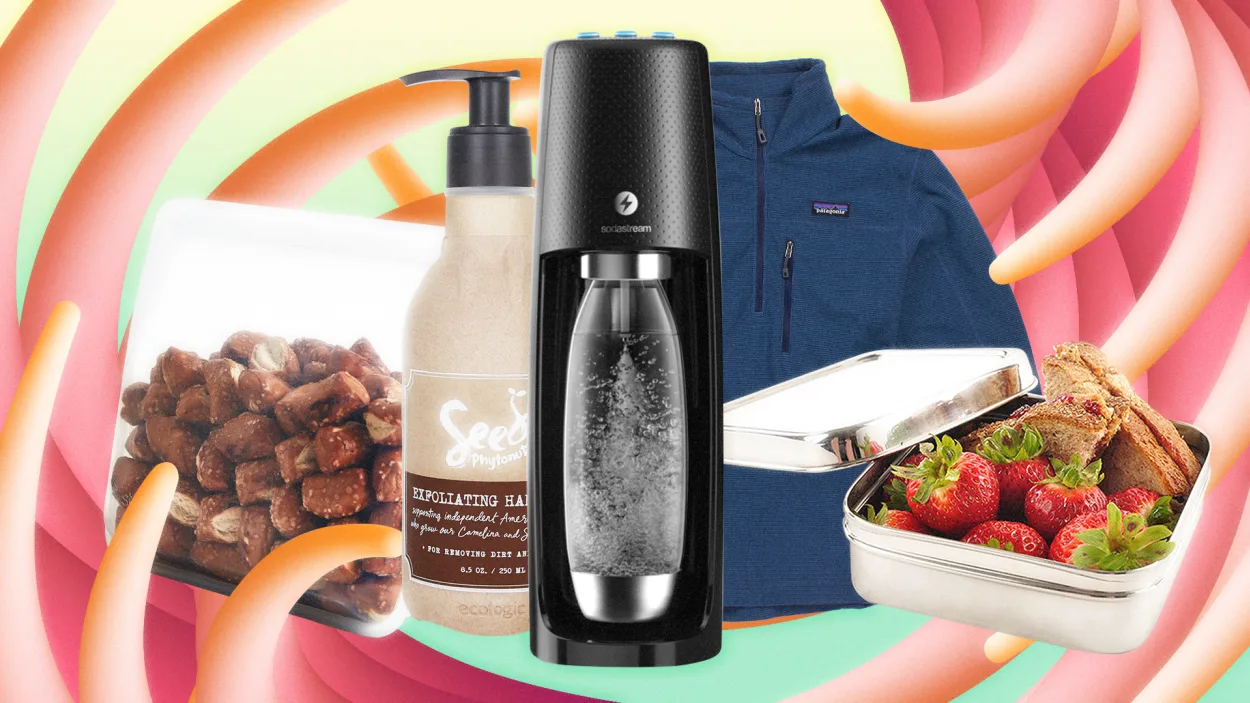 Are you ready to take your fight against plastic to the next level?
.
.
Click the link below for the article:
.
__________________________________________
January 7, 2024
Mohenjo
Business, Food For Thought, Human Interest, Political, Science, Technical
amazon, business, Business News, current-events, Future, Hotels, human-rights, medicine, mental-health, research, Science, Science News, technology, Technology News, travel, vacation
Some content on this page was disabled on April 15, 2025 as a result of a DMCA takedown notice from Guardian Media Group. You can learn more about the DMCA here:
https://wordpress.com/support/copyright-and-the-dmca/
January 6, 2024
Mohenjo
Business, Food For Thought, Human Interest, Political, Science, Technical
amazon, business, Business News, current-events, Future, Hotels, human-rights, medicine, mental-health, research, Science, Science News, technology, Technology News, travel, vacation
Click the link below the picture
.
If you haven’t heard it or felt it yourself, people are angry about the state of tipping. Consumers have noticed that they’re being asked to tip more often and for higher amounts than before. They buy their morning coffee and the barista flips around a screen that nudges them to add on a little more, or they go to pick up lunch, and they’re prompted to leave an extra $1. In particularly confounding situations, some people have found themselves being asked to tip their dermatologist or an e-commerce website. In the media, story after story has been written, recorded, and televised about the current state of affairs in tip culture in America.
To describe this culture, we’ve coined terms like “tipflation” and “guilt-tipping.” Many of the conversations I find myself in about high prices these days end with someone saying, “And then you’re supposed to tip on top of it.”
Contrary to the high emotions around it, tip requests aren’t that big a deal. What every frustrated consumer seems to forget is that you can just say no — plenty of people do. (Whether you should is a separate question, especially for workers whose livelihoods depend on tips.) Tipping in the vast majority of cases is optional. Maybe that tip jar was a little easier to ignore than the tablet, but I’m going to let you in on a little secret here: The worker behind the counter hoped you’d put money into the jar, you just didn’t feel as icky about not doing it.
“There are bigger things in this world going on to get frustrated about,” said Dianne Gottsman, a national etiquette expert.
So why does this rile people up so much? Tipping has become a sort of proxy for frustrations about the economy; it’s a small thing that often feels easier to focus on than the bigger things, like inflation. It can pit workers, consumers, and even businesses against one another in a way that’s uncomfortable for all involved.
It’s also an issue with no easy solutions. Some service workers don’t want tipping to go away, even if it means they’ll be paid a higher base wage. And while it’s easy to suggest businesses simply pay their workers more, that extra pay will come from somewhere — often in higher prices being passed on to consumers.
Why tipping gets people in such a tizzy
One thing is true: Tipping is different from what it used to be, even a few years ago. During the pandemic, there was a groundswell of support for service workers and small businesses, and practically everyone who could overtip did. That support hasn’t lasted — society has pretty quickly given up on worrying about essential workers — but some of the tipping changes have. “That emboldened a lot of companies to be more aggressive in asking for tips,” said Ted Rossman, a senior industry analyst at Bankrate. “It was followed pretty quickly by this big bout of inflation, and now we’re starting to see the backlash.”
.
:format(webp)/cdn.vox-cdn.com/uploads/chorus_image/image/72939669/Vox_BigSqueeze.0.jpg)
.
.
Click the link below for the article:
.
__________________________________________
January 6, 2024
Mohenjo
Business, Food For Thought, Human Interest, Political, Science, Technical
amazon, business, Business News, current-events, Future, Hotels, human-rights, medicine, mental-health, research, Science, Science News, technology, Technology News, travel, vacation

Click the link below the picture
.
Grout is no fun. The word even sounds unhappy. And the bright white stuff shows Every. Little. Blemish. It’s porous, hard to get to, easily stains—the list goes on. But fret not, here we have it: some helpful tips to make your least favorite chore a little more bearable.
Materials
- Baking Soda
- Vinegar
- Hydrogen peroxide (optional)
- Spray bottle
- Grout brush or scrub brush (a toothbrush works as well!)
- Small bowl
Instructions
Step 1: Start with vinegar.
Fill your spray bottle with a 1:1 solution of vinegar and water and spray the work area generously. Let the solution sit for about five minutes, then follow up with a grout brush or a scrub brush. If you don’t have one of these, a toothbrush works in a pinch. Rinse with warm water.
.
 Photos by Ashley Poskin
.
.
Click the link below for the article:
.
__________________________________________
Older Entries
Newer Entries

