August 11, 2024
Mohenjo
Business, Food For Thought, Human Interest, Political, Science, Technical
amazon, business, Business News, current-events, Future, Hotels, human-rights, medicine, mental-health, research, Science, Science News, technology, Technology News, travel, vacation

Click the link below the picture
.
When you’re struggling through a case of the common cold, the snot pouring from your nose seems endless. You go through countless tissues to mop up all the chunky, bright yellow boogers and thin, runny mucus, heaping up mountain ranges of used tissues.
And while you try to comfort yourself with hot soup and over-the-counter medications (many of which don’t do anything at all), a question pops into your head—how much mucus does someone actually produce while they’ve got a cold?
It must be enough to fill at least a coffee cup, you’re sure. Or a sink maybe? Or even a car? Surely someone must have attempted to measure this for the sake of sinus science.
As it turns out, only a few intrepid scientists have collected Kleenex for the common good. And from what these brave researchers have found so far, the amount of mucus produced through our valiant viral suffering may not be as much as we think.
Mucus plays an astonishing number of useful roles in the human body, from lining our intestinal tracts and sliming up our poop to working as nature’s lube for sexual activities involving vaginas. The slick combination of water, salts, and gel-forming proteins called mucins that make up mucus also helps trap dust, allergens, and infectious particles in the nose, mouth, windpipe, and lungs. This congealed mass of sticky mucus and unwanted particles is then swept up with the help of tiny, hairlike structures known as cilia, and dumped at the back of the throat where it’s usually swallowed—hopefully without you noticing (until someone points out that’s what’s happening; you’re welcome). Overall, even without a cold, our bodies produce quite a lot of mucus, over 1.5 liters per day. You’re gulping down a solid large ice cream container of snot every day, even when you’re not sick.
But get a cold, and it can feel like bucketloads more. Since mucus is also poised to act as a major immune response when we get sick, mainly due to its sticky consistency, booger production gets pushed into overdrive. Blood flow gets rerouted to the nose, swelling up the nasal tissues and making it hard to breathe (the reason you still can’t get a good breath no matter how much you blow). Submucosal glands and cells called goblet cells pump out gobbets of mucin proteins. The mucin proteins fill up with water, and the resulting overflow comes out as a tsunami of snot—hopefully also flushing out harmful virus particles in the process.
But exactly how much goop a cold produces is a difficult question to investigate, not least because of all the variables involved. There are at least 160 strains of rhinovirus that produce the symptoms we call the common cold—each causing a slightly different immune response—and other viruses, such as coronaviruses and RSV, can also trigger varying coldlike symptoms. People are also known to respond differently to the same infection—one may be very slimy while another remains relatively dry. Individuals who live in dry climates may have drier mucous membranes than those in humid ones. So, when scientists attempt to research colds, they must try to minimize these variables; this means infecting study participants with a single type of rhinovirus or coronavirus at a time, and monitoring them through the course of their symptoms.
With most previous studies examining the common cold—mainly testing out different drugs to ease symptoms—researchers have measured things like subjective nasal congestion scores, or even how much air you can sniff up your nose, instead of anything to do with discarded tissues or snot volume. This is because effectively collecting snot samples can be quite difficult: as mucus is mostly water, asking people to collect their used tissues over time means that the water will evaporate, leading to unreliable results. Collecting tissues would also mean more than one visit to a lab, costing money and time for participants and scientists alike.
But a few courageous scientists have taken up the task of snot collection. A 1993 study by D.A.J. Tyrrell and colleagues at the Center for Applied Microbiology and Research in England infected 116 volunteers with either a coronavirus (one of the cold-causing kinds, not a pandemic-causing kind) or one of three types of rhinovirus and quarantined them for up to five days after infection. To study their mucus ejection volume, the scientists collected used tissues in sealed plastic bags and then weighed them against non-mucus-filled bags of tissues. After all that, however, they never reported the actual volume or weight of the snot rockets. Instead, the scientists simply noted that 60 percent of people experience an increase in mucus weight, and up to 70 percent had a “nonzero tissue score” (meaning they used at least one tissue) two days after inoculation.
.

When sick, our noses often feel like a snot machine. Semen Tiunov/Alamy Stock Vector
.
.
Click the link below for the article:
.
__________________________________________
August 11, 2024
Mohenjo
Business, Food For Thought, Human Interest, Political, Science, Technical
amazon, business, Business News, current-events, Future, Hotels, human-rights, medicine, mental-health, research, Science, Science News, technology, Technology News, travel, vacation

Click the link below the picture
.
Is a slower, more mindful pace of life the answer to stress – or is it just another unachievable, privileged lifestyle brag? Meet the author who battled burnout with “a year of nothing”.
How does the idea of doing nothing for a year sound? No work, no emails, no career progression, no striving or achieving or being productive. For many of us, such a thought might once have brought its own anxiety attack – surely, work is status, earning money is achievement, and being busy is a brag? But these days, a year of nothing is more likely to sound dreamy, even aspirational – there has been, as they say, a vibe shift.
Millennials are embracing the concept of #SlowLiving – the hashtag has been used more than six million times on Instagram (despite posting on Insta being fairly antithetical to its principles of a mindful, sustainable lifestyle, with much reduced screen-time). Gen Z, meanwhile, have pioneered quiet quitting and “lazy girl jobs”, where one does the minimum at work to preserve your energy for the more meaningful parts of your life, be that hobbies, relationships, or self-care. And people across the generations are united to wanting to work less: in the UK, the concept of the four-day week is gaining serious traction.
To be facetious about it: hustle is out, and rest is in. And this is something Emma Gannon knows all about: the prolific author, podcaster, and Substack entrepreneur published A Year of Nothing – her account of taking an entire 12 months off – earlier this year. It quickly sold out when published earlier this summer, and has proved so popular it will now be reprinted and available to buy in November.
Not that it was, initially, a lifestyle choice: Gannon suffered such extremely bad burnout, she had no choice but to stop working. Her account of her year of rest and recuperation is now published in two small, sweetly readable volumes by The Pound Project, charting her journey back to health via gentle activities such as journaling, watching children’s TV, birdwatching, and the inevitable cold-water swimming (which Gannon knowingly acknowledges is a cliché for “Millennial writers with their bobs and tote bags”, but comes to love anyway).
Having been fully on-board with the girl-boss culture of the 2010s, Gannon had already stepped away from that with her last book, The Success Myth: Letting Go of Having It All, which explored how relentlessly striving for success rarely brings true happiness. But it was experiencing complete burnout that forced her to really confront the importance of rest.
“Looking back, there were lots of red flags – feeling very confused, pulsating headaches, not being able to focus on things in the room, quite scary stuff. But I over-rode it, [thinking]: ‘I’m busy, I’ve got to crack on’,” she recalls. Suddenly, in 2022, her body went into a forced shut-down mode. “Couldn’t look at a phone, couldn’t look at a screen, couldn’t walk down a street without feeling fragile. It was the feeling that, ‘oh you can’t muddle your way through this – you have to stop’. Many people with chronic burnout have to get to that point before they’ll take time off [work], because we’re so conditioned in this society to push through at all costs.
.
 Alamy
Alamy
.
.
Click the link below for the article:
.
__________________________________________
August 10, 2024
Mohenjo
Business, Food For Thought, Human Interest, Political, Science, Technical
amazon, business, Business News, current-events, Future, Hotels, human-rights, medicine, mental-health, research, Science, Science News, technology, Technology News, travel, vacation
Click the link below the picture
.
CLIMATEWIRE | Climate change is thinning Arctic sea ice, but contrary to conventional wisdom that’s making shipping through the North American Arctic more difficult.
A study published in Nature looked at Canada’s Northwest Passage over 15 years. It found that the melting of local ice due to global warming enables thicker ice from Greenland to flow into the corridor’s choke points, reducing the length of time when ships can move through the passage.
“First-year ice, that’s retreating. But it means the thick ice — multiyear ice — is then more able to flow down into those areas,” lead author Alison Cook, a researcher at the Scottish Association for Marine Science and the University of Ottawa, said in an interview.
That thicker ice poses hazards for ships, such as damage or sinking if there’s a collision.
The results contradict the common view that the Northwest Passage, the Arctic Ocean waterway linking the Atlantic and Pacific, is an increasingly practical option for commercial shipping. It even surprised Cook.
“I certainly was assuming the season length was becoming longer everywhere, and it just wasn’t,” she said.
Cook and her colleagues looked at historical ice charts of the Northwest Passage and converted those into season lengths. The seasons indicate the number of weeks where medium ice-strength ships can traverse the passage without taking extra safety precautions.
Four regions saw significant changes. In three, the shipping season was shortened by 50 to 70 percent between 2007 and 2021. In one — the eastern Lancaster Sound — the season length grew by 15 percent.
Shipping seasons typically run between 15 and 25 weeks, though it fluctuates heavily between years and regions.
Changing ice has discouraged at least one passenger cruise line from sailing the passage.
Scenic Luxury Cruises and Tours crossed the Northwest Passage in 2022, but “because of the sensitive environment and ever-changing ice conditions and weather conditions of the Arctic, they redeployed their sailings after that season,” said Michelle Abril, vice president of Coyne PR and a spokesperson for Scenic. “They are not currently sailing there or have itineraries set through Q1 2027 to visit that region.”
Despite the shrinking seasons, crossings have — on average — increased over the past decade, according to data provided to POLITICO’s E&E News by the Canadian Coast Guard.
“Over the coming years, the Canadian Coast Guard anticipates an increase in arctic traffic, due to increased tourism, commercial shipping, and adventuring opportunities,” the Coast Guard said in a statement.
While the trends show voyages rising and season lengths decreasing, there are a couple of explanations for that apparent contradiction.
The first is demand. Shipping companies are eyeing alternatives to the narrow and congested Panama Canal. And adventure tourists are eager to trek into the Arctic.
.

Large cargo ship filled with containers navigating through ice. Jean Landry/Getty Images
.
.
Click the link below for the article:
.
__________________________________________
August 10, 2024
Mohenjo
Business, Food For Thought, Human Interest, Political, Science, Technical
amazon, business, Business News, current-events, Future, Hotels, human-rights, medicine, mental-health, research, Science, Science News, technology, Technology News, travel, vacation

Click the link below the picture
.
Someone told me recently, “If you’re like me, you’re watching the Olympic games thinking, ‘Why can’t I get motivated to get in shape?’” I responded, “I feel your pain. I have a book deadline October 1st, but I catch myself rearranging the spice rack, surfing online, or cleaning out a cabinet that doesn’t really need it.
Unfortunately, motivation doesn’t simply show up when you’re waiting for the mood to strike. If you are waiting for the urge to finish that report, reach a deadline, or send an important email, you might be waiting a long time. And according to experts, it’s not motivation that’s needed to reach conclusion. It’s something else.
What’s holding us back? It’s the myths that are inconsistent with science that me believe in, according to Dr. Wendy Grolnick, professor of psychology at Clark University and an expert on motivation. I spoke with her by email, and she told me, “A common motivation myth is that we should wait for motivation to strike.” Grolnick, coauthor of the new book, Motivation Myth Busters: Science-Based Strategies to Boost Motivation in Yourself and Others, added that there are several things you can do instead of waiting for that magic moment.
“We all struggle with motivating ourselves and others at times,” Grolnick explained to me. “My coauthors and I argue that some of the problem is that we may hold beliefs about motivation that are not consistent with science. Our book busts 10 myths and provides scientifically supported strategies to boost motivation.” She shares examples of four common myths along with information to bust them.
Myth 1: Some People Are Motivated—Others Aren’t
The Science: You are motivated and so is everyone else. The idea that motivation is a characteristic of a person is not supported by science, Grolnick informs us. “Motivation varies by the domain (e.g., sports versus academics), context (some situations or people in them prime your motivation and others don’t), task (some tasks are more motivating than others), and the person’s interests.
Grolnick’s suggestions for action:
-
Assume everyone is motivated. When you see someone who seems to lack motivation, try to understand why and tap into their motivation.
-
Try to understand why the person feels unmotivated. For example, do they feel pushed to do something, unable to succeed? Disconnected from others?
-
Tie the task to the person’s interests or goals.
-
Make the task more interesting.
.

Many of us spend an inordinate amount of time waiting to get motivated, but experts inform us that … [+] Getty
.
.
Click the link below for the article:
.
__________________________________________
August 9, 2024
Mohenjo
Business, Food For Thought, Human Interest, Political, Science, Technical
amazon, business, Business News, current-events, Future, Hotels, human-rights, medicine, mental-health, research, Science, Science News, technology, Technology News, travel, vacation
Click the link below the picture
.
The percentage of people who say they’ve tried to end a pregnancy without medical assistance increased after the Supreme Court overturned Roe v. Wade. That’s according to a study published Tuesday in the online journal JAMA Network Open.
Tia Freeman, a reproductive health organizer, leads workshops for Tennesseans on how to safely take medication abortion pills outside of medical settings.
Abortion is almost entirely illegal in Tennessee. Freeman, who lives near Nashville, said people planning to stop pregnancies have all sorts of reasons for wanting to do so without help from the formal health care system — including the cost of traveling to another state, challenge of finding child care, and fear of lost wages.
“Some people, it’s that they don’t have the support networks in their families where they would need to have someone drive them to a clinic and then sit with them,” said Freeman, who works for Self-Managed Abortion; Safe and Supported, a U.S.-based project of Women Help Women, an international nonprofit that advocates for abortion access.
“Maybe their family is superconservative, and they would rather get the pills in their home and do it by themselves,” she said.
The new study is from Advancing New Standards in Reproductive Health, a research group based at the University of California-San Francisco. The researchers surveyed more than 7,000 people ages 15 to 49 from December 2021 to January 2022 and another 7,000-plus from June 2023 to July 2023.
Of the respondents who had attempted self-managed abortions, they found the percentage who used the abortion pill mifepristone was 11 in 2023 — up from 6.6 before the Supreme Court ended federal abortion rights in 2022.
One of the most common reasons for seeking a self-administered abortion was privacy concerns, said a study co-author, epidemiologist Lauren Ralph.
“So not wanting others to know that they were seeking or in need of an abortion or wanted to maintain autonomy in the decision,” Ralph said. “They liked it was something under their control that they could do on their own.”
Kristi Hamrick, vice president of media and policy at Students for Life Action, a national anti-abortion group, said she doesn’t believe the study findings, which she said benefit people who provide abortion pills.
“It should surprise no one that the abortion lobby reports their business is doing well, without problems,” Hamrick said in an emailed statement.
Ralph said in addition to privacy concerns, state laws criminalizing abortion also weighed heavily on women’s minds.
“We found 6% of people said the reason they self-managed was because abortion was illegal where they lived,” Ralph said.
In the JAMA study, women who self-managed abortion attempts reported using a range of methods, including using drugs or alcohol, lifting heavy objects, and taking a hot bath. In addition, about 22% reported hitting themselves in the stomach. Nearly 4% reported inserting an object in their body.
.

The percentage of people seeking to end their own pregnancies who used the abortion pill mifepristone has increased since the Supreme Court overturned the federal right to an abortion. Soumyabrata Roy/NurPhoto via Getty Images
.
.
Click the link below for the article:
.
__________________________________________
August 9, 2024
Mohenjo
Business, Food For Thought, Human Interest, Political, Science, Technical
amazon, business, Business News, current-events, Future, Hotels, human-rights, medicine, mental-health, research, Science, Science News, technology, Technology News, travel, vacation

Click the link below the picture
.
It doesn’t matter what you do for a living. Welcoming a child and then getting back to work is one of the most complicated things for a mother to adjust to. It’s especially complex if you’re an athlete.
Constant travel for competitions and games and the consistent training required, there are so many aspects of being a sportswoman that can take you away from home and away from your children. But many athletes are making it work, including at this year’s summer Olympics in Paris. With the addition of support like a nursery in Olympic Village for athlete mothers, quite a few Olympians brought their children along for the unforgettable experience.
Whether they’ve become champions after delivering a child or grapple with the emotions of having to leave their kids back home to play for their country, these moms are superheroes. And whether they take home gold or not, they’re winners for what they’re accomplishing and the inspiration they are to their children and mothers everywhere.
Dearica Hamby
Hamby, a mother of two to daughter Amaya and son Legend, is representing USA in Paris. The WNBA All-Star earned a bronze medal playing 3×3 basketball. “Unfortunately, our society and work culture perpetuate ‘mom guilt’ as they go back to work, or making moms feel like they can’t both parent and provide,” Hamby told ESSENCE in 2023. “It’s a false choice, and I’m proud to show just how strong moms are and to support other mothers going back to work. Being a mom and doing what I love is really special.”
Shelly-Ann Fraser-Pryce
In what has been a stellar career on the track, “The Pocket Rocket,” a mother to soon-to-be 6-year-old son Zyon, is competing in her last Olympics. She knows she has more in her, but the 37-year-old said she plans to hang up her spikes for her family. “My son needs me,” she told ESSENCE in our January/February 2024 issue. “My husband and I have been together since before I won in 2008. He has sacrificed for me. We’re a partnership, a team. And it’s because of that support that I’m able to do the things that I have been doing for all these years. And I think I now owe it to them to do something else.”
Clarisse Agbegnenou
The French judoka, who took home a bronze in the individual competition and gold with the French mixed team, is a mother to daughter Athéna, who would come with her to train in preparation for the Olympic Games in her home city. “I want women athletes who follow me to feel free and legitimate, to break codes to change mentalities and change the rules,” she told Le Parisien. “We can have a life as a woman and mother as well as champion at the same time.”
.
 Luis Robayo/AFP/Getty Images; Richard Heathcote/Getty Images Sport; Brad Smith/ISI Photos/USSF/Getty Images Sport
.
.
Click the link below for the article:
.
__________________________________________
August 9, 2024
Mohenjo
Business, Food For Thought, Human Interest, Political, Science, Technical
amazon, business, Business News, current-events, Future, Hotels, human-rights, medicine, mental-health, research, Science, Science News, technology, Technology News, travel, vacation

.
Love songs by Johnnymac365, check them out!
.

.
.
Click the link below for music:
https://music.apple.com/us/album/love-how-many-ways-can-love-happen-ep/1642574248
.
__________________________________________
August 8, 2024
Mohenjo
Business, Food For Thought, Human Interest, Political, Science, Technical
amazon, business, Business News, current-events, Future, Hotels, human-rights, medicine, mental-health, research, Science, Science News, technology, Technology News, travel, vacation
Click the link below the picture
.
It’s a very strange experience to watch a play in which you are a character—and to shake hands with the person who plays you. I did both this July while attending a performance of Kyoto at the Swan Theatre in Stratford-upon-Avon in England. The moment meant more, of course, than just a glimpse of oneself on history’s stage. The play shows how science won out over climate denial in a critical face-off between scientists and industry over the future of the planet.
Kyoto is a play about the Kyoto Protocol—an agreement made more than 25 years ago that, as summarized by the United Nations, committed “industrialized countries and economies in transition to limit and reduce greenhouse gases (GHG) emissions in accordance with agreed individual targets.” Written by Joe Murphy and Joe Robertson, the play is a co-production of Good Chance and the Royal Shakespeare Company that provides a dramatic retelling of a historic meeting in Kyoto, Japan, in December 1997, where the protocol was finalized.
At this meeting, a key Intergovernmental Panel on Climate Change (IPCC) scientific assessment helped to inform the international emissions reduction negotiations—the Working Group I part of the IPCC Second Assessment Report, which was completed in 1995 and published in early 1996. I was convening lead author of chapter eight, “Detection of Climate Change and Attribution of Causes.” The role of the IPCC, back in 1995 and today, was to advise the governments of the world on the science and impacts of climate change, as well as on strategies for mitigating and adapting to those impacts.
In 1990 the first IPCC scientific assessment had concluded that the jury was still out on whether a human-caused climate change signal could be identified in real-world climate data. The 1995 assessment’s chapter reached a very different conclusion, encapsulated in 12 simple words: “The balance of evidence suggests a discernible human influence on global climate.” This was a powerful, historic statement from cautious scientists and a rather conservative organization.
Multiple factors contributed to this dramatic transition. Advances in the science of climate fingerprinting, for example, made a big difference in climate research during the five years between the two reports.
Fingerprinting seeks to understand the unique signatures of different human and natural influences on Earth’s climate. This uniqueness becomes apparent if we probe beyond a single number—such as the average temperature of Earth’s surface, including land and oceans—and look instead at complex patterns of climate change. Patterns have discriminatory power and allow scientists to separate the signature of human-caused fossil-fuel burning from the signatures of purely natural phenomena (such as El Niño and La Niña climate patterns, changes in the sun’s energy output, and effects of volcanic eruptions).
Kyoto describes some of the fingerprint evidence that was presented during a key meeting in Madrid in November 1995, ahead of the Kyoto face-off dramatized in the performance. The “discernible human influence on global climate” conclusion was finalized in Madrid, where the participants included 177 delegates from 96 countries, representatives from 14 nongovernmental organizations, and 28 lead authors of the IPCC Second Assessment Report. As a lead author of the evidence chapter, I was there among them in that Madrid plenary room. So were several of the other characters in Kyoto, including the play’s central one—Donald Pearlman, who was a lawyer and lobbyist for the Climate Council, a consortium of energy interests.
Pearlman and I were on opposite sides of the Madrid chessboard. My efforts were directed toward synthesizing and assessing complex science and ensuring that the science was accurately represented in the IPCC report. His were directed toward delaying international efforts to reduce emissions of heat-trapping greenhouse gases. Such reductions were bad for the business interests he represented and for the revenues of oil-producing countries, such as Saudi Arabia and Kuwait.
Pearlman, who passed away in 2005, understood the singular importance of the Madrid “discernible human influence” conclusion. He knew it was the scientific equivalent of the Biblical handwriting on the wall. The jury was no longer out. Human-caused fingerprints had been identified in records of Earth’s surface and atmospheric temperature. Humans were no longer innocent bystanders in the climate system; they were active participants. Burning fossil fuels had changed the chemistry of Earth’s atmosphere, thereby warming the planet and sending Earth’s vital signs into concerning territory. The Madrid conclusion meant that the days of unfettered fossil-fuel use and carbon pollution were numbered.
.

Kyoto production photo at the Swan Theatre, June 17, 2024. Manuel Harlan/RSC
.
.
Click the link below for the article:
.
__________________________________________
August 8, 2024
Mohenjo
Business, Food For Thought, Human Interest, Political, Science, Technical
amazon, business, Business News, current-events, Future, Hotels, human-rights, medicine, mental-health, research, Science, Science News, technology, Technology News, travel, vacation

Click the link below the picture
.
For their whole life, your firstborn felt like the center of the universe. Then—bam!—this new crying critter barges in, demanding so much attention. To boot, a toddler’s brain is in “caveman” mode with limited patience, communication, and impulse control. Acting out, sleep struggles, and inflexible demands (like parental preference), are 100-percent-normal tot responses to a new sibling.
Here’s what you should do to ease the transition.
Stick to a Predictable Evening Routine
A predictable bedtime routine with reliable sleep cues can go a long way to help get sleep back on track. Start your routine about an hour before bedtime. Turn off all screens, including your own phone! Dim the lights, turn on some low, rumbly white noise, and play it all night to help mask late-night disturbances like a crying baby brother or sister. Tuck your little guy in with his favorite lovey (these important transitional objects can provide a lot of comfort during times of upheaval) and read together.
Then snuggle up close and finish your routine with what I call “Bedtime Sweet Talk.” In a calm voice, remind your child all the good things he did that day and preview some of the fun things he can look forward to tomorrow. Filling your little one’s sleepy mind with loving words helps to make bedtime something to look forward to instead of dread. Plus, he gets a heaping helping of your undivided attention.
The reader who submitted this question said their toddler is currently experiencing strong preference for Mom. Whether it’s Mom or Dad they are clinging to, it’s a good idea for you and your spouse to take turns being on night-night duty, and stick to the plan so your son knows what to expect. You could even rehearse your routine during the day with a Beddy-Bye Book, a special homemade book that illustrates all of the getting-ready-for-bed steps.
Feed the Meter During the Day
Another powerful tool for helping your newly minted big brother feel extra respected and loved, which, believe it or not, can help keep bedtime battles at bay, is a technique I call “feeding the meter.” Just like you must feed a parking meter to keep from getting a parking ticket, feeding your toddler’s “meter” with frequent bits of love and attention helps keep toddlers happy and extend their patience and good behavior. Take a minute to sing a song with them, compliment something they are wearing or how well they are playing, pull them in for a hug, or kiss them on the head as they play blocks. It all counts!
Here are some more great ways to keep their meters topped up:
-
Catch your big kid being good. Every time your toddler puts their toys away or kisses their baby brother, offer a little “snack” of attention. Nothing over the top, just a thumbs-up, a warm smile, and a bit of understated praise, like “You put your toys away yourself. Thank you!”
-
Try a little “gossip.” “Gossiping” is a fun little way to make your compliments and criticism more effective. Tell your child directly what you want them to hear “Yay! You picked up your toys super fast!” Then, a little later, when you’re on the phone to Grandma (or pretend to talk to one of your tot’s stuffed animals), whisper the same compliment. When your child overhears you saying it to someone else, without winking at them or letting them know that you know they are there, your child will feel doubly proud and think, “Wow, I’m hearing it a lot lately!”
-
Beef up “Special Time.” Offering one or two five-minute chunks of Special Time can work wonders! It’s when you give your oldest your undivided attention—no phones or baby siblings—and do whatever your tyke wants. Wrestling and pillow tossing helps your tot vent aggression in an acceptable way. Always start with a little ten-second made-up song (like, “It’s Bobby’s Special, Special, Time!”) and set a timer. When it’s over, you can remind your child that they will have another special time tomorrow.
.
 Getty Images
.
.
Click the link below for the article:
.
__________________________________________
August 7, 2024
Mohenjo
Business, Food For Thought, Human Interest, Political, Science, Technical
amazon, business, Business News, current-events, Future, Hotels, human-rights, medicine, mental-health, research, Science, Science News, technology, Technology News, travel, vacation
Click the link below the picture
.
Over billions of years, gravity has pulled the universe’s matter into a chaotic netting of filaments, tendrils, and voids known as the cosmic web. Galaxies are strewn along these strands like beads on a string, and New Mexico State University astronomer Farhanul Hasan and his colleagues wondered how environments created by the filaments affect galaxies’ evolution. “I like to call them galactic ecosystems,” he says.
To find out, the researchers needed to accurately map the cosmic web over time. But the mixture of gas, galaxies and dark matter that constitutes the web makes this task challenging, because although the stars in the galaxies are easy to see, the rest is not.
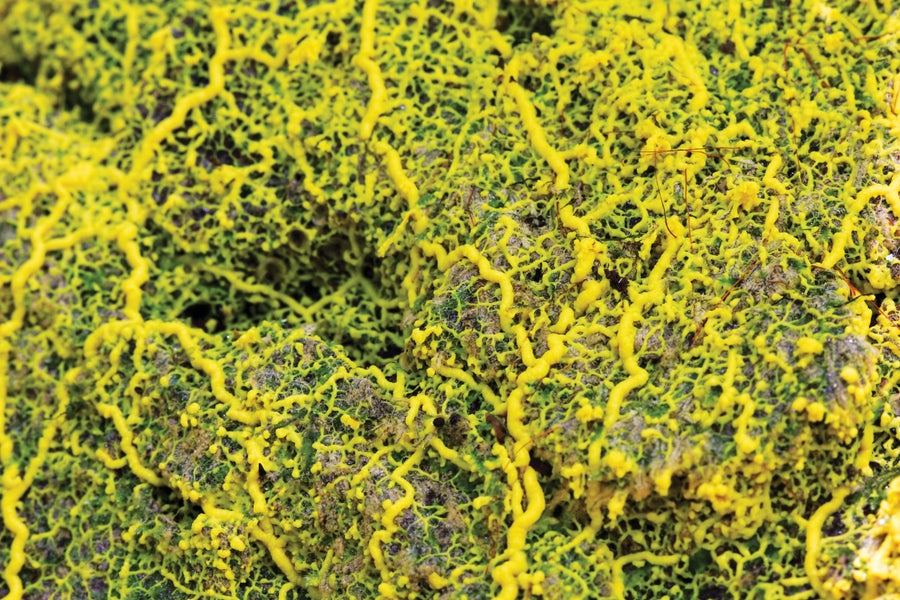
To connect the dots in a computer simulation of the universe, Hasan and his colleagues brought in a special “collaborator”: a species of the humble slime mold. These single-celled organisms are experts at exploring the space around them. Their membranes push outward in a synchronized wave in every direction. When they find a food source, nearby membranes relax, allowing subsequent pushes to send more material to that region.
Scientists have used slime molds’ exploration prowess to solve mazes and logic puzzles, to re-create transportation systems, and to inspire efficient computer algorithms. “It’s a really good mapping algorithm because it’s not really biased by the first direction you decide to look in; [it’s] capable of exploring everything at once,” says New Jersey Institute of Technology slime mold specialist Simon Garnier.
Hasan and his team gave a slime-mold-based algorithm a set of galaxies’ positions as “food” and let it map connections across the simulated universe at various time points. The slime-mold map created a cleaner filament structure than any human-designed algorithm they had tried; it was also sensitive to smaller features and traced dark matter more easily. The researchers found that neither the proximity nor the thickness of the universe’s filaments seemed to affect the galaxies early on, but as the universe matured, things changed: material pulled into the web eventually disrupted star formation in galaxies that were too close.
“The crucial difficulty in using the cosmic web to constrain galaxy formation is in describing it with the accuracy needed to observe its effect,” says New York City College of Technology astrophysicist Ari Maller. “The use of the slime-mold algorithm seems to have accomplished that goal.”
The study’s results, appearing in the Astrophysical Journal, are just the beginning. New surveys are stretching observations even further back in time. Conclusions from the simulated universe eventually can be tested against older glimpses of the real cosmic web—and the slime-mold algorithm is poised to map them all.
.
 TommyIX/Getty Images
.
.
Click the link below for the article:
.
__________________________________________
Older Entries
Newer Entries
 James' World 2